
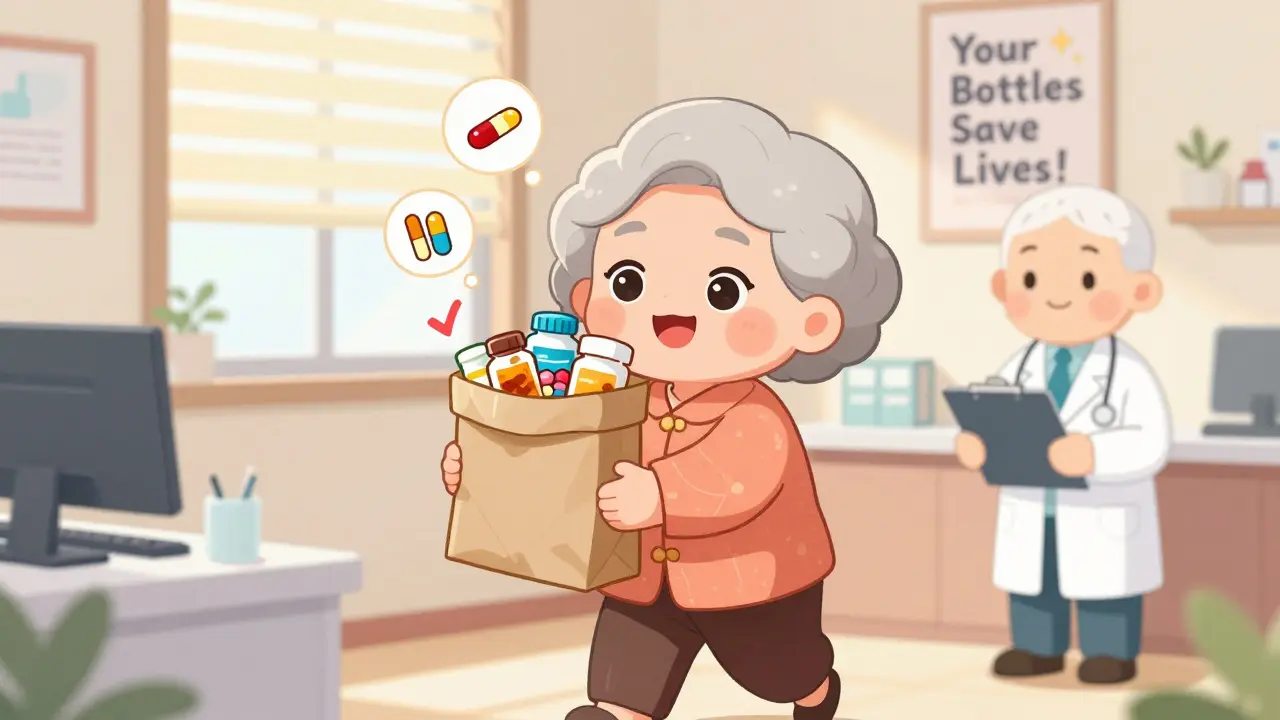
When you walk into a doctor’s office, you might think the most important thing is telling them how you’ve been feeling. But for many people, especially those on multiple medications, the real key to staying safe is what’s in your bag: your pill bottles.
Every year, thousands of patients end up in the hospital because of medication errors. Most of these mistakes happen not because a doctor prescribed the wrong thing, but because no one knew what the patient was actually taking at home. That’s where bringing your pill bottles to appointments makes all the difference.
Why Your Pill Bottles Matter More Than Your Memory
You might think you remember every pill you take. But studies show that 60-70% of people get at least one medication wrong when they try to list them out from memory. It’s not your fault. Life gets busy. You forget what that small white pill is for. You stop taking something but don’t throw the bottle away. You switch to a new pharmacy and the label changes. Your medicine cabinet becomes a jumble of unlabeled containers.
Bringing your actual pill bottles - not just a list - gives your provider a real-time snapshot of what’s in your home. The labels on those bottles contain details you can’t recall: exact dosages, expiration dates, pharmacy contact info, and even the reason the drug was prescribed. That’s why the American Academy of Family Physicians says physical bottle review reduces medication discrepancies by 67% compared to self-reported lists.
What Exactly Should You Bring?
You don’t need to bring just your prescription drugs. Bring everything. That includes:
- All prescription medications in their original containers
- Over-the-counter pills like pain relievers, antacids, or sleep aids
- Vitamins and supplements - even the ones you think are "harmless"
- Herbal remedies and teas that claim to help with health issues
- Any medications you’ve stopped taking but still have in your home
- "As needed" meds like nitroglycerin, albuterol, or ibuprofen for occasional pain
Don’t leave anything out because you think it’s "not important." One 2023 study found that 29% of dangerous drug interactions came from PRN (as-needed) medications patients forgot to mention.
And yes - even if a bottle is empty or the pills inside are expired, bring it. That empty bottle tells your doctor you were on something, and it might explain why you’re still feeling unwell.
The Problem with Pill Organizers
Many people - especially older adults - use weekly or monthly pill organizers. They’re convenient. But they’re also dangerous for medication reconciliation.
A 2023 study in the Journal of Patient Safety found that 38% of patients consolidate their meds into these containers. That means the labels are gone. The doctor sees a tray of 20 pills and has no idea what any of them are. Is that blue pill a blood pressure drug? A thyroid pill? A leftover antibiotic?
If you use a pill organizer, bring both the organizer and the original bottles. Your provider will compare the pills in the organizer to the labels on the bottles to make sure nothing’s missing or mixed up.
Some patients even use two separate organizers - one for morning, one for night. That’s fine. Just make sure you bring both.
How to Prepare: A Simple 15-Minute Routine
You don’t need to spend hours getting ready. Just set aside 15-20 minutes the day before your appointment.
- Find every medication container in your home - bathroom, kitchen, nightstand, purse, car.
- Place them all in a single brown paper bag or clear plastic tote. Don’t sort them. Just gather.
- Take a photo of each label with your phone. This helps if something gets lost or if you need to show a pharmacist later.
- If you’ve thrown away a bottle, check your phone. If you took a photo before discarding it, you’re covered.
- Write down any questions: "Why am I taking this?", "Is this still needed?", "Can I stop the one I haven’t used in months?"
Some clinics even call patients the day before their appointment to remind them. If your doctor’s office does this, answer. It increases your chances of bringing everything by 47%.

What Happens During the Appointment?
When you hand over your bag of bottles, your provider will likely sit down with you and go through each one. They’ll compare your list to what’s on the bottles. They’ll check for duplicates, interactions, outdated prescriptions, and unnecessary meds.
You might be surprised by what they find. One nurse in Melbourne reported catching three dangerous drug interactions in one month just because patients brought their bottles. One man was taking two different blood thinners he didn’t know he was on. Another woman was still taking a cholesterol drug she’d been told to stop two years ago.
The process usually takes 5-10 minutes. It’s not a big deal. But it’s one of the most important things you’ll do in that visit.
What If You Don’t Have the Original Bottles?
If you lost a bottle, don’t panic. But don’t guess either.
Call your pharmacy. Most can print out a list of your filled prescriptions. Bring that printout. It’s not as good as the original bottle - it won’t show you the lot number or expiration date - but it’s better than nothing.
Apps like Medisafe or MyTherapy can sync with your pharmacy and give you a digital list. Use them as backup, not replacement. The physical bottle still has the most accurate, FDA-mandated info.
And if you’ve thrown away a bottle? Take photos next time. Pharmacists say 82% of patients who photograph their labels before discarding them avoid future confusion.
Why Telehealth Isn’t Enough
Many people now use their phone camera to show pills during virtual visits. It sounds smart. But it misses key details.
A 2024 study found that telehealth pill checks miss 22% of discrepancies that in-person reviews catch. Why? Because you can’t see:
- How the pills are stored (e.g., in a dusty box, under the sink)
- Whether pills are broken, discolored, or moldy
- Unused bottles you’ve forgotten about
- Empty containers that tell a story about stopped meds
Also, many patients don’t have good lighting, shaky hands, or forget to show the label. A 78% accurate pill ID app can’t replace a pharmacist’s trained eye looking at the real thing.
What Your Provider Is Looking For
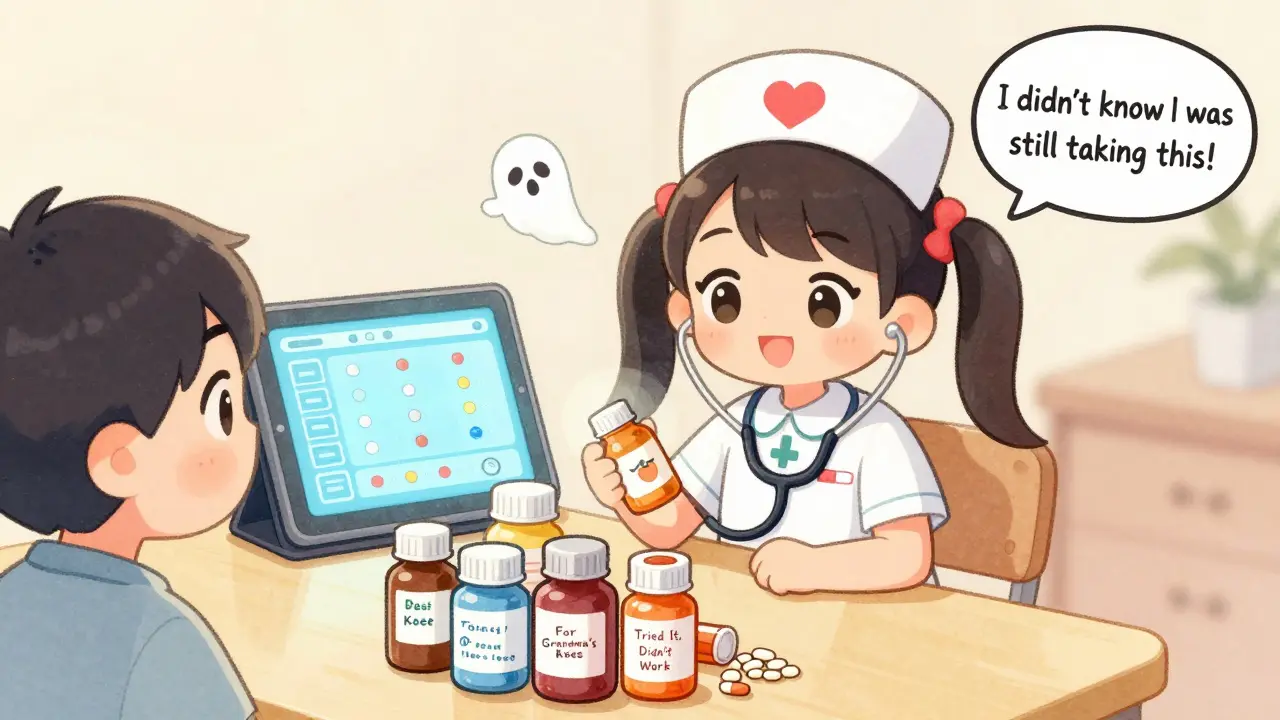
When they review your bottles, they’re not just checking names. They’re looking for:
- Duplicates: Are you taking two drugs that do the same thing?
- Outdated prescriptions: Are you still on antibiotics from last year?
- Unnecessary meds: Is that pill for a condition you no longer have?
- Missing meds: Did you stop something without telling anyone?
- Drug interactions: Does your blood pressure med react badly with your supplement?
- Expiration dates: Are you taking old or degraded medication?
These aren’t just paperwork issues. They’re safety issues. The American Geriatrics Society found that 56% of potentially harmful medications in older adults were only discovered through physical bottle review.
Real Stories From Real Patients
One Reddit user, u/MedSafetyNurse, shared that since patients started bringing bottles, they’ve caught three dangerous interactions in one month. One was a woman taking a blood thinner and a new herbal supplement that nearly caused a stroke.
Another, u/ElderCareGuru, said their mother brings 15+ bottles to every visit. "It’s messy," they wrote, "but the doctor says it’s the only way she stays safe."
Conversely, u/PharmTechPro described a patient who brought a bag of loose pills with no labels. "We spent 20 minutes trying to guess what they were. One turned out to be a dangerous heart med. We almost missed it."
And then there’s the shame factor. A 2023 survey found 28% of patients feel embarrassed about unused meds. But your provider has seen it all. They’ve seen expired insulin, abandoned antidepressants, and bottles of pills from surgeries ten years ago. They’re not judging. They’re saving your life.
What Comes Next
After your appointment, your provider might:
- Remove a medication you no longer need
- Adjust a dose based on what you’re actually taking
- Prescribe a new drug because something was missing
- Send you to a pharmacist for a full med review
They’ll also update your electronic health record. This helps future doctors, ER staff, and even your pharmacist avoid dangerous mistakes.
Some clinics now use digital tools that scan pill labels with a phone. But even these systems still require the physical bottle to be present. Technology helps - but it doesn’t replace the real thing.
Final Tip: Make It a Habit
Don’t wait until you’re sick or confused. Make bringing your pill bottles part of every appointment - whether it’s for a cold, a blood pressure check, or a yearly physical.
Set a calendar reminder: "Gather meds before Dr. appointment." Do it the day before. Keep your brown bag in your car or by the door. Make it automatic.
Because when it comes to your medications, the truth isn’t in your memory. It’s in the bottle.