
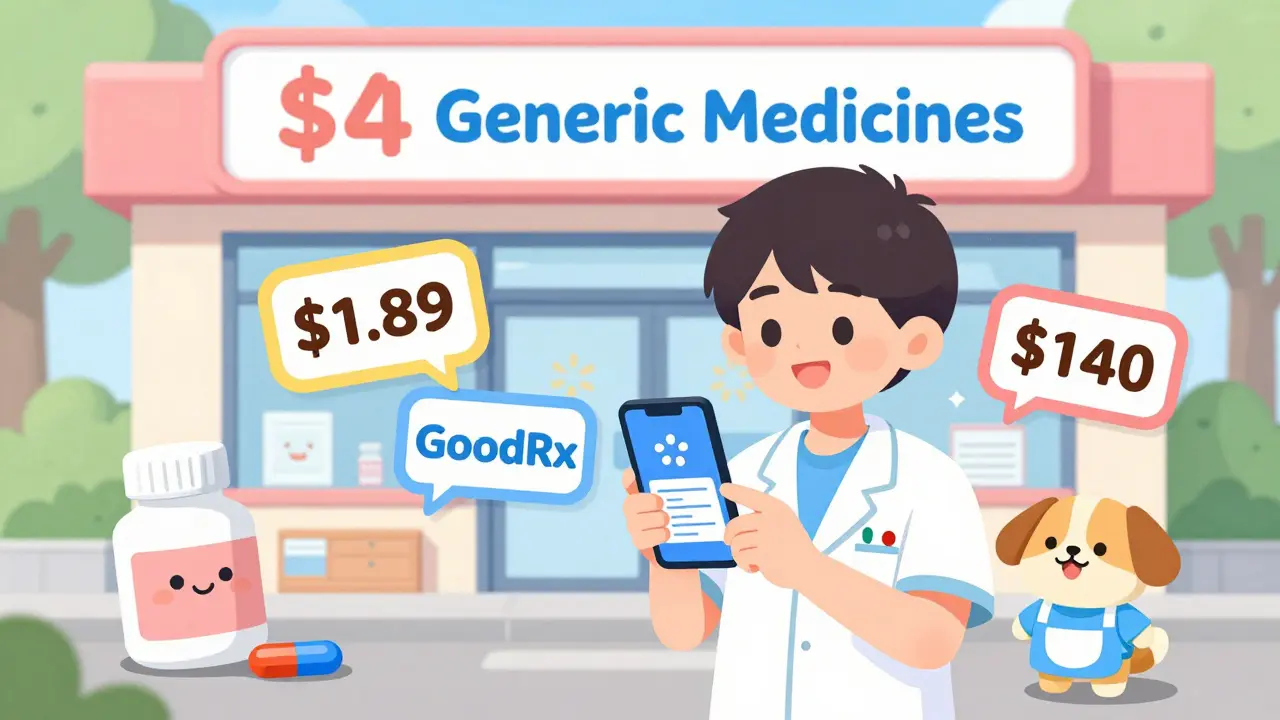
Ever paid $50 for a generic pill only to find out your neighbor paid $3 for the same thing at a store just five blocks away? You’re not alone. In 2026, cash prices for medications can vary by hundreds of dollars-even within the same city. The difference isn’t about luck. It’s about knowing where to look and how to ask.
Most people assume their pharmacy charges a standard price. They don’t realize that the same prescription, at the same dose, from the same manufacturer, can cost $1.99 at one pharmacy and $140 at another. That’s not a typo. That’s the reality of how drug pricing works in the U.S. And if you’re paying out-of-pocket-whether you’re uninsured, on a high-deductible plan, or just tired of insurance bureaucracy-you need to shop like a pro.
Why Prices Vary So Much
Pharmacies don’t set prices randomly. They’re caught in a web of deals between drug manufacturers, pharmacy benefit managers (PBMs), and their own business models. Manufacturers offer deep discounts to big chains like CVS or Walgreens in exchange for volume. But those discounts aren’t passed to you. Instead, they’re used to negotiate better deals with insurers. Meanwhile, independent pharmacies and grocery stores often charge less because they make up for lower margins with higher foot traffic.
For example, a 30-day supply of metformin 500mg might cost $15.99 at a national chain. But at a Kroger or Walmart pharmacy, the same pill could be $1.89. Why? Because Kroger runs a $4/$9 generic program. That’s not a sale. That’s their standard price. And they’re not losing money-they’re using it to bring you in for groceries.
Even more surprising? The undiscounted cash price at a pharmacy is often the highest price you’ll see. That’s the price before any coupons or discounts. Always ask for it first. Many people assume their insurance will cover it, so they never check. But sometimes, paying cash with a discount card is cheaper than using insurance-especially if you haven’t met your deductible.
The Tools That Save You Money
You don’t need to call every pharmacy in town. There are apps and websites built just for this. The most popular is GoodRx is a free price comparison tool that aggregates real-time cash prices from over 70,000 U.S. pharmacies and offers discount coupons. It’s been around since 2011 and now serves over 200 million users. In 2023, GoodRx reported users saved an average of 88% on generics and 42% on brand-name drugs compared to undiscounted prices.
But don’t rely on just one. Cross-check with RxSaver is a free discount platform that provides cash price comparisons and printable coupons for prescription medications., WellRX is a prescription discount service that offers savings on both generic and brand-name medications through pharmacy partnerships., and BuzzRx is a price comparison tool for prescription drugs that provides coupons and discounts at local pharmacies.. Each one pulls data from slightly different networks. One might show a lower price at a local independent pharmacy. Another might have a better deal at a Target or Costco.
Here’s a real example from a user in Chicago: they needed insulin. The same vial cost $98 at one pharmacy, $145 at another, $220 at a third, and $345 at a national chain. With GoodRx, they found a $79 price at a nearby Walmart. That’s $266 saved in one transaction.
Pharmacy Type Matters More Than You Think
Not all pharmacies are created equal. Here’s how they stack up:
| Pharmacy Type | Undiscounted Cash Price | GoodRx-Discounted Price | Typical Margin |
|---|---|---|---|
| Supermarket (e.g., Kroger, Safeway) | $45.80 | $28.17 | $4.71 |
| Mass Merchandiser (e.g., Walmart, Target) | $52.10 | $29.45 | $5.84 |
| National Chain (e.g., CVS, Walgreens) | $148.20 | $64.42 | $12.68 |
| Independent Pharmacy | $112.30 | $58.90 | $8.20 |
| Analytical Pharmacy | $365.12 | $120.50 | $15.67-$16.56 |
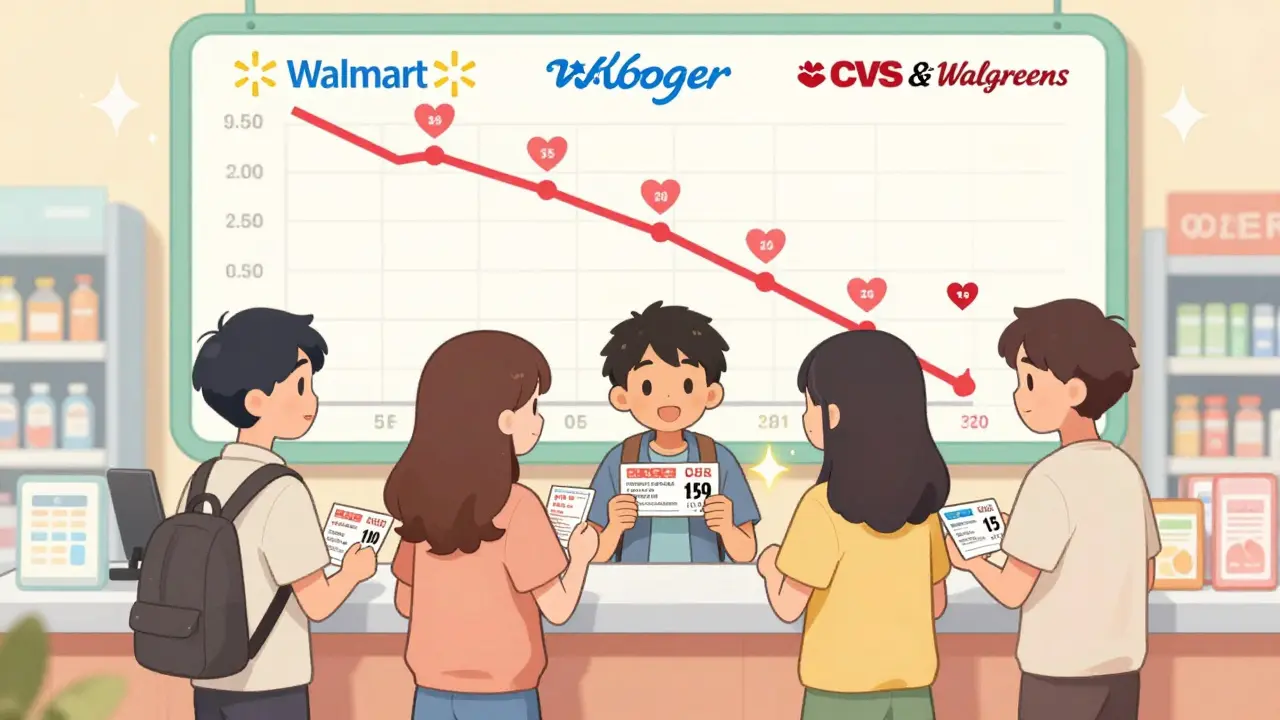
Notice something? Supermarkets and mass merchandisers consistently offer the lowest prices-even after discounts. National chains are the most expensive. Independent pharmacies? Sometimes cheaper, sometimes not. They don’t always participate in discount programs. But here’s the secret: many independents offer unadvertised discounts if you ask. If you’re a regular, tell the pharmacist you’re trying to keep costs low. You’d be surprised how often they’ll drop the price another $5 or $10.
Brand vs. Generic: The Real Savings
GoodRx and other tools work best on generics. For brand-name drugs, the savings are often minimal. A 2020 study found that GoodRx discounts on brand-name medications were only 10-15% lower than undiscounted prices. Why? Because manufacturers don’t offer deep discounts on brands-they rely on insurance rebates.
But here’s the trick: ask your doctor if a generic version exists. For example, if you’re on Lipitor, ask about atorvastatin. If you’re on Nexium, ask about esomeprazole. In most cases, the generic is chemically identical and costs 80-90% less. One user on Reddit saved $112 on Synthroid by switching to levothyroxine and using a GoodRx coupon. The doctor didn’t even blink.
There are exceptions. Some drugs, like Humira or Enbrel, have no generic. But even then, some manufacturers offer patient assistance programs. Always check the drugmaker’s website. You might qualify for free or low-cost medication if your income is under $50,000.
Mail Order and Non-Profit Options
If you take the same meds every month, mail order is worth considering. RXOutreach.com is a non-profit pharmacy that provides discounted generic medications to U.S. residents with household incomes at or below 300% of the federal poverty level ($45,000 for individuals in 2023). You don’t need insurance. You just need to prove income. They offer 90-day supplies of common generics for as little as $10. That’s $3.33 per month for metformin, lisinopril, or simvastatin.
Even if you have insurance, RXOutreach can be cheaper than your co-pay if you haven’t met your deductible. And unlike insurance, there’s no formulary restriction. If your doctor prescribes it, they’ll fill it.
How to Shop Like a Pro: 5 Steps
Here’s your simple, step-by-step plan:
- Ask for the undiscounted cash price before showing insurance. Many people don’t realize their insurance might not be the cheapest option.
- Use at least three price-checking tools-GoodRx, RxSaver, and WellRX. Compare results side by side.
- Check local grocery and warehouse stores first. They often have the lowest prices, even without coupons.
- Ask your pharmacist if they have any unadvertised discounts. Especially if you’re a regular.
- Consider mail order if you’re on long-term meds and make under $45,000/year. RXOutreach.com is free to join.
It takes about 10 minutes per prescription. But if you save $50, $100, or $200 on a single refill, you’ll never skip this step again.
What About Medicare?
If you’re on Medicare, you still need to shop. The Inflation Reduction Act caps out-of-pocket drug costs at $2,000 per year starting in 2025. But that doesn’t mean you’re not overpaying now. Many Medicare Part D plans have different preferred pharmacies. Your plan might cover a drug at $10 at CVS but $45 at Walgreens. Always check your plan’s formulary and preferred pharmacy list. And don’t forget: you can switch plans during open enrollment (October 15-December 7). A small change can save hundreds.
Real Talk: What Doesn’t Work
Some myths need to die:
- Myth: "Insurance always saves money." Truth: If you haven’t met your deductible, cash with a coupon is often cheaper.
- Myth: "All pharmacies charge the same." Truth: A 2021 NIH study found price differences of over 300% for the same drug in one ZIP code.
- Myth: "GoodRx doesn’t work on brand names." Truth: It works better on generics-but even on brands, you can sometimes save 20-40%.
And one more thing: don’t wait until you’re out of pills to check prices. Do it before your refill is due. That way, you have time to switch pharmacies or order mail order.
Final Thought: It’s Not Rocket Science
Pharmacy shopping isn’t about being a financial expert. It’s about being curious. It’s about asking, "How much is this?" and then checking one more place. The system is designed to make you feel powerless. But you’re not. You’re the customer. And you have more power than you think.
Start with one prescription. Compare three pharmacies. Use one coupon. Save $50. Then do it again next month. In a year, you’ll save over $600. That’s a vacation. That’s a new pair of shoes. That’s peace of mind.
Can I use GoodRx with Medicare?
Yes, you can use GoodRx with Medicare, but only if you’re paying out-of-pocket. If you’re using your Medicare Part D plan, the pharmacy will apply your plan’s price. GoodRx can’t be combined with insurance. However, if your Part D co-pay is higher than the GoodRx cash price, you can choose to pay cash instead. Just tell the pharmacist you want to use the GoodRx coupon instead of your insurance.
Why is the same drug cheaper at Walmart than CVS?
Walmart and other mass merchandisers use medications as a loss leader. They make little or no profit on prescriptions but use them to bring customers into the store for groceries, electronics, or clothing. CVS and Walgreens rely more on pharmacy profits and insurance reimbursements, so they charge more. It’s a business model difference, not a quality difference.
Do I need to be a U.S. citizen to use GoodRx or RXOutreach?
You don’t need to be a U.S. citizen, but you do need a U.S. mailing address and a valid prescription from a U.S. licensed doctor. Both GoodRx and RXOutreach require prescriptions to be filled by U.S. pharmacies, so they’re only available to people living in the U.S.
Can I use GoodRx for insulin?
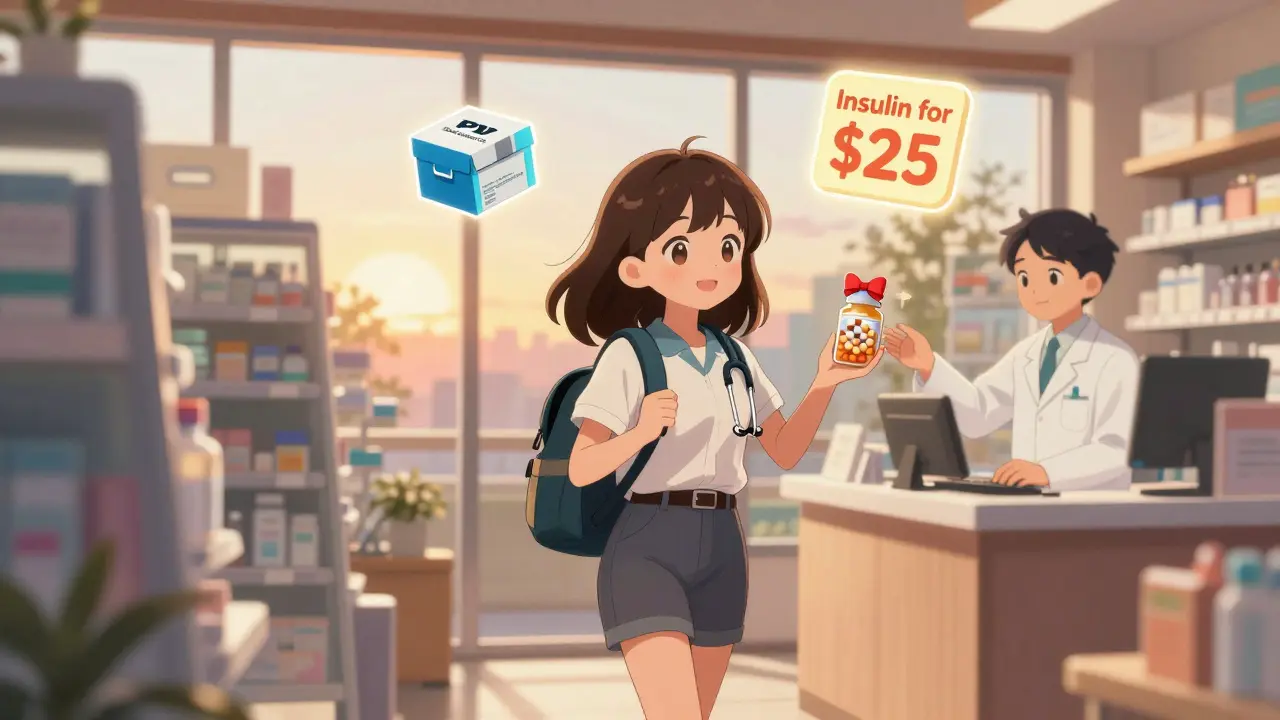
Yes, and it’s one of the best places to save. Insulin prices vary wildly-from $30 to over $300 for the same vial. GoodRx often finds prices as low as $25 at Walmart and other discount pharmacies. In 2023, Walmart began selling certain insulins for $25 without a coupon. GoodRx can help you find the lowest price nearby.
What if the price on GoodRx is different at the pharmacy?
This happens about 12% of the time, according to Consumer Reports. Pharmacies update prices manually, and sometimes they’re delayed. If the price at the counter is higher, ask if they’ll honor the coupon. Most will. If they refuse, try another pharmacy. The price on the app isn’t a guarantee-it’s a starting point. Always confirm before you pay.

Comments
Okay so I just spent 45 minutes comparing prices on GoodRx, RxSaver, and WellRX for my dad’s lisinopril-turns out the local Walmart had it for $1.89, CVS wanted $17.50, and the independent pharmacy? $22. I almost cried. Not because I saved money, but because I realized I’ve been overpaying for FIVE YEARS. FIVE. YEARS. I thought insurance was helping. It wasn’t. It was robbing me blind while pretending to be a hero. And don’t even get me started on how pharmacies lie about "discounted" prices. They show you the insurance rate first, then act confused when you ask why the cash price is higher. It’s a scam. A beautifully packaged, white-coated, prescription-pad scam. I’m telling everyone I know. This isn’t advice. This is a survival guide.
The systemic failure here is not merely economic-it is moral. The pharmaceutical-industrial complex has weaponized necessity. When a diabetic must choose between insulin and rent, we are not dealing with a market inefficiency; we are confronting a structural violence. The fact that Walmart can offer insulin at $25 while CVS charges $300 is not a feature of competition-it is evidence of predatory monopolization masked as retail. The state permits this. The FDA enables it. And we, the consumers, are told to "shop smarter." As if ignorance were the root cause, rather than policy failure. We need legislation, not coupons.
They don't want you to know this but the real reason prices vary is because the government is secretly working with PBMs to control the market. You think Walmart is helping? They're a front. The same companies that run the big chains also own the data brokers behind GoodRx. It's all a trap to make you think you're saving money while they track your habits and sell your data to Big Pharma. I checked the WHO database-over 70% of discount coupons are issued by companies linked to the same 3 corporations. They want you dependent on apps so they can manipulate pricing in real time. Don't trust the numbers. Trust your gut. And never use a coupon that requires your phone number.
This is such an important post. I'm from India and I've seen how affordable generics are here-sometimes under $1 for a month's supply. It makes me sad that in the U.S., even basic meds are so expensive. But your guide is clear and practical. I'm sharing this with my American friends. The key is persistence. Don't give up after one pharmacy. Visit three. Ask politely. And if they say no, try again next week. Prices change. I learned this when I was buying metformin for my sister. Took three tries. Saved $80. You're not powerless. You just need to be consistent.
I just used this method for my mom’s blood pressure med and saved $120 this month! I’m so happy I didn’t ignore this. I used GoodRx, checked Walmart, and then walked into the Kroger pharmacy and asked, "Can you beat this?" They lowered it by another $3. I didn’t even have to argue. Just asked like a human being. It’s wild how much power you have when you stop being passive. I’m telling my whole family. We’re all doing this now. Thank you for making it simple. You just changed our lives.
While the practical advice provided is commendable, I must emphasize the ethical imperative underlying this issue. The commodification of essential medicines represents a profound failure of public policy. The fact that individuals must engage in consumer arbitrage to access life-sustaining pharmaceuticals is not indicative of market efficiency, but rather of institutional neglect. One ought not to be required to become a price detective merely to survive. Systemic reform, not consumer vigilance, is the necessary solution. That said, your step-by-step guide remains a valuable interim tool for those trapped in the current broken system.
While your analysis of pharmacy pricing differentials is generally accurate, it is incomplete without reference to the role of the 340B Drug Pricing Program and the impact of Medicare Part D coverage tiers. Furthermore, the assertion that independent pharmacies "sometimes offer unadvertised discounts" is statistically misleading; according to the National Community Pharmacists Association (NCPA) 2023 report, only 12.7% of independents routinely offer cash discounts beyond those facilitated through third-party platforms. Additionally, the claim that "Walmart runs a $4/$9 generic program" is outdated; as of Q1 2024, their program has been expanded to include 120 medications, not 30, and pricing is now dynamically adjusted based on regional supply chain costs. I recommend cross-referencing with the FDA’s Drug Shortage Database and the CMS Formulary Transparency Portal for more accurate, real-time data.
I tried this last month. Saved $90 on my thyroid med. Just asked the pharmacist if they had a better price. They did. Didn’t even need a coupon. Just said "I’m trying to keep costs down." They got it. No drama. No apps. Just human conversation. I’m not saying this is the solution to everything. But it’s something. And it’s worth doing. Thank you for reminding me I have a voice here.
You people are idiots. You think GoodRx is helping? It's not. It's a Trojan horse. The real savings are in mail order from Canada. You're not supposed to know that. The FDA bans it. But I've been getting my insulin from a pharmacy in Toronto for $12 a vial. No coupon. No app. Just a VPN and a FedEx label. And you're all over here comparing Walmart prices like it's a game. Wake up. The government doesn't want you to know this. They're scared. Because if you start importing, the whole system collapses. I've been doing this for 7 years. I'm not a criminal. I'm a survivor. And you're still playing by their rules.
Walmart and Kroger are just front companies for the deep state. You think they're giving you cheap meds? They're luring you in so they can track your purchases, build your profile, and then sell you ads for overpriced supplements. This whole "cash price" thing is a psyop. They want you to think you're smart for saving $50. Meanwhile, your data is being sold to insurance companies who use it to raise your premiums next year. I don't use apps. I don't use coupons. I buy nothing. I grow my own herbs. I'm not part of the system anymore. You're all being played.
Interesting how you all ignore the real issue-pharmacies are owned by hedge funds now. I checked the SEC filings. CVS is 63% owned by BlackRock. Walmart? 41% by Vanguard. They don’t care if you save $20. They care if you use insurance, because then the PBM gets the rebate. The whole "cash price" thing? A distraction. They want you to think you’re empowered while they quietly raise prices on the insured. I tried using GoodRx on my statin. The price dropped from $140 to $65. But my insurance bill went up $80 the next month. Coincidence? Nah. This isn’t about shopping. It’s about control. And they’re winning.