
Understanding Embolism
Being your friendly neighbourhood blogger, I have dabbled in quite a few topics, and today I'm diving into the mesmerising and somewhat scary world of medicine. You'd never imagine that someone like me, who once got squeamish at the sight of a paper cut, would be talking about embolisms and blood thinners, but well, here we are. Hold on tight because I am going to enchant you with some medical science stuff about embolisms.
An embolism is like an unexpected trip—an unwelcome one, that is. It happens when a blood clot, fat globules or even an air bubble decides to go on a tour in your bloodstream and, at some point, it gets stuck. And when it jams up a blood vessel, the organs relying on blood from that vessel are in for a tough time. The blockage could cause them to starve for oxygen and nutrients leading to organ damage. Ouch! Not the kind of unexpected trip anyone would want to join!
The Dangers Looming Over
Now you’re thinking "Ethan, how dangerous can this get?" Well, folks, it can get very dangerous indeed. The emboli (a fancy name for the stuff causing the blockage) can travel to major organs like the brain, causing strokes, or to the lungs causing pulmonary embolism, or to the heart leading to a heart attack. As someone who loves his neurons and lungs as much as he loves his dog Jasper, I can tell you that we should be very wary of these unwelcome guests.
Is there anything we can do about it? Absolutely. This is where blood thinners strut onto the stage. Remember, in this article, it is the blood thinners vs. the emboli. The who's who in the world of embolism prevention and treatment.
Blood Thinners: The Cavalry
As you read this, your blood is pumping through your body, delivering oxygen and nutrients to those trillions of cells working hard to keep you breathing, moving and—reading this article, I presume. Now imagine what happens when a clot blocks this flow. The blood thinners are medications that reduce the chance of blood clotting, effectively acting as prevention and treatment for embolism.
Here's an interesting fact before we go on: the term 'blood thinners' is actually a misnomer. They don't actually thin the blood. They work to reduce the formation of blood clots or to destabilise existing ones. Much like how designated drivers ensure that their party doesn't crash into something on a night out.
A In-Depth look at Blood Thinners
Let's dig deeper into the world of these life-saving medicines. There are two types to familiarise yourself with: anticoagulants and antiplatelets. You might think the names are difficult to remember—but hey, it could've been worse—we could still be using Latin!
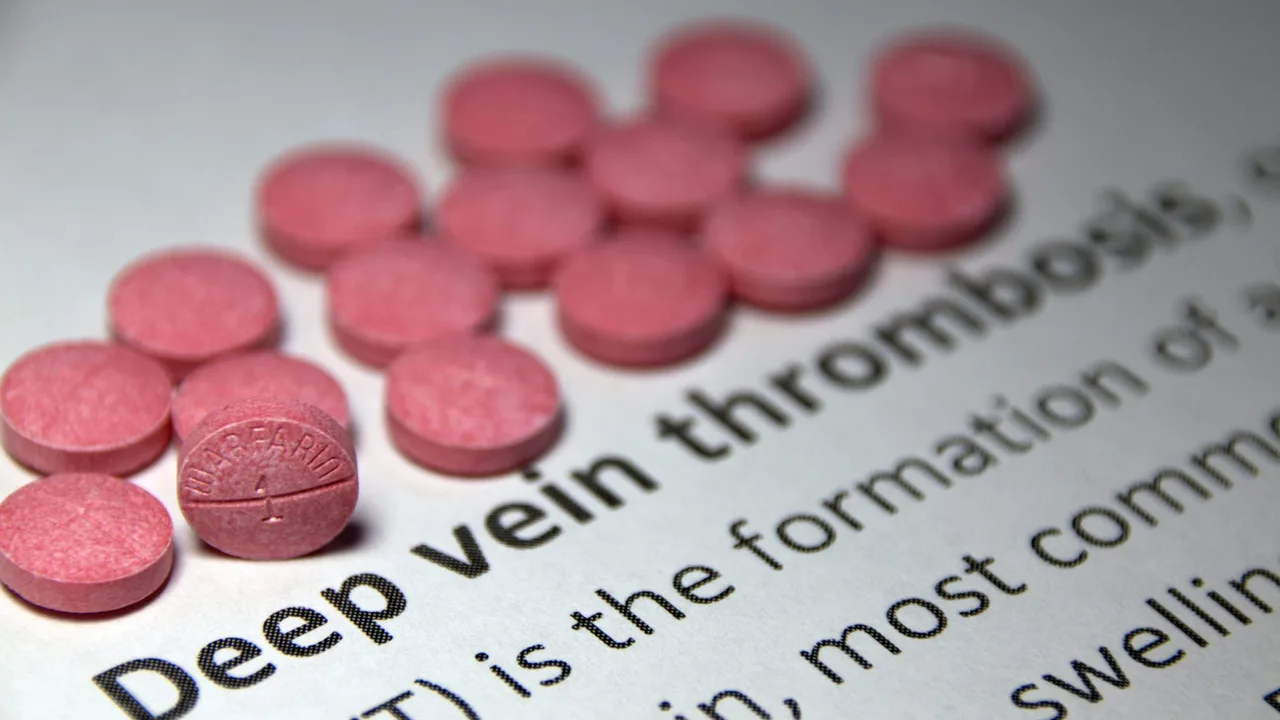
Anticoagulants, the bigger word of the two, also have the bigger job. They slow down the clotting process. They're kind of like the town's traffic cop, slowing things down and ensuring everything moves smoothly. Warfarin and heparin are two of the most commonly used anticoagulants.
Then, we have antiplatelets. Their job is to prevent platelets (tiny, disc-shaped elements in your blood) from sticking together and forming a clot. They are more like the well-behaved kids in school, always doing their part to keep things peaceful and smooth. Aspirin and clopidogrel are some of the most common examples of antiplatelets.
The Potential Consequences and Watch-Outs
Now, if you have this uncanny vision of blood thinners as superhero meds charging in, capes flying, and annihilating the enemy (read: emboli) in a snap, allow me to throw in a little reality check. Like all medications, blood thinners have potential side effects and require careful management. They're a bit like my dog Jasper, really helpful and friendly, but if I forget his walk, well, things can get messy.
Extensive use of blood thinners can lead to excessive bleeding, swelling, and other complications. As in most things in life, the key is balance. It’s essential to monitor how these medications work in your body by getting regular blood tests and following your healthcare provider's advice to the letter. After all, they went through man years of medical school for a reason!
Our bodies are a delicate symphony of processes and mechanisms that work non-stop to keep us alive and functioning, and sometimes they need a little support. Blood thinners in embolism prevention and treatment play a vital role in this. Next time when you walk by a pharmacy, maybe you'll give those blood thinners a tip of the hat for the incredible job they do.
Throughout the course of this article, we have romped around the world of embolism and blood thinners, and I reckon you've got your fair share of quirky facts and practical tips. Nevertheless, if you have got a particular question in mind, feel free to post it in the comments. As always, yours in science and oddities, Ethan.

Comments
I mean, blood thinners are basically just nature's way of saying ' chill out, your blood is too dramatic' 😅 I've been on them for years and honestly? I feel like a walking sci-fi movie. But hey, at least I'm not dead.
The part about antiplatelets being like well-behaved kids is actually spot on. I work in a lab and we see how platelets clump like overeager teenagers at a party. Aspirin just tells them to calm down and stand in line
You know what's wild? We treat blood clots like villains but they're just doing their job too hard. Blood is supposed to clot. It's not broken. We're just too lazy to sit still or eat right. The real embolism is our modern lifestyle. We created this problem then bought a pill to feel better about it.
It is imperative to underscore the fact that the nomenclature 'blood thinners' is, in fact, a misnomer of considerable epistemological consequence. The pharmacological agents in question do not alter viscosity per se, but rather modulate the coagulation cascade via specific enzymatic inhibition. One must exercise considerable discernment when engaging with popular medical discourse.
Ohhh so now we're romanticizing anticoagulants like they're the heroes of a rom-com? 🤡 I had a cousin who bled out from a nosebleed on warfarin. They told her it was 'just a side effect'. Like it's a bonus feature. Yeah. Right.
BLOOD THINNERS = LIFE SAVERSSSS!!! 🙌 I was in the ER with a DVT and now I take my pills like they're my morning coffee. No more fear of sitting on long flights. I’m basically a superhero with a pill organizer 🦸♀️💊
I love how you explained it like a story. I'm a nurse and I tell my patients the same thing - it's not about thinning blood, it's about keeping things flowing. You're doing great work here
In my village in Nigeria, we used to use bitter leaf and neem bark for circulation problems. Now I see modern medicine is doing something similar but with science. I think both have value. The body knows what it needs - we just have to listen. I'm glad you're spreading awareness. Keep going, brother.
This was so well written 🙏 I had a pulmonary embolism last year and I didn't know what was happening. This article helped me understand why I'm on apixaban now. Also - Jasper sounds like an angel 🐶❤️
I used to think blood thinners were just for old people. Then I got a clot after a long car ride. Turns out, sitting for 8 hours is basically a crime against your veins. Now I walk every hour. And I don't even like walking. But I'd rather walk than end up in a coffin.
They don't want you to know this but blood thinners are part of the pharmaceutical agenda. They're pushing these drugs so you'll be dependent forever. Why not fix the root cause? Like your diet? Or your fear of movement? Or maybe the fluoridated water? 😏
Look, I get it. You're trying to be cute with the 'designated driver' analogy. But let's be real - this country's medical system is a circus. You get a clot, they slap you on warfarin and tell you to eat kale. Meanwhile, your insurance won't cover the real fix: a damn treadmill. We're treating symptoms like they're the enemy.
I'm sorry, but your casual tone undermines the gravity of anticoagulant therapy. There are documented cases of fatal hemorrhages due to improper dosing. This isn't a 'quirky fact' column. It's life-or-death medicine. Please update your article with proper disclaimers.
The anthropomorphic characterization of platelets as 'well-behaved children' is not only scientifically inaccurate, but epistemologically regressive. One must eschew such infantilizing metaphors when discussing hemostatic regulation - a domain governed by precise biochemical cascades, not elementary school behaviorism.
You wrote 'embolism' correctly, but you missed a comma after 'neurons' - and you used 'stroll' instead of 'journey' - this is unacceptable. Also, your dog's name is 'Jasper'? How cliché. And you didn't cite the 2022 Cochrane review on antiplatelet efficacy. Shame.
I'm not even mad. I'm just disappointed. You made blood thinners sound like a Marvel movie. Meanwhile, my uncle died from a brain bleed because he forgot to get his INR checked. This isn't a podcast. People die from this.
So let me get this straight - we’re giving people chemicals to stop their blood from clotting... but the same system that made these drugs also makes the pills that cause the clots in the first place? Hmm. I smell a conspiracy. Who owns the patents? Who profits? Who’s behind the 'designated driver' metaphor? 🤔