
How a 30-Year-Old Trade Deal Still Blocks Cheap Medicines for Millions
In 1995, a global trade deal called TRIPS changed how the world gets medicine. It didn’t make headlines at the time, but it turned patents into a global lock on life-saving drugs. Today, millions in low- and middle-income countries still can’t afford basic treatments for HIV, cancer, or heart disease-not because the medicines don’t exist, but because international law says they can’t be made cheaper.
The TRIPS Agreement is a World Trade Organization treaty that sets minimum standards for intellectual property protection across 164 member countries. It was designed to protect pharmaceutical companies’ profits by requiring all members to grant 20-year patents on drugs, even in places where people earn less than $2 a day.
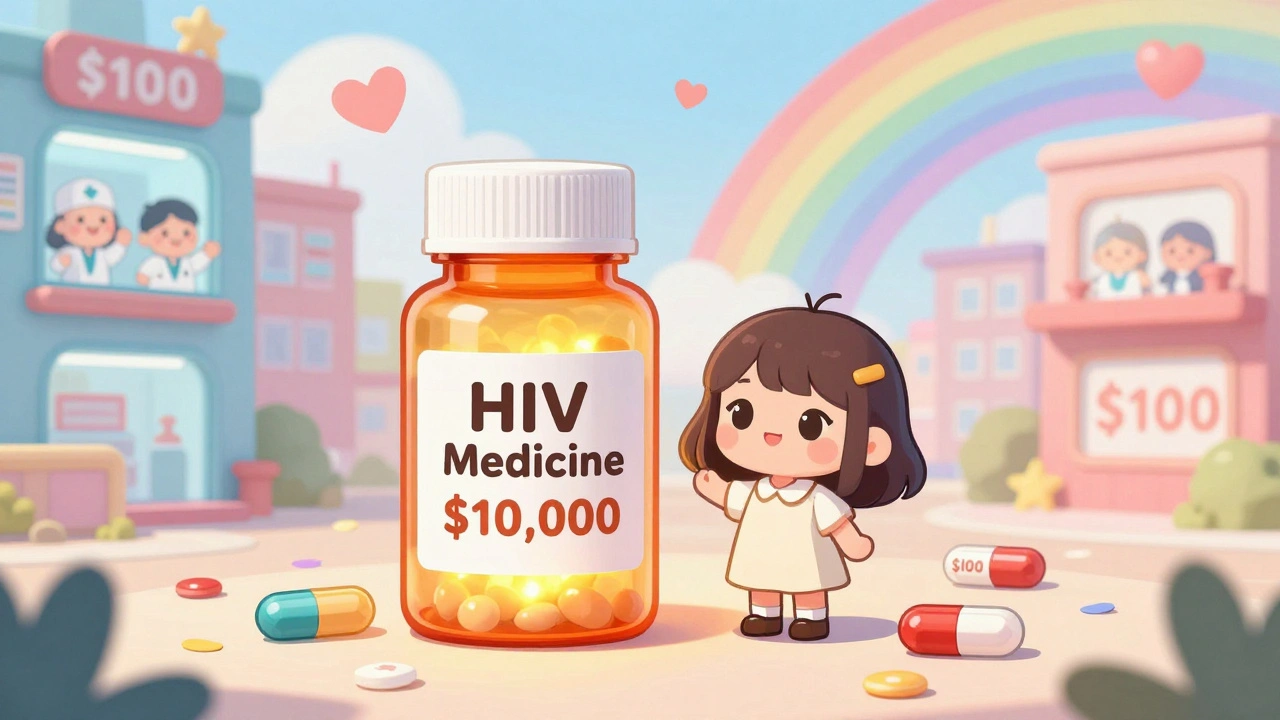
Before TRIPS, countries like India, Brazil, and Thailand made their own generic versions of patented drugs. In India, a year’s supply of HIV medicine cost about $100. After TRIPS, that same drug, under patent, jumped to $10,000. The difference wasn’t in quality-it was in who owned the right to make it.
What TRIPS Actually Requires
TRIPS doesn’t just say "patents are good." It spells out exact rules:
- Every country must grant patents on pharmaceutical products for at least 20 years from the filing date (Article 33).
- Patents can’t be denied just because a drug is a modified version of a natural compound (Article 27).
- Generic manufacturers can’t start selling until the patent expires-even if the original drug is priced out of reach.
These rules sound neutral. But they ignore reality. In the U.S., 89% of prescriptions are for generics. In sub-Saharan Africa, it’s 28%. Why? Because patents block local production.
TRIPS also says that if a country wants to make a generic version without the patent holder’s permission, it can do so under something called a compulsory license-but only under strict conditions.
Compulsory Licensing: The Legal Loophole That Almost Never Works
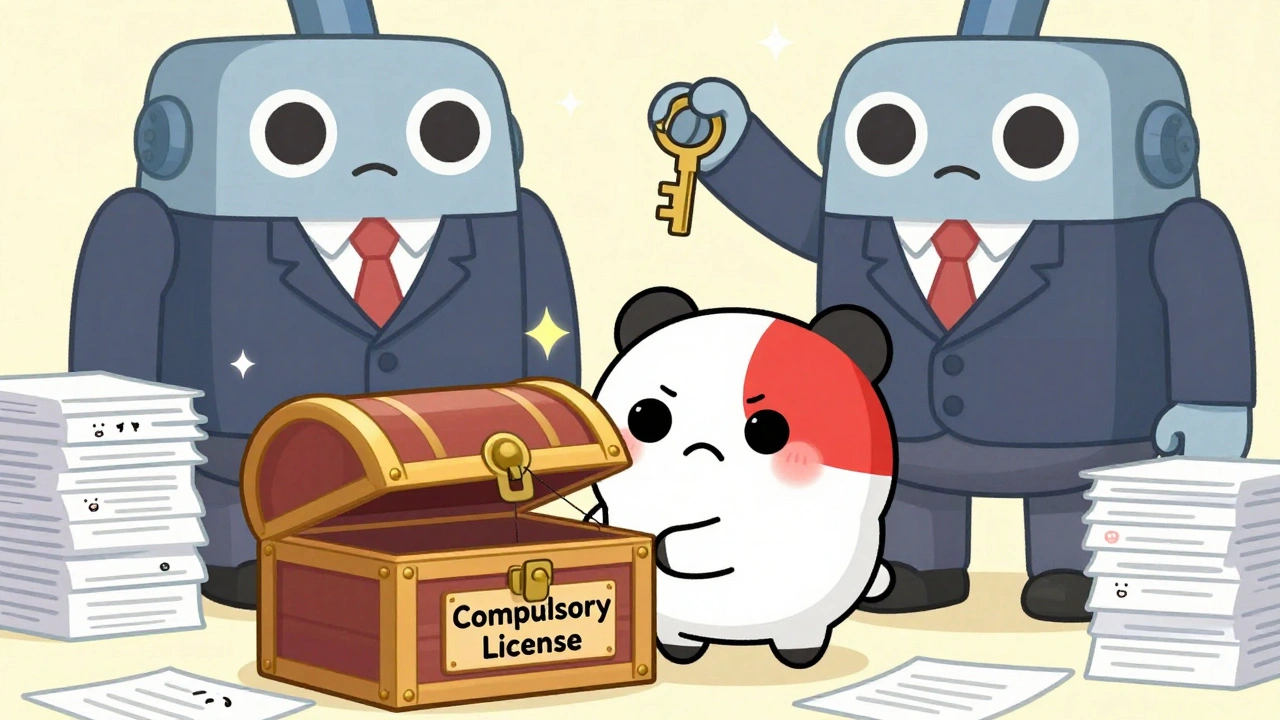
Article 31 of TRIPS lets countries issue compulsory licenses during public health emergencies. That means the government can say: "This drug is too expensive. We’re making it ourselves, even if the company doesn’t like it."
It’s legal. It’s allowed. But it’s nearly impossible to use.
Thailand did it in 2006 for HIV and heart drugs. Prices dropped by up to 80%. The U.S. responded by pulling Thailand’s trade benefits, costing the country $57 million a year in lost exports. Brazil did the same for HIV drugs in 2007. The U.S. put Brazil on a "watch list" for two years.
South Africa tried in 1997. Thirty-nine pharmaceutical companies sued them. The case was dropped only after global protests. The message was clear: use your legal rights, and you’ll face punishment.
Even when countries try to follow the rules, they get lost in bureaucracy. The 2005 amendment to TRIPS-called the Article 31bis system-was supposed to fix this. It let countries without drug factories import generics made under license by another country.
It’s been used once.
In 2012, Rwanda imported HIV medicine from Canada. It took four years. Médecins Sans Frontières had to help Rwanda fill out 78 separate forms. The final price? Still 30% higher than if Rwanda could have made it themselves.
Why the System Is Broken
Here’s the truth: TRIPS flexibilities exist on paper. In practice, they’re buried under fear, complexity, and pressure.
- 92% of low-income countries have no one full-time assigned to handle patent law or medicine access.
- 67 of 48 least-developed countries still don’t have the laws needed to issue a compulsory license-even though they’re legally allowed to wait until 2033 to implement pharmaceutical patents.
- Between 2007 and 2015, there were 423 documented threats of trade retaliation against countries that even considered using compulsory licensing.
Pharmaceutical companies don’t just lobby. They threaten. They cut aid. They delay approvals. They sue. And governments, especially smaller ones, fold.
Even when a country succeeds, the cost is high. Thailand lost export revenue. Brazil lost diplomatic goodwill. Rwanda spent years waiting for a shipment that should have taken months.
What’s Working Instead?
There’s one path that’s actually getting drugs to people: voluntary licensing.
The Medicines Patent Pool is a nonprofit that negotiates with drugmakers to let generic manufacturers produce cheaper versions of patented medicines. Since 2010, it’s helped bring down prices for 44 HIV, hepatitis, and tuberculosis drugs across 118 countries.
But here’s the catch: it only covers 1.2% of all patented medicines. And 73% of its licenses are limited to sub-Saharan Africa-even though the same diseases exist in Asia, Latin America, and Eastern Europe.
Voluntary deals are better than nothing. But they’re not a solution. They depend on the goodwill of companies that make billions from the same drugs.
Compare that to Brazil’s pre-TRIPS era: from 1996 to 2001, Brazil produced and exported generic antiretrovirals to 127 countries. Treatment coverage hit 85%. Cost? One-tenth of the branded price.
The Real Cost of Patent Protection
Patents aren’t evil. Innovation needs protection. But when 80% of the medicine access gap in low-income countries is caused by patent rules, something’s wrong.
The global pharmaceutical market is worth $1.42 trillion. Patented drugs make up 68% of that revenue-but only 12% of prescriptions. That means 88% of pills sold are cheap generics. But in rich countries, not poor ones.
In the U.S., a generic version of the heart drug clopidogrel costs $4 a month. In South Africa, before a compulsory license, it was $200. Same pill. Same factory. Different laws.
And it’s getting worse. More than 86% of WTO members have added "TRIPS-plus" rules in bilateral trade deals. These extend patent terms beyond 20 years. They delay generic approvals. They block parallel imports. They shrink the space for cheap medicine even further.
One study estimated these extra rules cost low-income countries $2.3 billion a year in lost savings from generics.
Is There Hope?
Yes-but it’s fragile.
In 2020, India and South Africa asked the WTO to temporarily waive TRIPS rules for COVID-19 vaccines and treatments. After two years of pressure, the WTO agreed-but only for vaccines. Therapies and diagnostics? Still locked down.
That’s not a win. It’s a compromise. And it’s too little, too late.
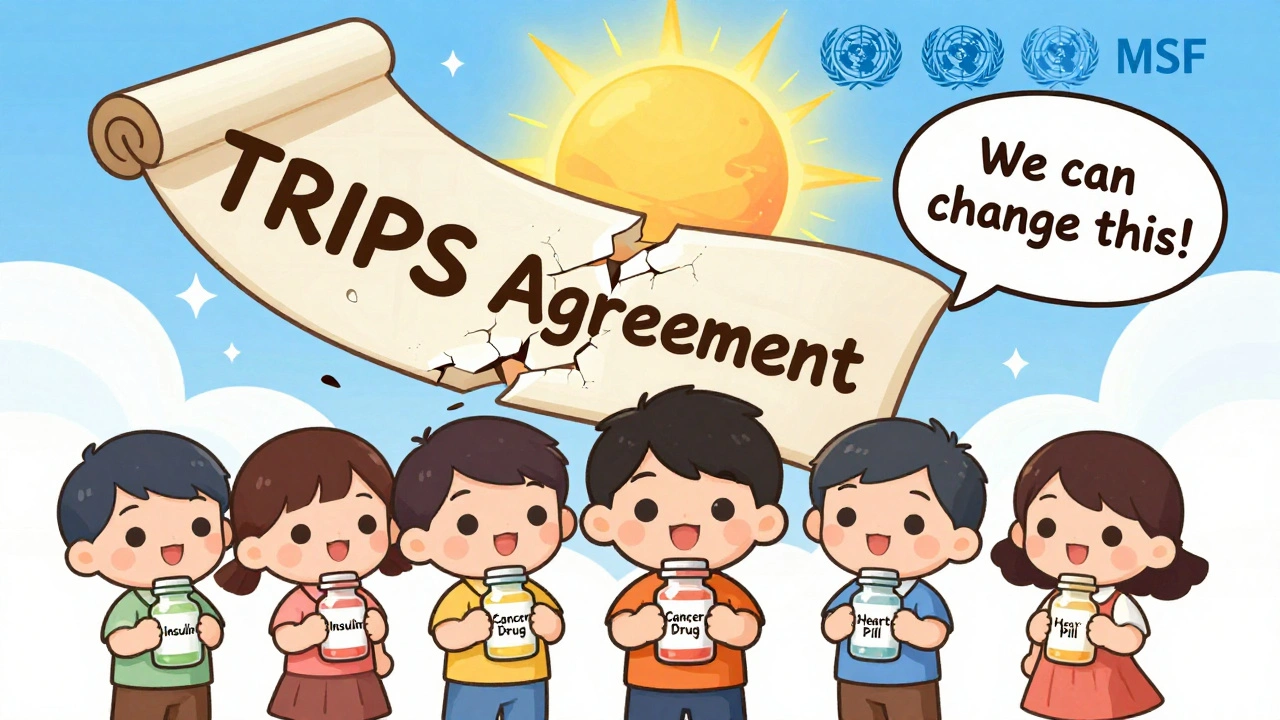
But the pressure is building. In 2024, the UN adopted a resolution calling for "reform of the TRIPS Agreement to ensure timely access to health technologies during health emergencies."
The WHO now says digital health tools-like diagnostic apps and remote monitoring systems-should also be covered by TRIPS flexibilities. That’s a new front in the fight.
And here’s the most important fact: 7 of the top 10 drug companies now say they care about "human rights due diligence." But only 14% of their patented medicines are actually covered by access programs.
Words aren’t enough. The system still favors profits over patients.
What Needs to Change
If we want real access to medicine, we need to fix the rules-not just work around them.
- Remove TRIPS-plus clauses from all trade deals.
- Expand the Article 31bis system so it’s fast, simple, and automatic-not a 4-year legal marathon.
- Let countries produce and export generics without fear of trade sanctions.
- Require transparency: drugmakers must disclose R&D costs and public funding used to develop each drug.
- Build local manufacturing capacity in low-income countries, not just rely on imports.
The tools are there. The laws can be changed. The question is: who has the will?
Right now, the system is designed to protect patents before people. But it doesn’t have to be that way.
Can countries legally make generic versions of patented drugs?
Yes. The TRIPS Agreement allows countries to issue compulsory licenses for generic production during public health emergencies. This is a legal right under international law. But in practice, many countries avoid using it due to political pressure, legal threats from pharmaceutical companies, and complex bureaucracy.
Why hasn’t the Article 31bis system worked better?
The Article 31bis system, meant to let countries without drug factories import generics, is overly complex. It requires 78 steps, multiple government notifications, and approval from both the exporting and importing country. The only time it was successfully used-Rwanda importing HIV medicine from Canada-took four years. Civil society groups called it "unworkable." Most countries don’t even try.
Do pharmaceutical companies really need patents to innovate?
Some do-but many don’t. A large portion of drug research is publicly funded. For example, the mRNA technology behind COVID-19 vaccines was developed with U.S. government grants. Yet companies still hold patents and charge high prices. Patents protect profits more than they drive innovation in many cases.
What’s the difference between compulsory licensing and voluntary licensing?
Compulsory licensing is when a government forces a patent holder to allow generic production. Voluntary licensing is when a company agrees to let others make the drug-usually for a fee. Voluntary deals are easier but unreliable. They depend on company goodwill. Compulsory licenses are a legal right but hard to use.
Why do rich countries oppose TRIPS flexibilities?
Rich countries, especially the U.S. and EU members, are home to most major pharmaceutical companies. They pressure other nations not to use compulsory licenses, often through trade threats, aid cuts, or diplomatic isolation. Their goal is to protect global patent markets-even when it means people in poor countries go without medicine.
Will the TRIPS waiver for COVID vaccines lead to broader change?
It’s too early to tell. The 2022 waiver only covers vaccines, not treatments or diagnostics. It’s also temporary and limited in scope. But it proved that collective pressure can force the WTO to bend. If countries keep pushing, it could become a model for future reforms on cancer drugs, antibiotics, and other essential medicines.
How many people are affected by TRIPS restrictions?
The World Health Organization estimates 2 billion people lack regular access to essential medicines. Patent barriers are responsible for 80% of that gap in low- and middle-income countries. Without reform, the UN projects that by 2030, 3.2 billion people could be without access to life-saving drugs.
What Comes Next?
The next five years will decide whether TRIPS becomes a tool for equity-or a permanent wall between profit and survival.
Right now, 58 low- and middle-income countries are negotiating new trade deals that include TRIPS-plus rules. That means more restrictions, not fewer.
But civil society, public health advocates, and even some governments are pushing back. The WHO, UNDP, and Médecins Sans Frontières are all calling for change. So are patients who can’t afford insulin. Parents who can’t buy cancer drugs for their children.
The law isn’t set in stone. It was written by people. It can be rewritten by people too.
Comments
This is why India was the pharmacy of the developing world before TRIPS. Now we're told to wait for charity instead of making our own pills. The system is rigged.
I know this sounds idealistic but what if we funded public drug research instead of letting pharma monopolize everything? We already pay for half the science anyway.
Stop crying about patents. If you cant afford medicine its your fault for living in a poor country. Why should rich companies subsidize your laziness?
The Rwanda example isn't broken because the system is flawed. It's broken because nobody in government knew how to fill out the forms. We need to train local officials not just complain about the WTO.
I work in global health and I can tell you this: the real bottleneck isn't the law. It's the lack of cold chain infrastructure. You can make the drug but if you can't store it you're back to square one.
TRIPS is fine. The problem is you people want free stuff. If you want cheap medicine stop being poor. Or better yet move to a country that actually works
Thailand got punished? Big surprise. When you defy the US on IP you're asking for trouble. Wake up and smell the capitalism
This whole thing is a psyop by the UN to weaken US pharma. You think they really care about African kids? They just want to destroy our economy and hand it to China.
I remember when I was a kid in Mumbai our family used to buy generic HIV meds for 800 rupees a month. Now those same pills cost 8000 because of patent extensions pushed by US lobbyists. It's not just illegal it's immoral. We need to boycott every US pharma product until this changes.
So what? If you can't afford the drug you shouldn't be taking it. Life isn't fair. Get a better job or die. Simple.
This is why I hate globalism. They take our innovation then give it away to people who don't even speak English. I bet they're just using the money for drugs and guns anyway.
You think this is bad wait till you see what happens when they start applying this logic to AI and quantum computing. Patents are the only thing keeping us from being ruled by third world dictators with access to our tech. This is step one of the Great Reset.
The Medicines Patent Pool is the real hero here. It's not perfect but it's working. We need to scale this model globally and fund it properly. This isn't charity. It's smart economics. A healthy population is a productive one.
We need to stop treating medicine like a luxury. It's a human right. And if companies won't play fair then governments should take back the patents. We paid for the research. Let's get our money's worth.