
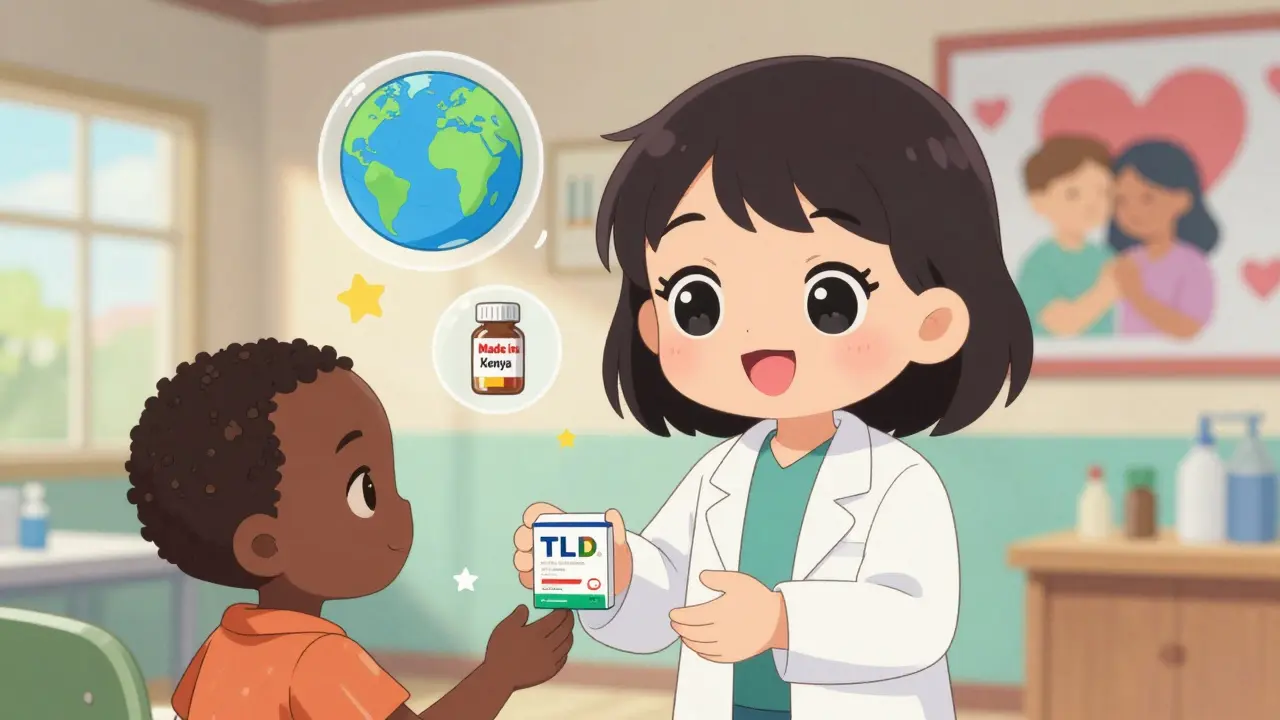
For decades, Africa relied on imported HIV medicines-mostly from India-to keep millions alive. But in May 2025, something changed. For the first time ever, the Global Fund an international financing organization that provides grants to combat HIV, tuberculosis, and malaria bought an antiretroviral drug made in Africa. Not just any drug-TLD a first-line HIV treatment combining tenofovir, lamivudine, and dolutegravir-and it came from a Kenyan company, Universal Corporation Ltd the first African manufacturer to receive WHO prequalification for TLD. This wasn’t a symbolic gesture. It was a pivot. A real, measurable shift toward health sovereignty.
Why Local Production Matters
Sub-Saharan Africa carries 65% of the world’s HIV cases but only 17% of its population. Yet until recently, nearly 80% of its medicines were imported. That meant long delays, supply shortages, and vulnerability to global disruptions-like during the pandemic, when shipping lanes froze and prices spiked. Local production fixes that. When a drug is made nearby, it doesn’t need to cross oceans. It gets to clinics faster. It costs less. And it creates jobs.
The new TLD formulation is a game-changer. It’s simpler, safer, and more effective than older regimens. People on TLD have fewer side effects, higher chances of suppressing the virus, and a much lower risk of drug resistance. Before this, many African countries were stuck with outdated pills. Now, they’re using the global gold standard-made right here.
The First African-Made TLD
Universal Corporation Ltd, based in Nairobi, became the first African company to get WHO prequalification a global benchmark for medicine quality, safety, and efficacy for TLD in 2023. That wasn’t easy. WHO’s standards are strict. They match those of the FDA or EMA. To pass, Universal had to prove every batch was consistent, sterile, and effective. They didn’t just copy a formula. They built a system.
By May 2025, they shipped enough TLD to treat over 72,000 people a year in Mozambique. That’s not just medicine. It’s stability. It’s dignity. For the first time, a country didn’t have to wait for foreign suppliers to decide if they could get treatment. They got it because their own factory made it.
Beyond Pills: Diagnostics and Long-Acting Shots
Treatment isn’t just about pills. You need to know who has HIV. You need to test them. And you need to keep them on treatment. That’s where Codix Bio a Nigerian diagnostics company producing HIV rapid tests via WHO technology transfer comes in. They now make HIV rapid diagnostic tests (RDTs) under a license from SD Biosensor, thanks to support from WHO’s Health Technology Access Programme. These tests cost pennies and give results in minutes. They’re now being rolled out across rural clinics in Nigeria, Uganda, and Zambia.
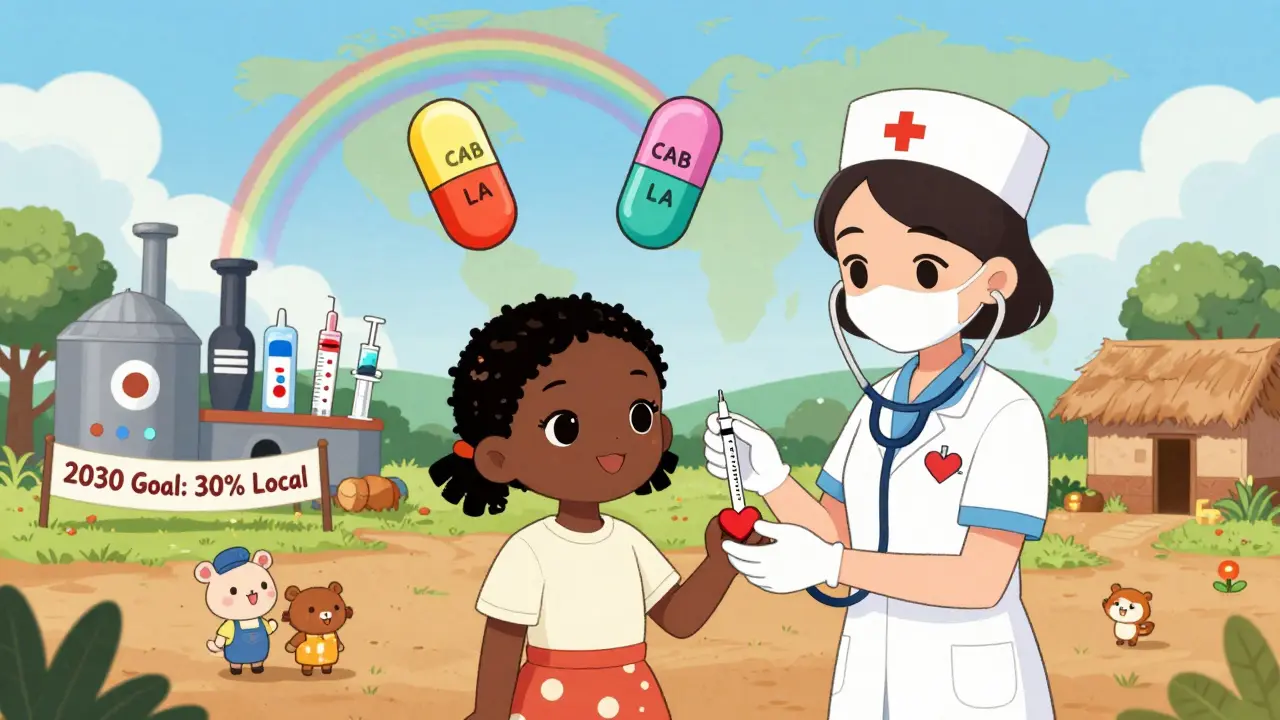
And then there’s the future: long-acting injections. In October 2025, South Africa the first African country to register the twice-yearly HIV injection cabotegravir long-acting approved the twice-yearly injection cabotegravir long-acting (CAB LA). That’s a huge leap. No more daily pills. Just two shots a year. Six companies got licenses from Gilead to make generic versions. Experts say prices could drop 80-90% once generics hit the market. That means millions more people can access this life-changing option.
How It All Fits Together
This isn’t random. It’s a coordinated strategy. The Global Fund, WHO, Unitaid, and the Gates Foundation are all working together to create demand. They’re not just giving money. They’re creating markets. They’re signing long-term contracts with African manufacturers so they can invest in factories, hire engineers, train workers, and upgrade labs.
Before, African companies couldn’t compete because no one guaranteed they’d buy their products. Now, they know: if they meet quality standards, they’ll get orders. That’s how you build an industry.
Numbers That Tell the Story
Here’s what’s changed:
- In 2000, HIV treatment cost $10,000 per person per year. By 2015, generic pills from India dropped that to under $100.
- In 2022, AIDS-related deaths fell to 630,000-down 52% from 1.3 million in 2010.
- By 2023, Eastern and Southern Africa hit 93% of people knowing their status, 83% on treatment, and 78% virally suppressed.
- Western and Central Africa lagged: 81%-76%-70%.
- Africa needs about 15 million person-years of first-line ARVs every year. Current local production covers less than 5% of that.
The goal isn’t just to match global supply. It’s to exceed it. The African Union’s Pharmaceutical Manufacturing Plan for Africa (PMPA) aims to raise local production from 2-3% to 40% by 2040. That’s ambitious. But it’s possible-with the right support.
Challenges Still Ahead
Let’s be clear: this isn’t solved. African manufacturers still produce a tiny fraction of what’s needed. Regulatory systems vary by country. Some governments lack the funding to buy locally made drugs even when they’re available. And there’s still a gap in R&D. Most HIV treatments were developed in Europe or the U.S. Few are designed specifically for African populations or co-infections like TB.
That’s why calls for “Africanizing research and development” are growing. We need African scientists leading trials. African labs testing new combinations. African companies designing drugs for our realities-not just copying what’s already out there.
Another hurdle? Integration. HIV programs often run in silos. You get tested in one clinic, pick up pills in another, see a counselor somewhere else. That’s inefficient. The best systems combine HIV care with maternal health, diabetes, and mental health services. That’s where real sustainability begins.
The Bigger Picture
This isn’t just about HIV. It’s about health security. When you build factories that make HIV drugs, you can also make malaria pills, antibiotics, or vaccines. When you train technicians to meet WHO standards, they can work in any pharmaceutical plant. When you create regulatory pathways for one drug, you open the door for dozens more.
And it’s economic. Every factory creates jobs-not just in production, but in logistics, quality control, packaging, and distribution. These aren’t temporary aid jobs. They’re skilled careers. And they keep money inside African economies instead of sending it overseas.
Gilead’s move on lenacapavir shows how powerful this model can be. They’re giving away the drug for free until generics arrive. They’ve signed deals with PEPFAR and the Global Fund to supply up to two million people over three years. That’s not charity. It’s strategy. They’re buying time-time for African manufacturers to catch up.
What’s Next?
By late 2025, new manufacturing plants in Ethiopia, Ghana, and Rwanda will start operating. More companies will seek WHO prequalification. The Global Fund’s Grant Cycle 7 will announce new countries eligible for African-made ARVs. And South Africa’s regulators are already evaluating three local firms to produce generic cabotegravir injections.
The goal by 2030? 20-30% of Africa’s antiretroviral supply made on the continent. That’s not a dream. It’s a plan. And it’s already happening.
This is how change happens-not with speeches, but with pills made in Nairobi, tests printed in Lagos, and injections produced in Cape Town. Africa isn’t waiting for permission anymore. It’s building its own future.
Are African-made antiretroviral drugs as effective as imported ones?
Yes. Drugs made in Africa that have WHO prequalification meet the same strict quality, safety, and efficacy standards as those made in Europe or the U.S. TLD, for example, is identical in composition and performance to the brand-name version. Independent studies confirm that African-made generics achieve the same viral suppression rates as imported versions.
Why did it take so long for Africa to start making its own HIV drugs?
For years, African countries relied on cheaper drugs from India, and there was little investment in local manufacturing. Weak regulatory systems, lack of funding, and unstable demand made it risky for companies to build factories. The breakthrough came when the Global Fund and WHO committed to buying African-made drugs, giving manufacturers the certainty they needed to invest.
How does WHO prequalification work?
WHO prequalification is a rigorous review process that evaluates a drug’s manufacturing quality, stability, safety, and effectiveness. Companies must submit detailed data from clinical trials and factory inspections. Only after passing all checks does WHO approve the product for procurement by UN agencies like the Global Fund. It’s the gold standard for low-resource settings.
Can African manufacturers compete with Indian companies on price?
Yes, and they already are. While Indian manufacturers pioneered low-cost ARVs, African producers are now matching their prices-sometimes even undercutting them-by reducing shipping costs, avoiding import taxes, and benefiting from donor-backed market guarantees. The goal isn’t just to compete on cost, but to create sustainable local economies.
What’s the role of long-acting injections in Africa’s HIV response?
Long-acting injections like cabotegravir are a game-changer for adherence. Many people struggle with daily pills due to stigma, forgetfulness, or lack of clinic access. A shot every six months removes those barriers. With generics expected to cost 80-90% less than the brand, these injections could soon be as accessible as pills-revolutionizing treatment across rural Africa.
Is this movement only about HIV, or does it affect other diseases?
It’s about much more. Building manufacturing capacity for HIV drugs creates infrastructure that can produce treatments for malaria, TB, hepatitis, and even future pandemics. Regulatory systems trained on ARVs can be used for vaccines. Workforce skills transfer to other industries. This isn’t just a health win-it’s a foundation for long-term health security.

Comments
idk man. seems like a lot of hype. africa making pills? sure. but are they really as good as india's? probably not. just saying.
This is honestly one of the most hopeful things i've seen in global health in years. 🙌 People think change happens in boardrooms, but it happens when a factory in nairobi opens and a kid in mozambique gets medicine without waiting 6 months. This is real. This is progress.
you think this is about health? no. this is a western NGO scheme to shift supply chains away from india so they can control africa's medicine market under the guise of 'sovereignty'. who really owns universal corp? check the investors. it's not african. it's fund-backed. and the WHO prequalification? same old gatekeeping. they approve what they want. don't be fooled.
lol. global fund bought a drug made in africa? yeah right. bet it's just a front. they're probably still shipping indian pills. this whole thing smells like a PR stunt. 🤨
I just want to say thank you to everyone working on this. The engineers, the lab techs, the pharmacists in Nairobi, Lagos, Cape Town - you're doing the work that saves lives. 🌍❤️ This isn't charity. It's justice. And it's beautiful to see.
i read this and thought: wow. this is actually happening. i used to think africa needed handouts. now i see it’s building its own future. small steps, but real.
lets be real - this is just india 2.0 with african branding. the science is the same. the manufacturing standards? questionable. and dont get me started on the 'who prequalification' - its a vanity badge for donors. true innovation? still in europe and usa. this is just rebranding.
i dont know much about pharma but i do know this: if a pill works and saves lives, who cares where it's made? if it's cheaper, faster, and made by people who live there? that's win-win. maybe we're overcomplicating it. just give people the medicine.