
Antihistamine Overdose Risk Calculator
What this tool does
This calculator determines if a dose of antihistamine is potentially dangerous based on the patient's weight, medication type, and amount ingested. It uses guidelines from poison control centers and medical research to help you decide whether to monitor at home or seek emergency care.
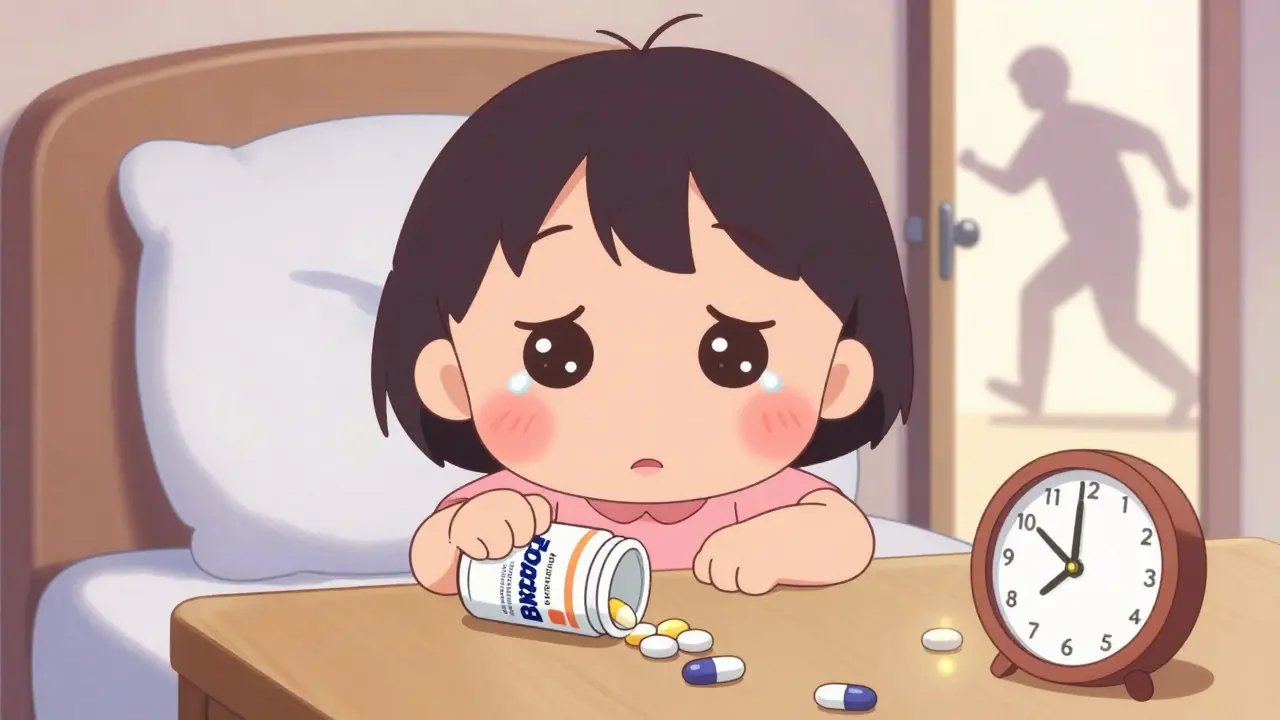
When a child swallows a handful of Benadryl pills, or an adult accidentally takes four times their dose of cetirizine, the clock starts ticking. Antihistamine overdose isn’t always obvious-no screaming, no blood, just drowsiness, a racing heart, or dry skin. But in the first few hours, what you do can mean the difference between a quick recovery and a trip to the ICU. The good news? With the right steps, survival rates are nearly 100%. The bad news? Most people wait too long to act.
What Happens in an Antihistamine Overdose?
Not all antihistamines are the same. First-generation ones like diphenhydramine (Benadryl), chlorpheniramine, and promethazine are the real danger. They cross into the brain and block acetylcholine, causing what’s called anticholinergic toxicity. Symptoms include confusion, flushed skin, dilated pupils, trouble urinating, and a heartbeat that races past 120 beats per minute. At high doses, they also block sodium channels in the heart-this is what causes the QRS complex on an EKG to widen beyond 100 milliseconds. When it hits 120 milliseconds or more, you’re looking at a risk of seizures, ventricular arrhythmias, or even cardiac arrest. Second-generation antihistamines like loratadine, cetirizine, and fexofenadine are much safer. They’re designed not to cross the blood-brain barrier. Even if someone takes 10 times the normal dose, they’re more likely to feel dizzy or have a mild fast heart rate than end up in critical condition. But don’t assume they’re harmless. A 2020 study of over 9,000 pediatric cases found that while only 0.2% of second-gen overdoses led to serious outcomes, 1.8% of first-gen cases did. And diphenhydramine alone was behind 83% of those serious cases in kids under six.First Steps: What to Do Right Now
If you suspect someone has taken too much antihistamine, don’t wait for symptoms. Don’t try to make them throw up. Don’t give them coffee or water to "flush it out." Here’s what actually works:- Remove any remaining pills or liquid from the mouth. Don’t induce vomiting-this increases the risk of choking, especially if the person is drowsy or unconscious.
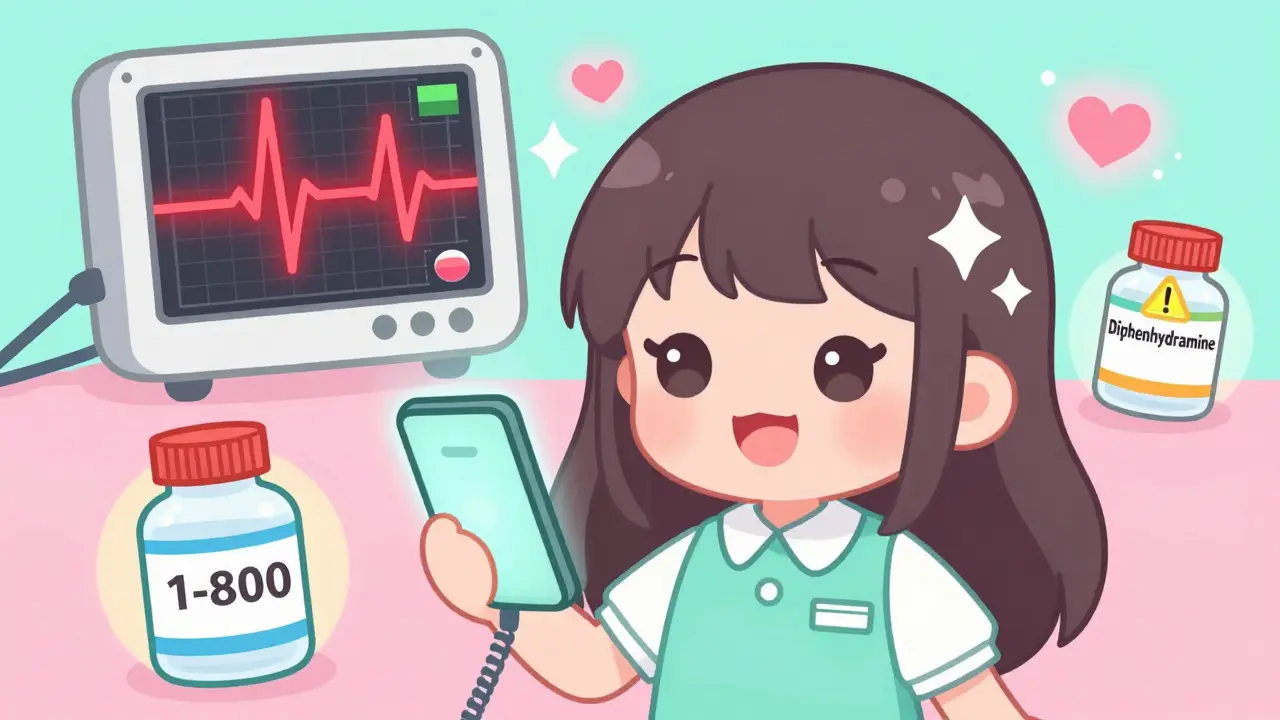
- Call poison control immediately. In the U.S., dial 1-800-222-1222. In Australia, call 13 11 26 (Poisons Information Centre). Don’t search online. Don’t wait. Poison control centers have real-time databases that tell them exactly how dangerous the dose is based on weight, age, and the specific drug. They’ve seen thousands of cases. They know when to send someone to the hospital and when it’s safe to watch at home.
- Gather the medication container. Emergency responders need to know the exact name and strength. A bottle labeled "Benadryl" could mean 25 mg diphenhydramine per tablet-or it could be a combination product with pseudoephedrine. That changes everything.
- If the substance got on the skin or in the eyes, rinse immediately. For skin contact, wash under running water for 15-20 minutes. For eye exposure, flush with cool water for at least 20 minutes. Don’t rub.
When to Go to the ER
You don’t need to rush to the hospital for every accidental sip. The Victorian Poisons Information Centre guidelines say that for children under six, an ingestion under 7.5 mg per kilogram of body weight (e.g., under 37.5 mg for a 5 kg child) is usually safe to monitor at home. For adults, less than 300 mg of diphenhydramine is often manageable without hospitalization. But if any of these are true, go now:- Heart rate over 120 bpm
- QRS widening on EKG (greater than 100 ms)
- Seizures, tremors, or hallucinations
- Difficulty breathing or unresponsiveness
- Ingestion of more than 300 mg in an adult or 7.5 mg/kg in a child
What Happens in the Hospital
Once at the ER, the focus is on stabilizing the airway, breathing, and circulation. The first thing they’ll do is check the EKG. If the QRS is widened, they’ll start thinking about sodium bicarbonate. That’s right-baking soda. A 2022 study in the New England Journal of Medicine showed that a 1-2 mEq/kg IV bolus of 8.4% sodium bicarbonate can reverse QRS prolongation caused by diphenhydramine. It works by alkalizing the blood and improving sodium channel function. Activated charcoal is given within 1-2 hours of ingestion, if the patient is awake and able to swallow. For adults, that’s 25-100 grams. For kids, it’s 0.5-1 gram per kilogram. It binds the drug in the gut and stops more from being absorbed. After that, it’s mostly about watching and waiting. Benzodiazepines like lorazepam or midazolam are used if the person is agitated, having seizures, or showing signs of extreme delirium. Don’t use physostigmine. That was once a standard treatment, but the American College of Medical Toxicology updated its guidelines in 2023 to warn against it. It can cause dangerous heart rhythms in antihistamine overdose. Most patients who don’t have cardiac issues are observed for 4-6 hours. If everything stays stable, they can go home. Those with EKG changes or severe symptoms are kept for 24-48 hours for continuous monitoring. The median hospital stay for admitted cases is just over 22 hours.Why People Get It Wrong
Most overdoses aren’t intentional. In fact, 79% are accidents. Parents mix up dosing cups. Kids grab bottles left on nightstands. Teens take "sleep aids" to get high. One Reddit user described their 2-year-old swallowing five 25 mg tablets of diphenhydramine-125 mg total. They called poison control, who said it was under the danger threshold for their child’s weight. They watched for six hours. The child slept more than usual but woke up fine. But another user, a 24-year-old who took 400 mg thinking it would help with anxiety, ended up in the ER with a heart rate of 130 bpm, dry mouth so bad they couldn’t swallow, and urinary retention. They spent 36 hours in the hospital. "I thought I was just being extra careful," they wrote. "I didn’t know one pill could be dangerous if you took too many."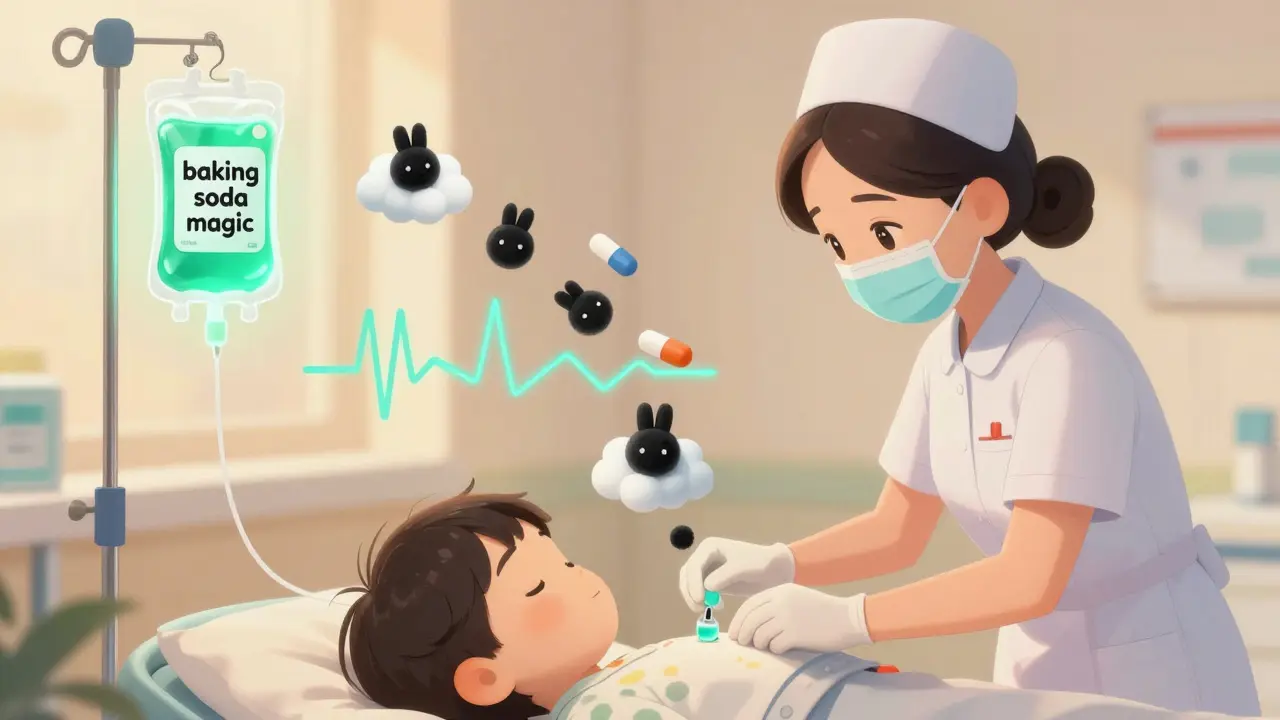
Prevention Is the Best Treatment
The FDA issued a black box warning in 2006 against using sedating antihistamines like promethazine in infants under two. The European Medicines Agency banned their use for insomnia in children. But many over-the-counter products still contain them-cold medicines, sleep aids, allergy blends. Always check the active ingredients. If it says "diphenhydramine," "chlorpheniramine," or "promethazine," treat it like a controlled drug. Store all medications out of reach. Use child-resistant caps-even if you think you’ll remember. Use a dosing syringe, not a cup. Write down the time you give the dose. A 2022 AAPCC report found that 42% of pediatric antihistamine exposures come from dosing errors.What You Should Know
- Antihistamine overdose is rarely fatal if treated quickly. Survival rate: 99.9% with proper care. - First-generation antihistamines are 9 times more likely to cause serious harm than second-generation ones. - Sodium bicarbonate is a proven, life-saving treatment for QRS widening. - Never induce vomiting. It’s dangerous and ineffective. - Poison control is your best first step-not Google, not a friend, not the ER waiting room.Can you die from taking too many antihistamines?
Yes, but it’s rare. Death from antihistamine overdose usually happens when treatment is delayed, especially with first-generation drugs like diphenhydramine. The main risks are cardiac arrhythmias, respiratory failure, or seizures. The 2023 StatPearls review found a 99.9% survival rate when patients receive timely medical care. Most deaths occur in cases where people wait hours to seek help or try to treat it themselves.
Is it safe to give activated charcoal at home?
No. Activated charcoal should only be given under medical supervision. It’s not a cure-all, and giving it incorrectly can cause choking, especially if the person is drowsy. It also interferes with other medications. Emergency responders or poison control will advise if it’s needed and how to give it safely.
What’s the difference between Benadryl and Zyrtec in an overdose?
Benadryl (diphenhydramine) is a first-generation antihistamine. It crosses into the brain and causes severe anticholinergic effects: confusion, fast heart rate, dry mouth, urinary retention, and dangerous EKG changes. Zyrtec (cetirizine) is second-generation. It rarely causes serious symptoms unless someone takes 10 times the normal dose. Even then, it’s more likely to cause dizziness or mild tachycardia than life-threatening issues. Benadryl is the #1 cause of serious antihistamine poisonings.
Can you flush antihistamines out of your system faster?
No. Antihistamines are highly bound to proteins in the blood (70-95%) and have a large volume of distribution, meaning they spread deep into body tissues. Drinking water, taking diuretics, or trying to sweat it out won’t help. The body eliminates them slowly through the liver. Medical treatment focuses on stopping further absorption (charcoal) and managing symptoms-not speeding up elimination.
How long does it take for antihistamine overdose symptoms to appear?
Symptoms usually start within 30 minutes to 2 hours after ingestion. The most dangerous effects-like heart rhythm problems-peak between 4 and 6 hours. That’s why observation for at least 4-6 hours is standard. Even if someone seems fine after an hour, they could still develop serious complications later.

Comments
Okay but let’s be real-this whole post is just a glorified poison control ad. I’ve seen moms in my town give their kids Benadryl like it’s candy because they’re too lazy to deal with tantrums. Then they freak out when the kid turns into a zombie. Toxic? Sure. But the real problem is parenting. Stop using sedatives as a babysitter. That’s the real public health crisis here.
Thank you for writing this. 🙏 I work in pediatrics and I’ve seen too many kids come in after someone thought "it’s just an allergy pill"-no, it’s not. I especially appreciate the note about sodium bicarbonate. So many ER docs still don’t know about it. Also, please, PLEASE keep your meds locked up. My niece swallowed 8 pills last year. She’s fine now, but I still have nightmares. 💔
Important correction: The 2023 American College of Medical Toxicology guidelines specifically advise against physostigmine in antihistamine overdose-not because it’s useless, but because it can induce bradycardia, asystole, and seizures in this context. The risk-benefit ratio is terrible. Also, activated charcoal? Only if administered within 60 minutes, and only if the patient is fully alert. Otherwise, aspiration risk outweighs benefit. This post gets 9/10-just needs more nuance on timing.
My cousin took 12 Zyrtec pills once because she thought it would help her sleep. She was just dizzy and super dry-mouthed for 12 hours. No ER, no drama. I’m so glad this post separates first-gen from second-gen. So many people think they’re all the same. This saved me from panicking last week when my nephew grabbed a bottle.
I just shared this with my entire family group chat. Seriously. Everyone needs to read this. My mom still keeps Benadryl in her nightstand next to her coffee mug. I’m gonna put a sticky note on it that says "THIS IS NOT A SLEEP AID, IT’S A POISON." And I’m buying a lockbox for all meds. I’m not waiting for someone to get hurt. This is the kind of info that should be on every pharmacy shelf. Thank you for making it so clear.
My dad took 400mg of diphenhydramine once trying to "get high" before he knew better. He ended up in the hospital for 48 hours. Said he thought it was like weed but stronger. He didn’t even know it was called Benadryl. Just thought "it’s in the cabinet, it’s safe." This post is exactly what people like him need to see.
so like… if someone takes a bunch of zyrtec, they just get sleepy? no heart stuff? i thought all antihistamines were the same lol. also why is benadryl still sold like it’s gum? like why not make it harder to buy? like put it behind the counter or something?
Good info. But you’re missing the real solution: community education. We need school programs, pharmacy kiosks, public service ads. This isn’t just about individual responsibility-it’s about systemic neglect. We treat drugs like this like candy because we’ve normalized it. Fix the system, not just the symptoms.
Let’s deconstruct the epistemology of pharmaceutical harm reduction. The state, in its infinite wisdom, has commodified anticholinergic toxicity by labeling it "over-the-counter"-a linguistic sleight-of-hand that absolves corporations of moral culpability. We are not dealing with a medical issue here; we are confronting a neoliberal pharmacological dystopia where corporate profit margins are prioritized over neurochemical integrity. The real villain isn’t the parent who misadministers Benadryl-it’s the FDA’s regulatory capture, the AMA’s complicity, and the pharmaceutical industry’s engineered ignorance. Sodium bicarbonate? A Band-Aid on a bullet wound. We need systemic decoupling of drug access from capitalist logic. Or, as I like to say: "If you can buy a lethal neurotoxin next to cough drops, we’re already dead."