
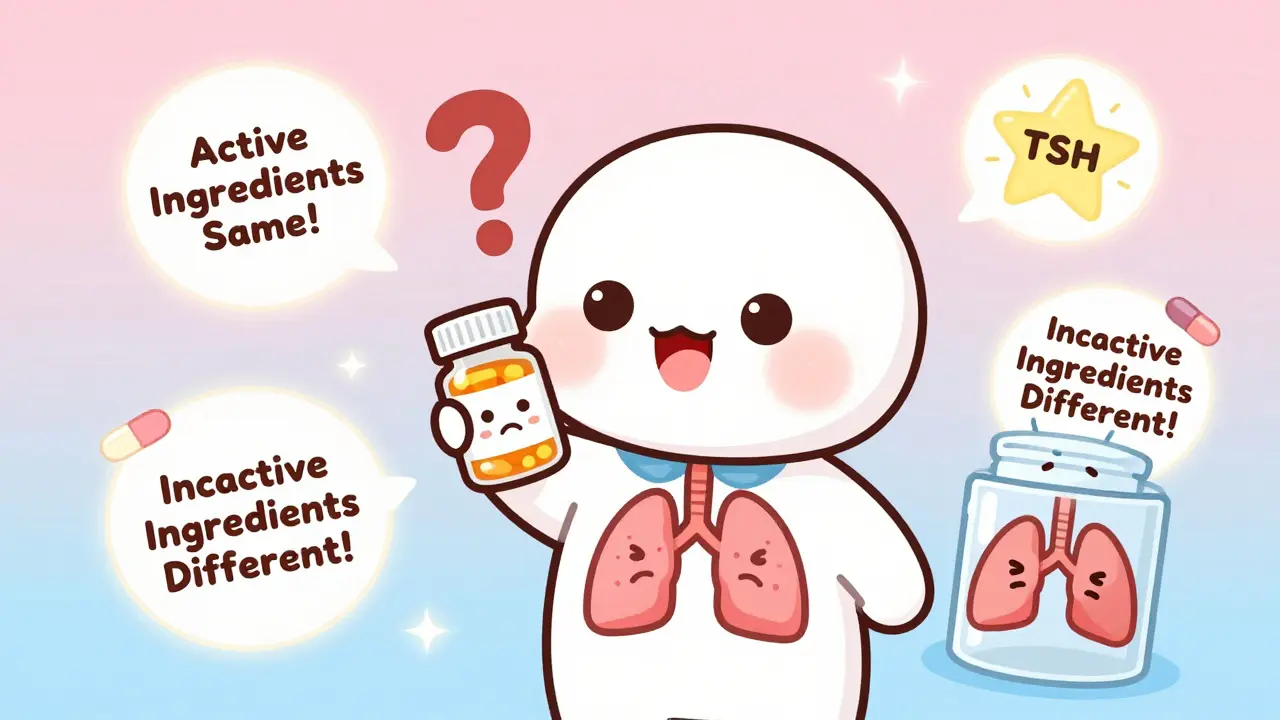
Most people assume that if a generic drug has the same active ingredients as the brand name, it will work the same way. That’s usually true-but not always. When it comes to combination medications, even small differences in inactive ingredients can throw off how the drug behaves in your body. And for some patients, that difference isn’t just theoretical-it’s life-changing.
What Exactly Is a Combination Drug?
A combination drug combines two or more active ingredients in a single pill or inhaler. Think of medications like Advair Diskus (fluticasone/salmeterol), metformin/sitagliptin for diabetes, or blood pressure pills that mix an ACE inhibitor with a diuretic. These aren’t just two pills rolled into one. They’re carefully engineered so the ingredients release at the right time, in the right place, and in the right balance. The brand-name versions are developed over years, with precise formulations to ensure consistent absorption and effect. When generics enter the market, they must match the active ingredients exactly. That’s the law. But here’s the catch: the FDA allows generic manufacturers to use different fillers, binders, dyes, and coatings. These are called inactive ingredients. They don’t treat your condition-but they can change how the drug works.Why Inactive Ingredients Matter More Than You Think
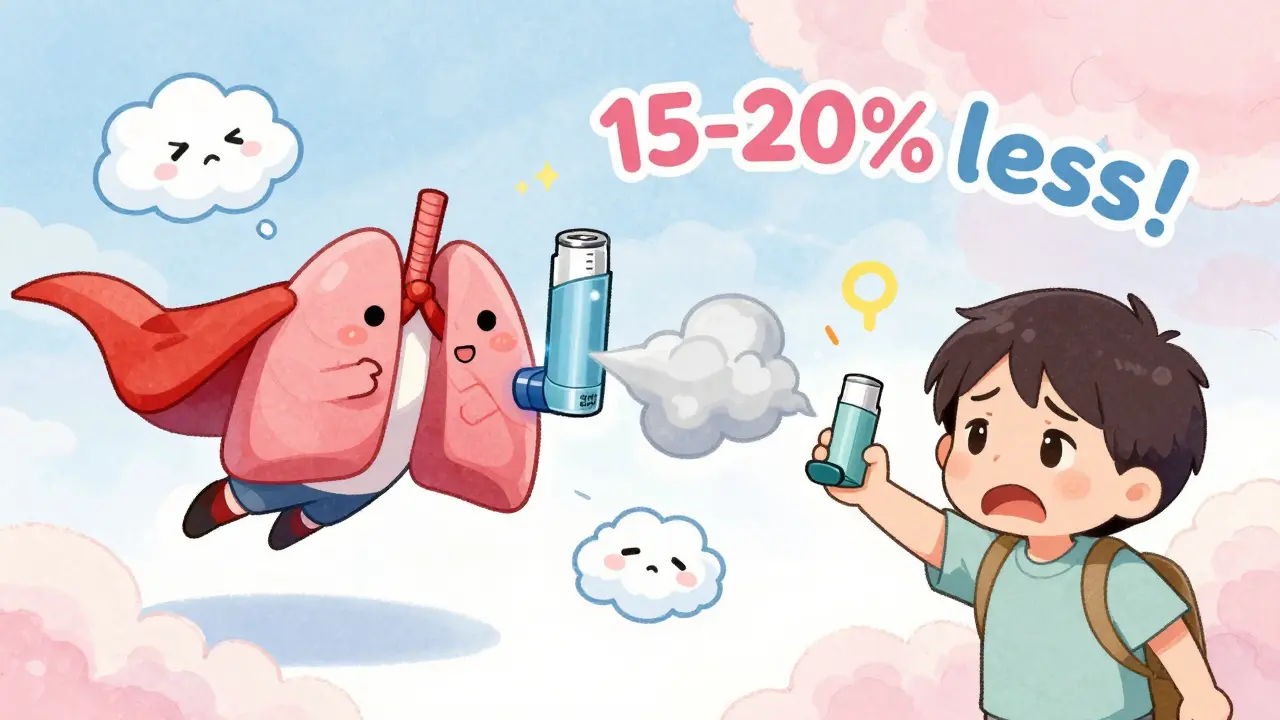
You might think, “If the medicine inside is the same, why does it matter what’s on the outside?” But the outside controls how the medicine gets into your bloodstream. Take extended-release pills. They’re designed to dissolve slowly over hours. If the generic uses a different type of cellulose or magnesium stearate, the pill might dissolve too fast-or too slow. For a drug like levothyroxine, which treats thyroid disorders, even a 5% change in absorption can send your TSH levels spiraling. A 2020 study of nearly 90,000 Medicare patients found that 12.3% of those switched from brand to generic levothyroxine needed a dosage adjustment within months. That’s more than one in ten people. For combination inhalers like Advair, the device matters just as much as the drug. A 2021 study showed some generic versions delivered 15-20% less medication to the lungs because the inhaler mechanism didn’t match the original. Patients didn’t feel worse right away-they just started using their rescue inhalers more often. By the time they saw their doctor, their asthma was already slipping out of control.The Narrow Therapeutic Index Problem
Not all drugs are created equal when it comes to tolerance for variation. The FDA classifies some as having a narrow therapeutic index (NTI). That means the difference between a helpful dose and a dangerous one is tiny. NTI drugs include:- Warfarin (blood thinner)
- Levothyroxine (thyroid hormone)
- Phenytoin and carbamazepine (anti-seizure meds)
- Cyclosporine (organ transplant drug)
What Patients Are Actually Reporting
Real people are noticing this. On PatientsLikeMe, 23.7% of users who switched to generic combinations reported problems. The highest complaints? Psychiatric meds and hormone therapies. On Reddit’s r/pharmacy, users described new stomach cramps, rashes, or sudden fatigue after switching to a generic version of metformin/sitagliptin-even though the active ingredients were identical. Pharmacists are hearing it too. A 2022 survey found that 34% of independent pharmacists received patient complaints about generic combination drugs. The top issues:- Gastrointestinal upset (41%)
- Skin reactions (29%)
- Feeling like the drug “doesn’t work anymore” (22%)
How to Know If Your Generic Might Be a Problem
The FDA’s Orange Book lists therapeutic equivalence ratings. Look for an “A” rating-it means the generic is considered interchangeable. But “B” ratings? Those are red flags. They mean the drug may not be equivalent, especially for NTI medications. Here’s what you can do:- Check your prescription. If your doctor wrote “dispense as written” or “no substitution,” that’s a signal they’re aware of potential risks.
- Ask your pharmacist. “Is this generic the same as the brand in terms of how it releases the drug?” Don’t settle for “it’s FDA-approved.” Ask about inactive ingredients.
- Know your ingredients. If you’re allergic to lactose, gluten, or certain dyes, check the pill’s inactive components. Some generics use lactose as a filler-others don’t.
- Track your symptoms. Keep a simple log: date, medication, how you feel. If you notice changes after a switch, bring it to your doctor with data-not just “I don’t feel right.”
What’s Being Done to Fix This
The FDA knows this is a problem. In 2023, they approved Teva’s generic version of Advair Diskus-but only after requiring the generic inhaler to match the original’s lung delivery performance. That’s new. For the first time, they tested the device, not just the powder. The NIH launched a $12.5 million research project in January 2023 to build better models for predicting how formulation differences affect drug performance. The Generic Pharmaceutical Alliance has pledged to list all inactive ingredients clearly on labels by 2025. And Congress passed a law in 2022 requiring the FDA to create a formal system to track adverse events linked to generic formulation changes. That system goes live in mid-2024.When to Stick With the Brand
Cost matters. Generic combination drugs save patients and insurers billions. Medicare saved $1.67 trillion from 2006 to 2019 thanks to generics. But for some people, the savings aren’t worth the risk. If you have:- A narrow therapeutic index drug
- A history of side effects after switching generics
- Multiple chronic conditions
- Are over 65 or have kidney/liver issues
The Bottom Line
Generic combination drugs are safe for most people. For the vast majority, they work just fine. But they’re not magic clones. They’re chemically similar-but not identical. The differences are small, but for some, they’re enough to break the balance. Don’t assume “same ingredients = same effect.” Ask questions. Track changes. Advocate for yourself. Your body doesn’t care about the label on the bottle-it only cares about what’s inside it, and how it gets to your bloodstream.Are generic combination drugs always safe?
For most people, yes. But for those taking narrow therapeutic index drugs-like warfarin, levothyroxine, or certain seizure medications-even small differences in inactive ingredients can affect how the drug works. About 1.2% of all prescriptions fall into this high-risk category, and switching generics in these cases can lead to measurable changes in blood levels and symptoms.
How can I tell if my generic drug has different inactive ingredients?
Check the drug’s package insert or ask your pharmacist for the inactive ingredients list. The FDA doesn’t require this on the bottle, but manufacturers must provide it upon request. Some pharmacies now list them on receipts. You can also search the FDA’s Orange Book or use apps like Drugs.com that show ingredient comparisons between brand and generic versions.
Why do generic drugs cost so much less if they’re supposed to be the same?
Brand-name companies spend an average of $2.6 billion developing a drug, including clinical trials. Generic makers only need to prove bioequivalence-testing that the drug gets into your bloodstream similarly. That costs about $2 million. They also use cheaper fillers and don’t pay for marketing. The savings come from lower R&D, no advertising, and competition among multiple generic manufacturers.
What’s an authorized generic, and should I consider it?
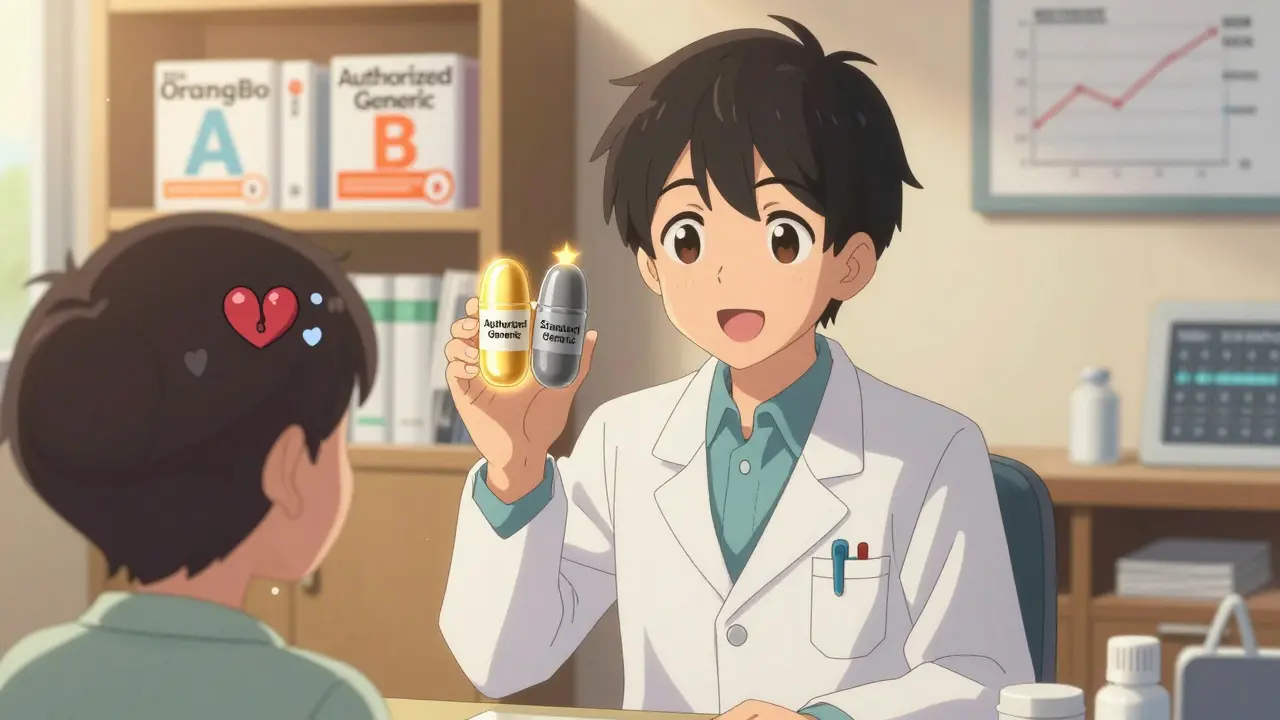
An authorized generic is made by the original brand company but sold under a generic label. It has the exact same ingredients, including inactive ones, as the brand version. It’s usually 60-70% cheaper than the brand but 15-20% more than a standard generic. If you’ve had problems switching to generics before, this is the safest option-without paying brand prices.
Can my pharmacist switch my medication without telling me?
In most states, yes-if the prescription doesn’t say “dispense as written.” But for narrow therapeutic index drugs, 46 states now require pharmacists to document substitutions and notify patients. California, for example, mandates detailed logs for all antiepileptic drugs. Always ask if a switch happened, especially if you’re on a high-risk medication.
What should I do if I think my generic isn’t working?
Don’t stop taking it. Contact your doctor and pharmacist right away. Keep a symptom log: when you switched, what changed, and how you feel. Your doctor may order a blood test to check drug levels. If a formulation difference is suspected, they can request the brand version or an authorized generic. Many insurers will approve it if you document the issue.

Comments
I switched my levothyroxine to a generic last year and my TSH went from 2.1 to 7.8 in three months. My doctor thought I was noncompliant until I showed him the pill bottle change. Now I’m back on brand and feel human again. No one talks about this enough.
Let me be crystal clear: this isn't about generics-it's about pharmaceutical negligence. The FDA's bioequivalence thresholds are archaic. We're talking about NTI drugs where a 5% deviation can trigger a myocardial infarction or seizure. This is systemic malpractice disguised as cost-cutting. The pharmaceutical-industrial complex is literally gambling with lives. And no, 'it's FDA-approved' is not a shield-it's a lie wrapped in bureaucratic jargon.
My Adderall XR generic made me feel like a jittery ghost for two weeks then I went back to brand and boom normal again. Pharmacist didn't even tell me they switched it. What even is the point of being a patient if you can't even trust your meds
The FDA's current regulatory framework for generic combination drugs is fundamentally inadequate. Bioequivalence studies conducted under fasting conditions do not reflect real-world pharmacokinetics. This is not a minor discrepancy-it is a clinically significant gap in patient safety protocol. The absence of mandatory device equivalence testing for inhalers is indefensible.
I’ve been on warfarin for 12 years. I switched generics once after my insurance forced it. I started bruising like a toddler who fell off a bike. My INR spiked to 5.8. I didn’t know what was happening until I saw the pill color change. Now I refuse all generics for anything NTI. I keep a printed copy of the inactive ingredients in my wallet. It’s not paranoia-it’s survival.
I work in a clinic and see this all the time. Patients come in saying 'my meds don't work anymore' and we find out they switched generics. Most of the time it's the extended-release ones-metformin/sitagliptin, bupropion SR. The body adapts to the delivery system, not just the chemical. It's subtle but real.
so like i switched to a generic advair and suddenly i was using my ventolin every 2 hours like its candy. my doc was like 'youre just anxious' and i was like 'bro i have asthma not a panic disorder'. i finally asked for the brand and my lungs went from 'i can barely walk to the fridge' to 'i went hiking last weekend'. also the generic tasted like burnt plastic. what even is that filler??
Let me just say this: if you're on a combo drug for depression, anxiety, or thyroid, and you suddenly feel like you're underwater or like your brain is made of wet cardboard-don't ignore it. Don't tell yourself it's 'just stress'. I was on a generic sertraline/olanzapine combo and I started crying in the shower for no reason, couldn't focus at work, and felt like my bones were vibrating. I switched back to the brand and within 10 days I was myself again. My pharmacist told me 'it's the same chemical' like that's some kind of magic spell. No. It's not. The coating, the filler, the release mechanism-it all matters. People are suffering because we treat medicine like a commodity. And it's not. It's biology.
USA always overthink. In Nigeria we take generic and live. Why you think you special
you americans think you are so smart with your fancy blood tests and labels but in africa we dont need all this. we take what we get and survive. your meds are too soft. your bodies are too weak. you cry over a pill change. we fight for food. stop making drama
the data shows 12.3% of levothyroxine switchers needed dose adjustment. that's not noise. that's signal. the FDA's equivalence standards are based on AUC and Cmax averages. but averages don't care about the outlier. the outlier is your grandma. the outlier is your kid with epilepsy. the outlier is you when you're 68 and your kidneys are slowing down. they're not testing for real people. they're testing for statistical ghosts.
My dad is 76, on warfarin and metoprolol. He switched generics last year. He didn't say anything until he almost passed out in the kitchen. Turns out his INR was 6.9. The generic had a different binder that slowed absorption, then released it all at once. He’s back on brand now. I just wish we knew this before he almost died.
PLEASE if you’re on a combo med-especially NTI-KEEP A JOURNAL. I started one after my thyroid meds went sideways. I wrote: Date, Pill Color, Energy Level, Heart Rate, Sleep Quality. Within 3 days I saw the pattern. I showed it to my doctor. He called the pharmacy. They switched me back. I’m alive because I tracked it. Don’t wait until you’re in the ER. Write it down. Your future self will thank you.