
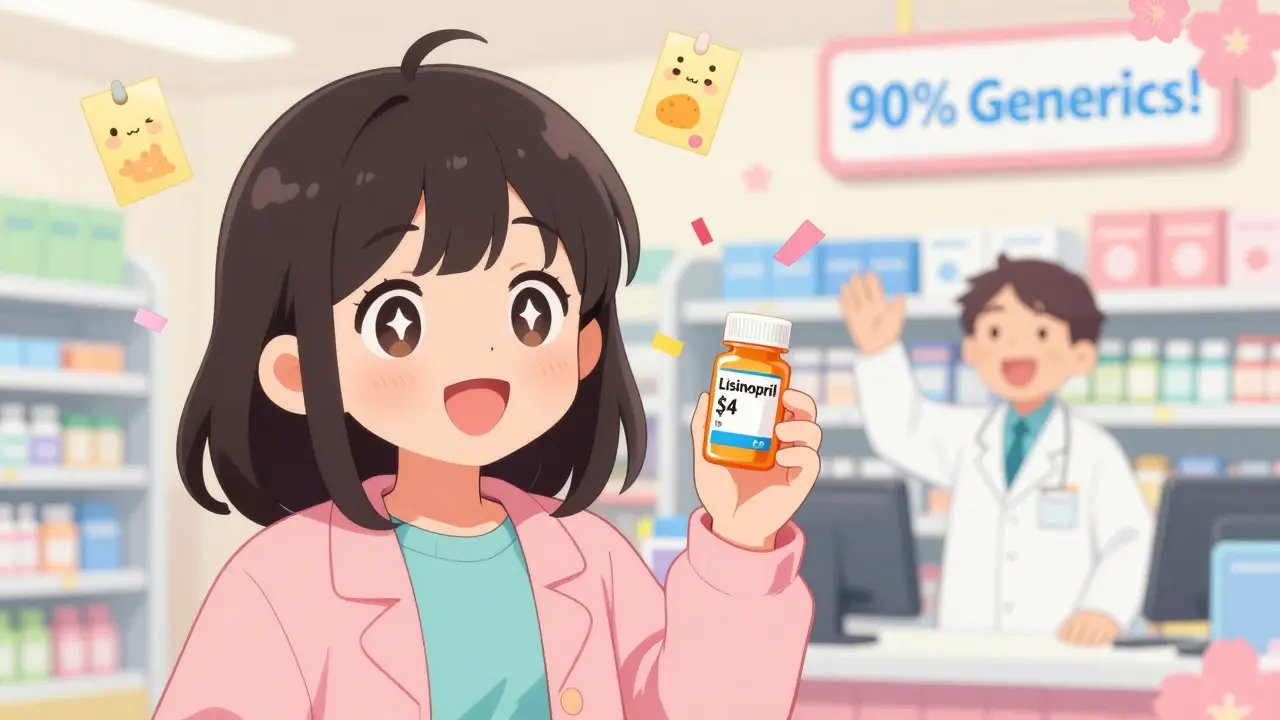
At first glance, it seems backward: Americans pay more for brand-name drugs than anyone else, yet they pay less for generics. If you’ve ever bought a month’s supply of generic lisinopril for $4 at Walmart while a friend in Germany paid €15 for the same pill, you’ve seen this paradox in action. It’s not a glitch in the system-it’s how the system was built.
Why US Generic Prices Are Lower
The US generic drug market operates like a high-volume, low-margin race to the bottom. Once a drug loses its patent, dozens of manufacturers jump in to make it. Companies like Teva, Mylan, and Sandoz compete fiercely on price, often selling pills for less than the cost to make them. That’s not a typo-some generic drugs are sold at a loss to gain market share. The result? Prices drop fast. This doesn’t happen in Europe the same way. In countries like France and Germany, the government sets prices or uses reference pricing-meaning they look at what other countries pay and match it. There’s less competition because fewer companies are allowed to enter the market at once. In the US, 90% of prescriptions are for generics. In Europe, it’s only about 41%. That difference in volume changes everything. More buyers, more sellers, lower prices. Pharmacy Benefit Managers (PBMs) in the US also play a hidden role. They negotiate rebates with drugmakers, often getting 35-40% off list prices for brand-name drugs. But for generics? They don’t need big rebates because the prices are already low. Instead, they push pharmacies to stock the cheapest version available. That’s why your co-pay for a generic is often $0-$10. In Europe, you pay a fixed co-pay regardless of whether the drug is generic or brand-name. So even if the drug costs less, you still pay the same amount out of pocket.Europe’s Higher Generic Prices Aren’t About Profit
European countries don’t pay more for generics because they’re being gouged. They pay more because their systems are designed differently. Their goal isn’t to drive prices to the lowest possible point-it’s to ensure stable supply and fair returns for manufacturers. If a generic drug’s price drops too low, companies stop making it. That’s happened in the US: when prices fell below manufacturing cost, suppliers left the market. Then, one company bought up the remaining production rights and raised prices sharply. That’s called a “market failure,” and it’s why the FDA sometimes lists generic drugs as “in shortage.” In Europe, regulators avoid that risk by keeping prices higher. They also limit the number of manufacturers allowed to sell a generic drug at any one time. That reduces competition but prevents chaos. It’s a trade-off: you pay more per pill, but you’re less likely to run into a shortage. In the US, you get the lowest price-but you might not find the drug on the shelf.Brand-Name Drugs: The Real Cost Divide
The real shocker isn’t the price of generics-it’s what Americans pay for brand-name drugs. A 2023 report from the US Department of Health and Human Services found that the US pays 422% more for brand-name drugs than other OECD countries. Even after accounting for hidden rebates, US prices are still 322% higher. Take Jardiance, a diabetes drug. In the US, Medicare negotiated a price of $204 per month. In 11 other countries, the average price was $52. That’s nearly four times more. Stelara, a psoriasis treatment, cost $4,490 in the US versus $2,822 elsewhere. These aren’t outliers-they’re the norm. Why? Because the US doesn’t negotiate prices directly. Insurance companies, PBMs, and pharmacy chains handle it all. Drugmakers set high list prices knowing they’ll get rebates later. European governments, by contrast, say: “This drug costs $X to develop. We’ll pay $Y based on its value to patients, not your marketing budget.”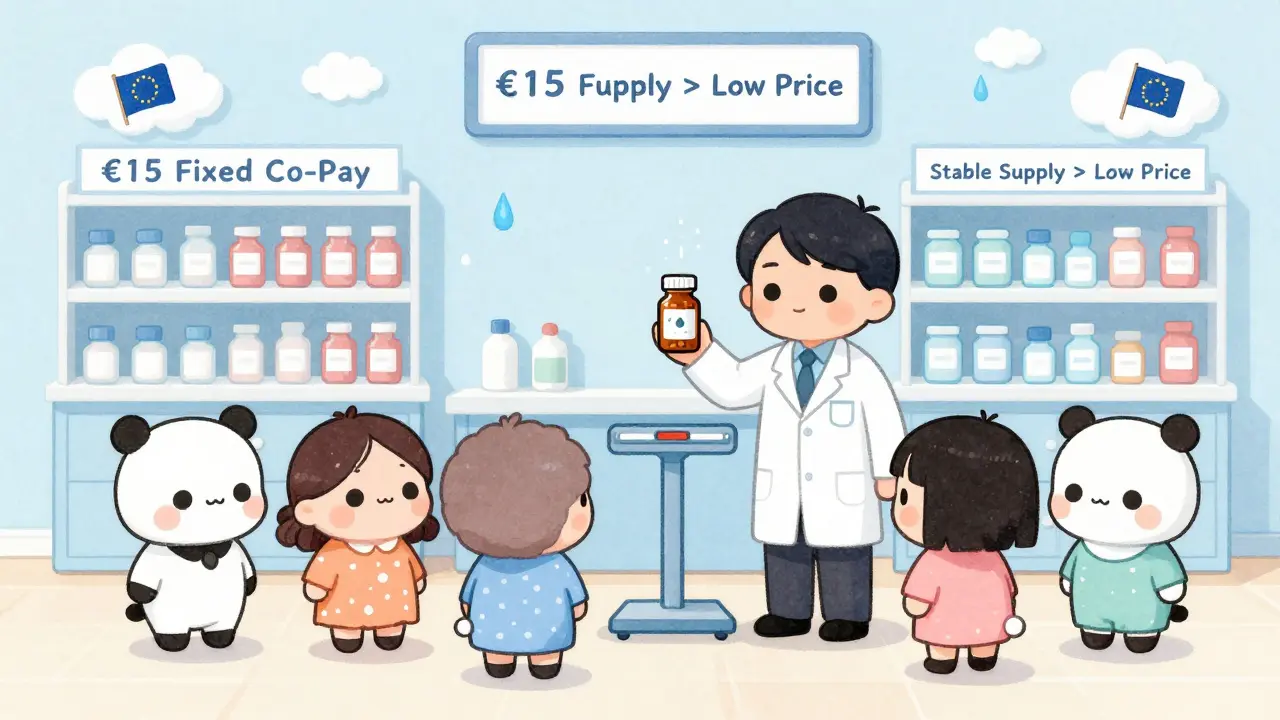
Who Pays for Innovation?
Here’s the uncomfortable truth: the US is funding global drug innovation. The country spends $1,443 per person on pharmaceuticals annually-more than double Germany, France, or the UK. That extra money doesn’t just go to shareholders. It goes to research and development. About two-thirds of all new drug development worldwide is funded by US sales. Between 2015 and 2023, 55% of new medicines were first launched in the US because that’s where companies could recoup their R&D costs. European countries benefit from those breakthroughs without paying the same price. That’s why experts call it “free riding.” When the US negotiates lower prices for brand-name drugs-like under the Inflation Reduction Act-it doesn’t just affect Americans. It affects everyone. If US prices drop too much, drugmakers will raise prices elsewhere to make up the difference. That’s what Alexander Natz of EUCOPE warned about: if the US forces drugmakers to charge the same as the lowest country, Europe will see prices jump.What This Means for Patients
If you’re in the US and take generics, you’re getting one of the best deals in global healthcare. A month’s supply of metformin? $4. Atorvastatin? $5. Levothyroxine? Often free with insurance. You’re benefiting from a hyper-competitive, volume-driven market. But if you need a new, patented drug-say, for cancer or autoimmune disease-you’re paying the highest price in the world. And if you’re in Europe, you’re paying less for those same brand-name drugs, but more for the generics you use daily. There’s also a hidden cost: access. In the US, pharmacists can automatically swap a brand-name drug for a generic unless the doctor says no. That’s legal in 49 states. In France, you need a doctor’s permission to switch. In Germany, it’s allowed, but not always practiced. That means even when a cheaper generic exists, you might not get it.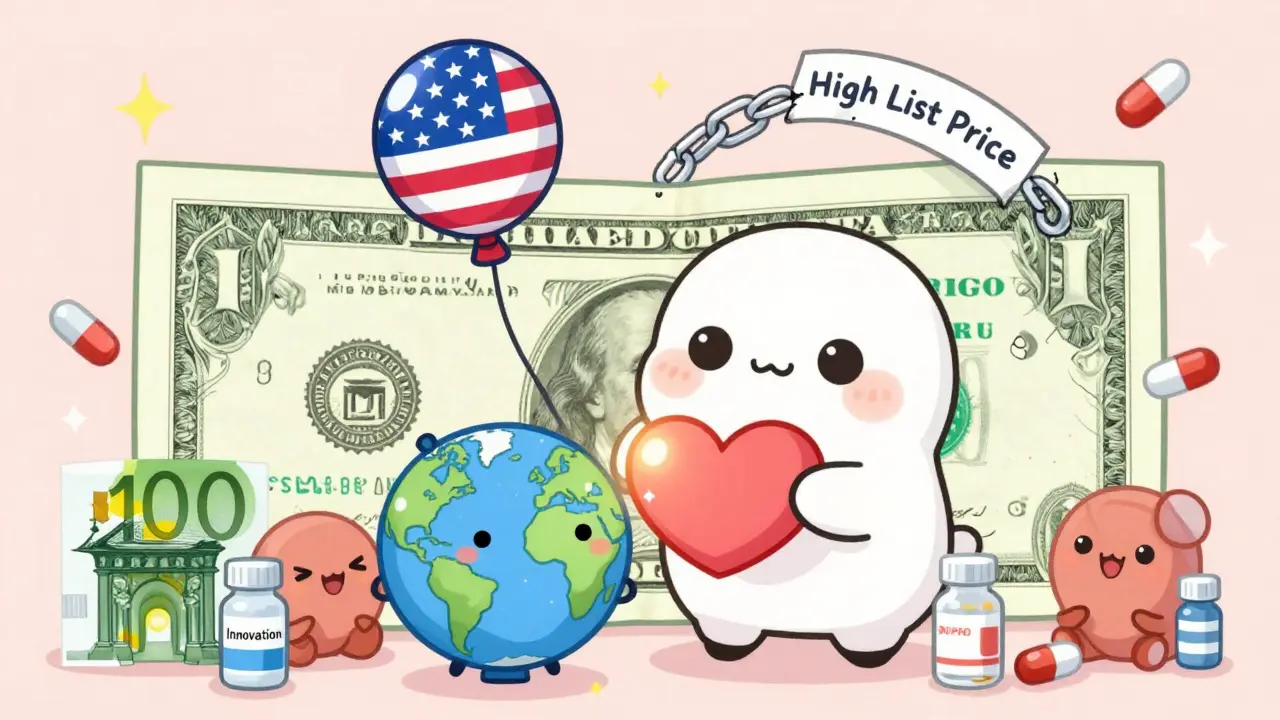
What’s Changing?
The US is starting to change. The Inflation Reduction Act lets Medicare negotiate prices for 10 high-cost drugs starting in 2026. That’s a big deal. For the first time, the government is directly challenging drugmaker pricing power. If those negotiations succeed, we could see US brand-name prices drop by 25-30% by 2027. But that doesn’t mean generic prices will rise. They’re unlikely to. The generic market is too competitive, too fragmented, and too volume-driven to be controlled by a single payer. Even if Medicare starts negotiating generics-which it currently can’t-there are too many manufacturers and too many products for any one agency to control. Meanwhile, Europe is watching. The European Medicines Agency admitted in 2025 that their pricing model may need adjustment. If US prices fall too much, they risk losing access to new drugs. Some countries are already testing models that reward innovation more directly-without letting prices spiral.Bottom Line
The US pays less for generics because its market is wild, competitive, and unregulated. Europe pays more because it’s orderly, controlled, and cautious. Neither system is perfect. The US gets low prices but risks shortages and unpredictable access. Europe gets stable supply but at a higher cost. For patients, the takeaway is simple: if you’re on generics, you’re getting a bargain. If you’re on brand-name drugs, you’re paying the global bill for innovation. And that’s not going to change anytime soon.Why are generic drugs cheaper in the US than in Europe?
The US has a highly competitive generic market with dozens of manufacturers competing for volume. Pharmacy Benefit Managers and large pharmacy chains drive prices down by choosing the cheapest supplier. In Europe, governments set prices, limit the number of manufacturers allowed to sell a generic, and prioritize supply stability over low cost. This results in higher prices but fewer shortages.
Do Americans really pay less for generics?
Yes. According to a 2022 US Department of Health and Human Services analysis, Americans pay about one-third less for generic drugs than residents of 33 other OECD countries. For example, generic lisinopril costs around $4 in the US but €15 in Germany. This is due to aggressive competition and volume-based purchasing in the US market.
Why are brand-name drugs so expensive in the US?
The US doesn’t regulate brand-name drug prices directly. Drugmakers set high list prices, then offer rebates to insurers and PBMs behind the scenes. Patients often pay the full list price until insurance kicks in. European governments negotiate prices based on a drug’s value to patients, not its development cost, leading to lower prices overall.
Does the US subsidize drug innovation for other countries?
Yes. The US accounts for 40% of global pharmaceutical sales despite having only 4% of the world’s population. The higher prices paid for brand-name drugs in the US fund about two-thirds of global drug research and development. European countries benefit from these innovations without paying the same upfront costs.
Can Medicare negotiations lower US drug prices?
Yes, but only for brand-name drugs. The Inflation Reduction Act allows Medicare to negotiate prices for 10 high-cost drugs starting in 2026. Early estimates suggest prices could drop 25-30% for those drugs. However, this won’t affect generic prices, which are already low due to market competition. It may, however, pressure other countries to raise their prices to maintain global R&D funding.
Are there risks to the US generic drug system?
Yes. When prices drop too low, manufacturers stop producing certain generics because they can’t make a profit. This leads to shortages. For example, some antibiotics and blood pressure medications have been in short supply because no company could profitably make them at the current price. The system works well until it doesn’t-and then patients suffer.

Comments
The US generic market is a fucking supply chain opera. You got like 17 manufacturers bidding to sell lisinopril at cost just to get shelf space, and PBMs flip it to pharmacies with zero markup because volume = power. Meanwhile in Europe, they treat generics like fine wine-limited edition, regulated, and overpriced. It’s not about morality, it’s about market architecture.
And yeah, the trade-off is real-shortages happen when no one can profit off a $0.02 pill, but at least when it’s available, it’s dirt cheap. That’s the price of capitalism with no brakes.
Let me get this straight-Americans pay four times more for cancer drugs so the rest of the world can get cheap generics? That’s not a system, that’s a global tax on sick people. The US is the drug industry’s ATM and everyone else is just stealing cash out of the slot.
And don’t give me that ‘funding innovation’ BS. If innovation required $1,443 per capita, then why is Big Pharma sitting on $200 billion in cash reserves? They’re not reinvesting-they’re buying yachts and lobbying Congress.
You people don’t get it. The reason generics are cheap here isn’t because of competition-it’s because we outsource manufacturing to India and China and let the FDA rubber-stamp everything. The pills are the same, but the oversight? Nonexistent.
And now we’re pretending this is a ‘free market win’? When your blood pressure med disappears off the shelf because the factory in Hyderabad got shut down for safety violations, you’ll stop celebrating the $4 price tag.
It is imperative to recognize that the structural disparity between pharmaceutical pricing models reflects divergent policy priorities. The United States employs a market-driven paradigm characterized by oligopolistic competition among manufacturers, whereas European systems adhere to value-based reimbursement frameworks anchored in cost-effectiveness analysis and public health equity.
Consequently, the lower nominal prices observed in the U.S. for generics are not indicative of superior healthcare efficiency, but rather a consequence of regulatory fragmentation and diminished payer leverage over supply chains.
Interesting perspective. In Nigeria, we don’t even have access to generics at these prices. Most of the time, the ones we get are counterfeit or expired. I’ve seen people pay $20 for a month’s supply of metformin because the real ones are too hard to find.
So while I see the logic in the US system, I also wonder-what about the rest of the world? The real question isn’t who pays more, but who gets anything at all.
My pharmacy gave me levothyroxine for free last month. I didn’t even know it was a thing until now. Honestly I just take it and forget. I guess I’m lucky I live where it’s this easy.
Don’t know why people make it so complicated. Pills are pills.
TL;DR: US generics = volume-driven chaos = cheap but unstable. Europe = controlled stability = expensive but reliable. Both work until they don’t.
The real issue? We treat medicine like a commodity instead of a human right. Fix that, and the pricing models become irrelevant.
Just want to say-thank you for writing this. I’ve been on lisinopril for 8 years and never realized how lucky I am. My dad couldn’t afford his meds back in the 90s. He’d split pills just to make them last.
It’s not perfect, but this system? It saved my life. And yeah, I know we’re paying for innovation elsewhere. But if we can keep generics this cheap while finally taming brand-name prices? That’s the win we’ve been waiting for.
Spencer’s right. It’s not about who pays more or less-it’s about who gets to live. The US system is a mess but it works for the basics. Europe’s system is calm but brittle. Maybe we need something in between.
Like, what if the government just bought generics in bulk and distributed them for free? No PBMs. No pharmacies. Just pills.
Too radical? Maybe. But so is letting someone die because they can’t afford $5 of medicine.