
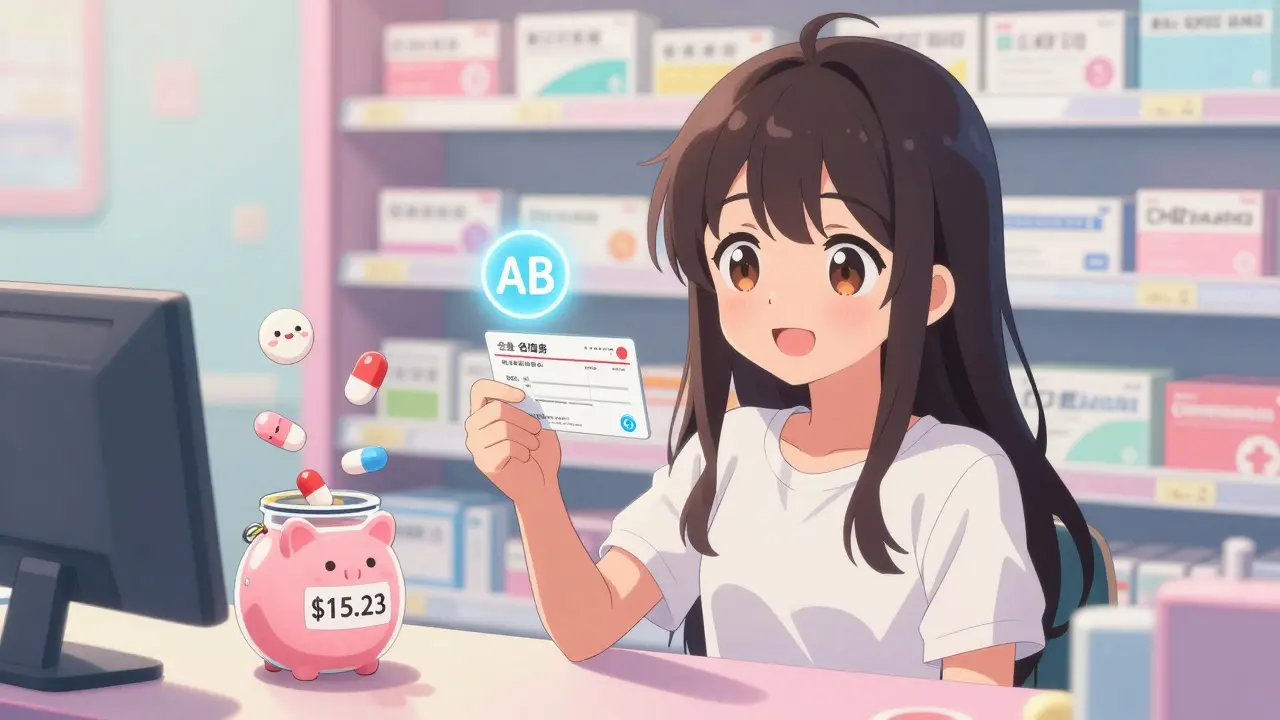
Getting a prescription filled shouldn’t mean paying three times more than you need to. If you’ve ever looked at your pharmacy receipt and felt shocked by the price, you’re not alone. The good news? There’s almost always a cheaper, equally effective version available - a generic medication. But how do you know if one exists for your drug? And more importantly, how do you make sure it’s safe to switch?
Why Generics Are Worth Asking For
Generic drugs aren’t second-rate. They’re the exact same medicine as the brand-name version, just without the marketing budget. The FDA requires them to have the same active ingredient, strength, dosage form, and route of administration. They must also be bioequivalent - meaning your body absorbs them at the same rate and to the same extent as the brand. That’s not a guess. It’s science. The numbers speak for themselves. In 2022, the average cost of a brand-name drug in the U.S. was $765.09. The same drug as a generic? Just $15.23. That’s over 98% cheaper. For people on fixed incomes, chronic conditions, or multiple prescriptions, this isn’t just savings - it’s survival. In Australia, where you might be paying out-of-pocket or through the PBS (Pharmaceutical Benefits Scheme), the same logic applies. Generics are approved under the same strict standards as brands. And if your doctor hasn’t mentioned them, it’s not because they don’t exist - it’s because they didn’t think to ask.How to Find Out If a Generic Exists
You don’t need to be a pharmacist or a researcher to find out. Here’s how to do it, step by step.1. Ask Your Pharmacist First
This is the fastest, most reliable method. Pharmacists have direct access to real-time databases that flag therapeutic equivalents. In fact, a 2022 JAMA study found they correctly identify generic alternatives 98.7% of the time. When you hand over your prescription, say: “Is there a therapeutically equivalent generic available for this?” Don’t just ask, “Do you have a generic?” That’s too vague. You want to know if it’s approved as interchangeable - not just cheaper. Most major chains - like Chemist Warehouse, Pharmacy Direct, or even your local independent pharmacy - automatically suggest generics. Many systems even pop up a cost comparison on the screen before they fill it.2. Use the FDA’s Drugs@FDA Database
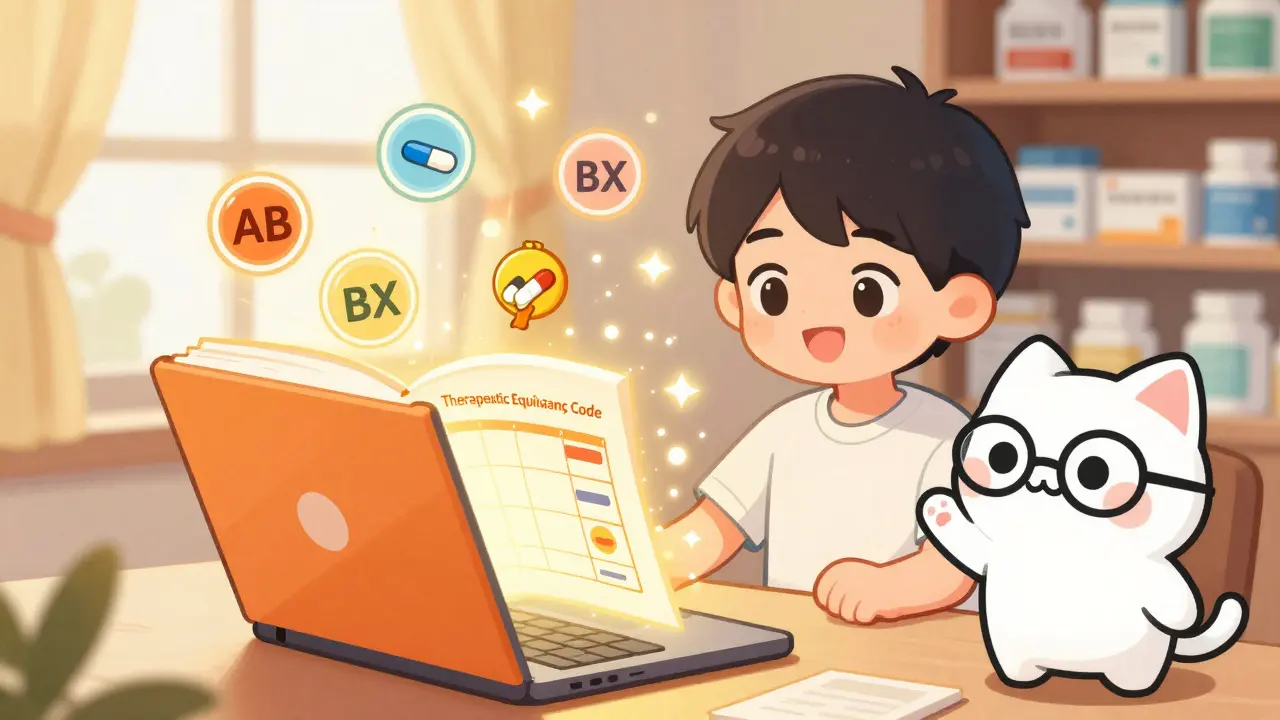
If you’re comfortable doing a little online research, the FDA’s Drugs@FDA tool is the gold standard. It’s free, updated daily, and contains approval data for over 20,000 drugs. Search by your brand name. Once you find the listing, look for the “Therapeutic Equivalence Code.” You’re looking for an “AB” rating. That means the generic is approved as interchangeable with the brand. An “BX” rating means there are concerns - don’t substitute without talking to your doctor. Don’t be intimidated by the jargon. The FDA has a simple guide called “How to Read the Orange Book” that walks you through it. You can find it on their site in under two minutes.3. Check the Orange Book (Officially: Approved Drug Products with Therapeutic Equivalence Evaluations)
This is the official government list of all approved generics and their equivalence ratings. It’s updated every month. You can search it through the FDA’s website or via third-party tools like GoodRx or Medscape. The key takeaway: AB = safe to swap. BX = ask your doctor.4. Use GoodRx or Similar Apps
Apps like GoodRx, WellRx, or RxSaver are great for comparing prices. They’ll show you the cash price for both brand and generic versions at nearby pharmacies. But here’s the catch: they don’t always tell you if the generic is therapeutically equivalent. You might see a low price - but if it’s a BX-rated drug, switching could be risky. Use these apps for price checks, not safety decisions. Always cross-check the therapeutic equivalence code with the FDA’s database.5. If You’re on Medicare or a Private Plan
Your insurance plan has a formulary - a list of drugs they cover, and which ones they prefer. Since January 1, 2024, Medicare Part D plans are required to show you real-time generic availability through the Medicare Plan Finder tool. Log in, search your drug, and look for the “Preferred Drug” label. If it says “Generic,” you’re golden. Private insurers often have similar tools. Call your plan’s customer service and ask: “Is there a preferred generic alternative for [drug name]?” They’ll tell you.When You Shouldn’t Switch - Even If a Generic Exists
Not all drugs are created equal. Some have a narrow therapeutic index - meaning the difference between an effective dose and a toxic one is tiny. For these, even small differences in how the body absorbs the drug can cause problems. Examples include:- Warfarin (blood thinner)
- Levothyroxine (thyroid hormone)
- Phenytoin (seizure medication)
- Lithium (mood stabilizer)
What to Do If Your Doctor Says “No”
Sometimes, doctors don’t know about generics. Or they’re used to prescribing the brand. Or they think it’s better. But they’re not pharmacists. If you’ve confirmed a generic exists and it’s AB-rated, ask your doctor: “I found a generic version approved as equivalent by the FDA. Can we switch?” Most will say yes. If they refuse, ask why. If they say, “I just prefer the brand,” that’s not a medical reason. You can also ask for a prior authorization form if your insurance blocks the brand. Many plans will cover the brand only if the generic doesn’t work - not the other way around.Common Mistakes People Make
- Assuming “generic” means “lower quality.” It doesn’t. The same factories often make both.
- Believing the cheapest option is always the best. A $5 generic might be BX-rated - and unsafe to switch.
- Not checking if your insurance requires step therapy. Some plans force you to try the generic first.
- Switching generics too often. If you’re stable on one, stick with it - especially for narrow therapeutic index drugs.
What’s Changing in 2026
The system is getting better. By mid-2026, electronic health record systems like Epic will automatically flag therapeutic equivalence at the point of prescribing. Your doctor will see a pop-up: “Generic available. Cost: $18. Brand: $750.” In Australia, the PBS is expanding its list of generics, and new legislation is pushing for more transparency in pricing. The goal? Make it impossible to overpay.Final Tip: Make It a Habit
Next time you get a new prescription - whether it’s for antibiotics, blood pressure, or depression - ask: “Is there a generic?” Do it every time. It takes 10 seconds. It could save you hundreds - or thousands - a year. You’re not being difficult. You’re being smart.Are generic medications as safe as brand-name drugs?
Yes. The FDA requires generics to meet the same strict standards as brand-name drugs. They must contain the same active ingredient, work the same way in the body, and be manufactured under the same quality controls. Over 90% of prescriptions in the U.S. are filled with generics, and they’ve been safely used for over 40 years.
How do I know if a generic is approved as interchangeable?
Look for the “Therapeutic Equivalence Code” in the FDA’s Orange Book or Drugs@FDA database. An “AB” rating means the generic is considered interchangeable with the brand. A “BX” rating means it’s not recommended for substitution without medical supervision.
Can I switch between different generic brands?
For most drugs, yes. But for narrow therapeutic index drugs like warfarin or levothyroxine, switching between different generic versions can sometimes cause side effects. If you’re on one of these, stick with the same manufacturer unless your doctor advises otherwise.
Why does my insurance keep switching me to a different generic?
Insurance plans often change which generic they cover based on pricing deals with manufacturers. This doesn’t mean the drug is less safe - but if you notice a change in how you feel after a switch, talk to your pharmacist or doctor. You can request to stay on your preferred version with a prior authorization.
What if no generic is available for my medication?
Some drugs are still under patent protection - especially newer biologics or complex formulations. If no generic exists, ask your doctor if there’s a similar, cheaper drug in the same class. For example, if your brand-name statin is expensive, there may be a generic alternative like atorvastatin that works just as well.

Comments
Just asked my pharmacist about my blood pressure med yesterday-turned out the generic was $12 instead of $700. I almost cried. Why does anyone still pay full price for brand names? It’s insane.
The FDA’s therapeutic equivalence criteria are rigorously enforced. Bioequivalence is not a suggestion-it’s a legal requirement under 21 CFR 314.94. The 98.7% accuracy rate cited from JAMA is corroborated by multiple meta-analyses. Generic drugs undergo the same batch testing, stability studies, and cGMP compliance as branded products. Any claim that generics are inferior is scientifically unfounded.
So… we’re told to trust science, right? But then we’re told to trust the FDA, and then we’re told to trust the pharmacist, and then we’re told to trust GoodRx-but GoodRx doesn’t even tell us if it’s AB-rated… so we’re back to the FDA… which is… a website… that requires reading… which requires… effort… which requires… consciousness… which requires… we’re all just… floating in a sea of pharmaceutical bureaucracy… and someone’s making money off our confusion…
Why does it have to be so hard to not get robbed?
It’s not about the drug. It’s about the system.
And the system is rigged.
And we’re the ones paying.
With our time.
With our health.
With our trust.
And no one’s apologizing.
So… I’ll take my $15 pill… and I’ll keep asking… because someone has to.
generic? more like genericus maxiumus 😭
my aunt took some cheap indian stuff for her thyroid and started hallucinating… like, full-on talking to her cat like it was the president…
not all generics are created equal fam
Ugh this post is so long I fell asleep twice
just use GoodRx and stop overthinking it
also who cares if it's AB or BX? it's still cheaper
and if you die cool
Let us not forget the deeper metaphysical implications of pharmaceutical commodification. The body, in its sacred biochemistry, becomes a mere ledger of cost-benefit ratios. When we reduce healing to a transaction, we betray the covenant between patient and healer. The FDA, though bureaucratic, remains a fragile bulwark against the abyss of corporate indifference. One must ask: if a pill is chemically identical, but its soul-its manufacturing ethos-is not-does it still heal?
And yet… I take my generic metformin. Every morning. Without hesitation. Because even philosophers must eat.
India is the world’s pharmacy-but let’s be honest: 70% of generic manufacturers there have never passed a single FDA inspection. You think your levothyroxine is safe? It’s probably sitting in a warehouse with cockroaches and no temperature control. Your ‘$15 pill’ is a lottery ticket with your thyroid as the prize. The system is a lie. They know it. You know it. We all just pretend.
I’ve been on the same generic for 12 years. No issues. My doctor never mentioned it, but my pharmacist did. I didn’t know what ‘AB-rated’ meant until I read this. Thank you. I feel less stupid now.
Also, I used to think generics were ‘cheap stuff.’ Turns out, I was the cheap one for not asking sooner.
Canada doesn’t have this problem. We have the PATENT SYSTEM. You don’t pay $700 for a pill here. You pay $5. And we don’t need 12-step guides to find out if it’s ‘equivalent.’ We just get the damn thing. Why is America so broken?
Also, your ‘GoodRx’ is just a middleman selling your data. You’re not saving money-you’re being monetized.
That’s actually a good point. I didn’t think about how GoodRx makes money off your search history. Kinda creepy.
My mom switched to a generic for her antidepressant… and she said she felt ‘numb’… like her emotions were turned down to 30%. She went back to the brand. I didn’t argue. I just held her hand. Some things… you don’t gamble with.
It’s not about the science. It’s about the person.
yo i just found out my zoloft generic is made in the same factory as the brand?? like same line?? same machines?? same people?? i thought they were totally different companies??
so why do we even have brand names??
it’s all just marketing
and i feel so dumb for paying extra for 10 years
I live in rural Oklahoma. My pharmacist printed me a little card that says ‘Your generic is $18. Brand is $720. You’re welcome.’ I keep it in my wallet. I show it to people. I’ve started a movement.
It’s not about drugs. It’s about dignity.
For anyone reading this: if you’re on levothyroxine, stick with the same manufacturer. Even AB-rated generics can vary slightly in fillers and binders, which can affect absorption. Don’t switch unless your doctor advises it. And if your insurance forces you to switch, document how you feel. Your health is not a cost center.
Also: thank you for writing this. It’s rare to see clarity in a sea of noise.
STOP OVERCOMPLICATING IT. Just ask your pharmacist. They’re the real heroes here. They don’t get paid enough. They don’t get thanked enough. But they’re the ones saving your life every day. So go ask. Now. Before your next refill. You’ve got this.