
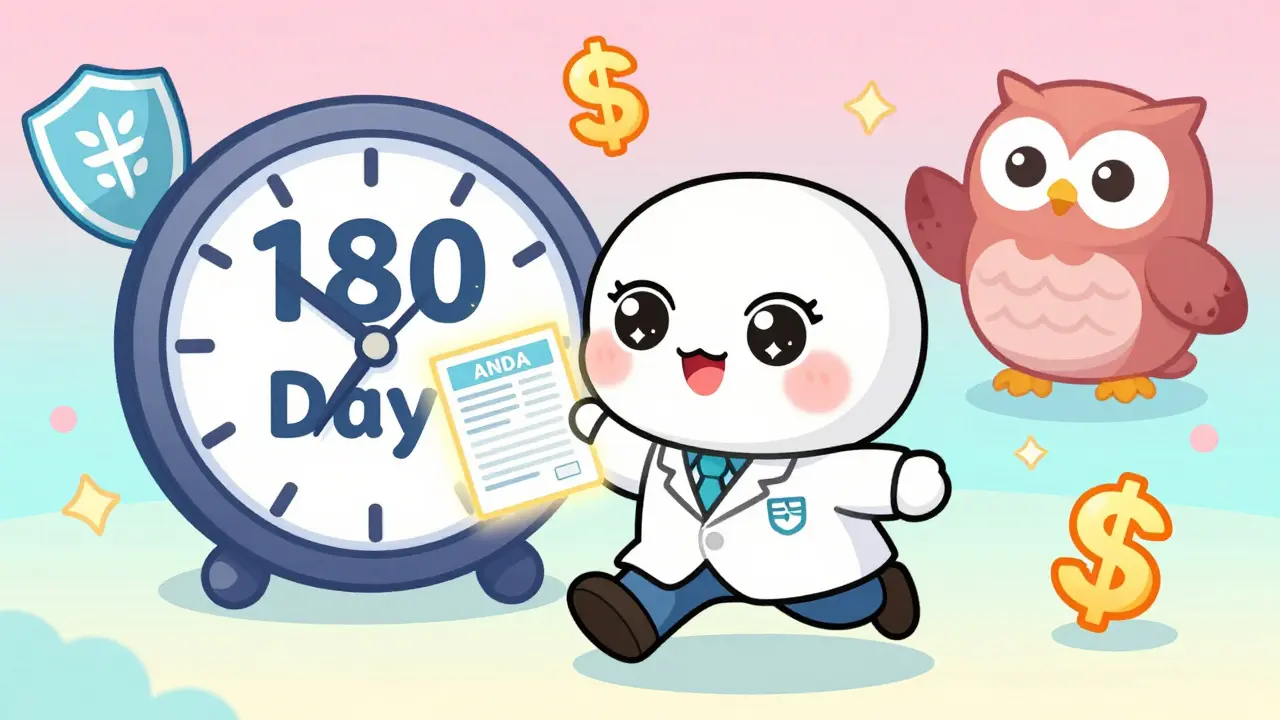
When a brand-name drug’s patent is about to expire, the race to be the first generic company to file for approval isn’t just about speed-it’s about billions of dollars. The first company to submit a complete Abbreviated New Drug Application (ANDA) with a Paragraph IV certification gets 180 days of exclusive rights to sell its generic version. No other generic can enter the market during that time. This isn’t a loophole. It’s the law-and it was designed to shake up the drug market.
How the 180-Day Clock Starts
The 180-day exclusivity rule comes from the Hatch-Waxman Act of 1984. Back then, brand-name drugs were expensive and generics were rare. Congress wanted to fix that. They gave generic companies a powerful incentive: be the first to challenge a patent, and you get a head start on the market. But the clock doesn’t start when the FDA approves your drug. It starts when one of two things happens: either you begin selling your generic, or a court rules that the brand’s patent is invalid, unenforceable, or won’t be infringed by your product. That means a generic company could get the exclusivity period triggered even before the FDA says yes to their application.
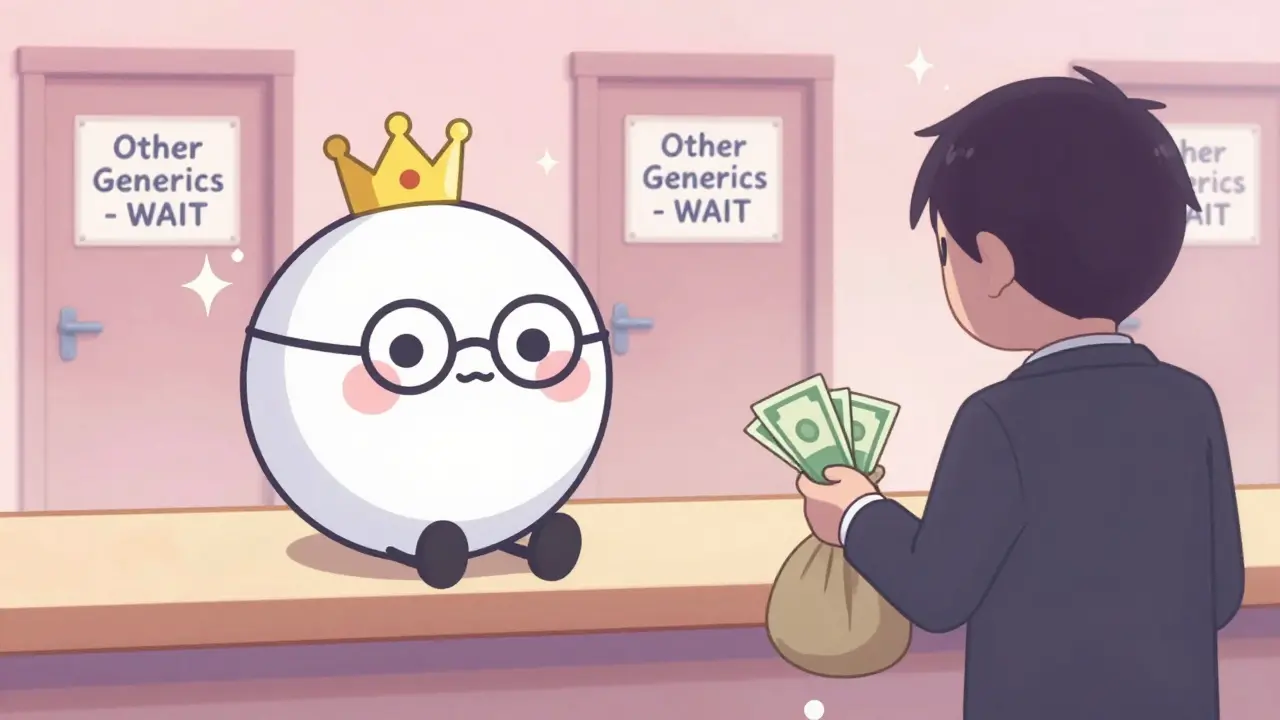
This is where things get messy. Some companies file an ANDA, win a court case, and then sit on the exclusivity. They don’t launch the drug. They just block everyone else from entering. The FDA can’t approve any other generic that challenges the same patent until the 180 days are up-even if the first filer hasn’t sold a single pill. This created a loophole called the “paper generic” problem. In some cases, the exclusivity period stretched for years, not months.
Who Wins and Who Loses
For the first filer, the payoff can be enormous. During those 180 days, they often capture 70 to 80% of the entire generic market. Sales can hit hundreds of millions-or even over a billion dollars. Teva’s generic version of Copaxone, launched in 2015, made $1.2 billion in that window. That’s not luck. It’s strategy. The first filer doesn’t just get a head start-they get a monopoly.
But the system isn’t fair to everyone else. Other generic companies wait. Patients wait. And sometimes, the brand-name company makes a deal. They might launch their own “authorized generic”-a version of their drug sold under a different label-at the same time as the first filer. This lets them keep most of the market share. One former brand company executive admitted on a public forum that paying a first filer $50 million to delay launch was cheaper than losing 100% of sales overnight.
Why This System Still Exists
The FDA says this rule was meant to get cheaper drugs to patients faster. And it worked. Today, 90% of all prescriptions in the U.S. are filled with generics-but they only cost 22% of what brand drugs do. Over the last decade, generics saved the U.S. healthcare system $2.2 trillion. That’s huge.
But the original design is breaking down. The Federal Trade Commission has called out “reverse payment” deals, where brand companies pay generics to delay entry. In 2010, they estimated these deals cost consumers $3.5 billion a year. The FDA itself admitted in 2022 that the system has been “gamed.”
What’s Being Done to Fix It
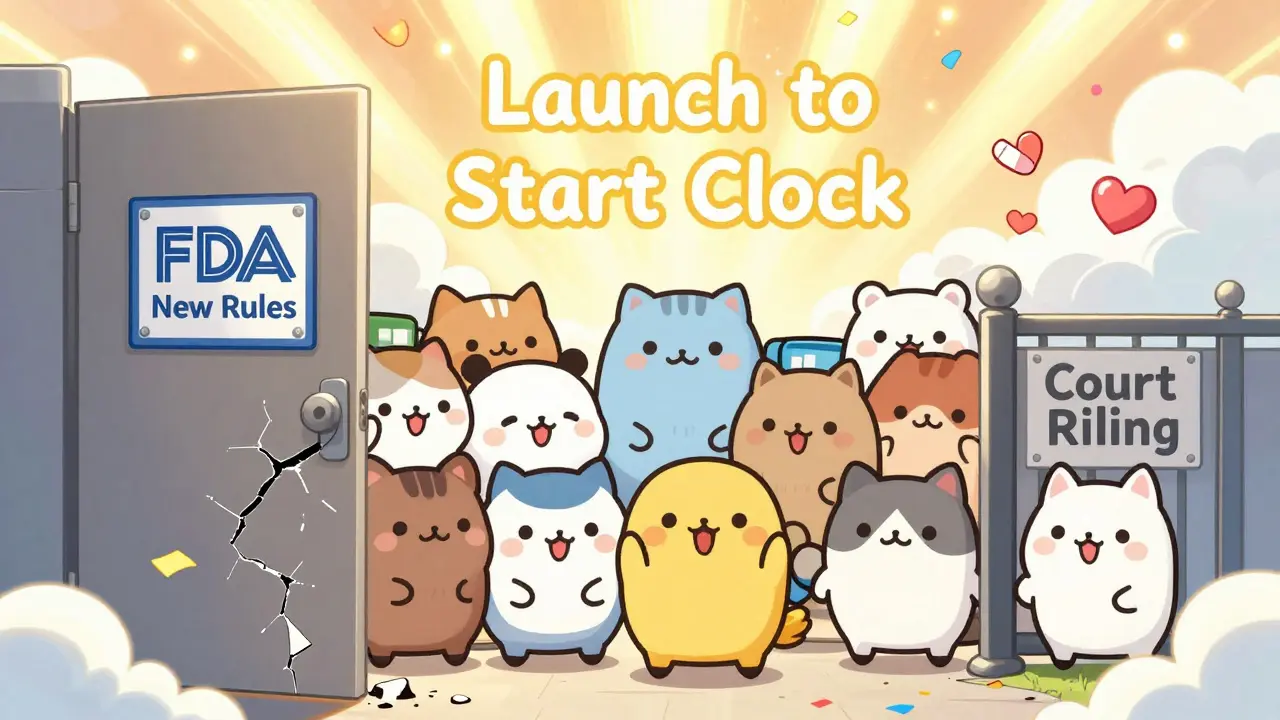
In 2022, the FDA proposed a major change: the 180-day exclusivity clock should only start when the first filer actually begins selling the drug. No more “paper generics.” No more court decisions triggering exclusivity without a real product on the shelf. This would stop companies from sitting on exclusivity and blocking competition.
There’s also a newer system called Competitive Generic Therapy (CGT) exclusivity, created in 2017. It’s simpler: the clock starts when you launch. No court rulings. No delays. It’s a cleaner model-but it only applies to drugs with little or no generic competition. Most Paragraph IV challenges still fall under the old 180-day rule.
Who Can Even Play This Game?
It’s not easy to be the first filer. You need deep pockets. You need lawyers who specialize in patent law. You need experts who understand the FDA’s technical requirements. A single Paragraph IV certification can cost $5 to $10 million just to prepare. And even then, 37% of applications get rejected for paperwork errors.
That’s why only a few big players dominate this space: Teva, Viatris, Sandoz. They’ve got the teams, the legal departments, the experience. Small generic companies? Most can’t afford it. Only 15% of small firms even use the FDA’s free guidance resources because the process is too complex.
The Future of Generic Drug Entry
If the FDA’s proposed changes pass, we could see 40 to 50 more generic drugs enter the market each year, six to nine months sooner than before. That could save consumers $1.2 to $1.8 billion annually. But the brand-name drug industry is fighting back. They argue that changing the rules might discourage generic companies from challenging patents at all.
The truth is, the 180-day exclusivity rule was never meant to be a weapon. It was meant to be a bridge-to get affordable drugs to people faster. But like any system with high stakes, it got twisted. The first filer isn’t just a competitor anymore. They’re a gatekeeper. And until the rules change, that gate will stay locked-unless someone actually walks through it.
What is a Paragraph IV certification?
A Paragraph IV certification is a legal statement made by a generic drug company when filing an ANDA. It says the company believes the brand-name drug’s patent is either invalid, unenforceable, or won’t be infringed by their product. This certification triggers the 180-day exclusivity period and often leads to patent lawsuits.
Can multiple companies file on the same day and share exclusivity?
Yes. If two or more companies file identical ANDAs with Paragraph IV certifications on the same day, they can share the 180-day exclusivity. But they must both launch within 75 days of each other. If one delays, they lose their share. This is why timing matters down to the second.
Why do some first filers never launch their generic?
Some first filers delay launch to avoid competition or because they made a deal with the brand-name company. In exchange for a payment or a share of profits, they agree not to sell the drug. This blocks other generics from entering, even though the exclusivity period is still running. The FDA calls this a “failure to market,” and it’s one of the biggest reasons the system is under fire.
Does the 180-day exclusivity apply outside the U.S.?
No. This rule is specific to the U.S. under the Hatch-Waxman Act. Other countries have different systems for generic drug approval. For example, Canada and the EU don’t offer 180-day exclusivity. They rely on patent expiration and faster approval pathways instead.
What happens if the first filer loses the patent lawsuit?
If the court rules in favor of the brand-name company, the first filer loses their exclusivity. They can’t sell the drug, and other generic companies can file their own applications. The exclusivity period is forfeited. This is why many first filers settle lawsuits before trial-to avoid losing everything.

Comments
So basically, the system rewards the company that can afford the most lawyers, not the one that makes the best drug. Wild.
The 180-day exclusivity under Paragraph IV was intended as a catalyst for competition, but the perverse incentives have turned it into a regulatory arbitrage mechanism. The FDA’s proposed rule change to tie exclusivity to commercial launch rather than litigation outcome is a necessary correction to align statutory intent with market reality.
bro i had no idea this whole system was this broken. like, i just thought generics were cheaper because they didnt spend on ads. turns out its like a legal poker game where only the rich can afford to play. sad.
So the brand companies pay the generics to not sell the drug? And we call this capitalism? I guess the free market just means whoever has the biggest wallet gets to decide who lives and who doesn’t.
Let me clarify something. The Hatch-Waxman Act was a compromise. It balanced innovation incentives with access. The current abuse is not a flaw in the law-it’s a failure of enforcement. The FTC and DOJ have the tools to act on reverse payments. They just choose not to.
This isn’t broken-it’s working exactly as designed. The system was never about patients. It was about creating a cartel between Big Pharma and Big Generic. The 180-day window? A velvet rope. The ‘paper generics’? A tax on hope. And the FDA? Complicit. You think they don’t know what’s happening? They do. They just don’t care enough to risk the lawsuits. This isn’t healthcare. It’s a financial instrument disguised as medicine.
It’s ironic. The law was built to break monopolies, but now it’s the tool that creates them. The first filer isn’t a pioneer-they’re a toll collector. And the real tragedy? The people who need the medicine the most are the ones who pay the highest price for the delay. This isn’t innovation. It’s rent-seeking dressed in legal robes.
Back in India, we don’t have this 180-day mess. If a patent expires, generics flood in. Prices drop overnight. No court battles, no backroom deals. I’ve seen insulin go from $100 a vial to $3 in six months. That’s what competition looks like. The U.S. system isn’t protecting innovation-it’s protecting profits. And patients are paying the price in pain, not just dollars.