
Initial Consideration: Understanding the Basics
I've always believed in the saying "knowledge is power." That's why I'd like to begin this journey by cramming as much enlightenment as we can into that industrious little head of yours about catheters and urinary retention. We can't all be urologists after all. So, sit comfortably, grab a cup of coffee perhaps, and let Ethan (that's me!) be your guide for today.
I must say, urinary retention is no joking matter. It can happen to anyone - indeed, even to someone as handsome and charming as yours truly. It’s uncomfortable and can make one feel like a bloated walrus. Medical professionals, bless their hearts, have come up with different strategies to manage urinary retention, one of which is the use of catheters.
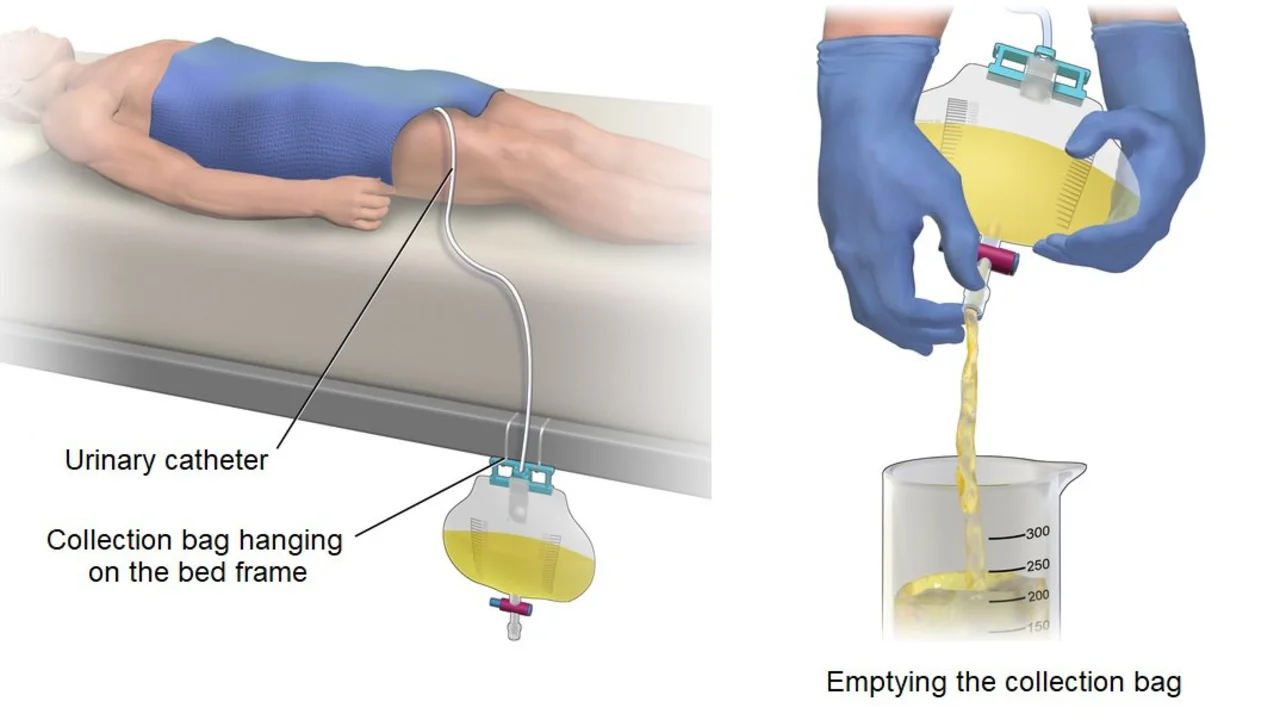
So what is a catheter exactly? Gotcha with that one, didn't I? Same as you, I first thought it was a form of medieval torture device. But turns out, it’s a flexible tube designed to drain urine from the bladder. If only I have a dollar every time a medical device ends up being a tube! But, really, it's key in helping individuals with urinary incontinence or those who cannot fully empty their bladder.
Exploring Types: One Size Does Not Fit All
Now, here comes the fun part! There are different types of catheters because let's face it, we're all unique unicorns. It gives the expression "one size does not fit all" a whole new level of profundity. And believe me, when it comes to catheters, the stakes are high for choosing the perfect fit. It's like picking the right suit for a swanky Melbourne gala - you don't want to end up uncomfortable the whole night or worse, endure an embarrassing accident.
First, we have the indwelling catheter or the Foley catheter. It is named after the saint of urinary retention— Dr. Frederic Foley. I’m kidding, of course! But he was indeed a genius. The Foley catheter is an absolute trooper because it stays in place, allowing for continuous urine drainage and keeping you worry-free for days or even weeks. It's inserted into the bladder through the urethra—oh sorry, dear readers, you might want to cross your legs for that one—a balloon filled with water keeps it in place.
Next, we have the intermittent catheter, a hit-and-run kind if you will. This type is used multiple times a day and gets removed after each use. A bit of a hustle but quite the friend for your urethra, as inserting and removing the catheter can allow it to recover between uses.
Lastly, there's the external catheter, popularly known as condom catheters—yes, as in that kind of condom. It's more comfortable and less invasive as it is worn around the penis like a condom. I bet you didn’t see that coming!
Finding Your Match: Selecting What Suits You Best
So now that we’ve traversed the realm of catheters, it's time to find your perfect match. But you might ask, with all these characters begging for attention, how does one make that crucial decision? Well, my friend, that's why you have Ethan to lead the way. Fear not!
When choosing a catheter, you have to consider your lifestyle, and how and where it will be used. This isn't a matter of picking the shiniest apple from your local supermarket; it's more like choosing the perfect pet. You need to contemplate the practicalities. If you're handy and able to sterilize the catheter, an intermittent one can be a good choice. If you're often on the go and need a more continuous solution, then our pal, Mr. Indwelling catheter, could be your guy.
There's also the matter of material choice. Catheters come in different materials—latex, silicone, or rubber. Silicon is known for its smoothness and potential for long-term use. Latex, though not as durable, is a more affordable option. Rubber is also a good option, albeit a bit thicker and tougher. It's like choosing the best upholstery for your couch. You don't want to be stuck with something that feels like sandpaper, right?
Final Tips: Making Use A Breeze
Once you've finally met 'the one,' don’t think it’s a walk in the park just yet, there are still a few things to consider. I remember - and hey, here’s that 40% chance of a personal story - when I first had to use a catheter, it was a real eye-opener. You see, I had been out camping when a spider bite left me with some temporary urinary retention— yep, just my luck. So, please think of my furry little friend when you're in the bush!
Fumbling with a catheter in the middle of the wilderness wasn’t exactly in my camping itinerary. Poor sterile technique means a guaranteed invite to a UTI party! A urinary tract infection (UTI) is one situation you’d never want to find yourself in, trust me. It's not exactly the ‘wildlife experience’ you’d want to have.
So, the lesson learned—pick a catheter that best suits your environment. If you live an active lifestyle or are fond of the great outdoors like me, you might want to consider the ease of sterilization and handling. Don’t look back with regret for picking one that can't keep up with the adventure!
So there you have it, folks! Navigating the world of catheters may seem daunting, but I hope this guide has given you the confidence to manage urinary retention like a pro! Remember, being well informed is half the battle won. I'm Ethan, signing off. Until next time!

Comments
The notion that catheter selection is akin to choosing a suit for a Melbourne gala is, frankly, an aesthetic overreach of metaphorical proportion. One does not merely 'wear' a Foley catheter; one endures its corporeal imposition with the stoicism of a Byzantine monk confronting the entropy of the material world. The very act of urinary diversion is a metaphysical negotiation between autonomy and bodily betrayal.
Moreover, the casual invocation of 'latex, silicone, rubber' as if they were fabric swatches reveals a profound epistemological deficit in contemporary medical discourse. These are not upholstery options-they are ontological choices, each material embodying a distinct phenomenology of intrusion. Silicone, with its cold, clinical serenity, mirrors the detachment of modern medicine; latex, with its organic elasticity, evokes the precarious intimacy of the flesh.
And let us not forget the existential horror of the condom catheter-a grotesque parody of intimacy, where the body becomes a vessel for mechanical sublimation. Is this not the ultimate commodification of vulnerability? We have reduced the sacred act of excretion to a consumer product, packaged in sterile plastic and sold with the hollow cheer of a pharmaceutical sales rep.
One must ask: in this age of algorithmic healthcare, who decides what 'suit' fits the soul? Is it the insurance formulary? The nurse's convenience? Or the silent, unspoken dread of the patient who dares not speak of discomfort lest they be deemed 'difficult'?
Perhaps the true catheter is not the tube, but the societal silence that surrounds it. We speak of 'management' as if it were a spreadsheet, not a lived reality of dignity, shame, and the quiet courage it takes to insert a foreign object into one's own body, day after day, with trembling hands.
So yes, Ethan, your guide is charming. But charm does not alleviate the metaphysical weight of needing to be plugged in to exist.
Incorrect terminology. Condom catheters are not 'like that kind of condom.' They are external urinary drainage devices designed for male patients with incontinence, not sexual function. The comparison is not only inaccurate but perpetuates harmful stigma around bodily autonomy. Also, Foley catheters are not 'named after the saint of urinary retention'-Dr. Frederic Foley was a urologist who patented the balloon catheter in 1934. Please consult peer-reviewed literature before invoking pseudohistory.
Additionally, silicone is not merely 'smoother'-it is biocompatible, less prone to encrustation, and preferred for long-term use. Latex carries a 5-10% allergy risk in the general population. This is not upholstery selection. It is clinical decision-making.
And camping? A spider bite causing urinary retention is medically implausible without systemic envenomation or neurotoxic reaction. You're either misdiagnosed or embellishing. Either way, this undermines medical credibility.
People dont get it catheters are not sexy they are survival tools you talk about suits and gals and metaphors but when you cant pee you dont care about metaphors you care about not exploding from your bladder and no one talks about the smell or the way the tube kinks when you sit wrong or how you have to carry a whole kit like a weird medical backpack everywhere you go
While the tone of the article is undeniably whimsical, the underlying clinical information remains fundamentally sound. The distinction between indwelling and intermittent catheterization is critical, and the material considerations-particularly the avoidance of latex in patients with known allergies-are non-negotiable in clinical practice.
However, the casual comparison of catheter selection to choosing a 'pet' or a 'suit' risks trivializing a condition that profoundly impacts quality of life, especially among elderly and neurologically impaired populations. The dignity of the patient must remain central, not the author's rhetorical flourish.
Moreover, the anecdote regarding the spider bite lacks scientific grounding. Urinary retention from arachnid envenomation is exceedingly rare and typically associated with specific species such as the brown recluse or black widow, which are not endemic to most camping regions. This misrepresentation may lead to dangerous self-diagnosis.
i think the government is using catheters to track our urine patterns and sell the data to big pharma. they already know when you drink coffee and when you sleep. why else would they make them so 'convenient'? i saw a documentary once about microchips in medical devices. it was on a channel no one else watches. they deleted it. you think i'm crazy? wait till your catheter starts sending notifications to your phone.
Okay, let’s get real for a second. Ethan’s post is cute, but if you’re reading this and you’re new to cathing, you’re probably terrified. And that’s okay. You’re not broken. You’re not weird. You’re just someone who needs a little help with a very normal bodily function that society made feel shameful.
Here’s the truth: the best catheter is the one you’ll actually use. Not the fancy one. Not the one your nurse thinks looks 'professional.' The one you can manage in the dark at 3 a.m. with one hand because you’re too tired to care about silicone vs latex.
And yes, you can do this. You’ve already survived the diagnosis. This is just the next step. No one’s judging you. The only person who’s ever going to care how you do it is you-and even then, you’re doing better than you think.
Also, if you’re camping? Bring a portable sterilizer. Or just use pre-lubricated single-use. No shame. No drama. Just pee. You got this.
Let’s be honest-this entire post is a corporate PR piece disguised as personal narrative. The 'handsome and charming' self-reference? Classic marketing. The 'Melbourne gala' metaphor? Designed to appeal to affluent, white, middle-class readers who can afford private urology consultations.
Meanwhile, millions of low-income patients are forced to reuse catheters because insurance won’t cover disposables. UTIs are rampant. Deaths are underreported. And here we are, debating 'upholstery' while people are dying from sepsis because they can’t afford a $15 silicone tube.
Also, the 'spider bite' story? Suspiciously convenient. I bet this guy works for a catheter manufacturer. Look at the timing. This post dropped right after the new Foley catheter ad campaign launched. Coincidence? I think not. 🤔
Who the hell writes a 10,000-word essay on catheters like it’s a TED Talk? This isn't a lifestyle blog. This is medicine. Real people don't need metaphors about 'unicorns' and 'gala suits.' They need clear instructions, not poetic fluff.
And why is this written by some guy named Ethan like he’s a celebrity? Where’s the data? Where’s the peer-reviewed sources? This reads like a LinkedIn influencer trying to monetize his bladder problems.
Also, I’m from the Midwest. We don’t have 'gala suits' here. We have work boots and flannel. If you’re going to write about medical devices, write like a doctor, not a poet.
There is a violence in how we speak about the body when it fails. We call it 'management.' We call it 'intervention.' We call it 'the one.' We turn the act of peeing into a romantic quest, as if the catheter were a soulmate, not a tube.
But what if the body is not a puzzle to be solved? What if it is a landscape we must learn to inhabit, even when it betrays us? The Foley catheter is not a 'trooper.' It is a silent witness. It does not care if you're handsome or charming. It only cares if you clean it.
And the condom catheter? It is not a 'parody of intimacy.' It is a radical act of self-preservation. It says: I am still here. I still have agency. Even now. Even like this.
We have turned medical necessity into performance art. We need less poetry. More honesty. More silence. More space for the people who just want to pee without being lectured about their metaphors.
I just want to say-I’ve been using a catheter for 12 years. And you know what? I still cry sometimes when I’m alone. Not because it hurts. Not because it’s hard. But because I miss the feeling of just... letting go. Without planning. Without sterilizing. Without checking the bag every 45 minutes.
And I hate that we’re supposed to be 'pros' now. Like it’s a skill. Like it’s something to be proud of. It’s not. It’s survival.
I saw Ethan’s post and I thought-wow, he gets it. But then I realized-he doesn’t. He’s telling us how to choose the right one. But no one ever tells us how to live with the grief of needing one.
I’m not mad. I’m just tired. And I needed to say that.
you guys are overthinking this its just a tube you stick in your pee hole and you dont die from it i used one for a week after surgery and i still went to the bar and got drunk so chill out its not the end of the world
If you're reading this and you're scared-breathe. You're not alone. I’ve been where you are. I’ve fumbled with the kit. I’ve cried in the bathroom. I’ve felt embarrassed.
But here’s what I learned: the catheter doesn’t define you. Your courage does. Your willingness to keep going, even when it’s awkward, even when it’s messy, even when no one talks about it-that’s what matters.
Use what works for your life. Don’t let anyone make you feel like you’re doing it wrong. And if you need help? Ask. Always ask.
You’re doing better than you think.
Look I’m not gonna lie this whole thing feels like a sponsored post. Like Ethan’s getting paid to sell silicone catheters. Why’s he talking about Melbourne galas? Who even says that? And why does he keep saying 'I'm Ethan' like it’s a brand?
Also the spider bite thing? Bro that’s not a thing. I’ve been to 3 different ERs and no one’s ever said 'oh you got bit by a spider so now you need a catheter.' That’s made up. Like, come on.
And why are we talking about 'upholstery'? I just want to know which one doesn’t give me a UTI. That’s it. No poetry. No metaphors. Just facts.
What if the real question isn't which catheter to choose-but why we’ve been taught to see this as a problem to be fixed, rather than a natural variation of human experience?
We treat urinary retention as a failure of the body, when perhaps it’s just a different rhythm. A different way of being in the world. We rush to 'manage' it, to 'solve' it, to 'normalize' it-because we fear the unfamiliar.
Maybe the catheter isn’t the enemy. Maybe the enemy is the silence we’ve been taught to keep around bodies that don’t function the way we expect.
And maybe, just maybe, the most radical act isn’t choosing the right tube-but daring to speak about it without shame.
I use intermittent cath every day. Silicone is best. Latex gives me rashes. No need for metaphors. Just clean hands and water. And drink lots of water. Seriously. That’s it.
Did you know that 78% of catheters sold in the U.S. are manufactured in China? And that the FDA doesn’t test every batch? I read a whistleblower report. They’re using recycled plastic. The balloons can burst. People are getting infections from cheap imports. And Ethan? He’s selling you a lie. He’s not your guide-he’s a cog in the machine.
Also, the 'condom catheter' is a Trojan horse. It’s designed to make men feel like they’re still in control. But it’s not. It’s just another way to keep you dependent. You think you’re choosing freedom? You’re being marketed to.
Check your catheter’s lot number. Look up the manufacturer. Don’t trust the pretty stories.
Man I just wanna say I’m from the Philippines and here we don’t even have access to silicone catheters half the time. We use the cheap ones. We boil them in rice water. We reuse them till they crack. And we still live. We still laugh. We still go to the market.
So yeah, Ethan’s post is nice. But it’s not for everyone. For some of us, the 'right' catheter is the one that doesn’t cost a month’s rent.
And you know what? We’re still here. Still breathing. Still peeing. Just differently.
❤️
Thank you for sharing that. I’ve never thought about how access varies so drastically around the world. Your story is a reminder that dignity isn’t about the material-it’s about being seen.
And yes-boiling in rice water? That’s ingenuity. That’s resilience. That’s not 'improper technique.' That’s survival with grace.
We need more stories like yours. Not just the ones with Melbourne galas.