
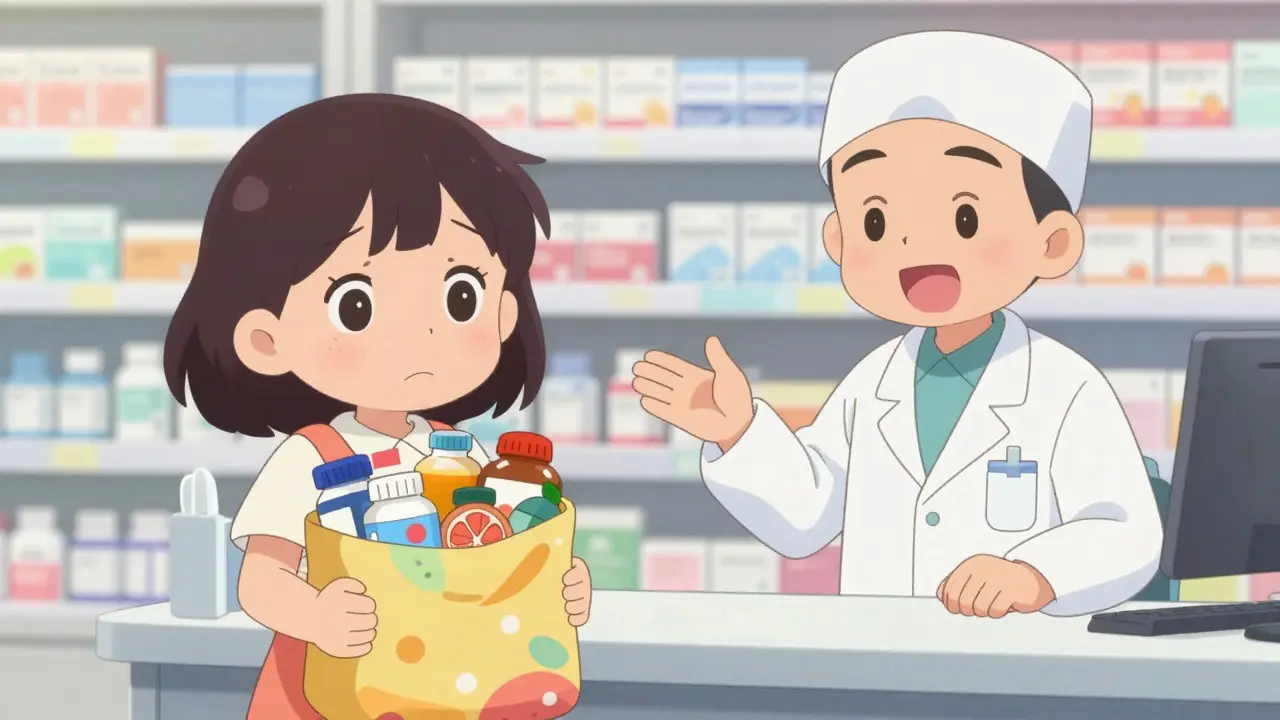
You pop a multivitamin in the morning, take your blood pressure pill at noon, and eat a grapefruit for dessert. It sounds like a routine day, but that combination could be quietly undermining your health. Most of us assume that because something is sold on a shelf or grows in the ground, it’s harmless. The reality is starkly different. Dietary supplements are products containing herbs, vitamins, minerals, or probiotics that are not approved by the FDA before reaching the market, meaning their interaction potential with prescription drugs is often unknown until it’s too late.
The numbers are startling. Between 40% and 60% of adults with chronic diseases use these products. Yet, fewer than 25% of patients actually tell their doctors or pharmacists about them. This silence creates a dangerous gap in your care plan. Pharmacists are the most accessible healthcare experts you have-93% of people live within five miles of one-but they can’t protect you from an interaction if they don’t know what you’re taking. Learning how to bridge this communication gap isn't just good advice; it’s a critical safety skill.
Why Pharmacists Are Your Best Defense Against Hidden Risks
Think of your pharmacist as the traffic controller for all the chemicals moving through your body. Doctors prescribe the medication, but pharmacists understand how those medications behave once they enter your system. They are trained in pharmacokinetics-the study of how your body absorbs, distributes, metabolizes, and excretes drugs.
This expertise becomes vital when you introduce non-prescription elements into the mix. For example, St. John's wort is a herbal supplement commonly used for mild depression that significantly accelerates the breakdown of many medications in the liver. If you are taking birth control pills, anticoagulants, or certain antidepressants, St. John's wort can render them ineffective or cause life-threatening conditions like serotonin syndrome. Without a pharmacist flagging this, you might wonder why your medication suddenly stopped working or why you started feeling dizzy and anxious.
The risk isn't limited to exotic herbs. Even common foods play a role. The American Heart Association warns that grapefruit interferes with enzymes in your gut that break down certain heart medications. This doesn't mean you need to give up fruit forever, but it does mean you need a professional to map out which combinations are safe for your specific regimen.
Preparing for the Conversation: What to Bring
Walking into a pharmacy and asking, "Is this okay with my meds?" is rarely enough. Pharmacists need data to make accurate assessments. To get the best advice, you need to prepare a comprehensive inventory of everything entering your body.
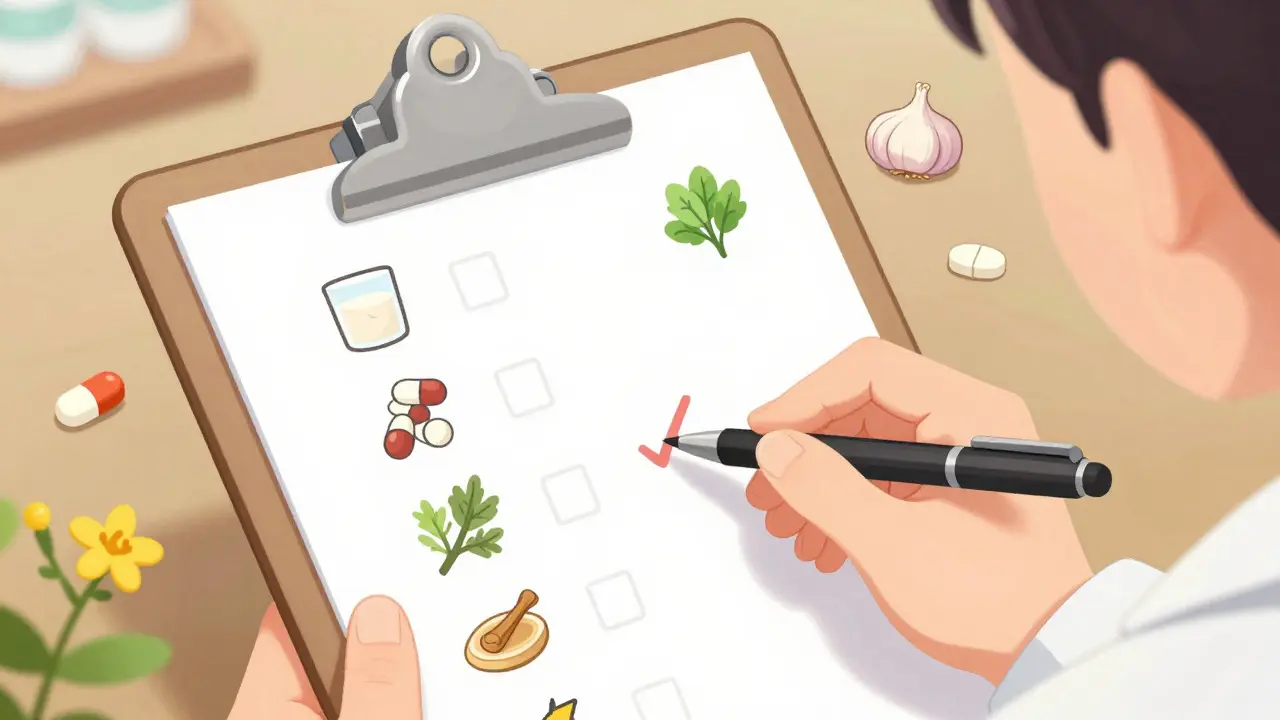
Create a simple list that includes:
- All prescription medications: Include dosage and frequency.
- Over-the-counter drugs: Pain relievers, antacids, and allergy meds count.
- Dietary supplements: List brand names, dosages, and how often you take them. Generic names can vary wildly in potency.
- Dietary habits: Note regular consumption of alcohol, caffeine, dairy, or specific fruits like grapefruit or cranberries.
Bring the actual bottles if possible. Labels provide crucial details about fillers and inactive ingredients that can also trigger reactions. If you buy supplements online, print out the product description. This preparation transforms a vague chat into a precise clinical review.
Key Questions to Ask Your Pharmacist
Many patients feel intimidated by pharmacists, assuming they are too busy or only interested in filling scripts. In reality, pharmacists want to catch errors before they become emergencies. Here are specific questions that unlock deeper insights:
- "Does this supplement affect how my body processes my current medications?" This targets metabolic interactions, such as those involving liver enzymes like CYP3A4.
- "Should I space out my supplements and meals?" Timing is everything. Calcium supplements, for instance, can bind to thyroid medications or antibiotics if taken simultaneously, blocking absorption.
- "Are there any foods I should avoid while taking this new medication?" This opens the door to discussing tyramine-rich foods with MAO inhibitors or vitamin K-rich greens with warfarin.
- "Could this supplement deplete any nutrients I’m already low on?" Some medications, like proton pump inhibitors (PPIs), deplete magnesium and vitamin B12 over time. A pharmacist can recommend compensatory strategies.
Don't hesitate to ask for clarification. If a pharmacist says, "It might interact," push for specifics. Is it a minor inconvenience, or a major contraindication?
High-Risk Supplements You Must Mention
Not all supplements carry equal weight. Some are relatively benign, while others act like powerful drugs. You must explicitly mention these high-risk items:
| Supplement | Primary Risk | Affected Medications |
|---|---|---|
| St. John's Wort | Accelerates drug metabolism; Serotonin Syndrome | Antidepressants (SSRIs), Birth Control, Anticoagulants |
| Ginkgo Biloba | Blood thinning | Warfarin, Aspirin, NSAIDs |
| Garlic Extract | Blood thinning | Anticoagulants, Antiplatelet drugs |
| Goldenseal | Liver enzyme inhibition | Metoprolol, Diazepam, Various Statins |
| Cranberry Concentrate | Increased bleeding risk | Warfarin |
Note that even "low risk" supplements like milk thistle or valerian can have exceptions depending on your unique health profile. Never assume safety based on general internet advice.
Navigating Food-Medication Conflicts
Food interactions are often overlooked because we view food as fuel, not chemistry. However, certain compounds in food directly compete with medications for absorption pathways.
Dairy and Calcium: Calcium binds with tetracycline antibiotics and levothyroxine (thyroid medication). The rule of thumb? Separate them by at least two to four hours. If you take your thyroid pill with breakfast coffee and milk, you might be absorbing less than 50% of the dose.
Vitamin K and Blood Thinners: If you take warfarin, consistency is key. Sudden spikes in leafy green intake (spinach, kale) can lower your INR levels, increasing clot risk. Conversely, sudden drops can spike INR, increasing bleed risk. Discuss your diet changes with your pharmacist to adjust dosing proactively.
Grapefruit and Citrus: As mentioned, grapefruit inhibits CYP3A4 enzymes. This affects statins (cholesterol meds), calcium channel blockers (blood pressure), and some immunosuppressants. Seville oranges and pomelos share this trait. Regular oranges and lemons are generally safe.
Understanding Nutrient Depletion from Medications
It’s not just supplements affecting meds; meds often drain your body of essential nutrients. This is a bidirectional relationship that pharmacists are increasingly trained to manage. Understanding this helps you advocate for necessary supplementation.
- Proton Pump Inhibitors (PPIs): Long-term use reduces stomach acid, leading to deficiencies in Vitamin B12, magnesium, and calcium. This increases risks for neuropathy and osteoporosis.
- Metformin: Commonly prescribed for diabetes, it can deplete Vitamin B12 and folate, potentially causing cognitive decline or nerve damage over years.
- Statins: These cholesterol-lowering drugs can reduce Coenzyme Q10 levels, contributing to muscle pain and fatigue in some users.
- Diuretics: Water pills flush out potassium and magnesium, risking electrolyte imbalances and heart arrhythmias.
Ask your pharmacist: "Does my current medication list put me at risk for nutrient depletion?" This question shifts the conversation from reactive problem-solving to proactive health maintenance.
Quality Matters: Checking Supplement Safety
Since the FDA does not approve dietary supplements before they hit the shelves, quality varies wildly. A supplement labeled "500mg" might contain 200mg or 800mg, or worse, hidden contaminants. When discussing supplements with your pharmacist, ask about third-party verification.
Look for seals from organizations like USP (United States Pharmacopeia) is an independent nonprofit organization that sets standards for ingredient quality and purity, NSF International, or ConsumerLab. These entities test products to ensure they contain what the label claims and are free from heavy metals or undisclosed drugs. Pharmacists can help you identify reputable brands versus those with poor manufacturing practices.
Building a Routine for Ongoing Communication
Don't wait for a crisis to talk about interactions. Make supplement and food discussions part of your regular pharmacy visits. Every time you pick up a new prescription, bring your supplement list. Update your pharmacist if you start a new diet, exercise regimen, or travel frequently, as these factors can alter how your body processes substances.
Pharmacists are shifting toward integrative care models. Initiatives like the 'Supplement Smart' program aim to standardize how pharmacists assess these interactions. By engaging actively, you help your pharmacist provide better care and contribute to a safer healthcare environment for everyone.
Do I need to tell my pharmacist about vitamins?
Yes. Even basic vitamins like Vitamin E or K can interact with blood thinners. Multivitamins often contain minerals like calcium or iron that block the absorption of antibiotics and thyroid medications. Transparency ensures your prescriptions work as intended.
How long should I wait between taking food and medication?
It depends on the specific interaction. For calcium and thyroid meds, wait 2-4 hours. For grapefruit and statins, avoidance is often recommended entirely. Always ask your pharmacist for the specific timing window for your regimen.
Are natural supplements always safe?
No. "Natural" does not mean harmless. Herbs like St. John's wort and Goldenseal have potent biochemical effects similar to pharmaceutical drugs. They can cause severe side effects or render life-saving medications ineffective.
What if my doctor doesn't ask about my supplements?
Take the initiative. Studies show many providers fail to ask due to time constraints. Bring a written list to every appointment and explicitly state, "I am taking these supplements." Then, follow up with your pharmacist for a detailed interaction check.
Can food increase the effectiveness of medication?
Sometimes. Fat-soluble vitamins (A, D, E, K) absorb better with fatty meals. Some antibiotics require food to prevent nausea. However, other drugs require an empty stomach for maximum absorption. Your pharmacist will specify whether to take each medication with or without food.

Comments
It is truly imperative that we recognize the profound responsibility placed upon us to maintain open lines of communication with our healthcare providers. The silence regarding supplemental intake is not merely an oversight; it is a dereliction of duty toward one's own well-being. We must elevate this discourse from casual mention to rigorous documentation, ensuring that every herb and vitamin is scrutinized with the same gravity as prescription pharmaceuticals. Let us strive for a culture of transparency where knowledge is shared freely and without hesitation.
Oh, brilliant. Another article telling us that nature has teeth. :)
I suppose next you'll tell me breathing air might interact with my existential dread? Groundbreaking stuff here. I've been popping pills since before the internet was invented and I'm still standing, mostly because I ignore half the warnings anyway. But sure, let's pretend every pharmacist is a saintly guardian angel instead of someone who just wants to finish their shift so they can go home and watch TV. Drama much?
Look, people are overcomplicating this. It’s basic biochemistry. You put chemicals in your body, they react. If you’re smart enough to buy a car, you’re smart enough to read a label or ask a professional. The problem isn’t the lack of information; it’s the collective stupidity of assuming 'natural' means 'safe.' St. John’s Wort is basically a liver enzyme accelerator on steroids. If you don’t know what CYP3A4 does, you probably shouldn’t be self-medicating with herbal extracts bought off the side of the road. Just take the meds, eat normal food, and stop trying to play chemist in your kitchen.
pharmacists are busy not because they want to be but because everyone treats them like vending machines. bring a list or shut up. simple.
Great points everyone! I really appreciate the passion here. Marc, your sarcasm is noted, but there is truth in the need for better communication. Chris, while blunt, you highlight a crucial point about education. Sam, directness helps cut through the noise. Here is what I’ve found helpful: I keep a small notebook in my bag specifically for medication updates. When I pick up a new script, I immediately write down the name, dose, and any specific instructions about food or timing. Then, I literally walk over to the counter and say, 'Hey, I’m adding this to my routine, can we double-check against my current list?' It takes thirty seconds and gives me peace of mind. Pharmacists actually love when patients are prepared because it saves them time digging through systems later. Let’s normalize asking questions!
This is super helpful info! 😊 I always feel awkward asking too many questions but maybe I should start bringing a list. Thanks for sharing! 🙌
A balanced approach is essential. We must acknowledge the complexity of pharmacokinetics while remaining accessible to the layperson. The suggestion to document interactions is prudent.
Indeed; the intersection of diet and medicine is a nuanced landscape. One must consider not only the immediate effects but also the long-term depletion of nutrients. For instance, the impact of PPIs on B12 levels is often overlooked until neurological symptoms manifest. It is incumbent upon us to advocate for comprehensive care that includes regular monitoring of these subtle shifts. Let us foster an environment where such inquiries are welcomed and valued by our healthcare teams.
most people are dumb. they think vitamins are candy. if you take warfarin and eat spinach randomly you will die. it is not hard to understand. stop being lazy and read the bottle.
Seriously though, why do people act surprised when grapefruit messes with statins? It’s been known for decades. I guess reading comprehension is optional now. Anyway, I just check everything online first so I don’t have to bother the pharmacist unless it’s weird. They’re too busy anyway.
i just take what the doc says and ignore the rest. seems fine so far.
There is a moral failing in how we treat our bodies. To ingest substances without understanding their consequences is an act of negligence. We owe it to ourselves and our communities to be informed citizens of our own health. Ignorance is no longer an excuse when information is so readily available. We must hold ourselves accountable for every pill and supplement we consume, ensuring that our choices align with the highest standards of care and respect for life.
I completely agree with the sentiment here! It is so important to be proactive. I started using a third-party verified brand after my pharmacist mentioned that quality control varies wildly. Seeing that USP seal made me feel much safer. Also, don't forget to ask about nutrient depletion! I didn't realize my metformin was affecting my B12 levels until my pharmacist brought it up during a routine check-in. It saved me from potential nerve damage down the line. Communication is key, folks!