
When a patient in a nursing home is switched from one blood thinner to another without their doctor explicitly ordering it, that’s not a mistake. It’s therapeutic substitution-a routine, regulated practice governed by institutional formularies. These aren’t just drug lists. They’re legal, clinical, and financial tools that decide which medications get used in hospitals and clinics, often overriding a prescriber’s original choice. In Florida, this is required by law. In 31 other states, similar rules are growing. And whether you’re a patient, a nurse, or a pharmacist, you’re already living with their impact.
What Exactly Is an Institutional Formulary?
An institutional formulary is a living list of approved drugs that a hospital, nursing home, or clinic uses to guide prescribing and substitution decisions. Unlike insurance formularies that control what your plan pays for, institutional formularies control what drugs are available inside the facility. They’re built by a committee-usually a medical director, a nurse leader, and a certified pharmacist-who review clinical evidence, cost, and safety before approving each medication. These aren’t static documents. They’re updated regularly, often every few months, as new studies come out or generics hit the market. The goal? Use fewer expensive drugs without sacrificing safety. For example, if two drugs treat the same condition equally well but one costs $50 a month and the other $400, the formulary will push the cheaper one-unless there’s a clear medical reason not to. In Florida, this isn’t optional. Under Statute 400.143 (2025), every nursing home must have a formulary, and it must follow strict rules: quarterly reviews, written policies, and mandatory monitoring of outcomes after substitutions. Other states are catching up. The system isn’t perfect, but it’s designed to stop random, unmonitored drug swaps that can cause harm.How Therapeutic Substitution Works in Practice
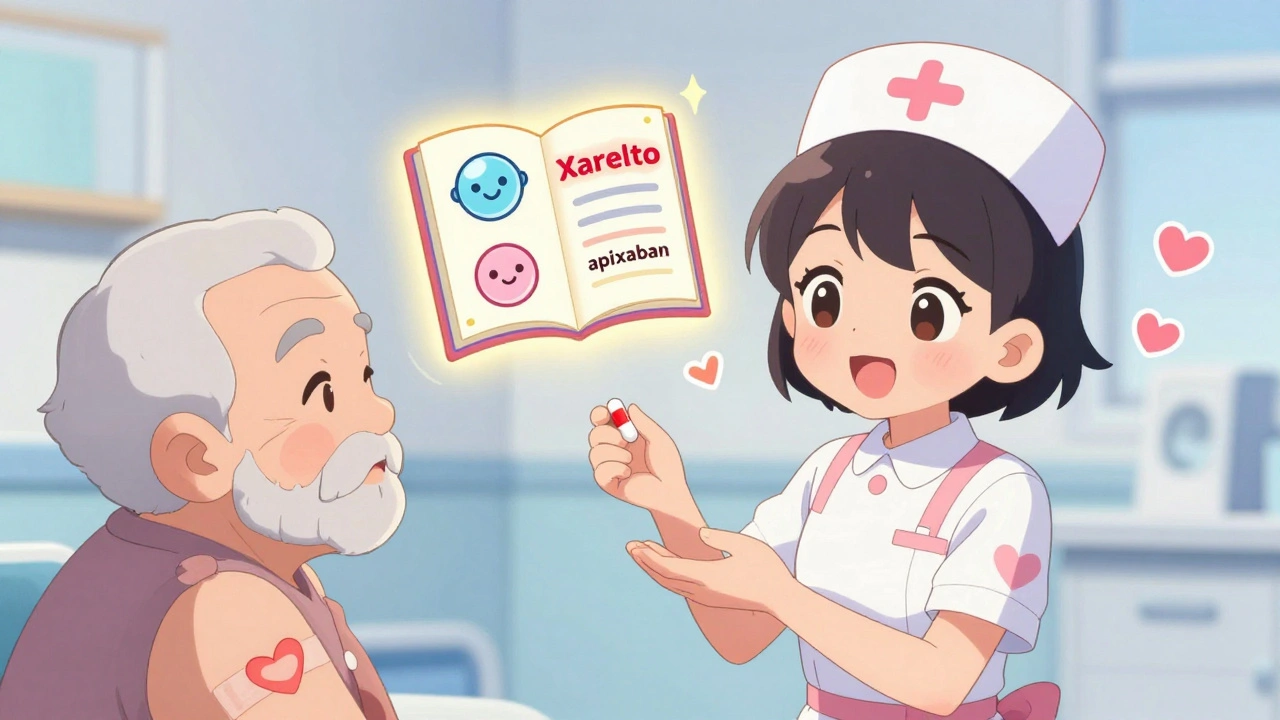
Therapeutic substitution means swapping one drug for another that’s chemically different but expected to do the same job. For example, switching from brand-name Xarelto to generic apixaban for blood thinning. Both prevent clots. Both are approved. But they’re not the same molecule. Here’s how it plays out in a real hospital: A 78-year-old patient with atrial fibrillation is admitted from a nursing home. She’s on Xarelto. The hospital’s formulary lists apixaban as preferred because it’s cheaper and has better real-world safety data. The pharmacy team doesn’t need the doctor’s permission-they’re allowed to switch it under the formulary’s rules. The patient gets apixaban. The nurse documents it. The pharmacist flags it in the chart. Sounds simple? It’s not. When that same patient is discharged back to the nursing home, and their home facility’s formulary only covers Xarelto, she gets switched back. No new order. No discussion. Just a system-driven swap. One pharmacist on Reddit described this as “medication whiplash”-patients getting different drugs every time they move between settings. And that’s where risks creep in. Studies show institutional formularies can reduce adverse drug events by 15-30%. But that only works if substitutions are tracked, documented, and communicated. Too often, they’re not. A Tampa nursing home director told the American Health Care Association that their quarterly reviews caught seven dangerous interactions they’d have missed otherwise. But across the country, many facilities still treat substitutions as a back-office cost-cutting trick-not a clinical decision.Who Decides What Goes on the Formulary?
It’s not the CEO. It’s not the drug rep. It’s a committee. Florida law requires three key members: the medical director, the director of nursing services, and a certified consultant pharmacist. Other states may vary, but the pattern is the same: clinical leadership, not finance alone. The committee doesn’t just pick drugs. They build rules. How do you evaluate a new medication? What data do you need? What happens if a doctor wants a non-formulary drug? What’s the process for appealing a substitution? Most formularies use a tiered system. Tier 1: generic drugs with strong evidence and low cost. Tier 2: brand-name drugs with no generic alternative. Tier 3: expensive drugs that require prior authorization. Patients pay less out of pocket for Tier 1, more for Tier 3. But here’s the twist: in institutional settings, the patient doesn’t pay the bill. The facility does. So the tier system isn’t about patient cost-it’s about institutional budget control. The process is evidence-based. The committee looks at peer-reviewed studies, real-world outcomes, and FDA data. They don’t rely on marketing. A 2023 survey by the American Society of Health-System Pharmacists found that 85% of hospital pharmacy directors rely on the Academy of Managed Care Pharmacy’s toolkit to make decisions. That’s the gold standard. But here’s the problem: not all committees are equal. In small clinics or underfunded nursing homes, the pharmacist might be part-time. The medical director might be overworked. The nursing director might not have time to review data. That’s when formularies become bureaucratic checkboxes-not clinical tools.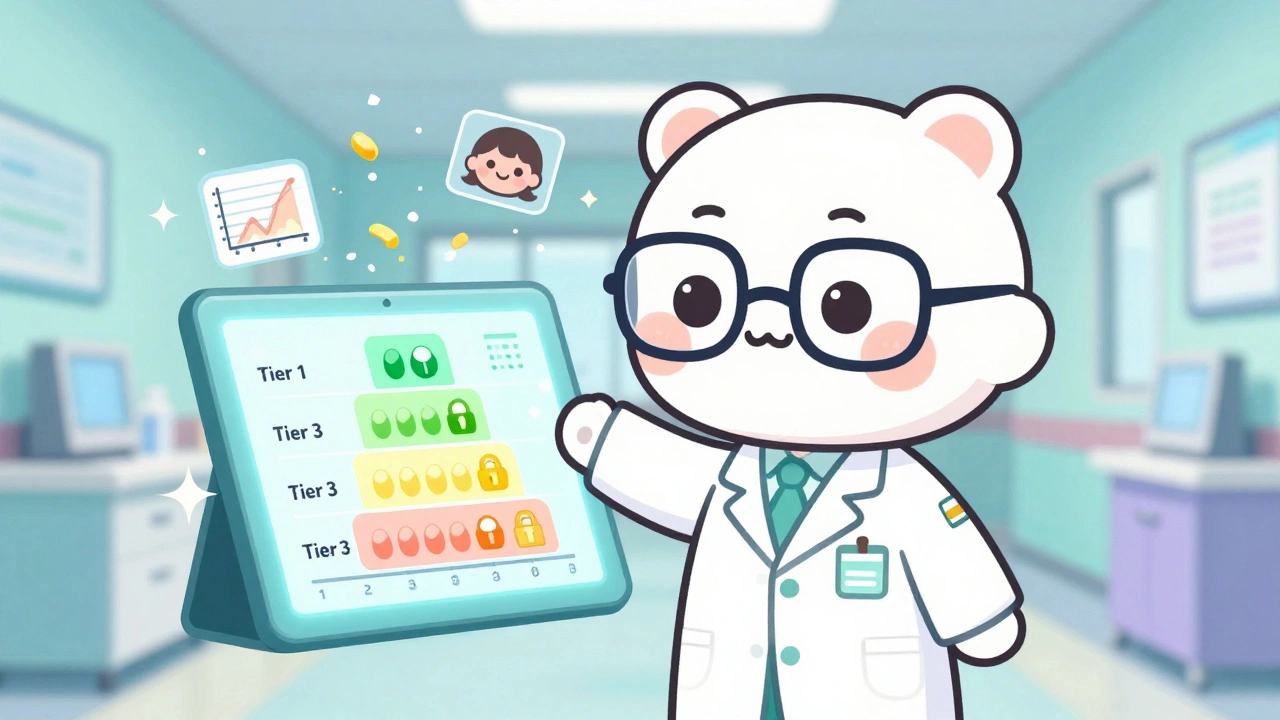
Why Institutional Formularies Are Different from Insurance Formularies
Insurance formularies decide what your plan covers. Institutional formularies decide what your hospital gives you. They’re similar in structure but different in purpose. Insurance formularies are designed to control costs for millions of people across a region. They’re run by pharmacy benefit managers (PBMs), who negotiate discounts with drug makers. If a drug isn’t on the list, your insurer won’t pay for it. You might pay hundreds out of pocket. Institutional formularies are about safety and consistency within a single facility. A patient might be on a non-formulary drug at home, but once they’re admitted, the hospital switches them. Why? Because the hospital needs to standardize care. If every nurse has to learn five different ways to administer the same drug, errors happen. Also, insurance formularies rarely allow substitutions without a doctor’s approval. Institutional formularies often do. That’s the key difference: authority. In a hospital, the pharmacy team has legal permission to swap drugs under specific conditions. In insurance, you need a prior authorization or a doctor’s note. This creates confusion. A patient might be on a drug covered by their insurance but not on the hospital’s formulary. Or vice versa. When they’re discharged, the discharge summary might not even mention the change. That’s how patients end up taking the wrong dose, the wrong drug, or nothing at all.The Real Costs: Bureaucracy, Confusion, and Patient Risk
Yes, formularies save money. But they also create headaches. One hospital pharmacist in Ohio told a 2024 survey that it takes 4-8 weeks for staff to learn the formulary rules. Nurses need training on when substitutions are allowed. Pharmacists need to update electronic health records (EHRs). Doctors need to understand how to request exceptions. And patients? They’re often left in the dark. AARP found that 67% of long-term care patients don’t know when their meds have been swapped. No one tells them. No one asks if they’ve had side effects. That’s not informed consent. That’s negligence. And the paperwork? It’s brutal. Florida facilities spend 20-30 hours per quarter just documenting formulary compliance. EHR systems often don’t integrate well with formulary rules. One Florida Agency for Health Care Administration survey found 68% of facilities had technical problems syncing their drug lists with their EHRs. That means alerts don’t pop up. Nurses don’t get warnings. Patients get the wrong drug. Even worse: some formularies are too rigid. A doctor treating a complex patient might need a drug that’s not on the list. The request for an exception can take days. The patient’s condition worsens. The doctor gets frustrated. The pharmacist feels caught in the middle. That’s when formularies stop being helpful-and start being harmful.
What’s Changing in 2025 and Beyond
The rules are tightening. Florida’s 2025 update to Statute 400.143 now requires more detailed reporting on substitution outcomes. CMS announced in March 2024 that nursing home formulary compliance will be part of their public quality ratings starting in Q3 2025. That means hospitals with poor substitution tracking will lose stars-and patients. The American Society of Health-System Pharmacists updated their guidelines in April 2024, recommending bi-monthly reviews instead of quarterly. That’s a big shift. It means formularies are becoming more dynamic, more responsive. The FDA is launching a pilot in 2025 to standardize therapeutic equivalence ratings for more drug classes. Right now, only certain generics are officially deemed interchangeable. That’s changing. When more drugs get that label, substitutions will become easier-and safer. And the future? AI. Gartner predicts that by 2026, 80% of healthcare systems will use AI to adjust formularies in real time based on patient outcomes. Imagine a system that sees a spike in kidney issues after switching to Drug A, then automatically flags it and suggests an alternative. That’s not sci-fi-it’s coming. But here’s the catch: technology can’t fix bad policy. If the committee doesn’t include patient advocates, if the rules aren’t transparent, if staff aren’t trained, then even the smartest AI will just automate mistakes.What Patients and Families Should Know
You don’t need to understand the law. But you do need to ask questions. If you or a loved one is in a hospital or nursing home:- Ask: “Has my medication been changed?”
- Ask: “Why was it changed?”
- Ask: “Is this a formulary substitution?”
- Ask: “Can I get the original drug if I want?”

Comments
Therapeutic substitution is such a double-edged sword. On one hand, you’ve got the clinical logic-cost-efficiency, evidence-based tiers, standardized protocols. On the other, you’ve got patients getting switched like chess pieces between Xarelto and apixaban with zero context. I’ve seen nurses scramble to explain why a med changed after discharge, and the family’s face? Pure confusion. It’s not just about compliance-it’s about continuity. The system’s built on data, but the human element? Still treated like an afterthought. 🤔
Ohhh here we go again-the ‘formulary is a tool, not a rule’ fairy tale. 🙄 Let’s be real: this is corporate cost-cutting dressed up in white coats. That ‘committee’? Half the time it’s the pharmacist who’s also the janitor on Tuesdays, and the ‘medical director’ is moonlighting at three other facilities. They don’t review outcomes-they review the budget spreadsheet. And don’t get me started on ‘AI adjusting formularies in real time.’ Yeah, right. Until then, we’re just automating mistakes with more PowerPoint slides. #MedicineIsNotExcel
There’s a deeper question here, and it’s not about drugs-it’s about trust. When we outsource clinical decisions to committees and algorithms, we’re quietly surrendering autonomy. Who are we really serving? The patient? Or the institution’s balance sheet? I’ve sat in nursing homes where the same elderly woman gets switched back and forth between two blood thinners every time she’s admitted or discharged. No one asks how she feels. No one tracks her cognition. We call it ‘efficiency.’ I call it emotional neglect. We’ve turned healing into a logistics problem. And that’s the real tragedy.
It is imperative to recognize that institutional formularies represent a necessary structural intervention in the context of escalating pharmaceutical expenditures and inconsistent clinical practices. The evidence base supporting standardized substitution protocols is robust, and the reduction in adverse drug events is statistically significant across multiple peer-reviewed studies. To dismiss these systems as bureaucratic is to misunderstand the foundational principles of evidence-based institutional governance. The challenge lies not in the existence of formularies, but in the fidelity of their implementation.
Let’s cut through the warm, fuzzy language. This isn’t ‘patient safety’-it’s pharmacy-driven rationing disguised as science. The fact that 67% of patients don’t even know their meds were swapped? That’s not a flaw-it’s the design. These systems exist to minimize liability, not maximize outcomes. And now they’re gonna use AI to make it worse? Brilliant. Automate the negligence. Next up: AI deciding which patients ‘deserve’ the expensive drug based on their social security number. This isn’t healthcare. It’s a corporate experiment with human beings as test subjects.
Big respect to the pharmacists who are actually trying to do the right thing in broken systems. 🙌 I’ve worked with some who stay late to track down old med lists, call discharge nurses, and even print out handouts for families. They’re the unsung heroes. But they shouldn’t have to. If the system was designed with communication as a core pillar-not an afterthought-we wouldn’t need heroes. We’d need better tech, better training, and better laws. Keep pushing. You’re not alone. 💪
Did you know that in some places, the pharmacist has to sign a paper form every time they swap a drug? And that paper goes into a box? And no one ever opens the box? That’s not a policy. That’s a joke. I saw a man in a wheelchair cry because he didn’t know why his blood thinner changed. He’d been on it for 12 years. They didn’t even tell him. That’s not efficiency. That’s cruelty. And they call it ‘best practice’? No. That’s just lazy.
Florida’s law is the gold standard. Why are we letting other states drag their feet? If you can’t handle a formulary, you shouldn’t be running a nursing home. This isn’t ‘liberty’-it’s negligence. We need mandatory audits, real-time EHR integration, and penalties for non-compliance. No more excuses. American healthcare doesn’t need more bureaucracy-it needs accountability. And if you’re not on board, you’re part of the problem.
AI formularies are coming. And honestly? I’m here for it. 🚀 Think about it: real-time data → adaptive dosing → zero errors. No more ‘medication whiplash.’ Just pure, optimized, algorithm-driven care. The old guard is scared of change. But the future? It’s not waiting. 🤖💊