
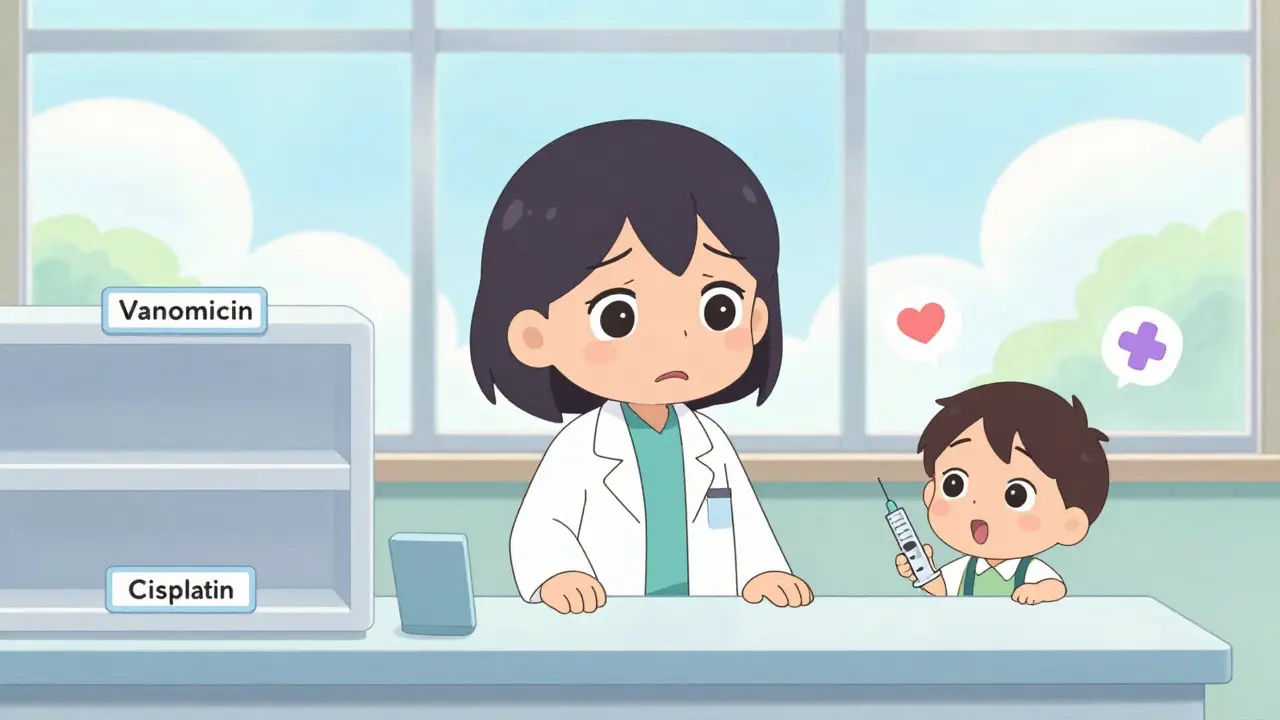
By December 2025, there are still 270 active drug shortages in the U.S.-and nearly all of them are generic medications. These aren’t rare glitches. They’re systemic failures that force hospitals to ration cancer drugs, pharmacies to turn away patients, and doctors to guess which substitute might work. If you’ve ever waited days for a prescription to fill-or been told your usual medication is unavailable-you’ve felt the impact. This isn’t about supply chain hiccups. It’s about how the business of cheap drugs made the system dangerously fragile.
Why Generic Drugs Are the Main Target
Generic drugs make up 90% of all prescriptions filled in the U.S. But they account for more than 70% of all shortages. Why? Because they’re designed to be cheap. Manufacturers compete on price, not quality or reliability. A generic version of a common antibiotic might sell for $2.50 a bottle, while the brand-name version costs $80. The profit margin? Sometimes as low as 5-10%. Compare that to brand-name drugs, which often earn 30-40% margins. When your profit is razor-thin, there’s no money to invest in better equipment, backup production lines, or quality control upgrades.Sterile injectables-like chemotherapy drugs, antibiotics, and IV fluids-are the worst hit. About 60% of all shortages involve these. Why? Because making them requires clean rooms, specialized machinery, and highly trained staff. One contamination event can shut down a whole facility for months. And if you’re only making one product with low margins, you can’t afford to build a second line. So when one plant goes down, the entire country runs out.
The Single-Point Failure Problem
Most generic drugs don’t have multiple manufacturers. FDA data from 2023 shows that about 70% of generic drugs have only one or two approved makers. That means if one company has a quality issue, shuts down for repairs, or decides to quit the market, there’s no backup. There’s no competition left to step in.Take vancomycin, a critical antibiotic used in hospitals. A single manufacturer in India had a FDA inspection failure in early 2024. The plant was closed for six months. No other U.S. facility could produce it fast enough. Hospitals went without it for over eight months. Pharmacists had to switch patients to alternatives-some less effective, some more expensive, some with worse side effects. Patients got sicker. More ended up in the ER.
This isn’t rare. It’s standard. The median length of a generic drug shortage has doubled since 2011-from 12 months to 24 months. That’s two full years without a vital medicine. And it’s getting worse.
Where the Drugs Come From-and Why That Matters
Over half of all drugs used in the U.S. are made overseas. Eighty percent of the active ingredients come from just two countries: China and India. That’s not just a supply chain-it’s a geopolitical risk.When India tightened its environmental regulations in 2022, dozens of API plants were shut down for failing inspections. When China had lockdowns during the pandemic, shipments stalled. When a new tariff proposal surfaced in early 2025, manufacturers scrambled to stockpile. But you can’t stockpile a drug that’s made on-demand. You can’t store IV bags for years. So when one country slows down, the U.S. feels it immediately.
And the number of U.S.-based generic manufacturing facilities has dropped by 22% since 2015-from 1,842 to just 1,437. Why? Because it’s cheaper to make drugs abroad. But that convenience comes at a cost: less oversight, longer lead times, and zero redundancy.
Who Pays the Price?
It’s not just hospitals. It’s patients.A 2024 American Hospital Association survey found that 89% of hospitals had to delay treatments because of shortages. Cancer centers were hit hardest: 67% reported changing chemotherapy plans because drugs like cisplatin or doxorubicin weren’t available. Some patients got lower doses. Others got older, less effective drugs. A few didn’t get treated at all.
Independent pharmacies aren’t spared. Nearly 80% reported shortages forced them to spend over 12 hours a week tracking down alternatives. That’s 12 hours not spent counseling patients, not filling prescriptions, not answering questions. And 43% of those pharmacies said patients walked away because they couldn’t afford the substitute or just gave up waiting.
Even chronic pain patients aren’t safe. When opioids like morphine or hydromorphone go short, patients who rely on them for daily function are denied refills. Emergency rooms see more visits for uncontrolled pain. Mental health worsens. The system doesn’t just fail-it breaks down one patient at a time.
The Hidden Cost to Healthcare Workers
Pharmacists are on the front lines. They’re the ones who have to find replacements, update electronic systems, train nurses, and explain to doctors why the usual drug isn’t working. According to ASHP’s 2024 survey, pharmacists spend 15-20 hours a week just managing shortages. That’s nearly half a workday.And it’s not just time. It’s stress. It’s guilt. One hospital pharmacist on Reddit wrote: “I had to tell a mom her child’s seizure medication was out of stock. We gave her a different one. Two weeks later, the seizures came back worse. I still think about it.”
Training has changed, too. Pharmacy schools used to focus on dosing and interactions. Now, they have to teach therapeutic substitution across dozens of drug classes. Nurses need to know alternatives. Doctors need to understand risks. Everyone’s scrambling.
Hospitals are spending an estimated $213 million a year just managing these shortages. That’s money that could go to staffing, equipment, or patient care. Instead, it’s going to paperwork, emergency orders, and crisis response.
Why the Market Is Broken
The generic drug industry used to be a success story. It brought down costs and made medicine affordable. But now, the race to the bottom has backfired.Profit margins have collapsed-from 35% in 2010 to just 18% in 2024. The top 10 manufacturers now control 60% of the market. That sounds like efficiency. But it’s really consolidation. Fewer players means less competition, less innovation, and more risk.
The FDA has issued 35% more quality citations since 2020. That’s not because manufacturers are sloppier. It’s because they’re running old equipment with no money to upgrade. They’re cutting corners to stay afloat.
As Dr. Valerie Malta from the University of Utah said: “Low-priced drugs are more vulnerable to shortage because they don’t pay enough to invest in reliability.” The market rewards the cheapest bid-not the safest, most reliable supplier.
What’s Being Done-and Why It’s Not Enough
There have been efforts. Executive Order 14050 in 2020 created a list of essential medicines and temporarily reduced shortages by 32%. The FDA launched a Drug Shortage Task Force in 2024 with four goals: diversify manufacturing, offer financial incentives, use advanced tech like continuous manufacturing, and improve early warning systems.But these are band-aids. Without changing how generics are priced, nothing will fix the root problem. The Congressional Budget Office predicts shortages will hit 350 by the end of 2026. The Congressional Research Service warns: “Without addressing the pricing structure that disincentivizes investment in quality manufacturing, generic drug shortages will remain a persistent threat.”
Proposed tariffs on imports from China and India could make things worse. If a shipment of API costs 50% more, manufacturers can’t absorb it. They’ll cut production. Or quit the market. And then what?
What Needs to Change
The fix isn’t complicated. It’s just politically hard.- Guarantee minimum prices for essential generic drugs-enough to cover quality production, not just the lowest bid.
- Incentivize redundancy-pay manufacturers to keep backup lines running, even if they’re not fully utilized.
- Invest in U.S. manufacturing-tax credits or grants to bring production back or upgrade existing facilities.
- Require transparency-mandate manufacturers to report potential shortages six months in advance, not after the fact.
Right now, the system is built on the assumption that cheap equals good. But when a life-saving drug disappears for a year, the cost isn’t measured in dollars. It’s measured in missed treatments, preventable complications, and lost trust.
Generic drugs saved billions. But they can’t save lives if they’re not there when you need them.
Why are generic drug shortages getting worse?
Generic drug shortages are worsening because the market rewards the lowest price, not reliability. Manufacturers have razor-thin profits, making it hard to invest in quality equipment, backup production, or skilled staff. Many drugs rely on a single factory, often overseas, with no fallback. When one plant fails-due to inspections, supply issues, or shutdowns-there’s no one else to step in. The number of U.S. manufacturing facilities has dropped 22% since 2015, and global supply chains are fragile. Without policy changes to ensure fair pricing and redundancy, shortages will keep rising.
Which drugs are most commonly in short supply?
Sterile injectables are the most affected, making up about 60% of all shortages. These include chemotherapy drugs like cisplatin and doxorubicin, antibiotics like vancomycin and ampicillin, IV fluids like saline and dextrose, and anesthetics like propofol. These drugs require complex, sterile manufacturing processes and have very low profit margins. Even small disruptions-like a single contamination or equipment failure-can shut down production for months.
Do brand-name drugs have shortages too?
Yes, but far fewer. Between 2018 and 2023, there were 1,391 shortages of generic drugs compared to just 600 for brand-name drugs. Brand-name drugs usually have higher profit margins, so manufacturers can afford backup production, quality controls, and inventory. They also often have therapeutic alternatives. When a generic drug disappears, there’s rarely another option. With brand-name drugs, doctors can often switch to a similar medicine.
How do shortages affect patient safety?
A 2022 American Medical Association survey found that 63% of pharmacists reported drug shortages led to serious adverse patient outcomes. Patients get substituted with less effective or more toxic alternatives. Cancer treatments are delayed or changed. Pain goes uncontrolled. Infections aren’t treated properly. In some cases, patients die because the right drug wasn’t available. Shortages don’t just inconvenience care-they directly increase risk.
Can I get a different generic version if my drug is out of stock?
Sometimes, but not always. Generics are supposed to be interchangeable, but in practice, they’re not always the same. Different manufacturers use different inactive ingredients, manufacturing processes, or release profiles. For some drugs-especially extended-release or injectable ones-switching can cause side effects or reduced effectiveness. Pharmacists and doctors must carefully evaluate each alternative. In many cases, no safe substitute exists, and patients simply go without.
Is there a way to know if a drug is going to be in short supply?
The FDA and ASHP publish public lists of current shortages, but they’re often reactive-not predictive. Manufacturers aren’t required to report potential shortages until they’re already happening. Some hospitals use internal tracking systems, and pharmacists monitor supply alerts. But there’s no reliable early-warning system for patients or even most providers. You’ll usually find out a drug is out of stock when you go to pick it up.

Comments
This system is broken and everyone knows it. We let drug companies chase pennies while patients suffer. It’s not rocket science-pay manufacturers enough to make drugs safely or accept the consequences.
The structural fragility stems from low-margin, high-volume economics combined with concentrated supply chains. The FDA’s regulatory burden is non-trivial, but the real issue is the absence of price floors for critical generics. Without margin assurance, capital allocation for redundancy is irrational from a shareholder perspective.
As someone from India, I see how hard these plants work. The regulations are tough, but the pressure to cut corners is worse. We need global cooperation-not blame. Better pay, better oversight, better outcomes for everyone.
It is an incontrovertible fact that the erosion of domestic pharmaceutical manufacturing capacity constitutes a national security vulnerability of the highest order. The systemic abdication of sovereign capability in favor of transnational cost arbitrage has rendered the United States perilously dependent upon foreign entities with divergent geopolitical interests.
So we’re supposed to feel bad for pharma companies making $2.50 a bottle? 😒 People are dying because we’re cheap. Not because they’re poor. Because we’re cheap.
China owns our medicine. It’s not an accident. It’s a strategy. They let us get addicted to cheap pills, then hold the supply hostage. The FDA’s just a puppet. Wake up. This is economic warfare.
There is hope. We can rebuild. We must invest in domestic manufacturing, incentivize redundancy, and treat essential medicines as public infrastructure-not commodities. The tools exist. We need the will.
They’re just trying to make a buck, right? 😔 But what if we paid a little more? Like, $5 instead of $2.50? Would that kill anyone? 🤔 Maybe we could actually save lives instead of just saving pennies.
I used to think this was just a supply chain issue. Then I watched a nurse cry because she couldn’t get the right chemo drug for her patient. This isn’t about economics. It’s about dignity. We’ve forgotten what healthcare is supposed to be for.
China and India are laughing all the way to the bank. We outsourced our medicine and now we’re begging for scraps. Time to bring it home. No more excuses.
It is lamentable that the prevailing market paradigm prioritizes cost-efficiency over patient safety, thereby incentivizing the consolidation of production facilities and the erosion of quality assurance protocols. The absence of a regulatory framework that internalizes the externalities of drug scarcity constitutes a profound failure of public policy. One might posit that the current system is not merely dysfunctional, but morally indefensible.
Of course, the solution is to ‘pay more’-as if that hasn’t been tried. What about reforming the FDA’s approval process? Or introducing tiered pricing based on clinical necessity? Or-gasp-ending the patent evergreening that keeps brand-name monopolies alive? No, let’s just throw money at the same broken model.
they said it was gonna be cheap n easy… now we got no meds n no one cares. why do they even make these drugs if they cant even keep them stocked? 😑
My uncle works in a generic drug plant in Gujarat. He says they’re running machines from the 90s. No one upgrades because no one pays enough. It’s not laziness. It’s survival.