
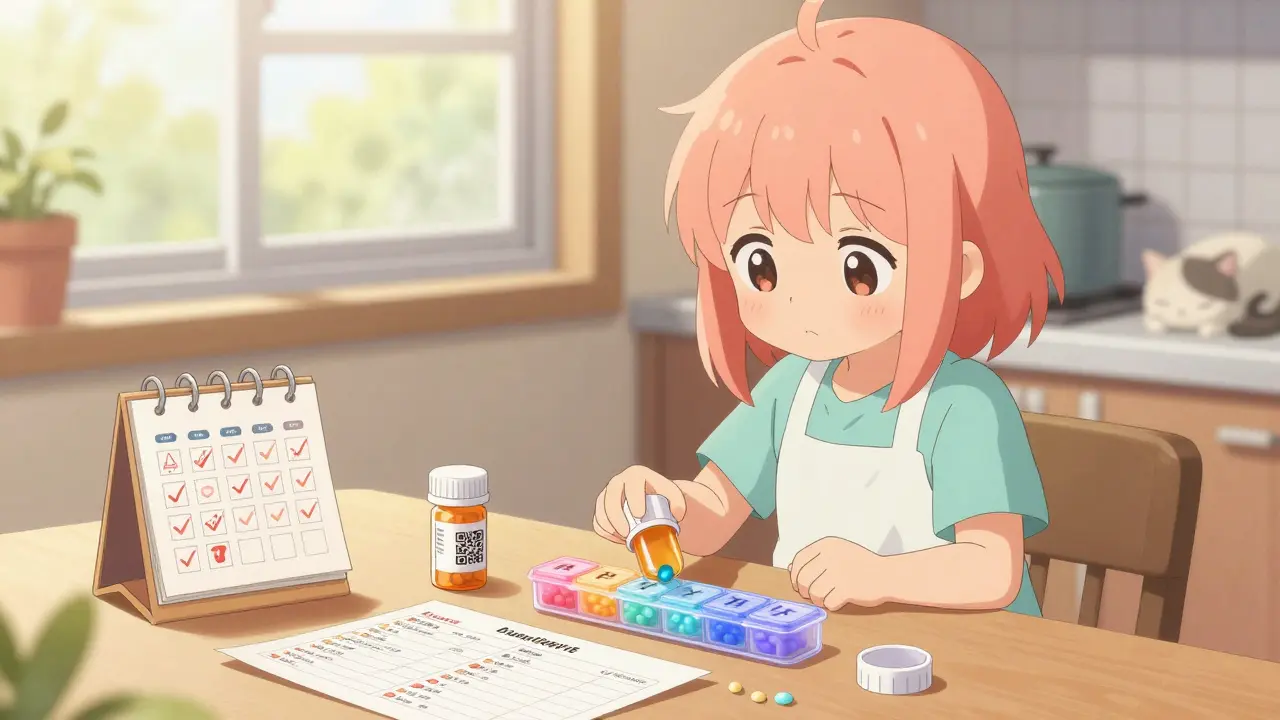
Every year, over 1.5 million people in the U.S. are harmed by medication errors - and most of those happen at home, not in hospitals. If you're caring for a parent, spouse, or loved one who takes multiple medications, you're not just helping them get better - you're their last line of defense against dangerous mistakes. The good news? You don’t need to be a nurse to prevent these errors. With the right habits, you can cut the risk of harm by more than half.
Why Medication Errors Happen at Home
Most people assume hospitals are the most dangerous places for medication mistakes. But the truth? The biggest risks are right in your kitchen or living room. A 2022 study in the Journal of the American Medical Association found that 30% of hospital readmissions within 30 days are caused by medication errors at home. That’s not because nurses messed up - it’s because caregivers, often overwhelmed and undertrained, are managing complex drug regimens without support. Think about it: an older adult might be taking five, eight, even twelve different pills a day. Some are prescriptions. Some are over-the-counter. Some are supplements. Some were prescribed years ago and never reviewed. One wrong dose, one missed pill, one bad interaction - and a simple mistake can send someone to the ER.What You Need to Know About Each Medication
You can’t protect someone if you don’t know what they’re taking. Start with a complete, updated list. Not a scrap of paper. Not a mental note. A real, written list - and keep it with you at all times. Here’s what every entry on your list needs:- Brand and generic name - Don’t write “blood pressure pill.” Write “Lisinopril 10mg” (generic) and “Zestril 10mg” (brand).
- Exact dosage - Is it 500mg tablet? 10mL liquid? 2 drops? Write it clearly.
- Timing - “Take once daily” isn’t enough. Is it 8 a.m. with breakfast? 8 p.m. before bed? Write the time.
- Purpose - Why are they taking it? For blood pressure? For pain? For sleep? This helps you spot if a drug is being duplicated or prescribed unnecessarily.
- Side effects - What should you watch for? Dizziness? Nausea? Confusion? Write them down so you know when something’s wrong.
Creating this list takes 60 to 90 minutes the first time. But once it’s done, you’ll reduce medication errors by 52%, according to the Mayo Clinic Proceedings. That’s not a guess - that’s data.
Storage and Expiration: The Hidden Risks
You wouldn’t leave milk out on the counter for weeks. But how many of us leave pills in the bathroom cabinet - warm, humid, and full of steam? The FDA says 90% of caregivers don’t check expiration dates. That’s dangerous. Some medications lose potency. Others break down into harmful chemicals. And if you’re giving a child liquid medicine from a bottle that’s been sitting in the sun? You could be giving them a wrong dose - or even a toxic one. Here’s what to do:- Store most medications at 68-77°F (20-25°C). That’s room temperature - not the bathroom, not the car, not the windowsill.
- Keep them away from moisture. A sealed plastic container in a closet is better than a medicine cabinet.
- Check expiration dates every month. If it’s expired, toss it. Don’t wait. Don’t hope it’s still good.
- For liquids, especially insulin or antibiotics, check the label. Some need refrigeration.
And never use a kitchen spoon to measure liquid medicine. A 2021 study in JAMA Pediatrics found that household spoons vary by 20-40% in volume. That’s like giving a child 10 mL one day and 14 mL the next - a 40% overdose. Always use a calibrated oral syringe. They cost less than $3 at any pharmacy.
Pill Organizers and Tech Tools: What Actually Works
If your loved one has dementia, memory loss, or just a busy schedule, a pill organizer isn’t optional - it’s essential. The Alzheimer’s Association recommends seven-day organizers with AM/PM compartments. Why? Because 78% of caregivers on ALZConnected forums say their loved ones miss doses without one. And 63% of those caregivers say alarms on pill organizers made the biggest difference. But tech isn’t for everyone. A 2023 National Institute on Aging focus group found that 27% of caregivers over 65 find apps like Medisafe or CareZone confusing. If that’s you, stick with the physical organizer. No shame in that. Still, if you’re comfortable with a phone, try one. Caregivers using digital trackers reported 32% fewer missed doses than those using paper logs. The key? Set daily reminders. Link them to real-life habits - like brushing teeth or eating breakfast.When Medications Clash: The Silent Killer
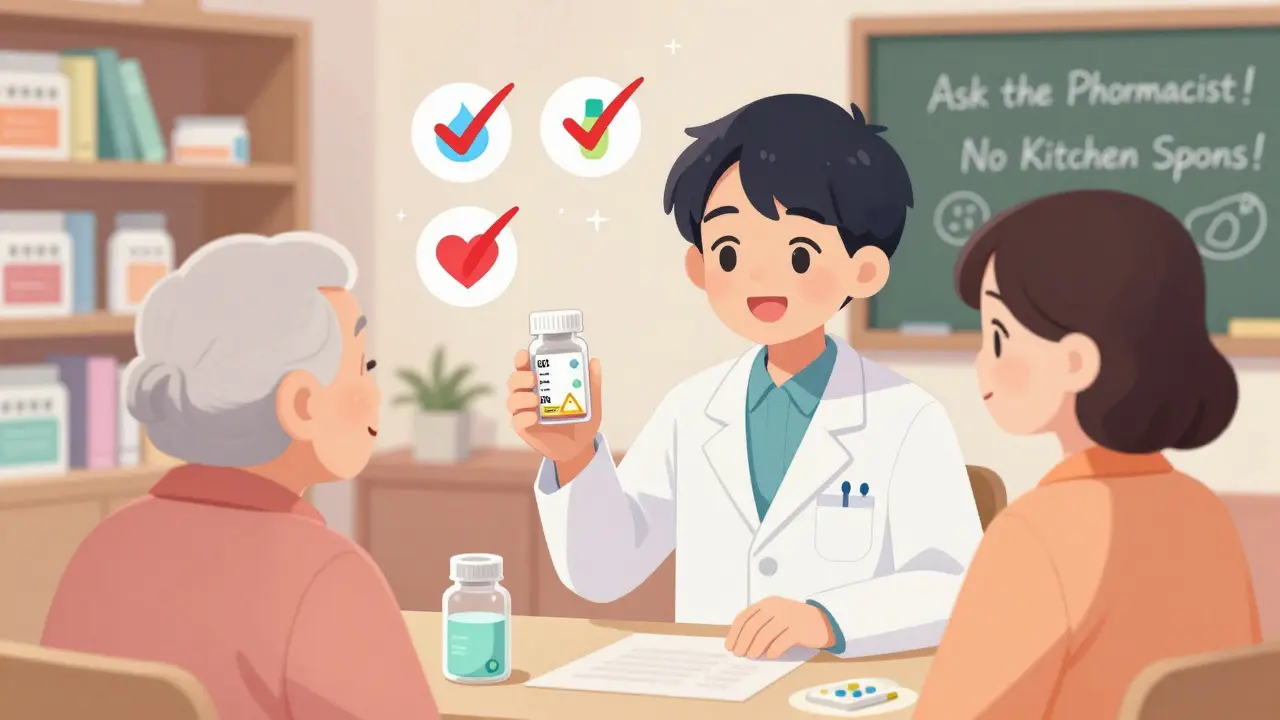
The biggest danger isn’t forgetting a pill. It’s giving two that shouldn’t be together. Dr. Michael Steinman from UCSF found that 48% of older adults take at least one drug that’s more risky than helpful. The most common? Proton pump inhibitors (like omeprazole) for heartburn and benzodiazepines (like lorazepam) for anxiety. Both can cause falls, confusion, and even long-term brain damage in seniors. And then there are look-alike, sound-alike drugs. HydroXYZINE (for allergies) vs. hydroCORTISONE (for skin). One is a sedative. The other is a steroid. Mix them up? Disaster. The solution? Ask the pharmacist. A 2022 study from the American Pharmacists Association found that 35% of pharmacy visits reveal hidden risks when caregivers ask, “Is this safe with everything else they’re taking?” One caregiver on FamilyCaregiver.org said: “After requesting a medication therapy review, the pharmacist found three dangerous interactions I didn’t know about.” Make this a habit. Go to the pharmacy with your list. Ask: “Are all these still needed? Any here that might be doing more harm than good?”Transition Time: The Most Dangerous Moment
The moment your loved one comes home from the hospital? That’s when errors spike. Dr. Joanne Lynn’s 2022 study found that 62% of medication errors happen during care transitions. A patient gets discharged with a new prescription. The caregiver doesn’t know about it. The old meds aren’t stopped. The patient ends up taking duplicates - or dangerous combos. The CARE Act, now in 47 states, requires hospitals to give caregivers clear, written instructions before discharge. But if they don’t? Ask for it. Demand it. Say: “I’m the one managing the meds at home. I need a full list of changes - what was added, what was stopped, what was changed.” Write it down. Read it back. Confirm with the pharmacist. Don’t assume.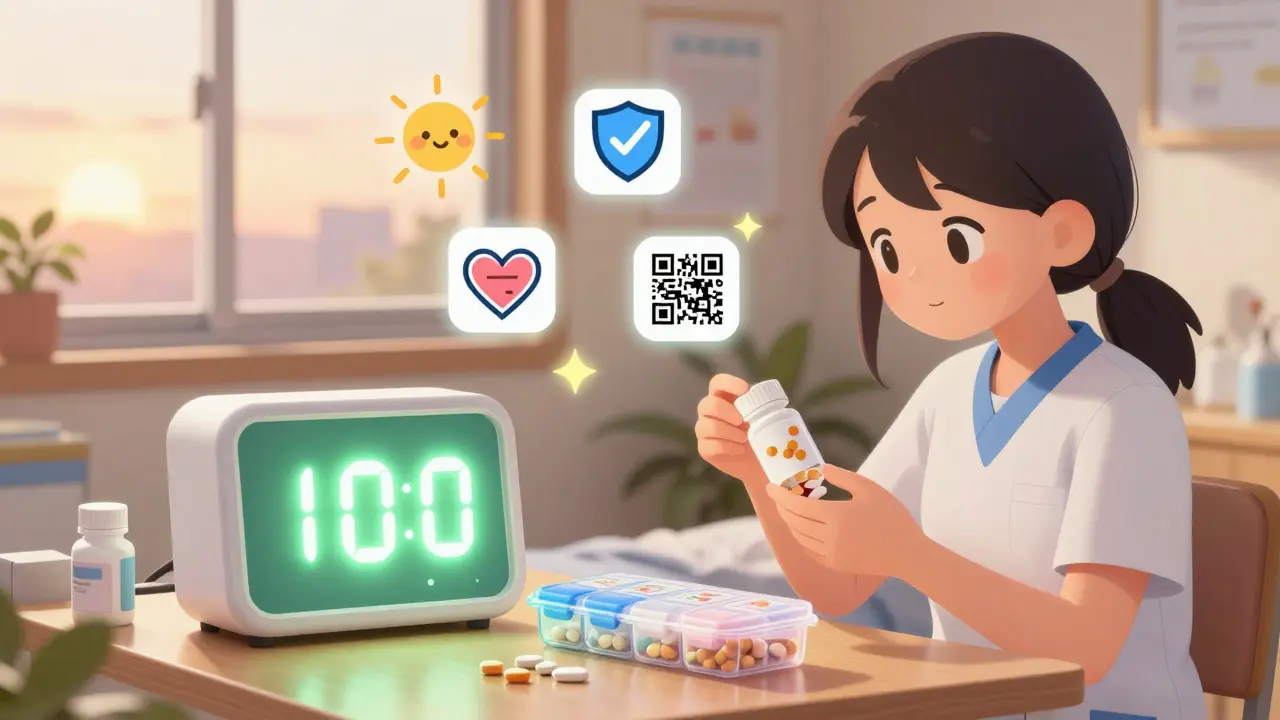
Get Help: The 6-Month Checkup
You wouldn’t skip your car’s oil change. Why skip your loved one’s medication checkup? Caregivers Nova Scotia recommends a bi-annual pharmacist review. Every six months, bring the full list to the pharmacy. Ask for a Medication Therapy Management (MTM) session. It’s free under Medicare Part D for anyone taking eight or more medications. This isn’t a sales pitch. It’s a safety net. A 2022 study in the Journal of the American Geriatrics Society found that these reviews reduce adverse drug events by 28%. Pharmacists are trained to spot:- Drugs that don’t belong
- Dosages that are too high
- Interactions you missed
- Medicines that are outdated
And they’re not judgmental. They’ve seen it all. Go. Bring the list. Ask questions. Make this a non-negotiable habit.
Weekly Check: The 10-Minute Habit
Every Sunday, set a 10-minute timer. Do this:- Check expiration dates on all bottles.
- Count pills. Are there more than expected? Less? That could mean someone’s taking extra - or not taking enough.
- Look for signs of tampering - broken seals, unusual color, strange smell.
- Check the pill organizer. Are pills stuck? Is it clean? Moldy? Toss it and get a new one.
This tiny habit prevents 18% of medication errors in children - and it works just as well for older adults. It’s not about being perfect. It’s about being consistent.
What’s Changing in 2026
The world of medication safety is getting smarter - and it’s getting easier for caregivers. - QR codes on prescription bottles (launched by the CDC in 2023) let you scan and instantly see dosage, purpose, and warnings. - Medication synchronization programs from CVS and Walgreens now align all prescriptions to one weekly pickup day - reducing missed doses by 39%. - Smart dispensers are starting to appear. They use AI to verify identity and dosage before releasing pills. Pilot programs cut dosing errors by 41%. - The Caregiver Action Network is launching a Medication Safety Certification in November 2024 - free training for 53 million U.S. caregivers.You don’t need to wait for tech to save your loved one. Start today. With the list. With the organizer. With the pharmacist. With the 10-minute weekly check.
Medication safety isn’t about memorizing every rule. It’s about building one habit at a time - and never letting your guard down.
How do I know if a medication is still needed?
Ask the pharmacist during a Medication Therapy Management (MTM) session. They use tools like the Beers Criteria to identify drugs that are risky for older adults - like benzodiazepines, anticholinergics, or long-term proton pump inhibitors. If a drug was prescribed years ago for a short-term issue, it might not be needed anymore. Never stop a medication without talking to the doctor - but always ask if it’s still necessary.
Can I use a pill organizer for all medications?
No. Some medications shouldn’t be moved out of their original bottles. These include pills that are sensitive to light or moisture (like nitroglycerin), capsules that must be taken whole, and drugs with special storage needs (like insulin). Always check the label or ask the pharmacist before transferring a medication to an organizer.
What should I do if I miss a dose?
Don’t guess. Check the label or call the pharmacy. For some drugs (like antibiotics), missing a dose means taking it as soon as you remember. For others (like blood pressure meds), doubling up can be dangerous. The rule of thumb: if it’s been less than half the time until the next dose, take it. If it’s more, skip it. Never double the next dose unless instructed.
How do I handle over-the-counter meds and supplements?
Treat them like prescriptions. Many supplements - like St. John’s Wort, ginkgo, or garlic pills - interact dangerously with blood thinners, antidepressants, or heart meds. Always include them on your medication list. Ask the pharmacist: “Is this safe with everything else?” Don’t assume “natural” means “safe.”
Is it okay to use a smartphone app to track meds?
Yes - if it works for you. Apps like Medisafe and CareZone help reduce missed doses by 32%. But if you or your loved one finds them confusing, stick with paper lists and pill organizers. The goal isn’t tech - it’s safety. Use whatever method keeps you consistent and calm.
What if my loved one refuses to take their meds?
Don’t force it. First, find out why. Is it because of side effects? Cost? Confusion? Talk to the doctor - maybe there’s a better option. Sometimes, switching from a pill to a liquid form, or from daily to weekly dosing, helps. If it’s cognitive decline, try a pill organizer with alarms. If it’s fear or mistrust, involve the pharmacist. They can explain the purpose in simple terms. Never hide pills in food unless approved by a doctor - some meds lose effectiveness or become dangerous when crushed.
How do I know if a medication is expired?
Check the expiration date on the bottle or box. For most pills, it’s printed in MM/YYYY format. For liquids, it’s often stamped on the label. If the pill is cracked, discolored, or smells strange - toss it. If the liquid is cloudy, thick, or has particles - don’t use it. Even if it’s “just a few months past,” don’t risk it. Medications can degrade unpredictably. When in doubt, throw it out.
Can I save money by buying meds in bulk?
Only if the medication is stable and your loved one will use it all before it expires. Many drugs lose potency over time. If you’re buying a 90-day supply, make sure storage conditions are right - cool, dry, away from light. Also, check if your pharmacy offers mail-order or discount programs. Sometimes, paying monthly is cheaper than buying in bulk - especially with Medicare Part D coverage.

Comments
Just wanted to say this post is a game-changer. I’ve been caring for my dad for two years now, and I never realized how many risks were lurking in his medicine cabinet. I started the weekly 10-minute check last Sunday - and already found three expired pills and a bottle that had been sitting in the bathroom for years. Never again. Simple habits really do save lives.
Wow a 52% reduction just from writing stuff down holy cow next youll tell us breathing oxygen helps
As someone from India who cares for my 80-year-old aunt, I can say this hits home. We don’t have fancy apps or pill organizers here - just a plastic box and a handwritten list taped to the fridge. But this post reminded me to actually write down the purpose of each pill. My aunt’s BP meds were labeled ‘red pill’ - no idea why she took them. Now she knows. Small changes, big difference.
Okay so let me get this straight - we’re supposed to be doing a full medication audit every six months, checking expiration dates monthly, using calibrated syringes, avoiding kitchen spoons, scanning QR codes, and now we’re supposed to get certified? This feels less like safety advice and more like a corporate wellness program designed to make caregivers feel guilty for not being pharmacists. I’ve been managing my mom’s meds for four years. I’m not a nurse. I’m not a robot. I do my best. And my best is sometimes just remembering to give her the blue pill before dinner. That’s enough.
My mom’s meds are in a drawer and I just grab whatever looks right. I mean, come on - how many ways can you mess up a pill? I once gave her a Tylenol instead of her heart med because they were both white. She was fine. She’s 82. She’s not gonna die from a typo. Also I think that ‘medication synchronization’ thing is just a ploy to get us to buy more drugs. Why can’t we just use our brains?
Let’s be real - medication safety isn’t about checklists or QR codes. It’s about presence. It’s about showing up, even when you’re exhausted. I used to think I needed a spreadsheet. Then I started sitting with my wife while she took her pills. I’d say the name out loud. ‘Lisinopril. For blood pressure. You’re doing great.’ She started smiling. She started remembering. The organizer? Still in the drawer. The list? Scribbled on a napkin. But the connection? That’s what kept her alive. Don’t let perfection become the enemy of presence. Sometimes, just being there - quietly, consistently - is the most powerful tool you’ve got.
I mean I get it but like why is everyone acting like this is rocket science? My grandma takes 11 pills and I just put em in a box and say ‘take em’ every morning. She’s 90 and still bickering with her neighbor. I think we’re overcomplicating this. Also why is the article so long??
Let’s address the elephant in the room - 52% reduction? That’s not data. That’s a cherry-picked statistic from a Mayo Clinic study with a sample size of 87 people. Meanwhile, the CDC admits over 70% of medication errors go unreported. And who’s paying for these ‘free’ MTM sessions? The government? Your insurance? That’s a cost-shifting scheme disguised as care. Also - QR codes? In 2026? We’re still using paper lists in 2024. This whole thing feels like a tech startup’s fantasy wrapped in caregiver guilt.
My sister says this post is ‘too much.’ I say it’s barely enough. I’ve seen three people I love die from medication errors. One because a doctor didn’t know she was on warfarin. One because her son used a teaspoon. One because they kept giving her melatonin after she’d already had a stroke. This isn’t ‘tips.’ This is damage control. And if you think you’re doing fine? You’re probably the one who’s missing the signs.
I get why people are frustrated. I’ve been a caregiver for over a decade. I’ve had to learn all this the hard way. But here’s the thing - the system doesn’t help us. Hospitals discharge people with 10 new scripts and no explanation. Pharmacies don’t call. Doctors don’t have time. So yeah, we’re left with this massive, overwhelming checklist. But guess what? We’re still doing it. We’re still writing lists, counting pills, calling pharmacies at 10 p.m. because we’re scared. This post doesn’t make it easier. It just says, ‘You’re not alone.’ And honestly? That’s worth something.