

Imagine walking a tightrope. One step too far left, and you fall into the abyss of toxicity; one step too far right, and you plummet because the medicine isn't working at all. For patients taking Narrow Therapeutic Index (NTI) drugs, defined as medications with an extremely small margin between a safe, effective dose and a toxic or ineffective dose, this is not just a metaphor-it is daily reality. These are powerful medicines that save lives but demand precision. If your doctor has prescribed one of these, understanding how they work is not just helpful; it is essential for your safety.
The term "narrow therapeutic index" sounds technical, but the concept is simple. Most drugs have a wide safety net. You might take a little more or a little less than the perfect dose, and you’ll still be fine. With NTI drugs, that buffer zone is almost nonexistent. The U.S. Food and Drug Administration (FDA) defines these drugs specifically as those where "small differences in dose or blood concentration may lead to serious therapeutic failures and/or adverse drug reactions that are life-threatening." In plain English? A tiny change in how much drug is in your blood can mean the difference between feeling great and ending up in the hospital.
What Exactly Is a Narrow Therapeutic Index?
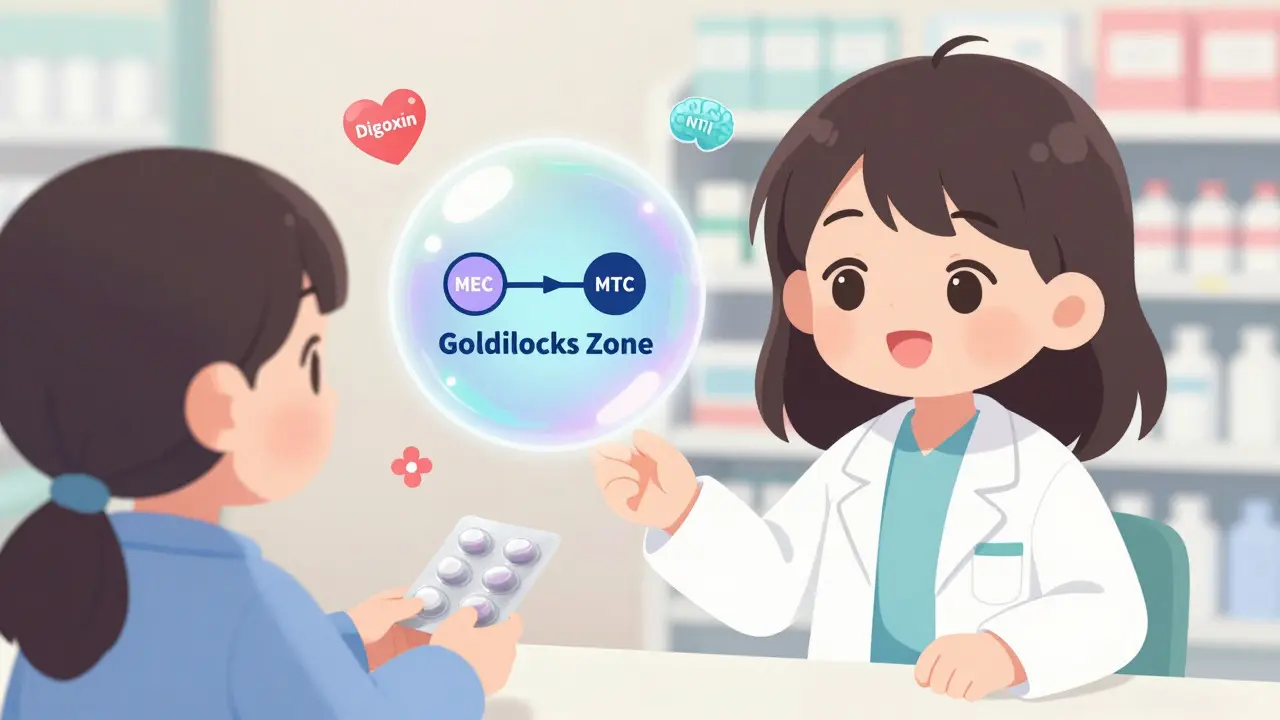
To understand why these drugs require so much attention, we need to look at the "therapeutic window." Think of this as the Goldilocks zone for medication levels in your body. On one side is the Minimum Effective Concentration (MEC)-the lowest amount needed to treat your condition. On the other side is the Minimum Toxic Concentration (MTC)-the point where the drug starts harming you.
For most medications, the gap between MEC and MTC is wide. But for NTI drugs, this gap is razor-thin-typically less than a twofold difference. According to clinical pharmacology studies, a mere 10-20% increase in blood concentration can shift an NTI drug from being therapeutic to being toxic. This steep concentration-response relationship means your body’s natural fluctuations, changes in diet, or even switching brands can throw you out of balance.
| Drug Name | Condition Treated | Therapeutic Range / Target | Risk of Overdose |
|---|---|---|---|
| Warfarin (Coumadin) | Blood Clots | INR 2.0-3.0 | Severe bleeding, hemorrhage |
| Lithium (Lithobid) | Bipolar Disorder | 0.6-1.2 mmol/L | Tremors, confusion, seizures |
| Digoxin (Lanoxin) | Heart Failure/Atrial Fibrillation | 0.5-0.9 ng/mL | Life-threatening arrhythmias |
| Tacrolimus (Prograf) | Organ Transplant Rejection | 5-15 ng/mL | Kidney damage, organ rejection |
| Levothyroxine (Synthroid) | Hypothyroidism | TSH within target range | Heart palpitations, bone loss |
Why Consistency Is King: The Generic Debate
If you take an NTI drug, you’ve likely heard the debate about generic versus brand-name medications. For most pills, generics are perfectly interchangeable. But for NTI drugs, the stakes are higher. The FDA requires stricter bioequivalence standards for these medications. While standard drugs allow an 80%-125% equivalence range between generic and brand versions, the European Medicines Agency (EMA) and increasingly the FDA mandate a tighter 90%-111% range for NTI drugs. This reduces variation from over 45% to less than 23%.
Why does this matter? Because small differences in absorption can lead to clinically significant changes in blood concentrations. Dr. Lawrence J. Lesko, former Director of the Office of Clinical Pharmacology at the FDA, noted that "NTI drugs require more stringent bioequivalence standards because small differences in absorption can lead to clinically significant differences in blood concentrations."
Patient experiences back this up. On the PatientsLikeMe forum, a warfarin user reported their INR jumping from a safe 2.5 to a dangerous 4.1 after switching to a different generic manufacturer, requiring emergency treatment. Similarly, thyroid patients often report severe fatigue and weight gain when switching levothyroxine manufacturers due to TSH fluctuations. The lesson? Try to stay on the same manufacturer if possible. If your pharmacy switches brands, ask your doctor to monitor your levels closely immediately after the switch.
Your Role in Monitoring: It’s Not Just Blood Tests
Taking an NTI drug is a partnership between you, your doctor, and your pharmacist. You cannot set it and forget it. Regular monitoring is non-negotiable. For warfarin, this means INR testing every 1-4 weeks. For lithium, blood checks every 3-6 months. For tacrolimus, twice-weekly tests initially after transplantation.
But monitoring isn’t just about lab results. You must learn to recognize the symptoms of both under-dosing and over-dosing. This awareness can save your life.
- Signs of Under-Dosing: Your condition returns. For warfarin, this might be leg swelling or chest pain (signs of clots). For bipolar disorder, it could be mood swings or mania. For transplants, it’s the risk of organ rejection.
- Signs of Over-Dosing: Toxicity symptoms appear. Warfarin overdose causes easy bruising, nosebleeds, or blood in urine. Lithium toxicity leads to tremors, confusion, and potentially seizures. Digoxin overdose can cause heart rhythm disturbances.
Keep a medication diary. Document your doses, any missed pills, dietary changes, and new symptoms. Data from the American College of Clinical Pharmacy shows that patients who actively track their management experience 32% fewer adverse events. This simple habit turns you from a passive patient into an active partner in your care.
Interactions: Food, Alcohol, and Other Meds
Because the therapeutic window is so narrow, anything that affects how your body processes the drug becomes critical. This includes food, alcohol, and other medications.
Take warfarin, for example. Vitamin K helps blood clot, while warfarin prevents it. If you suddenly eat large amounts of leafy greens (high in Vitamin K) without adjusting your dose, your INR will drop, increasing clot risk. Conversely, skipping greens can spike your INR. Consistency is key-not necessarily avoidance, but predictability.
Lithium is sensitive to sodium and hydration levels. Dehydration or low salt intake can raise lithium levels to toxic ranges quickly. If you’re sweating heavily in summer or have a salty meal, your body’s handling of lithium changes. Always stay hydrated and discuss major dietary shifts with your provider.
Other medications can also interfere. Many antibiotics, antifungals, and even grapefruit juice affect the liver enzymes (like CYP2C9 or CYP3A4) that break down NTI drugs. Before starting any new supplement or over-the-counter medication, check with your pharmacist. They are your best resource for spotting dangerous interactions before they happen.

The Future: Personalized Medicine and Genetics
We are moving toward a future where "one size fits all" dosing disappears. Researchers at the University of California, San Francisco, are currently tracking thousands of patients to develop personalized monitoring protocols based on genetic factors. Preliminary results show that genetic variants like CYP2C9 and VKORC1 explain 40-60% of warfarin dosing variability.
Experts predict that by 2026, pharmacogenetic testing will become standard for initiating several NTI drugs. This could reduce adverse events by up to 35%. If you struggle with finding the right dose, ask your doctor if genetic testing is available for your specific medication. It might provide the missing piece of the puzzle.
Practical Tips for Daily Management
Living with an NTI drug doesn’t have to be scary, but it does require discipline. Here is a checklist to keep you safe:
- Stick to a Routine: Take your medication at the same time every day to maintain stable blood levels.
- Don’t Skip Doses: Missing a dose can drop your levels below the therapeutic threshold. If you miss one, follow your doctor’s specific instructions-don’t double up unless told to.
- Use One Pharmacy: Using a single pharmacy ensures consistent generic sourcing and allows the pharmacist to review all your medications for interactions.
- Carry Information: Wear a medical ID bracelet or carry a card listing your NTI drug, dosage, and emergency contacts.
- Communicate Changes: Tell your doctor about any new health issues, surgeries, or lifestyle changes immediately.
The global market for therapeutic drug monitoring is growing rapidly, reflecting the increasing recognition of its importance. In 2022, it was valued at $2.8 billion and is projected to reach $4.7 billion by 2027. This growth signals a broader healthcare shift toward precision and safety, benefiting patients like you.
Are all generic versions of NTI drugs safe?
Most generic NTI drugs are safe and effective, meeting strict FDA bioequivalence standards. However, because the therapeutic window is narrow, some patients may experience slight variations in response when switching manufacturers. It is recommended to stay with one generic source whenever possible. If you switch, inform your doctor so they can monitor your blood levels more frequently during the transition.
How often do I need blood tests for NTI drugs?
Frequency depends on the specific drug and your stability. Warfarin typically requires INR testing every 1-4 weeks. Lithium levels are checked every 3-6 months once stable. Tacrolimus may require twice-weekly tests initially after transplant. Always follow your healthcare provider’s specific schedule, as individual needs vary.
Can food affect my NTI medication?
Yes, significantly. For example, vitamin K-rich foods (like spinach and kale) can lower warfarin effectiveness. Sodium and hydration levels impact lithium concentrations. Grapefruit juice can interfere with many drugs by affecting liver enzymes. Consistency in diet is crucial; avoid sudden drastic changes in nutrient intake without consulting your doctor.
What should I do if I miss a dose?
Do not automatically double the dose. Check your prescription label or call your pharmacist for specific instructions. For some NTI drugs, taking a double dose can push you into toxicity, while waiting too long can cause therapeutic failure. Generally, if it’s close to the next scheduled dose, skip the missed one and continue your regular schedule.
Is genetic testing useful for NTI drugs?
Increasingly, yes. Genetic variants such as CYP2C9 and VKORC1 can explain up to 60% of dosing variability for drugs like warfarin. Pharmacogenetic testing helps doctors determine the optimal starting dose, potentially reducing trial-and-error adjustments and lowering the risk of adverse events. Ask your provider if this testing is appropriate for your situation.