
Why You Might Be Switching to Generic Drugs
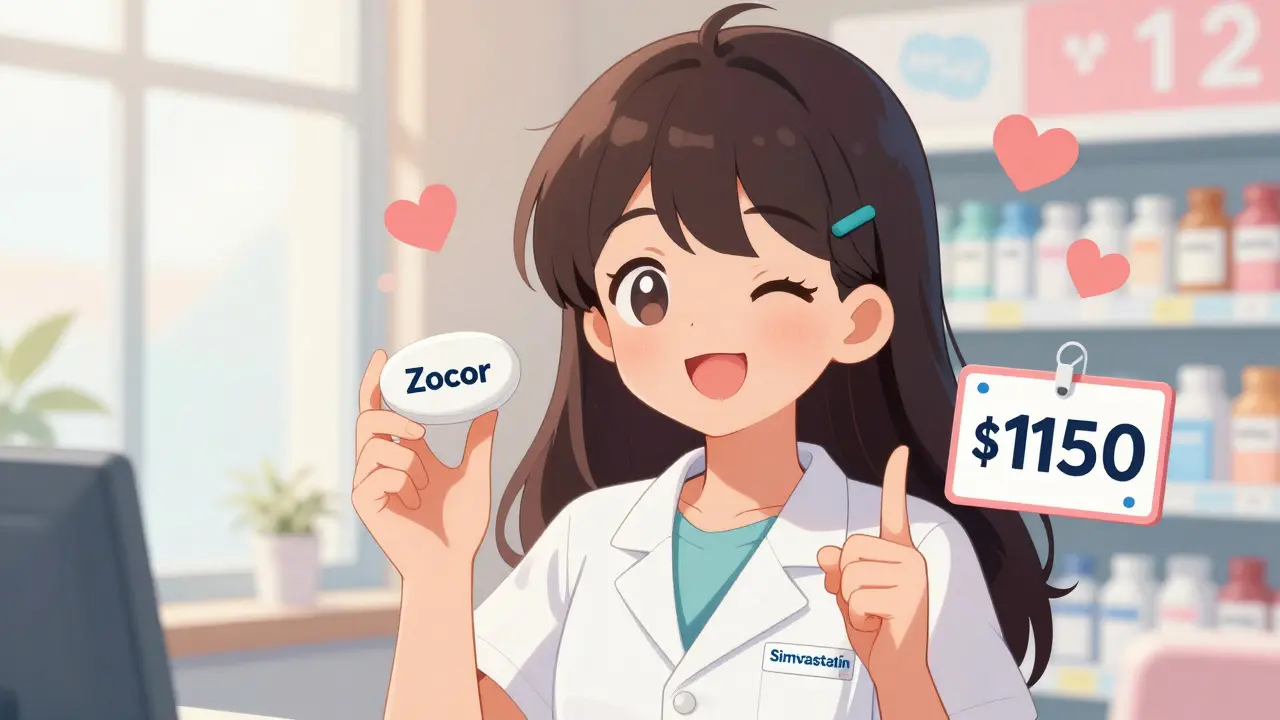
Most people don’t choose to switch from brand-name drugs to generics because they want to. They do it because the price drops-from $150 a month to $12. That’s not a small difference. It’s the difference between taking your medicine and skipping doses because you can’t afford it. In Australia, the Pharmaceutical Benefits Scheme (PBS) pushes for generic substitution where possible, and private insurers often charge higher copays for brand-name drugs. The result? Around 85% of prescriptions filled here are for generics. But if you’ve never made the switch before, you might be nervous. What happens when your pill looks different? Will it still work?
How Generic Drugs Are Made and Approved
Generic drugs aren’t knockoffs. They’re exact copies of the active ingredient in brand-name drugs. The Therapeutic Goods Administration (TGA) in Australia, like the FDA in the U.S., requires generics to prove they deliver the same amount of medicine into your bloodstream at the same speed as the original. That’s called bioequivalence. The acceptable range is tight: between 80% and 125% of the brand’s absorption rate. If a generic doesn’t meet that, it doesn’t get approved.
But here’s the catch: generics can look different. They might be a different color, shape, or size. That’s because trademark laws stop generic makers from copying the exact appearance of the brand. Your old pill was a white oval. Now it’s a blue capsule. That’s normal. It doesn’t mean it’s weaker. It just means you need to pay attention to the name on the label, not the look.
When Switching Works Perfectly
For most people, switching to generic drugs is seamless. A 2022 review of over 1,200 patient reports on Drugs.com found that 78% rated generic medications as ‘good’ or ‘excellent’ for effectiveness. People taking generics for high blood pressure, diabetes, or cholesterol often see no change in how they feel. Many report saving hundreds of dollars a year without losing control of their condition.
One woman in Melbourne switched from a brand-name statin to a generic version after her PBS co-payment dropped from $30 to $6. She checked her cholesterol six months later-same numbers. She told her doctor, ‘I didn’t even notice the change.’ That’s the norm. For the vast majority of medications, the generic works just as well.
The Real Risks: When Switching Can Cause Problems
Not all drugs are created equal when it comes to switching. Some have what’s called a ‘narrow therapeutic index.’ That means the difference between a dose that works and one that causes harm is tiny. For these, even small changes in how the drug is absorbed can matter.
Examples include:
- Levothyroxine (for thyroid conditions)
- Warfarin (a blood thinner)
- Anti-epileptic drugs like phenytoin or carbamazepine
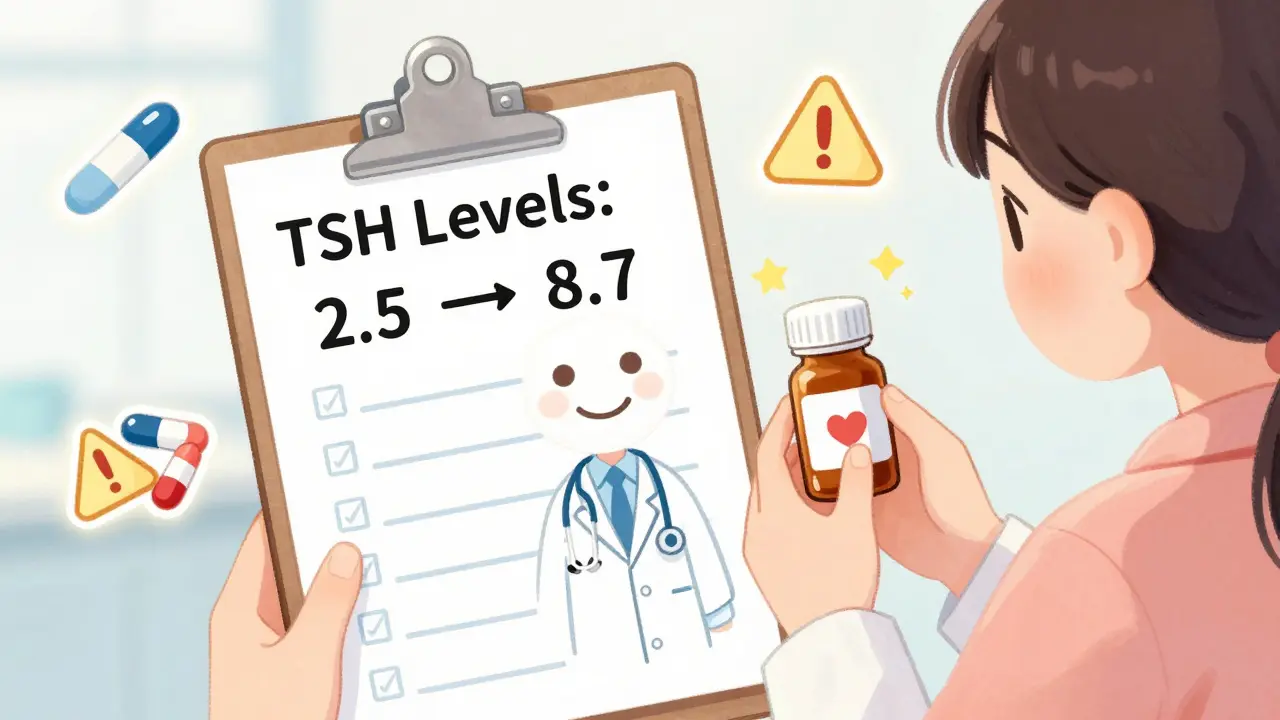
There are real stories. One man in Adelaide switched from Synthroid to generic levothyroxine and saw his TSH level jump from 2.5 to 8.7 in six weeks-signaling his thyroid wasn’t being controlled anymore. He went back to the brand, and his numbers returned to normal. Another patient on warfarin reported unusual bruising after a generic switch. Her INR levels, which measure blood clotting, became unstable.
These aren’t rare. Studies show that patients on these drugs are more likely to experience issues after switching. That’s why many doctors now write ‘dispense as written’ or ‘do not substitute’ on prescriptions for these medications.
Why Your Pill Keeps Changing
If you’ve been on the same generic for a while, you might notice something odd: your pill looks different again. That’s because pharmacies don’t always get the same generic manufacturer. The TGA approves multiple suppliers, and pharmacies buy from whoever has the best price at the time. In some cases, the same generic drug can come from three different factories in a year.
This isn’t a mistake. It’s how the system works. But it causes confusion. One patient in Melbourne said, ‘I thought I was getting a new medicine because the pill changed color. I stopped taking it for three days.’ That’s dangerous.
Pharmacies are starting to label bottles with notes like ‘This is a different brand of the same medicine’ to help. But you still need to check the name on the label. If you see a change in appearance, don’t assume it’s wrong. Just confirm with your pharmacist.
What You Should Do Before and After Switching
Here’s what works in real life:
- Ask your doctor if your medication is safe to switch. Especially if it’s for thyroid, epilepsy, heart rhythm, or blood thinning.
- Check the label every time you refill. Don’t rely on how the pill looks. Look for the active ingredient name (e.g., ‘simvastatin’ instead of ‘Zocor’).
- Keep a log of how you feel after switching. Note any new symptoms: dizziness, fatigue, mood changes, or unusual side effects.
- Get a blood test if you’re on a narrow therapeutic index drug. Your doctor might want to check levels 4-6 weeks after switching.
- Don’t stop if you’re worried. Call your pharmacist or doctor first. Most issues can be fixed by switching back.
Cost vs. Risk: The Bottom Line
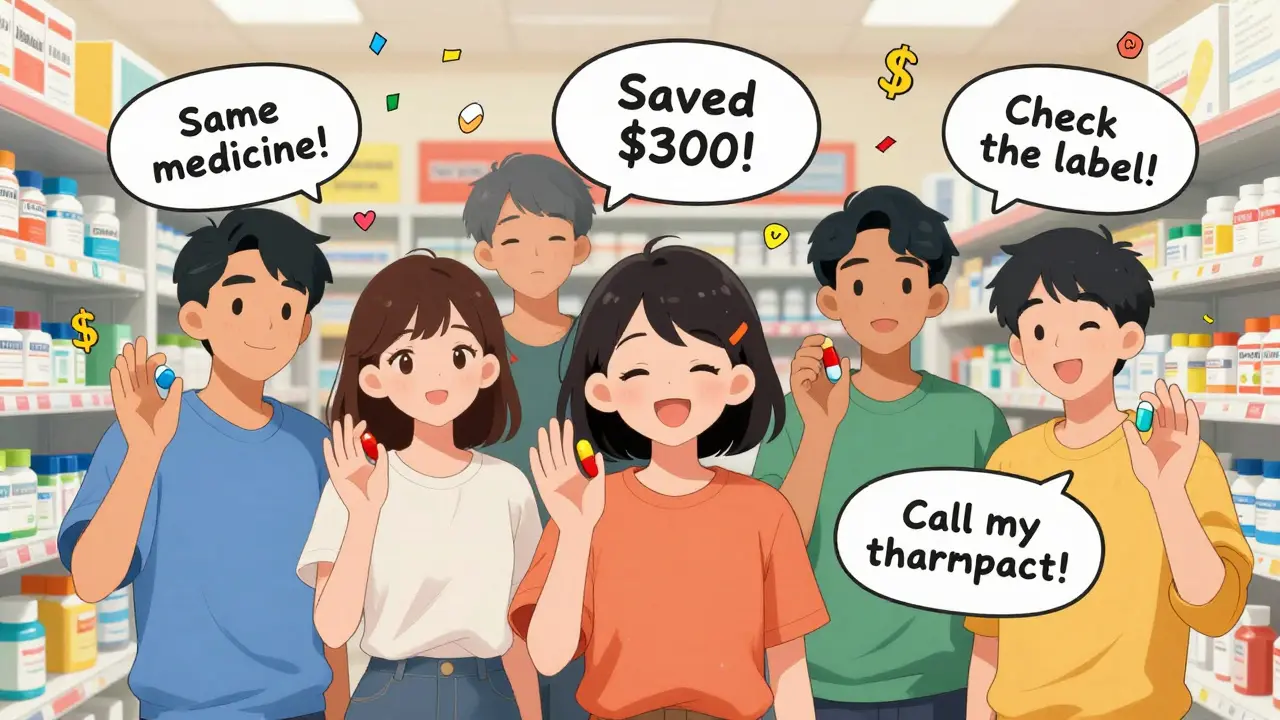
Generics save money-big time. The PBS estimates that generic substitution saves Australian taxpayers over $1 billion a year. For you, that could mean $200-$500 saved annually. But savings shouldn’t come at the cost of your health.
If your medication is for a condition where small changes matter, don’t feel guilty about asking for the brand. Your doctor can write a ‘dispense as written’ prescription. Insurance might charge more, but it’s better than ending up in hospital because your seizure control slipped or your blood clotted too much.
For most other drugs-antibiotics, antidepressants, asthma inhalers, or pain relievers-generics are just as safe and effective. There’s no reason to pay extra unless you have a real reason to.
What to Do If Something Feels Off
Some people swear their generic doesn’t work as well. Sometimes, it’s psychological. Other times, it’s real. If you notice:
- New side effects
- Worsening of your condition
- Unexplained fatigue or mood changes
Don’t ignore it. Contact your doctor. Bring your old and new pills with you. Ask: ‘Could this be the generic?’
Many doctors will switch you back if there’s a clear pattern. You’re not being difficult. You’re being smart.
Final Thoughts: It’s Not About Brand-It’s About Control
Generic drugs aren’t inferior. They’re regulated, tested, and proven to work for most people. But medicine isn’t one-size-fits-all. Your body reacts to what’s in the pill, not the logo on it. If you’re on a drug where tiny changes matter, you deserve to know your options. If you’re on a routine medication, you can probably save money without a second thought.
The key is staying informed. Know what you’re taking. Check the label. Talk to your pharmacist. Don’t let cost savings become a health risk. And if something feels wrong-speak up. Your health isn’t a line item on a budget spreadsheet. It’s your life.

Comments
I switched my statin to generic last year and honestly? Didn't notice a thing. Saved me like $300 a year. My doctor said the TGA checks these things way harder than people think.
Still, I always check the label. Weird pill colors freak me out too, but now I just smile and say 'oh cool, new design' 😄
My mom’s on levothyroxine and she switched generics and felt like crap for weeks. Tired all the time, weird mood swings. We went back to the brand and she was herself again. So yeah, generics are great… unless they’re not. Listen to your body.
I used to think generics were sketchy until I saw the TGA approval docs. Same active ingredient. Same bioequivalence standards. The pill looks different because lawyers made them look different. Not because it's weaker.
LMAO people still think generics are 'inferior'? Bro it's the same damn molecule. If your body can't handle a generic you're probably allergic to the dye or filler. Not the medicine. 💀
You people are so naive. Big Pharma and the government are in cahoots. Generics are cheaper because they use cheaper fillers that cause long-term damage. You think they care about your thyroid? They care about profit margins.
i switched my blood pressure med to generic and it was fine but then i got a new batch and it was a diff color so i thought i was getting scammed. called the pharmacy they said oh yeah different maker. i was like oh ok. still works tho
Oh sweetie, you think the TGA is some kind of superhero? They approve generics based on *statistical averages*. What if you're not average? What if your liver metabolizes drugs like a sloth? 🤡
For most meds? Go generic. For thyroid, warfarin, seizure meds? Talk to your doc. Don't just assume. Keep a journal. Note how you feel. If something changes, don't panic. Just call your pharmacist. They're your secret weapon.
I've been on the same generic antidepressant for 5 years. Pill changed color 4 times. I didn't even notice until my roommate pointed it out. My mood? Stable. My bank account? Thank you, generics.
In the US, insurance companies force this switch. In Australia? People actually care about patient outcomes. That’s why your system works better. We’re just trying to survive the corporate healthcare circus 🤡💊
THEY'RE TESTING ON US. EVERY TIME THE PILLS CHANGE COLOR, IT'S A NEW FORMULA. I SAW A DOCUMENT LEAKED ON REDDIT. THE FDA AND TGA ARE COVERING IT UP. MY NEIGHBOR'S CAT GOT SICK AFTER SWITCHING. IT'S A CONSPIRACY. 🕵️♀️
I used to be scared of generics too... until I realized I was paying $140 for a pill that looked exactly like the $12 one, just with a different logo. My therapist said I was having a brand trauma. I laughed. Then I cried. Then I switched.
If you're on warfarin or levothyroxine, don't just switch. Get your blood tested 4 weeks after. Simple. Cheap. Smart. Your doctor will appreciate you being proactive. This isn't about being difficult. It's about being responsible.
My pharmacist told me the same generic can come from 3 different factories in a year. That’s wild. But if the active ingredient is the same and it passed bioequivalence, why does it even matter? Just check the name on the bottle. Done.
It's funny how we assign meaning to color and shape. A pill is just chemistry. But we've been trained to equate appearance with trust. That's not medicine. That's marketing. The real question isn't 'does it work?' It's 'why do we fear the blank pill?'