
Medication Side Effect Assessment Tool
Check Your Symptoms
Why Rural Patients Need Better Side Effect Monitoring
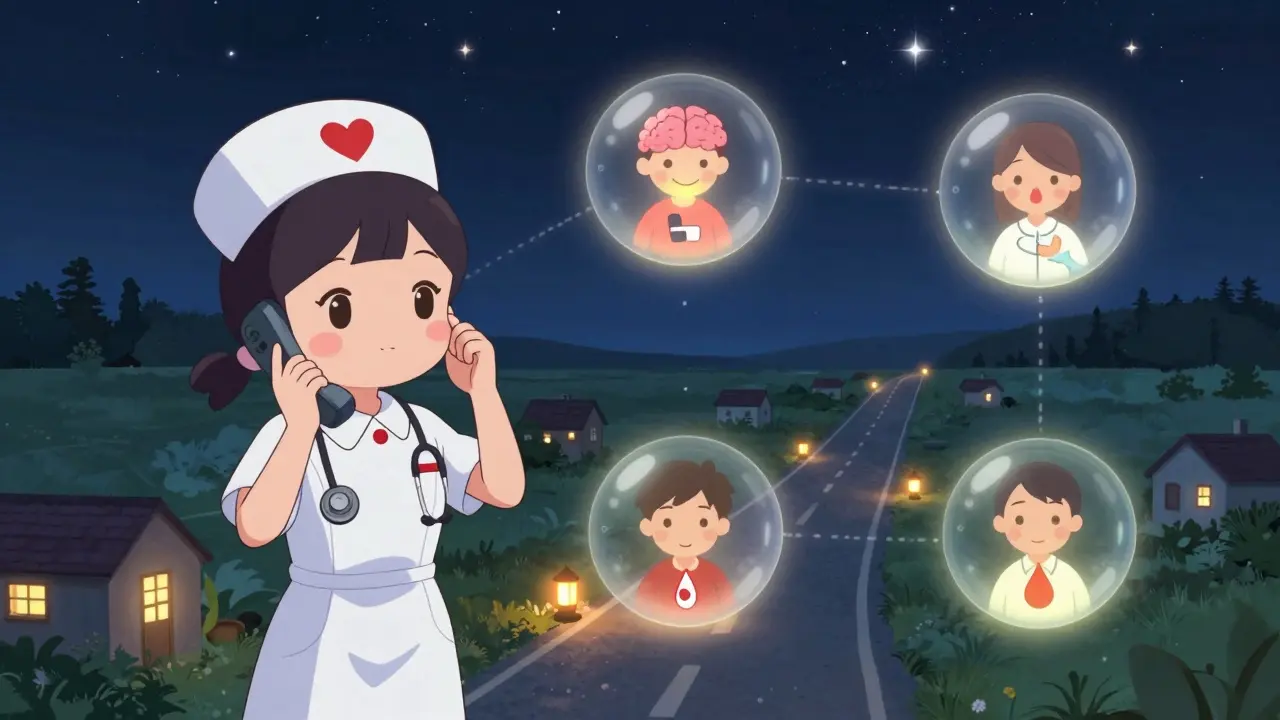
Living far from a hospital doesn’t mean you should risk your health just because help is hard to reach. In rural areas, patients on medications like blood thinners, antidepressants, or high blood pressure drugs often go weeks without seeing a doctor. That’s dangerous. Side effects don’t wait for appointments. A sudden drop in blood pressure, a rash that spreads, or confusion from a new pill can turn into an emergency fast - and by the time someone drives 80 miles to the clinic, it might be too late.
That’s where telehealth comes in. Not as a luxury, but as a lifeline. Remote monitoring lets patients report symptoms in real time, send vital signs from home devices, and get help before things get serious. In 2023, rural health clinics using telehealth for side effect tracking saw a 31% drop in hospital visits for medication-related problems, according to a study in the Journal of Medical Internet Research.
How Telehealth Tracks Side Effects in Real Time
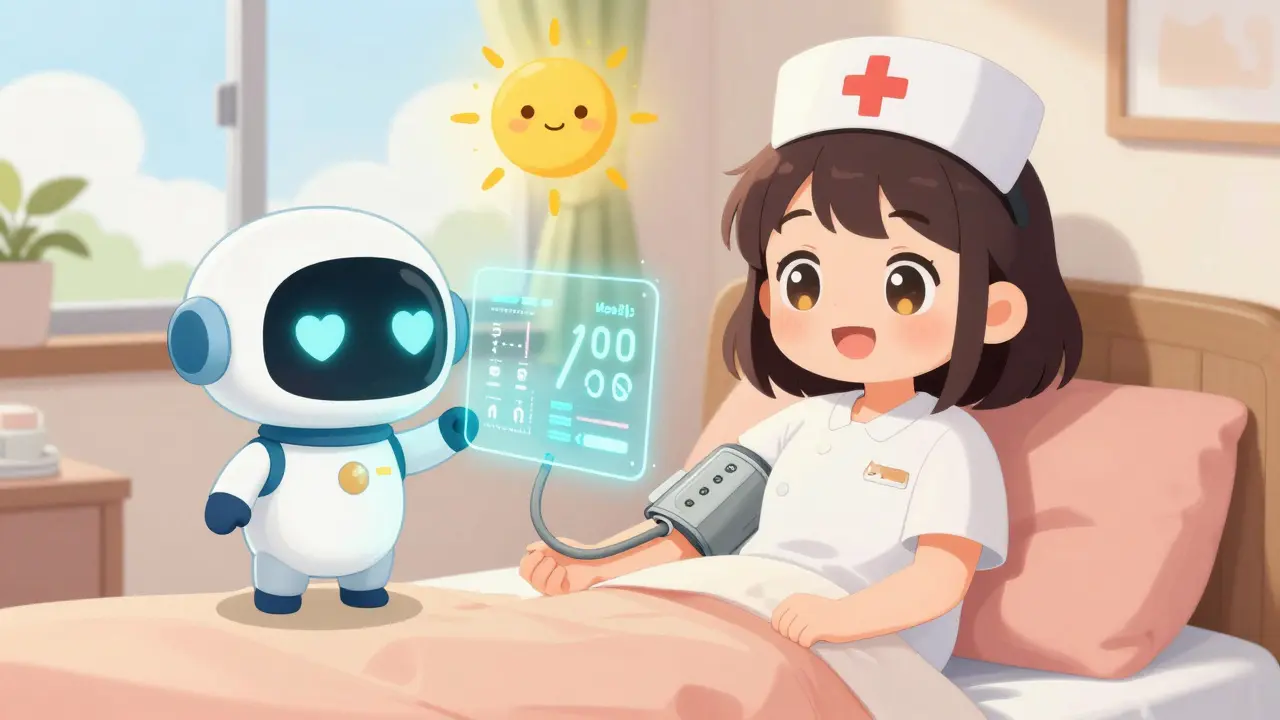
It’s not just video calls. Modern telehealth for side effect monitoring uses a mix of tools that work together. Patients use FDA-cleared devices to check their blood pressure, heart rate, or oxygen levels at home. These devices sync automatically to apps on their phone. If numbers go outside safe ranges, the system alerts their care team within minutes.
Smart pill dispensers like Hero Health track whether doses are taken. Miss a pill? The system sends a reminder, then flags it to the pharmacist if it happens again. Symptom checkers built into apps ask simple questions: “Have you felt dizzy today?” “Any nausea?” “Any unusual bruising?” Answers go straight into the patient’s electronic health record. Nurses and pharmacists review them daily.
For mental health meds - used by nearly 80% of rural telehealth patients, per the American Hospital Association - tracking mood swings, sleep changes, or tremors is critical. A 2022 study in the Journal of Telemedicine and Telecare found these digital symptom reports matched in-person assessments 78% of the time. That’s good enough to catch problems early.

What Works Best: Real Examples from the Field
The University of Mississippi Medical Center runs one of the most successful programs. They give patients with blood thinners a Bluetooth-enabled INR monitor. Patients prick their finger once a week, the device sends results to a pharmacist, and they hop on a video call to review. Since 2019, 92% of patients stay in the program. Why? Because they avoid trips to the ER for dangerous bleeding events.
In Oklahoma, Dr. Wilbur Hitt’s clinic uses telehealth to monitor antipsychotic drugs. Patients wear simple wristbands that track subtle shaking - a sign of a serious side effect called tardive dyskinesia. The system alerts the team before the patient even notices. “We’ve cut hospital transfers for these complications by 40%,” he says.
Even in places with spotty internet, audio-only calls are saving lives. Since the 2023 CONNECT for Health Act let Medicare pay for phone check-ins, 58% of rural seniors now use them. One patient in West Virginia told her pharmacist over the phone she couldn’t breathe after a new pill. She got help before her throat swelled shut.
The Big Hurdles: Tech, Trust, and Connectivity
But it’s not perfect. Nearly 30% of rural Americans still don’t have broadband fast enough for video calls, according to the FCC’s 2023 report. And 34% of seniors over 65 say the apps are too confusing. One woman in Montana said she spent three hours trying to connect her blood pressure cuff to her phone - then gave up.
Another problem? Not all clinics have staff to manage it. Seventy-eight percent of rural clinics say they’re short on nurses or pharmacists to handle monitoring duties. And reimbursement is messy. Medicare pays $51 for 20 minutes of remote monitoring. But only 63% of private insurers follow that rate. Some clinics lose money running these programs.
Then there’s the human side. Some patients feel like they’re talking to a robot. “I miss the doctor looking me in the eye,” said a patient in a Healthcare.gov review. That’s why the best programs pair tech with personal touch - a nurse calls weekly just to check in, even if nothing’s wrong.
What You Can Do: A Simple Plan for Patients and Families
If you or someone you care for lives in a rural area and takes regular meds, here’s how to start:
- Ask your provider if they offer remote monitoring for your meds. Don’t assume they do - many don’t advertise it.
- Request a device if you’re on blood thinners, heart meds, or psychiatric drugs. Most are low-cost or covered by insurance.
- Get help setting it up. Most programs offer free training. Don’t skip it. One session isn’t enough - patients need 2-4 sessions on average to feel confident.
- Use the app every day. Even if you feel fine, report symptoms. Minor changes matter.
- Have a backup plan. If the internet goes down, use a phone call. Audio-only is still valid and covered by Medicare.
Family members can help too. Even if you’re tech-savvy, having someone nearby to help with setup or remind you to check in makes a huge difference.
The Future Is Here - But Only If We Fix the Gaps
AI is starting to predict side effects before they happen. IBM’s MedSafety system, approved by the FDA in 2023, analyzes patient data and flags risks with 84% accuracy. Wearables now detect tiny muscle twitches linked to antipsychotic drugs - 91% accurate in early tests.
But technology alone won’t fix this. Rural hospitals are closing because urban telehealth providers steal patients - and revenue. For every 10% increase in telehealth use, rural hospitals lose 8% in income, according to Dr. Cornaggia’s 2023 study. That means fewer local staff, fewer services, and less care overall.
The solution? Pay rural clinics fairly. Train local pharmacists to lead monitoring. Expand broadband with the FCC’s $20.4 billion Rural Digital Opportunity Fund. And make sure Black and Indigenous rural patients - who are 1.8 times less likely to get these services - aren’t left behind.
Right now, 92% of rural health systems plan to expand telehealth monitoring by 2025. That’s hopeful. But progress won’t mean anything if it only helps those with good Wi-Fi and smartphones. The goal isn’t just to monitor side effects - it’s to make sure no one has to drive 100 miles to stay safe.
Can telehealth really catch dangerous side effects before they become emergencies?
Yes. Studies show telehealth monitoring reduces hospitalizations for medication side effects by 31% in rural areas. Devices that track blood pressure, heart rate, and INR levels can detect dangerous trends hours or days before symptoms appear. One patient in Montana avoided a life-threatening bleed because his blood thinner app flagged a rising INR level - he got help before he felt dizzy or bruised.
What if I don’t have good internet at home?
You don’t need high-speed internet for all telehealth monitoring. Medicare now covers audio-only phone check-ins for side effect reviews. Many apps let you report symptoms via text or voice messages. Even basic smartphones can send simple updates. If video calls aren’t possible, ask your provider about phone-based monitoring - it’s just as effective for many medications.
Are these apps and devices hard to use for older adults?
They can be - and that’s a real barrier. About 34% of rural seniors say they struggle with the tech. But successful programs offer free, in-person training. Most patients need 2-4 sessions to feel comfortable. Many clinics assign a nurse or care coordinator to walk through setup step by step. Family members can also help with initial setup. The goal isn’t to make patients tech experts - just to get them using the tools safely.
Which medications benefit most from remote side effect monitoring?
The highest-risk meds include anticoagulants (like warfarin), antihypertensives, antidepressants, antipsychotics, and diabetes drugs. These have narrow safety margins - small changes in dosage or body response can cause serious harm. Anticoagulants alone account for 30% of preventable adverse drug events in rural patients. Remote monitoring for these drugs has shown the biggest drop in ER visits and hospital stays.
Is telehealth monitoring covered by insurance?
Medicare covers remote patient monitoring at $51 for every 20 minutes of clinical time, as of 2023. Medicaid coverage varies by state. Private insurers are slower to follow - only 63% cover it at the same rate. Some pharmaceutical companies, like Pfizer and Merck, now fund monitoring programs for their drugs in rural areas. Always ask your provider or pharmacist: “Is this covered, and how do I enroll?”
Can pharmacists really help monitor side effects remotely?
Absolutely. Pharmacists are experts in how drugs affect the body - and they’re often underused in rural care. A Vanderbilt study showed when pharmacists lead telehealth monitoring, severe side effects drop by 43%. They review lab results, check for drug interactions, adjust doses, and educate patients. In programs where pharmacists are part of the team, medication adherence jumps to 89%, compared to just 62% without them.
What happens if I report a side effect and no one responds?
Good programs have clear response protocols. Critical symptoms (like chest pain or trouble breathing) trigger an immediate call back within 15 minutes. Moderate issues (like dizziness or nausea) get a response within 24 hours. Minor concerns (like mild headache) are addressed within 72 hours. If you’re not getting replies, ask your clinic about their response times. If they don’t have a system, push for one - your safety depends on it.
Comments
Oh please. Another tech-worshiping fantasy. You think a Bluetooth INR monitor is going to save someone who can’t even afford groceries? My cousin in West Virginia had his device stolen last month - and the clinic told him to ‘just call if he felt weird.’ No one’s coming. This isn’t healthcare - it’s a Silicon Valley PR stunt disguised as compassion.
Honestly, this is game changer for us in rural India too! We’ve got patients on warfarin using basic android phones with SMS-based symptom logs. No fancy apps, just USSD codes. Pharma companies here are funding devices - Merck sent 500 BP cuffs to our district last year. The key? Local ASHA workers help with setup. Tech ain’t the issue - trust and training are. 89% adherence in our cohort, no joke.
This is socialism with Wi-Fi. You want to ‘monitor’ people? Fine. But don’t make taxpayers pay for it. Medicare’s paying $51 for 20 minutes? That’s a scam. And who’s paying for the broadband? The same folks who got bailed out after 2008? No. We’re not funding tech for lazy, non-tech-savvy seniors. If you can’t use an app, maybe you shouldn’t be on complex meds. Simple.
There is a profound metaphysical irony here: we have engineered systems capable of predicting hemorrhage before the patient feels the first bruise - yet we still treat human beings as if they are data points in a spreadsheet. The soul does not sync to Bluetooth. The trembling hand, the whispered fear over a phone line, the silence after a missed check-in - these are not metrics. They are the quiet elegies of a healthcare system that mistakes efficiency for empathy. And yet… we cling to the device like a rosary, hoping the machine will pray for us.
I’ve seen this work firsthand in Bihar - elderly folks who never used a smartphone before now send voice notes saying ‘my legs feel heavy’ or ‘no sleep since Tuesday.’ The local nurse listens, calls back, sometimes sends a volunteer with a pillbox. It’s not perfect. Sometimes the phone dies. Sometimes the voice note is just crying. But someone answers. That’s more than most get. Don’t underestimate the power of a voice that says, ‘I’m here.’
Telehealth is a scam. Rural clinics are closing. This is just corporate cost-cutting dressed up as innovation.
Hey, just wanted to say - my grandma started using the phone check-ins last month. She didn’t even know how to turn on her tablet, but now she calls the nurse every Tuesday at 3pm like clockwork. Says it’s her ‘new friend.’ No fancy gadgets. Just a phone and someone who actually listens. That’s the real tech right there.
Let’s be real. The FDA-approved ‘AI side effect predictor’? It’s trained on data from urban hospitals with 24/7 staff. It doesn’t know what a 72-year-old in Montana looks like after three days without power. And the ‘pharmacist-led monitoring’? They’re just glorified call center workers paid $15/hour. This isn’t medicine - it’s a surveillance pyramid scheme. Who’s really benefiting? Big Pharma. And you’re the product.
Stop overthinking it. If it helps even one person avoid the ER, it’s worth it. My dad used the audio check-ins after his stroke. No app. No Wi-Fi. Just a phone call. He’s alive today because someone answered. That’s not magic. That’s just showing up.
Ah yes, the noble quest to digitize human vulnerability. How poetic. We’ve replaced the doctor’s paternal gaze with a notification from an app that says, ‘Your INR is 5.2. Please call your care team.’ How… dignified. I’m sure the patient felt truly seen as they stared at their phone, wondering if the algorithm knew they were too tired to call back. The future is here - and it’s a cold, automated whisper in a dead-end internet connection.