
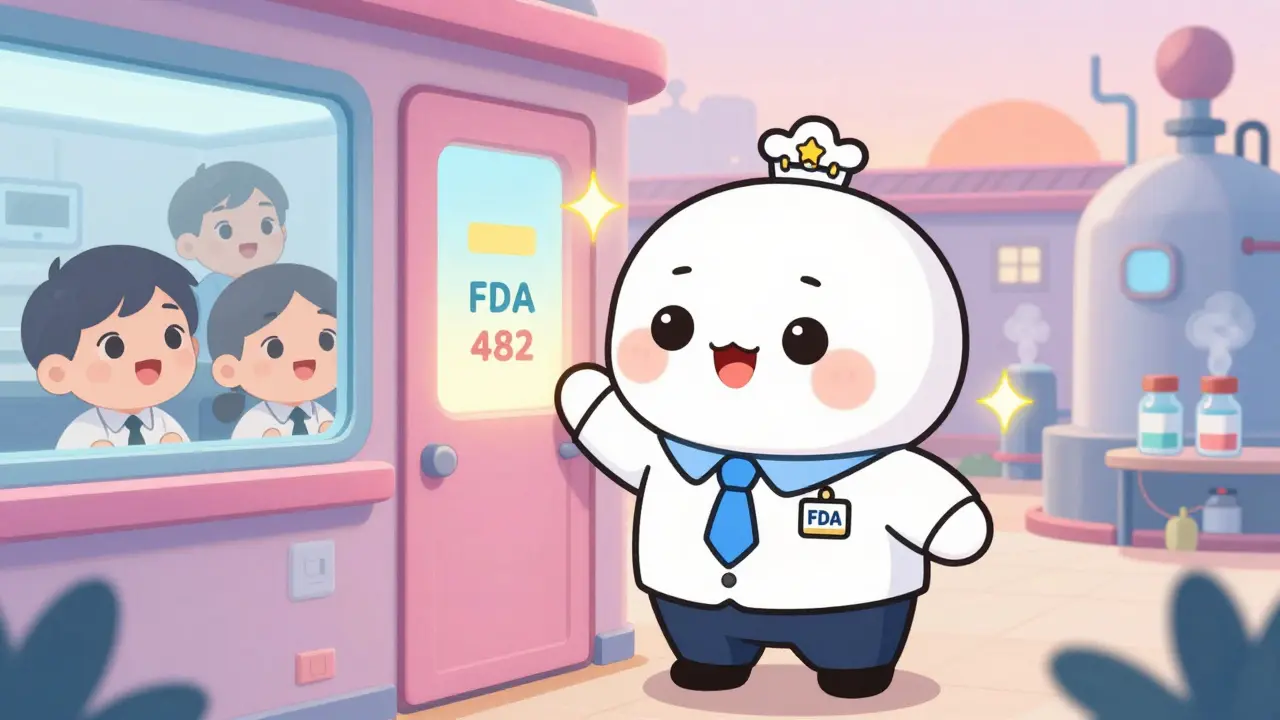
Why the FDA Shows Up Without Warning
If you run a facility that makes medicine, medical devices, or food for the U.S. market, you know the feeling: the knock on the door, the badge, the Form FDA 482 handed to you before you’ve even had coffee. No call. No email. No heads-up. That’s an unannounced FDA inspection, and it’s not a threat-it’s the new normal.
For years, if your factory was in India, China, or Germany, you’d get a notice weeks ahead. FDA inspectors would schedule their visit around your calendar, your translators, your cleanup crew. But that changed on May 6, 2025. The FDA dropped a policy bomb: all foreign facilities are now subject to unannounced inspections, just like U.S. ones. No more warning. No more rehearsing. Just real-time, real-world compliance-or consequences.
What Happens When They Walk In
It doesn’t start with a PowerPoint or a welcome packet. It starts with an inspector showing up, identifying themselves, and handing you Form FDA 482. That’s not a suggestion. It’s a legal notice. You’re required to cooperate. The inspector doesn’t ask if you’re ready. They don’t wait for your manager to finish a call. They go straight to where the work happens: the cleanroom, the packaging line, the QC lab.
They’ll pull records. Not the polished, curated ones you keep for auditors. They’ll grab the actual batch records from the last week. They’ll check if your SOPs match what’s happening on the floor. They’ll ask a technician: “How do you clean this machine?” and watch them do it. If the procedure says “rinse with purified water for 30 seconds,” but the tech rinses for 10, that’s a violation. No second chance. No “we’ll fix it next time.”
Inspections can last hours or days. It depends on how messy things get. One facility in Mumbai had a 12-hour inspection because the inspector found 17 deviations in the sterile manufacturing area alone. Another in New Jersey got a “No Action Indicated” because their system ran clean-no duct tape, no last-minute fixes.
Why Surprise Visits Work
Think about it: if you knew the inspector was coming next Tuesday, wouldn’t you clean up? Wouldn’t you make sure the logs looked perfect? Wouldn’t you tell your team to “just follow the book” for the day?
That’s exactly what the FDA is trying to stop. Before May 2025, foreign facilities received advance notice in 90% of cases. And guess what? The FDA found serious problems in over 90% of those inspections. Domestic facilities, inspected without warning, had a 45% failure rate. That gap wasn’t about skill-it was about preparation. Foreign companies had time to hide. The FDA called it a “double standard.”
Now, when they show up unannounced, they see the real operation. The broken calibration on the pressure gauge. The handwritten notes replacing digital logs. The employee who’s been skipping the sterilization cycle because “it takes too long.” These aren’t mistakes. They’re risks. And risks to patients are what the FDA is built to stop.
Who’s Affected-and How
This isn’t just about big pharma. It’s about every company that makes anything sold in the U.S.:
- Manufacturers of generic drugs in China
- Suppliers of active pharmaceutical ingredients (APIs) in Italy
- Factories packaging supplements in Mexico
- Producers of infant formula in Germany
Approximately 80% of the active ingredients in U.S. medicines come from overseas. Forty percent of finished drugs do too. That’s not a small fraction-it’s the backbone of the supply chain. And now, every one of those facilities is on the same playing field as a plant in Ohio.
The FDA conducts about 3,000 foreign inspections a year. Before 2025, most were announced. Now, nearly all are unannounced. And they’re not slowing down. The agency says it will increase frequency. That means more visits. More pressure. More scrutiny.
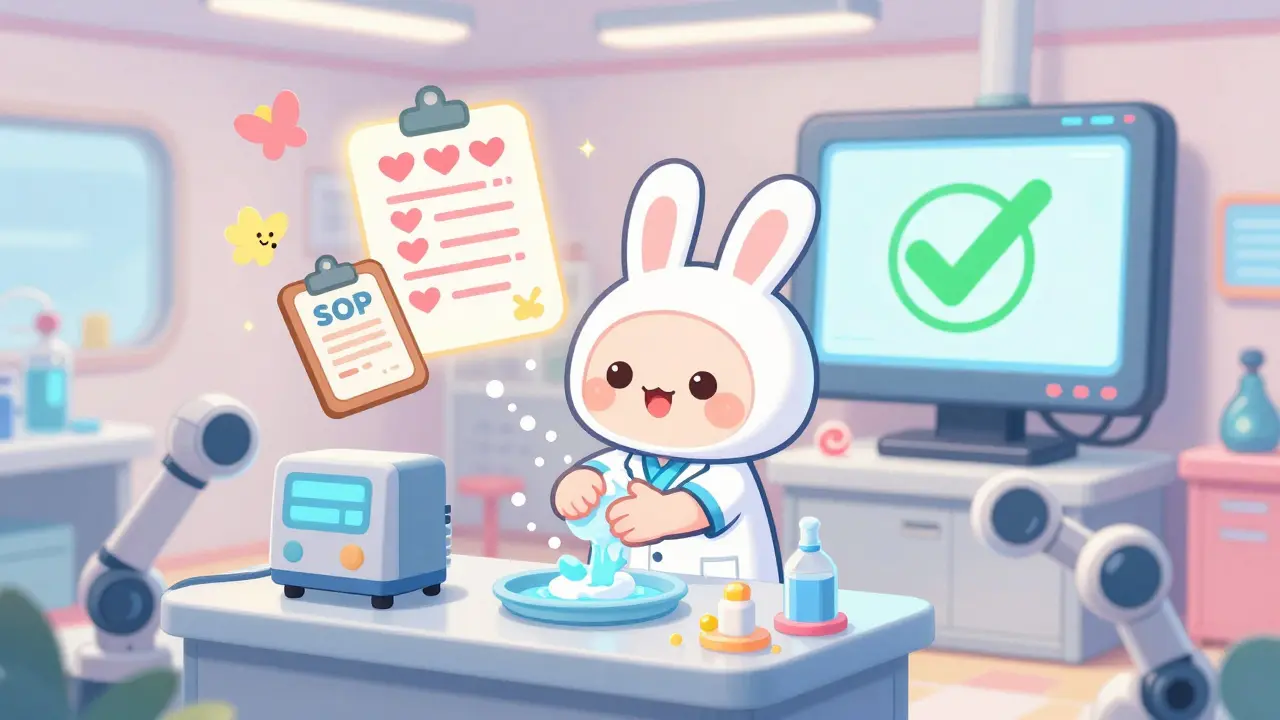
How to Get Ready (Without a Magic Wand)
You can’t fake compliance. But you can build it into your daily work.
Here’s what actually works:
- Run mock inspections every quarter. Don’t tell your team when. Just show up with a clipboard and start asking questions. See how fast they can pull records. See if the cleanroom still passes air tests without a warning.
- Use digital QMS software. Paper logs are a liability. If your quality management system isn’t real-time, auditable, and tamper-proof, you’re already behind. Tools like Veeva, MasterControl, or even a well-configured SharePoint site can protect you.
- Train everyone, not just QA. The person filling the vial? The janitor cleaning the floor? The shipping clerk? They all touch compliance. If they don’t know why handwashing matters before entering the cleanroom, you’re one misstep away from a Form 483.
- Keep documentation live. Your SOPs must match reality. If your procedure says “verify temperature every 15 minutes,” but the log shows entries every hour? That’s a violation. Update your docs to reflect what actually happens-or change the process to match the doc.
- Have a response plan. Who answers the door? Who calls legal? Who retrieves the records? Who speaks to the inspector? Write it down. Train it. Test it.
One company in Bangalore had zero issues during their first unannounced inspection because they ran a surprise drill the week before. The inspector left saying, “This is the cleanest foreign facility I’ve seen in five years.” That’s not luck. That’s discipline.
The Big Questions Still Unanswered
Not everything is clear. The FDA hasn’t said whether they’ll still notify foreign regulators before showing up. For years, they’d email India’s drug authority or China’s NMPA to coordinate. That helped with language, logistics, and diplomacy. Now? No one knows. Some experts worry this could strain international relationships. Others say it’s necessary-foreign regulators sometimes warn companies themselves.
There’s also the language barrier. Before, you had time to bring in translators. Now? The inspector shows up, speaks only English, and expects answers. Some facilities are hiring bilingual staff full-time. Others are using real-time translation apps. Neither is perfect. But the FDA isn’t waiting for you to fix it.
What Happens If You’re Not Ready
The FDA doesn’t just write a report and leave. They have teeth.
- A Form 483 lists observations. It’s not a fine. But it’s public. Buyers see it. Investors see it. Customers walk away.
- A Warning Letter means you’re in serious trouble. You have 15 days to respond with a plan. Miss the deadline? You’re on the blacklist.
- A Import Alert means your product gets stopped at the border. No exceptions. No appeals. Just rejected.
- And if you’re caught falsifying records? That’s a criminal offense. People go to jail.
The FDA has the legal power to deny, delay, or limit inspections. If you try to hide records, lock a room, or lie to an inspector, you’re not just risking your license-you’re risking prison.
This Isn’t Temporary. It’s Permanent.
This isn’t a pilot. It’s not a trend. It’s the new baseline. The FDA calls it “a new era in enforcement.” President Trump’s May 2025 executive order backed it. Industry analysts say it’s here to stay. The goal? To make sure every pill, every syringe, every jar of baby food that enters the U.S. is made safely-no matter where it was made.
There’s no going back. The days of “we’ll fix it before they come” are over. The only way to survive is to be ready every day.
Frequently Asked Questions
Are FDA inspections always unannounced?
No, but they’re becoming the default. Domestic facilities have always been mostly unannounced. Foreign facilities used to get advance notice, but since May 2025, the FDA has shifted to unannounced inspections for nearly all foreign sites. The only exceptions are specific programs where advance notice is needed for safety or translation reasons-but those are rare now.
Can I refuse an FDA inspection?
No. Refusing an inspection is a federal offense. The FDA has legal authority to enter any facility that manufactures products regulated by them. If you block access, delay the inspector, or hide records, you can face fines, import bans, or even criminal charges. Cooperation is mandatory.
How often do unannounced inspections happen?
There’s no fixed schedule. The FDA uses risk-based targeting. High-risk facilities-like those with past violations, complex processes, or overseas locations-are inspected more often. Some get visited once a year. Others might be inspected twice in a year. The FDA says it plans to increase the frequency of unannounced visits abroad, especially for critical products like insulin, vaccines, and sterile injectables.
What documents should I always have ready?
You should be able to pull any batch record, SOP, training log, equipment maintenance log, or deviation report within minutes. The FDA looks for consistency between your written procedures and what happens on the floor. Digital systems that auto-log data (like temperature, timestamps, operator IDs) are far safer than paper logs. Keep backups offline and online.
Do I need a translator for an unannounced inspection?
The FDA doesn’t provide translators. If your team doesn’t speak English, you’re on your own. Many companies now hire bilingual quality staff or use real-time translation apps during inspections. But relying on ad-hoc translation during a surprise visit is risky. The best move is to train key personnel in basic regulatory English and keep a bilingual checklist ready.
What’s the difference between a Form 483 and a Warning Letter?
A Form 483 is a list of observations-things the inspector saw that don’t match regulations. It’s not a violation yet. A Warning Letter is the next step. It’s official. It means the FDA believes you’ve broken the law. You have 15 days to respond with a corrective plan. If you don’t, your products can be blocked from entering the U.S., and you could face legal action.
What Comes Next
The FDA isn’t done. They’re already testing AI tools to analyze inspection data faster. They’re expanding partnerships with foreign regulators-not to give notice, but to share findings. And they’re pushing for global standards that match U.S. rules.
If you’re still waiting to get ready, you’re already behind. The goal isn’t to pass an inspection. It’s to never need to worry about one.

Comments
lol so now we gotta pay some yankee inspector to show up outta nowhere? what a joke. my cousin’s factory in bangalore got hit with a 483 because someone used the wrong tape on a box. no one even knew it was a regulated material. this is just bureaucratic theater. 🤡
You think this is harsh? Try working 16-hour shifts in a cleanroom with no AC, then being told your handwritten logs are ‘non-compliant’ because you forgot to sign one. The FDA doesn’t care if you’re drowning in work-they care about their checklist. We’re not criminals. We’re workers trying to survive.
This is actually a good thing. I’ve seen too many facilities in India cut corners because they thought ‘no one’s coming.’ Now? Everyone’s forced to do it right. I run mock inspections every Friday-no warning, just show up with a clipboard. My team knows the drill. No panic. No lies. Just clean work. It’s not about fear-it’s about pride in what you make.
THIS IS A POWER GRAB. 🚨 The FDA doesn’t care about safety-they care about CONTROL. They’re using ‘patient safety’ as a cover to destroy global manufacturing and bring everything back to the US. Who profits? Big Pharma. Who suffers? Small factories. This is the deep state flexing. 🇺🇸🔥
Unannounced inspections? Funny. Last year my buddy’s plant got inspected and the guy asked for a ‘batch record’… but they’d just switched to digital. The inspector didn’t know how to open the PDF. So he wrote up a violation for ‘missing paper logs.’ So now we’re back to printing 500 pages a day just to please a guy who can’t use a computer. Progress!
The notion that unannounced inspections are somehow punitive is a delusion. Compliance is not a performance. It is a moral obligation. To treat regulatory standards as a game of hide-and-seek reveals a profound ethical failure. Those who rely on advance notice are not victims-they are enablers of systemic negligence. The FDA has acted with necessary rigor. The real scandal is not the inspection-it is the culture that required it.
If you can't handle an unannounced inspection, you shouldn't be making medicine.
Think about it... what if the FDA is just a front? 🤔 What if the real goal is to force every drug manufacturer into a single digital surveillance system? They want all your data-every temperature log, every shift change, every keystroke. This isn't about safety. It's about building a global pharmaceutical surveillance state. 🕵️♂️💻 #BigPharmaIsWatching
Hey, just wanted to say-this post actually helped me a lot. My team was getting lazy about SOP updates. We started doing weekly 10-minute walkthroughs with random people picking the area to check. No drama, just curiosity. We found three things we didn’t even know were wrong. Now we’re prepping for the real thing. Thanks for the clarity.
The article correctly identifies the shift in FDA policy, but fails to mention that the 2025 change was codified under 21 CFR Part 211.180, which explicitly permits unannounced inspections for foreign establishments under the Food and Drug Administration Safety and Innovation Act (FDASIA). The legal basis is solid. The operational challenges-translation, cultural misalignment, infrastructure gaps-are real, but they are not excuses for noncompliance. The solution is investment, not resistance.