
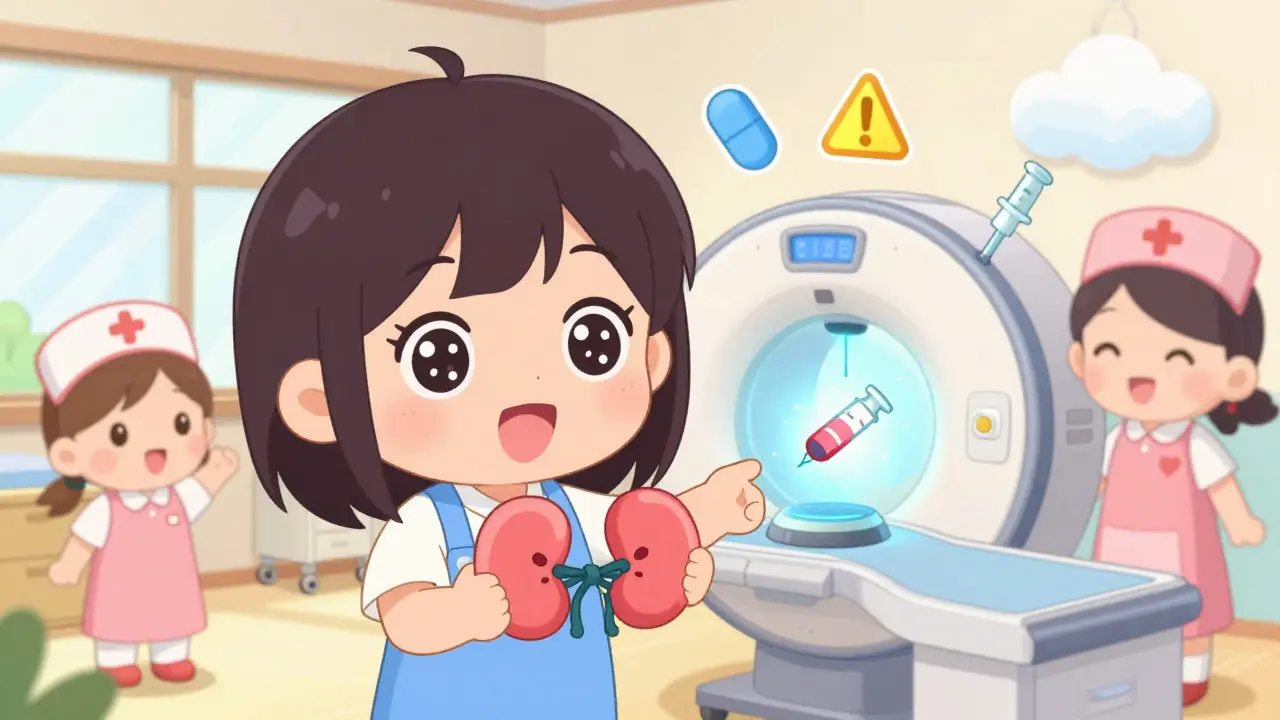
When you have chronic kidney disease (CKD), even a small stress on your kidneys can trigger a dangerous drop in function-acute kidney injury (AKI). This isn’t just a temporary blip. For people with CKD, AKI can lead to permanent damage, dialysis, or even death. The two biggest preventable causes? contrast media and nephrotoxic medications. Avoiding them isn’t optional. It’s life-saving.
Why AKI on CKD Is So Dangerous
CKD means your kidneys are already working at reduced capacity. If your eGFR is below 60 mL/min/1.73m², you’re in stage 3 or worse. At this point, your kidneys can’t handle much extra strain. Now imagine giving them iodinated contrast for a CT scan, or prescribing an NSAID for back pain. These aren’t minor risks-they’re triggers.
Studies show that up to 50% of CKD patients who get contrast dye develop AKI. In those with diabetes and CKD, the risk jumps even higher. And it’s not just contrast. Aminoglycoside antibiotics, vancomycin, amphotericin B, and even common painkillers like ibuprofen can push your kidneys over the edge. One study found NSAID use in CKD patients increases AKI risk by 2.5 times. That’s not a small number-it’s a red flag.
What makes this worse is that many patients don’t know they’re at risk. Up to half of hospitalized CKD patients aren’t flagged as high-risk before they get a nephrotoxic drug or contrast scan. By the time their creatinine spikes, it’s often too late.
Contrast Media: When It’s Necessary and When It’s Not
Not every CT scan needs contrast. Ask your doctor: Is this scan truly needed? Could an ultrasound or MRI without contrast do the job? If you’re getting a CT for abdominal pain, a simple non-contrast scan might be enough. For kidney stones? Ultrasound first. For brain bleeds? MRI might be safer.
If contrast is unavoidable, follow these rules:
- Use the lowest dose possible-ideally under 100 mL.
- Hydrate before and after-isotonic saline at 1.0-1.5 mL/kg/hour for 6-12 hours before and after the scan.
- Avoid contrast if your eGFR is below 30-unless there’s no alternative and you’re on dialysis.
- Don’t use hyperoncotic fluids like albumin or hydroxyethyl starch. They don’t help and may hurt.
Some hospitals use sodium bicarbonate instead of saline for hydration, but recent data shows no real benefit. Stick with normal saline-it’s proven, cheap, and effective.
For patients on dialysis, getting dialysis within 24 hours after contrast can help flush it out. But don’t schedule it just because you’re scared-only do it if you’re already on regular dialysis. For those not on dialysis, no preemptive treatment is needed.
Nephrotoxic Medications: The Silent Killers
These are the drugs that sneak up on you. You take them for pain, infection, or high blood pressure-and your kidneys pay the price.
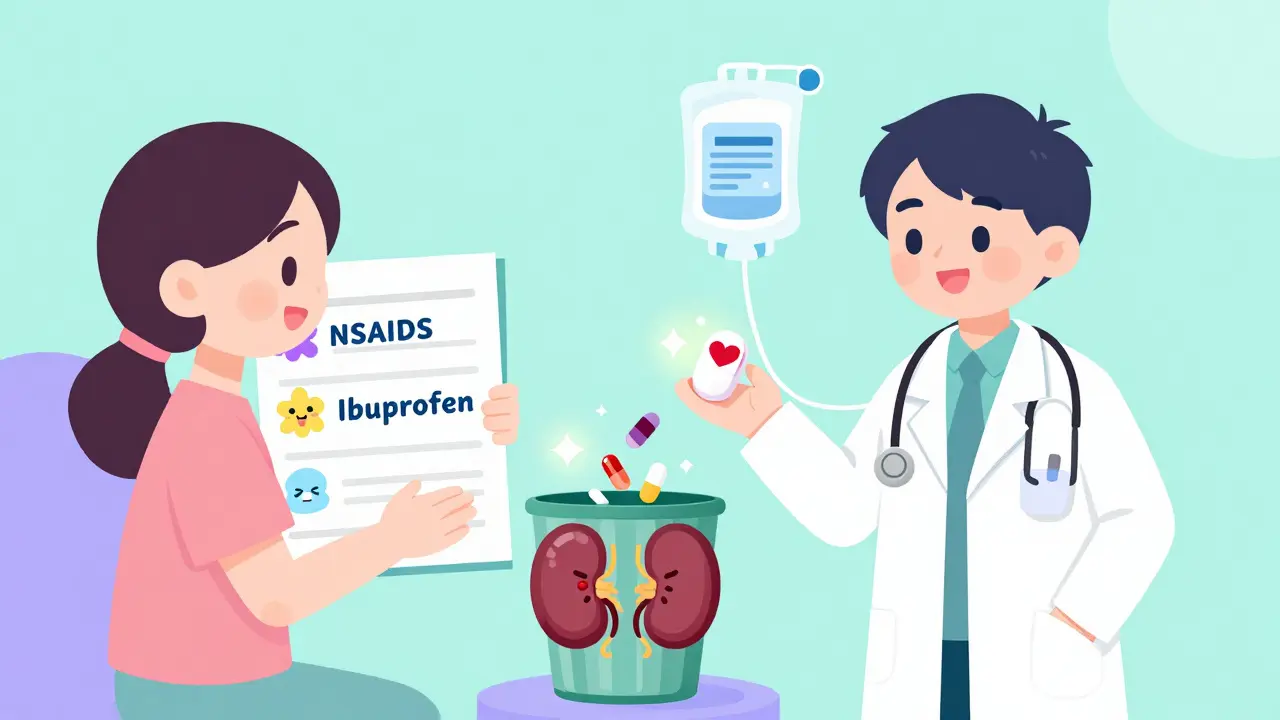
NSAIDs (ibuprofen, naproxen, celecoxib) are the worst offenders. They block prostaglandins that keep blood flow to your kidneys. In CKD, that’s like turning off a lifeline. Even a few days of use can cause AKI. The Veterans Health Administration found NSAIDs double or triple AKI risk in CKD patients. Stop them. Period.
ACE inhibitors and ARBs (like lisinopril, losartan) are tricky. They protect your kidneys long-term, but during an acute illness or dehydration, they can cause sudden drops in kidney function. Don’t stop them on your own. If you’re sick, dehydrated, or hospitalized, talk to your doctor. They may hold the dose temporarily.
Aminoglycosides (gentamicin, tobramycin) are used for serious infections. But they’re toxic to kidney cells. In 10-25% of courses, they cause AKI. If you’re on one, your creatinine must be checked every 24-48 hours. If it rises by 0.3 mg/dL or more, stop it.
Vancomycin is another culprit. Nephrotoxicity hits in 5-40% of cases, especially if your blood levels go above 15 mcg/mL. Your pharmacist should be tracking this. If you’re on vancomycin and your eGFR is under 30, ask if a different antibiotic is an option.
Amphotericin B, used for fungal infections, is toxic in 30-80% of patients. If you have CKD and need antifungal treatment, ask about lipid-based versions-they’re less damaging.
And don’t forget over-the-counter supplements. Herbal remedies like aristolochic acid (found in some weight-loss teas) and high-dose vitamin C can also harm kidneys. Always tell your doctor what you’re taking-even if you think it’s “natural.”
What to Do When You’re Hospitalized
Hospitals are where most AKI on CKD happens. Here’s how to protect yourself:
- Ask for a medication review-preferably by a pharmacist. Studies show pharmacist-led reviews reduce AKI by 22%.
- Request an eGFR check before any procedure or new medication. If your last test was over 3 months ago, demand a new one.
- Know your baseline-if your usual creatinine is 2.0 mg/dL, don’t let them treat you as if it’s 1.0. AKI is defined by change from your normal, not by a fixed number.
- Push for electronic alerts-many hospitals now have systems that flag high-risk patients. If yours doesn’t, ask why.
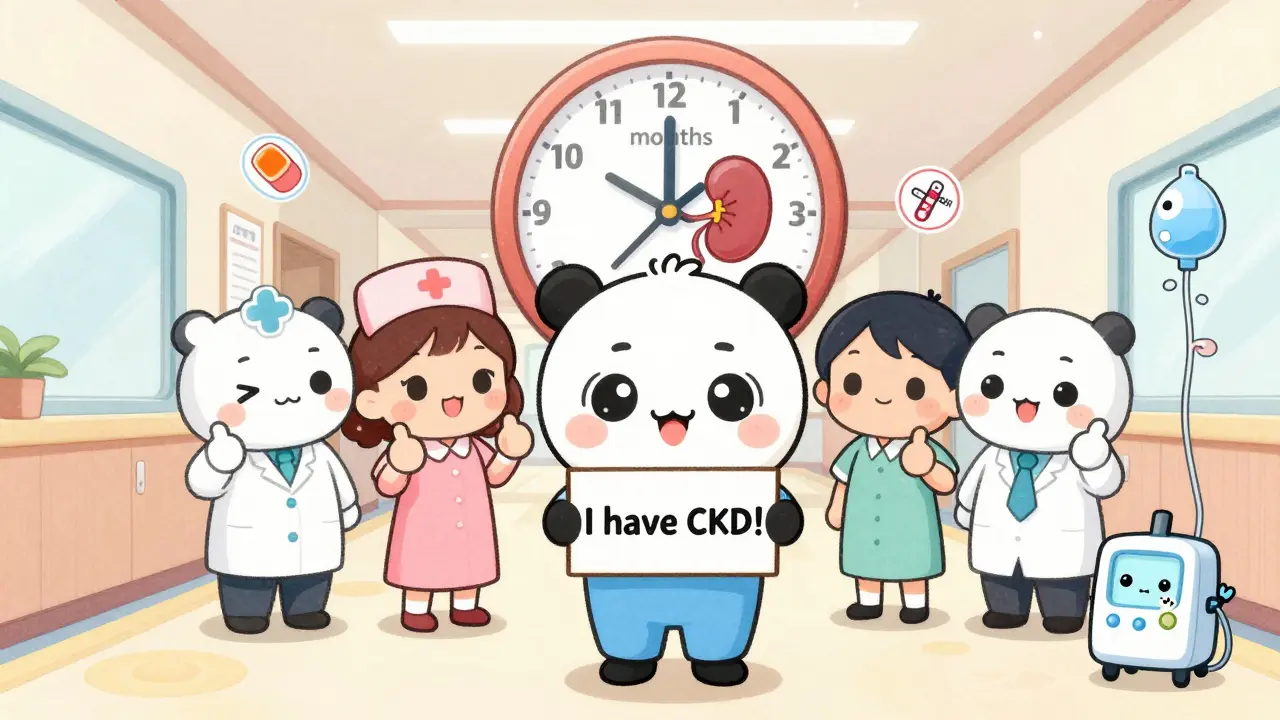
And if you’re admitted for any reason-pneumonia, heart failure, even a broken bone-tell every nurse and doctor you have CKD. Don’t assume they’ll know from your chart. Say it out loud.
Monitoring and Follow-Up
After an AKI episode, your kidneys don’t bounce back the same way they used to. About 30% of AKI cases in CKD patients lead to permanent loss of function. 10-15% will need dialysis within five years.
That’s why follow-up is non-negotiable:
- Check creatinine and eGFR every 1-2 weeks after discharge.
- Test urine albumin-to-creatinine ratio (uACR)-this shows if your kidneys are leaking protein, a sign of ongoing damage.
- Consider cystatin C-if your creatinine is unreliable due to low muscle mass or illness, cystatin C gives a clearer picture of kidney function.
- Wait 3 months before labeling any kidney problem as CKD. If your function hasn’t recovered by then, it’s likely permanent.
And don’t skip your nephrologist. If you’re admitted with AKI on CKD, having a nephrologist involved cuts your death risk by 20%. That’s not a small advantage-it’s a game-changer.
What’s Changing in 2025
Guidelines are evolving. The KDIGO 2012 rules are still the gold standard, but new evidence is shaping practice:
- Early AKI biomarkers like TIMP-2 and IGFBP7 can predict kidney injury 12 hours before creatinine rises. Hospitals in Australia and the U.S. are starting to use them in ICUs.
- Early dialysis isn’t better-the 2022 AKIKI 2 trial showed that rushing into dialysis doesn’t improve survival. Wait for clear signs of overload or acidosis.
- No more NAC for contrast-while some doctors still give it, meta-analyses show it doesn’t reliably prevent AKI. Hydration is all you need.
- Hydration with saline still wins-despite years of debate, isotonic saline remains the only proven method to reduce contrast risk.
The big takeaway? Don’t chase new tricks. Stick to the basics: avoid nephrotoxins, hydrate, monitor, and speak up.
What Patients Can Do Right Now
You don’t need to be a doctor to protect your kidneys. Here’s your action plan:
- Make a list of all your medications-including vitamins and herbs. Bring it to every appointment.
- Know your eGFR-if you don’t know it, call your doctor and ask.
- Never take NSAIDs without checking with your doctor-even if it’s just for a headache.
- Stay hydrated-but don’t overdo it. Drink when you’re thirsty. Avoid alcohol and sugary drinks.
- Ask before every scan-“Is contrast really needed? Is there a safer option?”
- Get educated-patients who understand their risk have 25% fewer AKI hospitalizations.
CKD doesn’t mean your life is over. But it does mean you have to be smarter about what you put into your body. Every pill, every scan, every drop of IV fluid matters. The difference between staying stable and needing dialysis might come down to one decision: saying no to that NSAID or that CT scan with contrast.
Be your own advocate. Your kidneys can’t speak for themselves. But you can.
Can I still get a CT scan if I have CKD?
Yes, but only if it’s absolutely necessary. Ask your doctor if an ultrasound or MRI without contrast could work instead. If contrast is required, use the lowest possible dose (under 100 mL), hydrate with isotonic saline before and after, and avoid it if your eGFR is below 30. Always tell the radiology team you have CKD.
Are NSAIDs safe for people with CKD?
No. NSAIDs like ibuprofen, naproxen, and celecoxib can cause acute kidney injury in people with CKD-even with short-term use. Studies show they increase AKI risk by 2.5 times. Use acetaminophen (paracetamol) for pain instead, and only if needed. Always check with your doctor before taking any painkiller.
Should I stop my ACE inhibitor or ARB if I get sick?
Don’t stop them on your own. ACE inhibitors and ARBs protect your kidneys long-term, but during illness, dehydration, or hospitalization, they can cause a sudden drop in kidney function. If you’re sick, dehydrated, or hospitalized, contact your doctor. They may temporarily hold the dose and restart it once you’re stable.
How often should I check my kidney function if I have CKD?
If your CKD is stable, check eGFR and urine albumin-to-creatinine ratio every 3-6 months. After an episode of AKI, check every 1-2 weeks until your function stabilizes. If your kidney function doesn’t recover after 3 months, it’s likely permanent, and you’ll need ongoing nephrology care.
Is N-acetylcysteine (NAC) effective for preventing contrast-induced AKI?
No. While some doctors still prescribe NAC, high-quality studies and meta-analyses show it doesn’t reliably prevent contrast-induced kidney injury. The only proven method is hydration with isotonic saline. Focus on that instead of relying on unproven supplements.
Can I use herbal supplements with CKD?
Many herbal supplements are dangerous for CKD patients. Some, like aristolochic acid (found in certain weight-loss teas), can cause irreversible kidney damage. Others, like high-dose vitamin C or licorice root, can raise blood pressure or worsen electrolyte imbalances. Always tell your doctor what you’re taking-even if you think it’s natural.
Does dialysis prevent AKI after contrast?
Only if you’re already on regular dialysis. For people not on dialysis, preemptive dialysis after contrast does not prevent AKI and can cause complications. The best protection is hydration with saline and avoiding contrast when possible. Dialysis should be used only to treat existing complications like fluid overload or high potassium, not as a preventive measure.

Comments
My dad had CKD and got contrast for a CT without anyone flagging him. He ended up in the hospital for a week. I wish someone had told us this stuff sooner. Now I print out this post and hand it to every doctor he sees.
NSAIDs are the silent killers and we all just keep popping them like candy. I used to take ibuprofen for my back pain like it was nothing. Now I use heat packs and stretch. My kidneys thank me.
Stop overcomplicating this. No contrast. No NSAIDs. Hydrate. Done.
I work in a hospital in Delhi and see this every day. Patients come in with AKI because they took painkillers for a headache. We need more awareness. This post is gold.
The hydration protocol with isotonic saline remains the only evidence-based intervention for contrast-induced AKI. Alternative agents like NAC have been thoroughly debunked in multiple meta-analyses. Stick to the data.
Hey everyone, you got this! Small changes = big wins for your kidneys. Stay hydrated, ask questions, and don’t be shy to say NO to that scan if it’s not urgent. You’re stronger than you think 💪
Oh wow, so the medical industry is just waiting for us to get AKI so they can bill us for dialysis? And NAC? Yeah right, that’s just the pharmaceutical lobby’s way of selling more pills. Meanwhile, saline costs 20 cents and no one tells you that. Classic.
I’ve been on lisinopril for 5 years. My eGFR is 42. Should I be worried if I get dehydrated during a hike? I always carry water but wonder if I should hold the med.
Let’s be real-this post is just a glorified KDIGO guideline dump. If you’re not a nephrologist or a hospital pharmacist, none of this is actionable. And who the hell has time to track cystatin C? This is performative medicine for people who like to feel smart.
Hey Erik, good question. If you're dehydrated, yes-hold the ACE/ARB until you're rehydrated and feeling stable. But don't stop it cold turkey. Talk to your doc, maybe get a quick creatinine check before your hike. You're doing great just by asking. 🙌
My cousin’s doctor gave her contrast even though her eGFR was 28. She needed dialysis for 3 months. Hospitals are lazy. You have to scream it: I HAVE CKD. Write it on your arm if you have to.
They’re hiding something. Why does every hospital have a secret list of drugs they don’t tell you about? I think the FDA is in on it. My neighbor’s kidney failed after a MRI and now she’s on a transplant list. Coincidence? I think not.
bro i just got a ct with contrast last week and my eGFR is 40… i drank 3 liters of water before and after and i’m fine. stop scaremongering. just hydrate and dont be a zombie.