
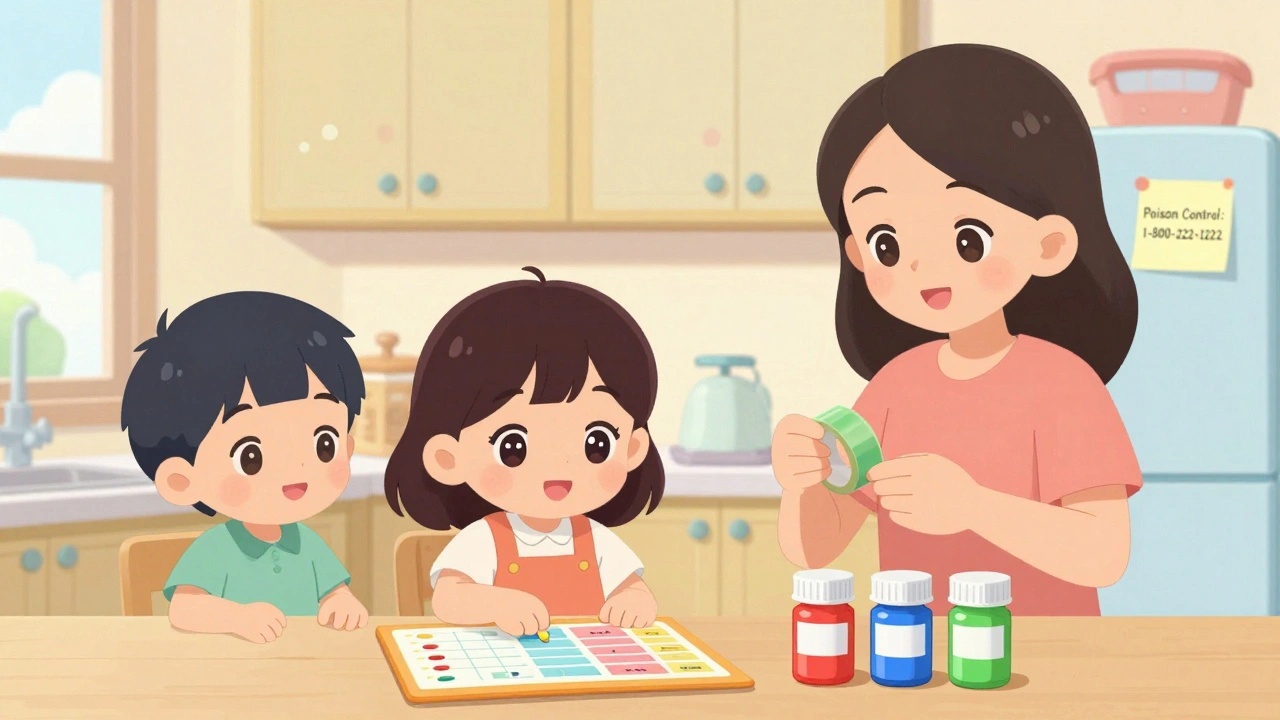
Why Your Family Needs a Medication Routine
Every year, nearly 60,000 kids end up in the emergency room because they got into medicine they weren’t supposed to. Most of these accidents happen at home-when a grandparent leaves pills on the counter, a babysitter forgets to lock the cabinet, or a toddler climbs up to reach a bottle on the shelf. It’s not just kids, either. Older adults taking five or more medications daily are at risk of mixing up doses, taking expired pills, or getting dangerous drug interactions. The truth? Medication errors are common, preventable, and often deadly.
You don’t need to be a nurse to keep your family safe. You just need a simple, consistent routine. This isn’t about being perfect. It’s about building habits that stop mistakes before they happen.
Store Medicines Up and Away-Not Just Out of Reach
"Up and away" isn’t just a slogan. It’s the #1 rule for keeping kids safe. The CDC says storing medicines at eye level or higher reduces accidental ingestions by 34%. But height alone isn’t enough. Kids are climbers. They pull down purses, climb on chairs, and open drawers. If a pill bottle is in a purse on the couch, it’s not safe.
Use locked cabinets. Not just any cabinet-ones with childproof locks. Even if you think your child can’t open it, they might. A 2023 study from Children’s Hospital Los Angeles found that 25% of kids accessed meds from bags or purses left on counters. If you have opioids in the house, keep them locked in a separate box with naloxone (Narcan) nearby. Know the signs of overdose: tiny pupils, slow breathing, extreme drowsiness. Acting fast saves lives.
And skip the bathroom. Humidity ruins pills. Moisture turns tablets into powder and makes liquids grow mold. Store medicines in a cool, dry place-like a bedroom closet or kitchen cabinet away from the sink.
Know the Five Rights of Medication Administration
Before you give any medicine, ask yourself these five questions:
- Right child-Is this medicine for the person I’m giving it to?
- Right medication-Does the label match what the doctor prescribed?
- Right dose-Am I using the right tool? A teaspoon isn’t accurate. Use the oral syringe that came with the bottle.
- Right route-Is this meant to be swallowed, applied to skin, or inhaled?
- Right time-Is it morning or night? Before or after food?
Getting one wrong can cause harm. A 2022 study showed using oral syringes instead of cups cuts dosing errors by 47%. If you’re unsure, call your pharmacist. They’re trained to catch mistakes.
Keep a Master Medication List
Write down every pill, patch, liquid, vitamin, and herbal supplement everyone in your household takes. Include:
- Brand and generic names
- Dosage and frequency
- Why it was prescribed
- Start date
- Side effects you’ve noticed
Keep this list on the fridge, in your phone, and in your wallet. Update it every time something changes-new prescription, stopped pill, added supplement. The American Pharmacists Association calls this the "brown bag" method: bring all your meds to your pharmacist every six months. They’ll spot duplicates, interactions, or drugs you no longer need.
For seniors, this is critical. The American Geriatrics Society says 15% of hospital stays for older adults are caused by inappropriate meds. Anticholinergic drugs-used for allergies, bladder issues, and sleep-can cause confusion, falls, and memory loss. A pharmacist review can help remove these safely.

Use Tools That Actually Work
Pill organizers are the most effective tool families use. A 2023 AARP survey found 68% of caregivers who used them said they reduced errors. Choose one with compartments for morning, afternoon, evening, and bedtime. Fill it weekly. Set a reminder on your phone: "Fill Sunday night."
Color-coding helps too. Use painter’s tape to mark containers: red for blood pressure, blue for insulin, green for vitamins. One Reddit user said this cut their family’s mistakes by 60%. If someone has trouble reading small print, use large-print labels or voice-activated reminders.
Apps like Medisafe work for tech-savvy users-but 27% of older adults give up on them within three months. Don’t force tech if it doesn’t fit. A simple alarm clock or sticky note on the mirror works just as well.
Handle Missed Doses the Right Way
Everyone forgets sometimes. But doubling up can be dangerous. Here’s what to do:
- If you miss a dose, give it as soon as you remember.
- If it’s almost time for the next dose, skip the missed one.
- Never give two doses at once unless your doctor says so.
For example, if your child misses their 8 a.m. antibiotic and you remember at 11 a.m., give it then. If you remember at 6 p.m., skip it and wait until tomorrow. The goal is to keep levels steady-not spike them.
Dispose of Old or Unused Meds Properly
Don’t flush pills down the toilet. Don’t toss them in the trash where a kid or pet might dig them out. The FDA recommends two safe options:
- Take them to a pharmacy drop box. Most pharmacies now have them.
- Use a drug deactivation bag (available at pharmacies) to mix pills with coffee grounds or cat litter, then throw them in the trash.
Check expiration dates yearly. Old antibiotics lose potency. Expired painkillers can become unstable. If you’re unsure, ask your pharmacist. They’ll tell you what’s safe to keep and what to toss.

Plan for Emergencies
Keep a printed emergency sheet taped to the fridge. Include:
- All current medications and doses
- Allergies
- Doctor’s name and number
- Poison Control: 1-800-222-1222 (call this number first, not 911)
Did you know 60% of households don’t know this number? Save it in your phone. Program it into your home phone. Write it on your child’s backpack. If your child swallows something they shouldn’t, call Poison Control immediately. They’ll tell you whether to wait, watch, or rush to the ER. Don’t wait for symptoms.
Review Every Three Months
Medication routines aren’t set-and-forget. Every 90 days, sit down with your family and ask:
- Is anyone taking something they don’t need?
- Are there new side effects?
- Is the schedule still working?
- Did we forget to refill something?
For seniors, this is especially important. Doctors often add meds but rarely remove them. A 2023 study found that regular reviews reduced adverse drug events by 27%. Ask your pharmacist or doctor to do a "deprescribing" check-removing drugs that do more harm than good.
What to Do If You Make a Mistake
You’re not alone. 42% of caregivers admit to at least one error in the past year. Common mistakes: giving the wrong dose, forgetting a dose, mixing up pills, or using the wrong tool.
Don’t panic. Don’t hide it. Do this:
- Call Poison Control: 1-800-222-1222
- Write down what happened
- Share it with your doctor at your next visit
Errors are learning opportunities. The goal isn’t perfection. It’s awareness. Every time you catch a mistake, you make the next one less likely.
Final Thought: Safety Is a Habit, Not a Task
Building a safe medication routine takes 2-3 weeks. Start with one change: lock the cabinet. Then add the master list. Then use the pill organizer. Don’t try to fix everything at once. Small steps stick.
Medication safety isn’t about fear. It’s about care. It’s about knowing that the little things-locking a bottle, writing a name, calling Poison Control-add up to protection. For your kids. For your parents. For your whole family.

Comments
this is so true man i forgot my grandpa was takin his blood pressure meds in the bathroom and the whole bottle got moldy 😅 we moved em to the bedroom closet and now he dont miss a day. simple stuff works.
In India we keep medicines in steel boxes tied with rope. No child opens it. No humidity. No drama.
I started using Medisafe last month and it’s a game changer 🙌 my mom’s pill schedule is now synced with my phone and she gets a voice reminder every morning. Also the app alerts me if she misses a dose. Tech isn’t scary if it saves lives 💊📱
Of course you’re recommending a pill organizer. Because nothing says "I care about my family" like a plastic tray with 16 compartments and a sticky note that says "don’t eat the blue ones". 🙄
The real issue isn’t storage or labels or apps-it’s the cultural normalization of pharmaceutical overreach. We treat every minor ache as a crisis requiring chemical intervention. The elderly are prescribed anticholinergics like they’re candy, and then we’re shocked when they wander the house confused. The solution isn’t just better habits-it’s systemic deprescribing. We need to stop adding pills and start removing them. A 27% reduction in adverse events isn’t a win-it’s a condemnation of how casually we weaponize medicine. If we treated the body like a machine that needs tuning instead of a battlefield needing bombardment, we’d be far safer.
You call this "safe"? You’re literally encouraging people to trust the same pharmaceutical industry that got us into the opioid crisis. Locking pills in a cabinet doesn’t fix the fact that most meds are overprescribed, under-researched, and marketed by corporations who don’t give a damn if your kid finds them. This is a Band-Aid on a severed artery. And you want people to use color-coded tape? How quaint. Real safety means questioning why we need so many pills in the first place.
I appreciate the intent, but this entire post is a performative exercise in medical paternalism. You assume every family has the cognitive bandwidth, literacy, and emotional stability to maintain a "master medication list" while juggling jobs, children, and elder care. You mention "brown bagging" like it’s a ritual of devotion, but for single parents working two shifts, it’s a luxury. And your tone-"don’t panic, don’t hide it"-implies guilt is the motivator for safety. The real problem isn’t poor habits. It’s a healthcare system that abandons families to navigate this chaos alone. You offer checklists. We need systemic support.
You didn’t even mention that 70% of accidental ingestions happen because caregivers think "it’s just one pill". That’s not ignorance. That’s arrogance. And now you’re telling people to use sticky notes? Please. If you can’t afford a locked cabinet or a digital reminder system, you shouldn’t be managing medications. This isn’t about care-it’s about privilege. And if your family can’t handle basic safety protocols, maybe they shouldn’t be handling prescription drugs at all.
The core failure here is lack of pharmacovigilance infrastructure. You're applying micro-level behavioral interventions while macro-level systemic risk factors-polypharmacy cascades, EHR fragmentation, and non-adherence feedback loops-remain unaddressed. The 47% reduction in dosing errors via oral syringes is statistically significant, but it's a Band-Aid on a hemorrhage. True intervention requires AI-driven CDS integration, automated dispensing with biometric verification, and real-time pharmacokinetic monitoring. Until then, you're just rearranging deck chairs on the Titanic.