
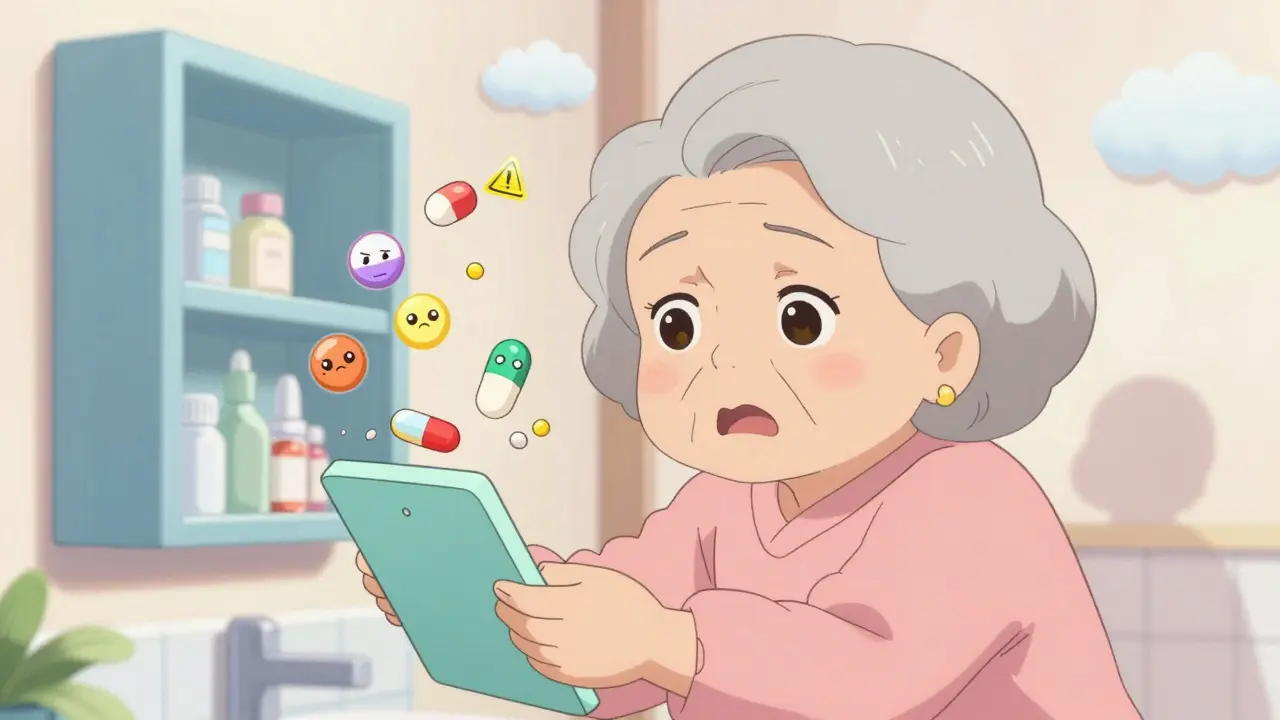
Every year, over 36,000 older adults in the U.S. die from falls. That’s more than car crashes or gun-related deaths in this age group. And while slipping on ice or tripping over a rug might seem like the obvious cause, the real culprit is often hidden in plain sight-in a medicine cabinet. Many seniors take medications that quietly steal their balance, slow their reactions, or drop their blood pressure when they stand up. These aren’t rare side effects. They’re common, predictable, and often preventable.
Medications That Make You Unsteady
Not all drugs are created equal when it comes to fall risk. Certain classes of medications are consistently linked to dizziness, confusion, and loss of coordination in older adults. The American Geriatrics Society’s Beers Criteria, updated in 2023, lists these as high-risk and advises doctors to avoid them whenever possible in people over 65.
Antidepressants-especially tricyclics like amitriptyline and nortriptyline-are among the most dangerous. These drugs block acetylcholine, a brain chemical needed for muscle control and balance. They also cause orthostatic hypotension: a sudden drop in blood pressure when standing. A 2018 meta-analysis found that people taking SSRIs like sertraline or fluoxetine were more than twice as likely to fall compared to those not taking them. Even newer antidepressants aren’t safe. The risk doesn’t disappear just because the drug is labeled “safer.”
Benzodiazepines-such as diazepam (Valium) and lorazepam (Ativan)-are prescribed for anxiety or sleep but slow down the central nervous system. They make reflexes sluggish and impair judgment. Long-acting versions stay in the body for days, building up risk over time. Studies show people on these drugs have a 42% higher chance of falling. And if you’re taking one along with an opioid? The risk jumps by 150%.
Antipsychotics, even when used off-label for agitation in dementia, are a major red flag. Drugs like risperidone and quetiapine cause sedation, muscle stiffness, and tremors. They’re often prescribed without proper monitoring, and seniors don’t always tell their doctors they feel wobbly. These medications are linked to a 50% increase in fall-related fractures.
Blood pressure meds are another silent danger. Beta-blockers like carvedilol, ACE inhibitors like lisinopril, and diuretics like hydrochlorothiazide are essential for heart health-but they can cause dizziness when standing. The risk spikes during dose changes. Many seniors don’t realize their fall isn’t from weakness-it’s from a medication they’ve been on for years.
Antihistamines like diphenhydramine (Benadryl) and chlorpheniramine are common in OTC sleep aids and cold medicines. They’re anticholinergic, meaning they block signals that keep muscles coordinated. One study found that seniors taking these daily had a 50% higher fall risk than those who didn’t. Yet, they’re still sold over the counter like candy.
Muscle relaxants like cyclobenzaprine and carisoprodol, and opioids like oxycodone or hydrocodone, also contribute. They cause drowsiness and slow reaction time. When combined with other sedatives, the effect multiplies.
Polypharmacy: The Silent Killer
Taking one high-risk drug is dangerous. Taking three or four? That’s a recipe for disaster.
A 2023 JAMA Health Forum study found that 65% to 93% of seniors hospitalized after a fall were taking at least one fall-risk-increasing drug. Nearly half were taking three or more. It’s not just the individual drugs-it’s how they interact. A blood pressure pill plus a sleep aid plus an antidepressant can create a perfect storm of dizziness, low blood pressure, and slowed reflexes.
The National Council on Aging warns that seniors taking four or more prescription drugs-even if none are on the high-risk list-have a significantly higher chance of falling. Why? Because each new medication adds another layer of side effects, and the body’s ability to process drugs declines with age. What was a safe dose at 55 might be toxic at 75.
And here’s the cruel twist: many of these medications were started years ago for conditions that no longer exist-or were never properly reassessed. A sleeping pill for temporary insomnia becomes a nightly habit. An anxiety med for a stressful period turns into a lifelong routine. Without regular review, these drugs keep working against you.
How Doctors Miss the Signs
It’s not that doctors don’t care. It’s that they’re often not looking.
A 2022 study found that only 42% of primary care physicians routinely check for medication-related fall risk in older patients. Many assume balance problems are just part of aging. Others don’t know which drugs to avoid. Even when they do, they’re hesitant to stop a medication-especially if the patient or family insists it’s helping.
But here’s the truth: stopping the wrong drug can save a life. Dr. Michael Steinman, co-author of the Beers Criteria, says reducing or eliminating fall-risk drugs can cut fall rates by 20-30%. That’s not a small gain. That’s life-changing.
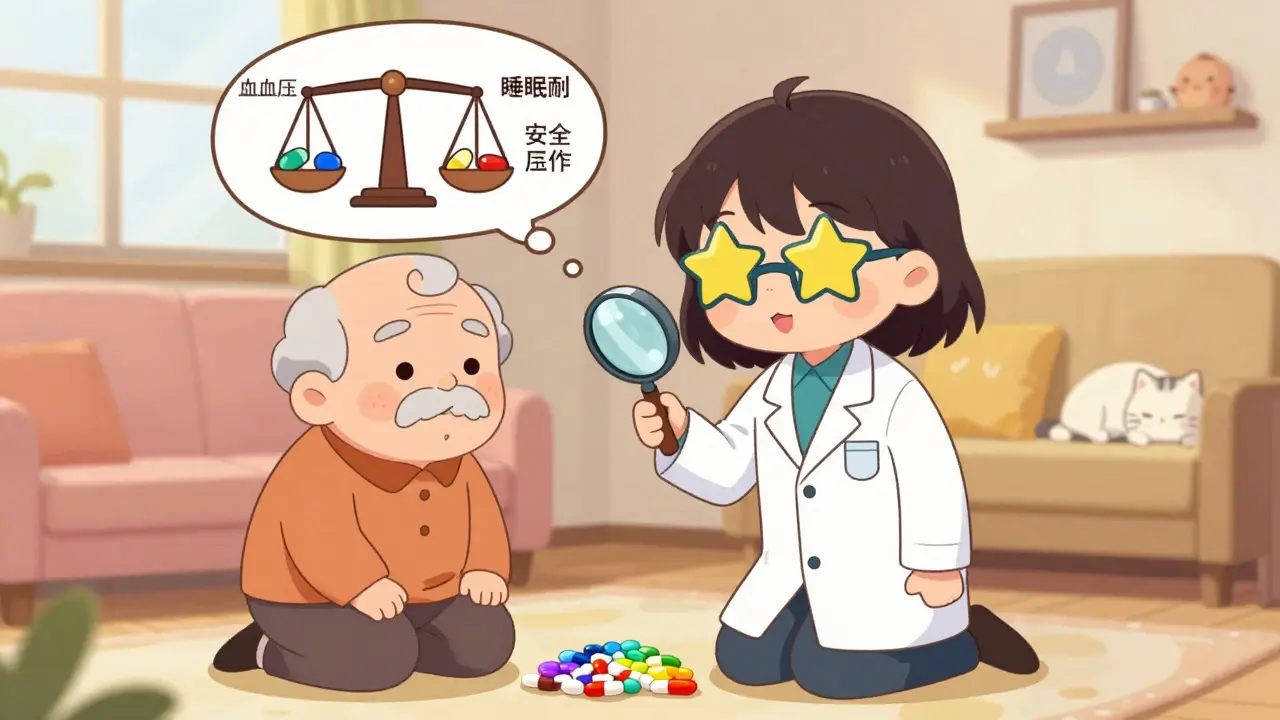
Pharmacists are stepping into this gap. Programs like HomeMeds, developed by the University of South Florida, train pharmacists to visit seniors at home, review every pill in the cabinet, and flag risky combinations. One 2021 study showed that pharmacist-led reviews reduced falls by 22% in community-dwelling seniors.
What You Can Do Right Now
You don’t need a doctor’s permission to start asking questions. Here’s what to do:
- Make a complete list of every medication-prescription, over-the-counter, supplements, and herbal remedies. Include dosages and why you take them.
- Bring it to your next appointment and say: “I’m worried about falling. Can we go through this list together?”
- Ask about alternatives for any high-risk drug. For sleep, try cognitive behavioral therapy instead of benzodiazepines. For depression, consider therapy or exercise before jumping to antidepressants.
- Check for orthostatic hypotension. Stand up slowly after sitting. If you feel lightheaded, dizzy, or see spots, tell your doctor. That’s not normal aging-it’s a warning sign.
- Don’t assume long-term use is safe. If you’ve been on a drug for more than six months, ask: “Is this still necessary?”
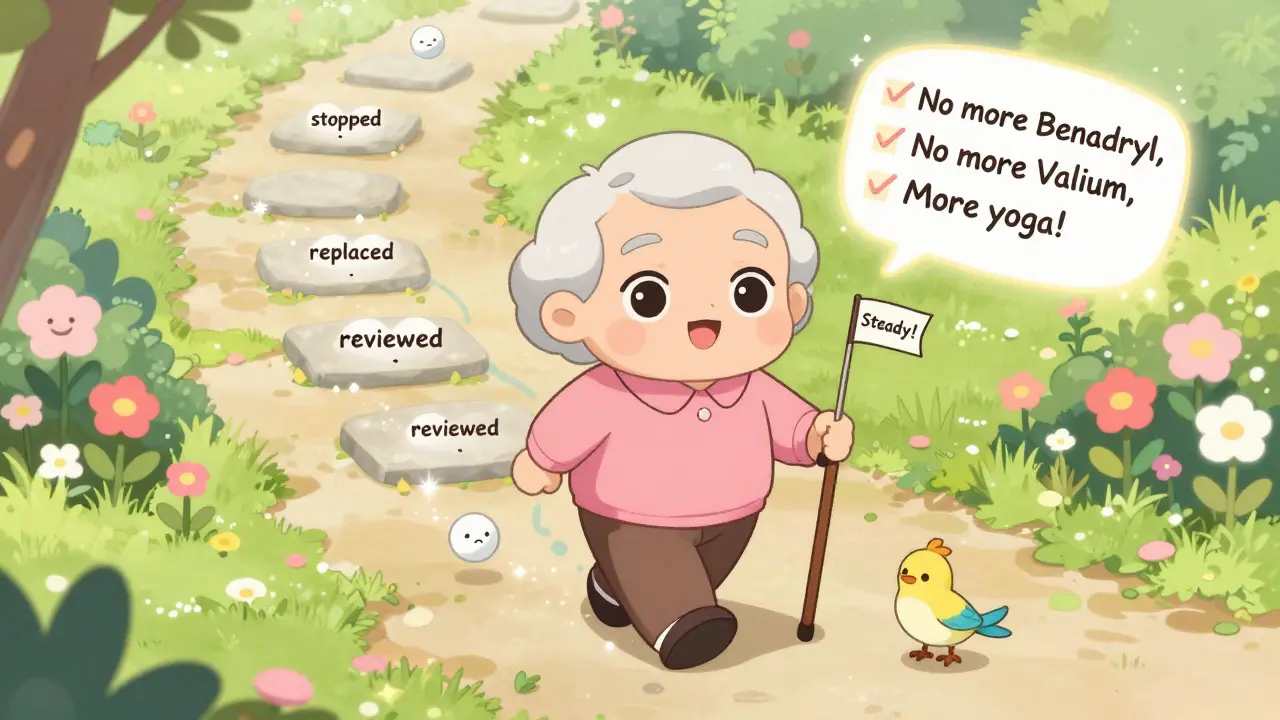
Some medications can be tapered safely. Others can be replaced with non-drug options. The goal isn’t to stop everything-it’s to stop what’s hurting you.
When to Seek Help
If you’ve fallen-even once-without a clear reason, it’s time for a full review. If you’ve had more than one fall in the past year, or if you’ve broken a bone from a minor stumble, you need more than a medication check. You need a team.
Ask your doctor for a referral to a geriatric specialist, physical therapist, or fall prevention clinic. These programs combine medication review, strength training, vision checks, and home safety assessments. The CDC’s STEADI program offers free tools for both patients and providers to help with this process.
And if you’re caring for an older relative, don’t wait for them to bring it up. Check their medicine cabinet. Ask about dizziness. Watch how they walk. Sometimes, the person most at risk doesn’t realize how much danger they’re in.
The Bottom Line
Falls aren’t accidents. They’re symptoms. And the drugs that cause them are often the easiest part of the problem to fix.
There’s no magic pill that prevents falls. But there are dozens of pills that can cause them. The solution isn’t more medicine-it’s less. Less of the wrong drugs. Less of the unnecessary ones. Less of the ones that were never meant to be taken for years.
Every pill you stop that’s not helping is a step toward staying steady. And every step you stay steady is a step toward staying independent.
Which medications are most likely to cause falls in seniors?
The top medications linked to increased fall risk include antidepressants (especially tricyclics), benzodiazepines (like Valium and Ativan), antipsychotics, blood pressure drugs (like beta-blockers and diuretics), antihistamines (like Benadryl), muscle relaxants, and opioids. These affect balance, blood pressure, and brain function. The American Geriatrics Society’s Beers Criteria specifically flags these as high-risk for older adults.
Can stopping a medication really reduce fall risk?
Yes. Studies show that carefully reducing or eliminating fall-risk-increasing medications can lower fall rates by 20% to 30%. For example, a 2021 study in the Journal of the American Geriatrics Society found that pharmacist-led medication reviews reduced falls by 22% in older adults living at home. The key is doing it safely and under medical supervision-not stopping cold turkey.
Is it safe to take multiple medications as a senior?
Taking four or more prescription drugs significantly increases fall risk, even if none are on the high-risk list. The more medications you take, the higher the chance of dangerous interactions, side effects, or cumulative sedation. This is called polypharmacy. Experts recommend regular medication reviews to cut unnecessary drugs and simplify regimens.
What should I do if I feel dizzy after taking a new medication?
Don’t ignore it. Dizziness, lightheadedness, or unsteadiness after starting a new drug is not normal aging-it’s a warning sign. Write down when it happens, how long it lasts, and what you were doing. Bring this to your doctor and ask: “Could this be from my medication?” Many times, the dose can be lowered or the drug replaced with a safer option.
Are over-the-counter drugs like Benadryl safe for seniors?
No. First-generation antihistamines like diphenhydramine (Benadryl) and chlorpheniramine are anticholinergic, meaning they block brain signals needed for balance and coordination. They’re linked to a 50% higher fall risk in seniors. Avoid them for sleep or allergies. Use non-drowsy alternatives like loratadine (Claritin) or cetirizine (Zyrtec) instead.
Who should review my medications for fall risk?
Start with your primary care doctor, but also ask to speak with a pharmacist. Pharmacists are trained to spot dangerous interactions and outdated prescriptions. Programs like HomeMeds offer in-home medication reviews specifically for seniors. Many insurance plans now cover these services. Don’t wait for a fall-ask for a review now.

Comments
i just found out my mom’s been taking benadryl every night for sleep for 8 years. she says it helps, but lately she’s been stumbling in the hallway. i didn’t even know it could be the meds. thanks for this. gonna make an appt this week.
This is one of those topics that gets buried under ‘aging is natural’ nonsense. The truth is, we treat older adults like they’re broken machines that need more parts, not like people who need fewer toxic inputs. That 50% fall risk increase from antihistamines? That’s not a side effect-it’s a public health failure. OTC doesn’t mean harmless. It means ‘no one’s watching.’
It’s interesting how we’ve outsourced our bodily awareness to pills. We no longer listen to dizziness as a signal-we just take another pill to mask it. The real question isn’t which drugs cause falls-it’s why we’ve normalized living in a fog just to avoid discomfort. Is safety in stillness, or in awareness?
bro my grandpa was on like 12 pills and he fell 3 times last year. we cut out the benadryl and the muscle relaxer and now he walks like he’s 60 again. doctors don’t wanna hear it but sometimes less is more. just sayin’.
Stop the meds, start the walks. Simple. No magic. Just movement. And if you’re dizzy standing up? Slow down. Don’t rush. Your body’s screaming. Listen.
Wow. Another fear-mongering article. My grandma’s on all those meds and she’s fine. Maybe she’s just old, not poisoned. Also, why do people think doctors don’t know what they’re doing? 🤦♀️
Let’s be honest: this isn’t about medication review. It’s about the cultural abandonment of the elderly. We’ve turned aging into a pharmaceutical problem because we don’t want to sit with the uncomfortable truth-that we don’t know how to care for our elders meaningfully. We’d rather tweak their prescriptions than spend time with them. The real fall risk isn’t in the pill bottle-it’s in our collective indifference.
Actually, the Beers Criteria are outdated. A 2024 meta-analysis just showed that low-dose SSRIs in seniors have *lower* fall risk than placebo when paired with physical therapy. So maybe it’s not the drug-it’s the context. Just saying. 🤷♀️