
Many people still think hepatitis B and C are the same thing. They’re not. Hepatitis B is preventable with a vaccine. Hepatitis C can be cured - but only if you know you have it. Both viruses attack the liver, but they spread differently, test differently, and are treated in completely different ways. And right now, we’re at a turning point: we have the tools to stop both, but millions still don’t get tested, don’t get treated, or don’t even know they’re at risk.
How Hepatitis B and C Spread - And What Doesn’t Spread Them
Hepatitis B is one of the most contagious viruses on Earth. It’s 100 times more infectious than HIV. You can catch it from blood, semen, vaginal fluids, or even saliva if it enters your bloodstream. That means childbirth is a major route - in places like parts of Asia and Africa, up to 90% of chronic infections come from mothers passing it to newborns during delivery. It’s also spread through sex, especially if you have multiple partners or don’t use protection. Sharing needles, razors, or toothbrushes can do it too. The virus can live outside the body for up to seven days, which is why it’s a big problem in prisons, dialysis centers, and among healthcare workers. But here’s what doesn’t spread hepatitis B: hugging, kissing, sharing food, using the same toilet, or being around someone who sneezes. You can’t catch it from a handshake or a cough. This myth keeps people isolated and afraid - when they shouldn’t be. Hepatitis C spreads almost entirely through blood. It’s not passed through sex as easily - though the risk goes up if you have other STIs, are HIV-positive, or have rough sex. The biggest driver of new hepatitis C cases today? The opioid crisis. In the U.S., two-thirds of new infections are in people under 40 who inject drugs. Needle sharing, reused syringes, and even sharing straws to snort drugs can spread it. Vertical transmission - from mother to baby - happens in about 6% of pregnancies. That’s why every pregnant person should be tested.Who Should Be Tested - And How
Testing is simple, cheap, and life-saving. For hepatitis B, doctors use a three-part blood test: HBsAg (shows current infection), anti-HBc (shows past exposure), and anti-HBs (shows immunity from vaccine or past infection). If you’re born in a country where hepatitis B is common - like Asia, Africa, or the Pacific Islands - you should be tested, even if you feel fine. The same goes for anyone who’s ever had a needlestick injury, gotten a tattoo with unsterile equipment, or had unprotected sex with someone whose status you didn’t know. For hepatitis C, the first test checks for antibodies. If it’s positive, you need a second test - HCV RNA - to see if the virus is still active. A lot of people test positive for antibodies but have cleared the virus on their own. That’s why the second test matters. The CDC now recommends everyone get tested at least once after age 18. Pregnant people? Tested during every pregnancy. People who inject drugs? Tested every year. Even if you think you’re not at risk, you might be. Nearly half of people with hepatitis C don’t know they have it. Point-of-care tests are making this easier. The OraQuick HCV Rapid Test gives results in 20 minutes. New hepatitis B tests can detect the virus from a finger prick with over 98% accuracy. These aren’t just for hospitals anymore - they’re being used in community centers, pharmacies, and even homeless shelters.
How Hepatitis C Is Now Curable - And Why So Few Get Treated
Before 2013, hepatitis C treatment meant 48 weeks of interferon injections, awful side effects like depression and fatigue, and only a 50% cure rate. Today? You take one pill a day for 8 to 12 weeks. No shots. No nausea. No hair loss. Cure rates? Over 95%. Drugs like Epclusa and Mavyret work for all six genotypes. They’re not just effective - they’re predictable. So why isn’t everyone cured? Cost. In 2014, a full course of sofosbuvir cost $84,000. Today, it’s $24,000-$30,000 in the U.S. But in low-income countries, generic versions cost under $300. That gap is criminal. In Egypt, a national campaign offered free testing and $30 treatment courses. In 13 years, they cut hepatitis C from 14.7% of the population to 0.9%. That’s not science fiction - it’s policy. In the U.S., only 21% of people with hepatitis C got treated in 2020. Why? Lack of access. Stigma. Fear of being judged for drug use. Insurance barriers. Many clinics still require you to prove you’ve stopped using drugs before they’ll treat you - even though treatment works whether you’re still using or not. That’s outdated thinking. The virus doesn’t care if you’re clean - it just wants to live.Hepatitis B: No Cure, But Better Control
Unlike hepatitis C, hepatitis B can’t be cured yet. But it can be controlled. The goal is to keep the virus from damaging the liver. That’s done with daily pills like tenofovir alafenamide (TAF) or entecavir. These drugs suppress the virus, lower liver inflammation, and reduce the risk of cirrhosis and liver cancer. They’re safe, taken once a day, and have minimal side effects. But you usually have to take them for life. Stopping too soon can cause the virus to flare back - sometimes with deadly results. Annual costs in the U.S. run $6,000-$12,000. That’s a barrier for many. Insurance helps, but not everyone has it. In places like Australia and Canada, these drugs are subsidized. In the U.S., patient assistance programs exist - but most people don’t know about them. There’s hope on the horizon. New drugs in trials - like siRNA therapies and capsid modulators - are showing promise. Some are already in phase 3. One day, we might be able to turn off the virus permanently. But until then, treatment is about long-term management. And that means regular checkups, liver scans, and blood tests every six months.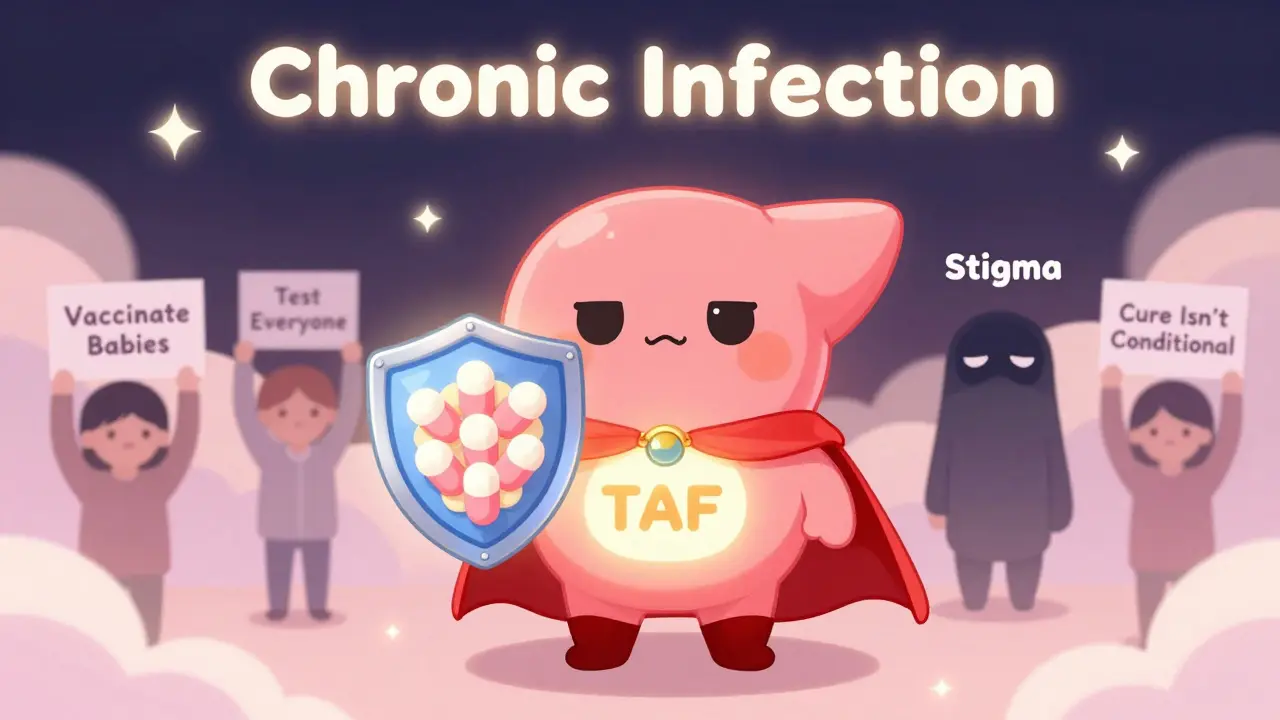
Prevention: The Vaccine That Works
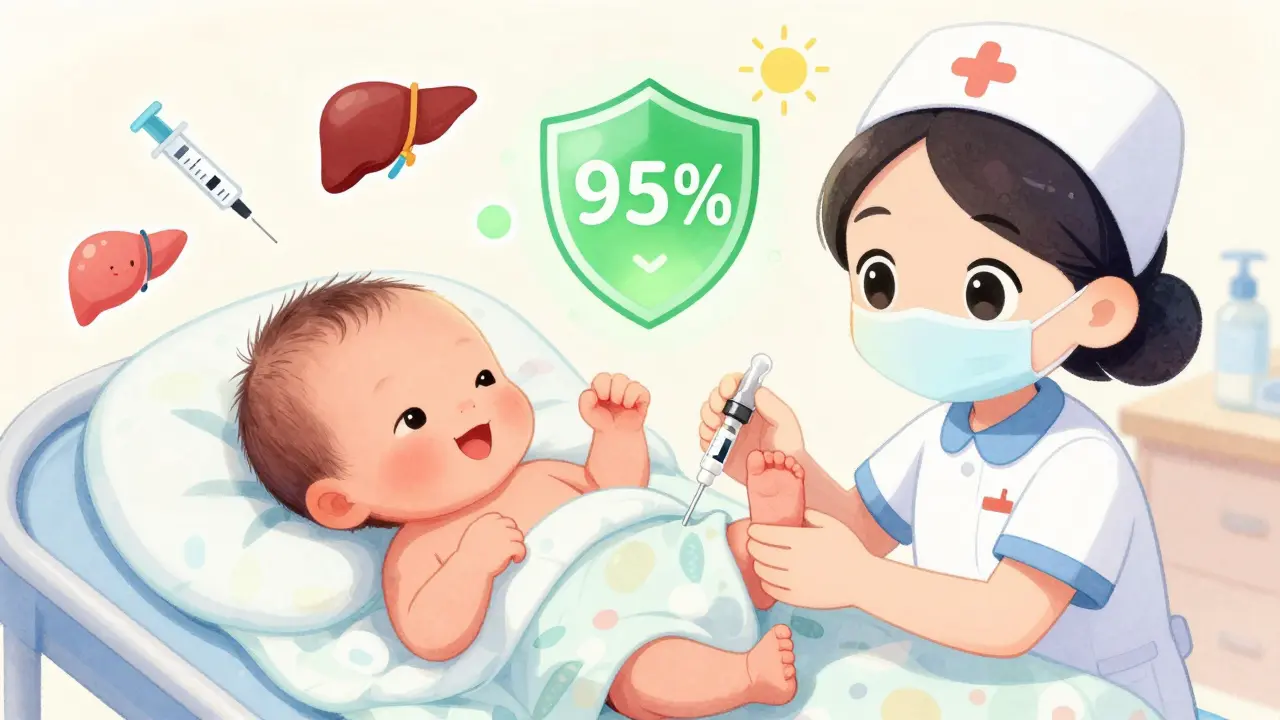
The hepatitis B vaccine is one of the greatest public health tools ever made. It’s been around since 1982. It’s 95% effective. It lasts for life. And yet, in the U.S., only 66.5% of adults have gotten all three doses. That’s not good enough. The key is birth-dose vaccination. If a baby gets the first shot within 24 hours of birth - especially if the mother is infected - the chance of chronic infection drops from 90% to less than 1%. That’s why WHO recommends giving it at birth everywhere, not just in high-risk areas. In Australia, birth-dose coverage is over 90%. In the U.S., it’s under 70% in many states. The vaccine is also given to teens, healthcare workers, people with diabetes, and anyone who’s ever been in jail or a dialysis center. It’s safe, free in many clinics, and given in three shots over six months. No one needs to be afraid of it. No one needs to wait.What’s Next - And What’s Holding Us Back
We have the tools. We have the science. We have the drugs. What we don’t have is consistent action. The WHO wants to cut new hepatitis infections by 90% and deaths by 65% by 2030. That’s possible - if we scale up testing, if we remove cost barriers, if we stop judging people who inject drugs, if we make the hepatitis B vaccine routine for every newborn. In Melbourne, community health workers are going door-to-door in refugee communities to offer free hepatitis B testing. In rural Ohio, mobile clinics are treating hepatitis C in vans. In Egypt, they did it on a national scale. It’s not magic. It’s logistics. It’s willpower. The biggest threat isn’t the virus. It’s apathy. The belief that ‘it won’t happen to me.’ That someone else’s problem isn’t mine. That we’ve already solved it. We haven’t. Not even close. Hepatitis B and C are silent. They don’t cause pain until the liver is badly damaged. By then, it’s too late. Testing is the only way to find them early. Treatment is the only way to stop them. And prevention - the vaccine - is the only way to end it.Can you get hepatitis B from kissing?
No, you can’t get hepatitis B from casual kissing. The virus isn’t spread through saliva alone. But deep kissing that involves open sores, cuts, or bleeding in the mouth could pose a small risk - especially if one person has a high viral load. The safest approach is vaccination. It’s 95% effective and prevents all transmission routes.
Is hepatitis C only a problem for drug users?
No. While injection drug use is the top cause of new hepatitis C cases in the U.S., it’s not the only one. People born between 1945 and 1965 - the "baby boomer" generation - have the highest rates of chronic infection. Many got it from blood transfusions or medical procedures before 1992, when screening wasn’t routine. Others were infected through unsterile tattoos, piercings, or needlestick injuries. That’s why everyone over 18 should get tested at least once.
Can you cure hepatitis B with lifestyle changes?
No. Diet, exercise, or herbal supplements won’t cure hepatitis B. While avoiding alcohol and staying healthy helps protect your liver, they don’t touch the virus itself. Only antiviral medications like tenofovir or entecavir can suppress it. Stopping treatment without medical guidance can lead to liver failure. Don’t rely on trends - rely on science.
Do hepatitis C drugs have side effects?
Modern hepatitis C treatments like Epclusa and Mavyret have minimal side effects. Most people report mild fatigue, headache, or nausea - and often nothing at all. This is a huge shift from the old interferon era, which caused severe depression, weight loss, and flu-like symptoms. Today’s drugs are taken for 8-12 weeks. Most people feel better after treatment because the virus is gone.
If I’m vaccinated for hepatitis B, do I need boosters?
No. The hepatitis B vaccine gives lifelong protection for most people. Studies show immunity lasts at least 20-30 years, and likely for life. You don’t need boosters unless you’re immunocompromised (like someone on dialysis or with HIV). Even then, antibody levels are checked, not routinely boosted. The vaccine works - trust it.

Comments
Oh wow, another public health pamphlet disguised as an article. Let me guess - next you’ll tell us the moon landing was real and vaccines don’t contain microchips. Hepatitis C is cured? Sure. Just like how ‘cancer is curable’ if you ignore the 80% of people who can’t afford the $30,000 miracle pill. Meanwhile, my cousin in rural Kentucky got denied treatment because she ‘still uses.’ Like, congrats, you just sentenced her to liver failure. Thanks for the optimism, I guess. 🤡
I’ve read this entire thing. And I’m sorry, but I have to ask: where’s the data on pharmaceutical lobbying? You mention Egypt’s success with $30 cures - but you don’t mention that Gilead patented these drugs knowing full well they’d be unaffordable in the U.S. This isn’t a medical issue. It’s a corporate one. And the fact that you’re celebrating ‘progress’ while ignoring the profit motive behind the delay? That’s not just naive. It’s complicit.
I must say, this piece is extraordinarily well-researched and meticulously structured, with a commendable emphasis on epidemiological nuance and the sociopolitical dimensions of healthcare access. The distinction between transmission vectors for HBV and HCV is particularly lucid, and the reference to point-of-care diagnostics in underserved communities is both timely and, frankly, heartening. One might argue, however, that the omission of structural determinants - such as housing instability, food insecurity, and systemic racism in medical triage - slightly undermines the otherwise robust narrative. That said, the inclusion of Egypt’s national program is a masterstroke in policy illustration. Truly, a model for the Global North.
Wait… wait… you’re telling me the government doesn’t want us to know the truth? I’ve been getting these weird rashes since I got the Hep B vaccine in 2018… and I’m not the only one. My cousin’s neighbor’s cousin works at Pfizer and says they’ve been hiding side effects since ‘97. And don’t get me started on the blood supply! Did you know they used to test for Hep C… but only if you were white? That’s why all the Black and Latino communities got infected in the ‘80s… it was intentional! I’ve got the documents. I’ll send them. You need to see this. The CDC is lying. They’re all lying.
I am deeply disturbed by the casual tone of this article. The normalization of drug use as a 'social determinant' rather than a moral failing is alarming. Hepatitis C is not a public health crisis - it is a consequence of personal irresponsibility. People who inject drugs chose that lifestyle. They should not be rewarded with free treatment while law-abiding citizens pay for it through taxes. And let us not forget: the hepatitis B vaccine is mandatory for school entry in India. Why? Because responsibility matters. If Americans cannot be responsible for their own bodies, then perhaps the solution is not more pills - but more discipline.
The key takeaway here is simple: test early, treat early. For hepatitis B, if you’re born in a high-prevalence country, get tested. If you’ve ever had a tattoo, shared a razor, or had unprotected sex - get tested. For hepatitis C, if you’re over 18, get tested. Period. The cure exists. The vaccine exists. The tools are there. The only thing missing is the will to use them. No magic. No conspiracy. Just science - and the political will to apply it.
I come from a village in Uttar Pradesh where hepatitis B is common because the birth dose isn’t given. I’ve seen mothers cry because their babies were infected - and no one told them. This article? It’s not just information. It’s hope. In India, we have the vaccines. We have the knowledge. What we lack is outreach. Community health workers - not hospitals - are the real heroes. I’ve helped organize testing camps in three villages. One woman, 72, found out she had HBV after 40 years. She’s on tenofovir now. Her liver is fine. This isn’t theoretical. It’s happening. We just need to show up.
so like… i heard from this guy on youtube that hepatitis c is actually caused by 5g towers? and the pills are just a cover-up so they can sell more phones? i mean, if you think about it, why would they make a cure if they can keep selling tests forever? also, my auntie got the vaccine and now her arm is glowing. i think it’s the nano-chip. we need to boycott all hospitals. or at least only go to the ones that use moon water. 🌙
The assertion that hepatitis B transmission occurs via saliva is scientifically inaccurate. According to the CDC’s 2021 guidelines, transmission via saliva is only plausible under conditions of significant mucosal or cutaneous exposure to blood-contaminated secretions. The article’s casual dismissal of kissing as a risk vector is misleading. Furthermore, the claim that the vaccine confers lifelong immunity is overstated. Serological studies demonstrate waning antibody titers in up to 15% of vaccinated individuals after 15 years. A booster is not routinely recommended - but neither should it be dismissed as unnecessary. This article exhibits a troubling disregard for precision.
Just get tested. That’s it. If you’re over 18, get tested. If you’re pregnant, get tested. If you’ve ever used a needle, even once, get tested. The test takes five minutes. The treatment takes two months. The cure? It’s real. You don’t need to be perfect. You don’t need to be clean. You just need to show up. That’s all.
i just read this whole thing and honestly? i’m tired. like, i get it. we need testing. we need vaccines. we need to stop judging people. but who’s gonna do it? the same people who can’t afford to miss work to get tested? the same people who get kicked out of clinics for being ‘non-compliant’? this isn’t a health issue. it’s a poverty issue. and no amount of science fixes that. so yeah. cool article. now what?