

Every year, around 1.3 million medication errors happen in the U.S. - and many could be prevented by simply checking your prescription label. Medication strength is the amount of active ingredient in each dose, measured in units like milligrams (mg) or micrograms (mcg). A mistake here can lead to serious harm. Prescription labels are your key tool for verifying this information before taking medication.
Where to Find Medication Strength on Your Label
Look for the strength information right next to the drug name. For tablets or capsules, it usually says something like "AMOXICILLIN 500 MG CAPSULE". The "500 MG" part is the strength per pill. For liquid medications, you'll see a ratio like "250 MG/5 ML", meaning 250 milligrams of medication in every 5 milliliters of liquid. Creams and ointments often show percentage strength, such as "HYDROCORTISONE 1% CREAM", which means 1 gram of the drug per 100 grams of cream.
FDA regulations require clear and standardized labeling on all prescription containers. For example, the FDA mandates no abbreviations for units like "U" for units (which could be mistaken for "0" or "4"). This standardization helps prevent errors that cause 7,000-9,000 deaths annually in the U.S. according to the Institute of Medicine's 2006 report.
Understanding Units and Common Pitfalls
Dosage units are critical. Milligrams (mg) and micrograms (mcg) differ by 1,000 times. A tiny mistake here can lead to dangerous overdoses. For instance, mistaking 0.25 mg for 25 mg could be fatal for some medications. Liquid medications often confuse people because the concentration ratio matters. A bottle labeled "250 MG/5 ML" means 250 milligrams per 5 milliliters, not 250 milligrams total.
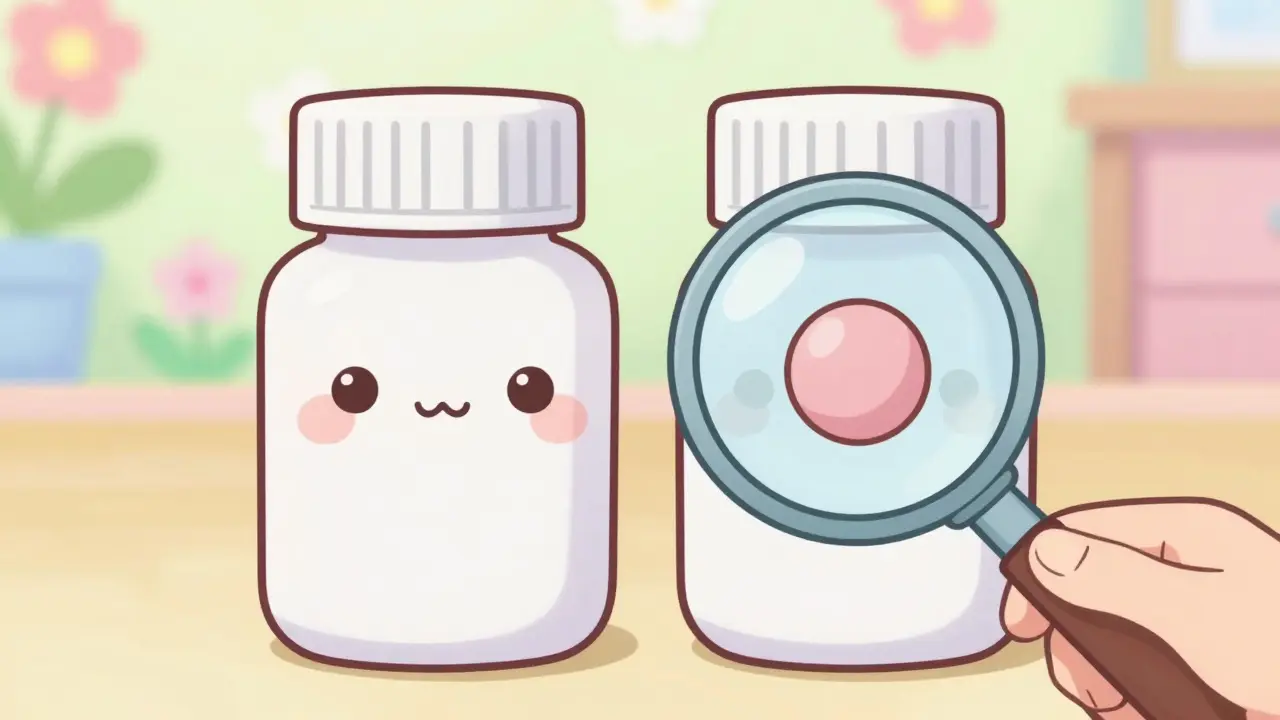
Decimal points cause serious errors. The FDA's 2021 study found that "0.5 mg versus 5 mg" errors account for 18.7% of fatal pediatric dosing mistakes. Always double-check numbers with a magnifying glass or phone app. Pharmacists recommend this for 76.3% of patients with vision challenges.
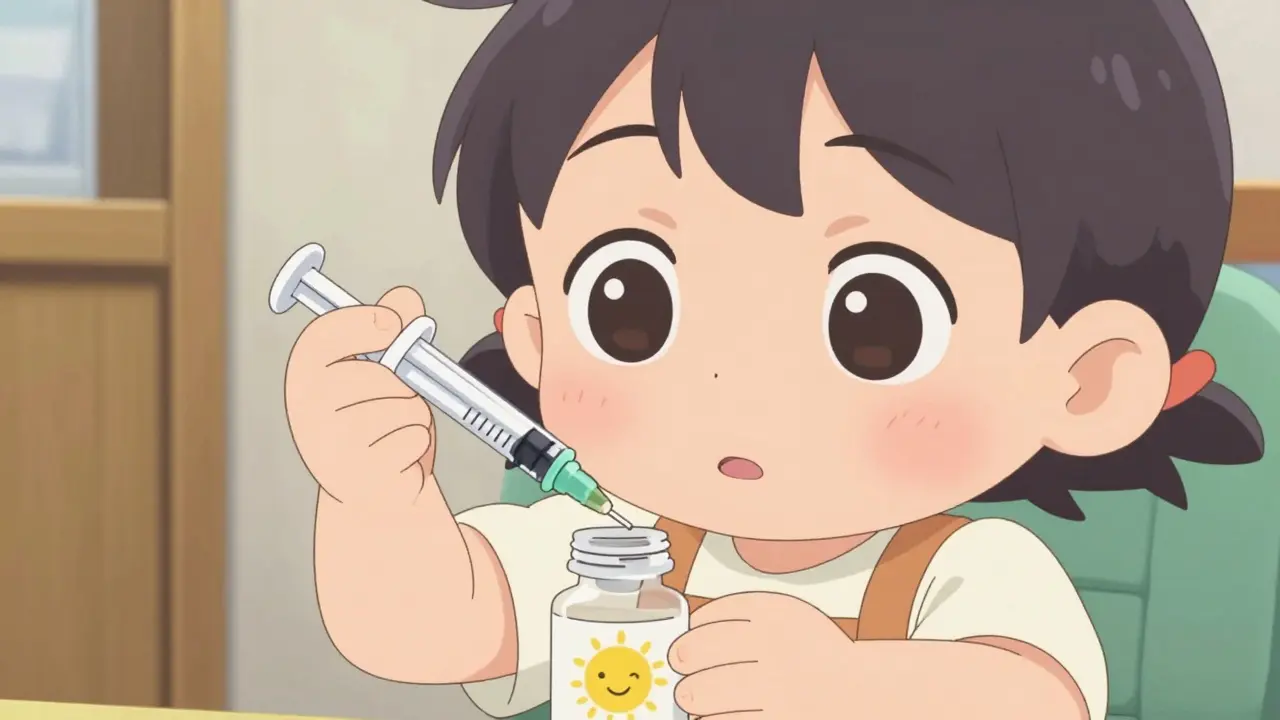
Checking Quantity: Total vs. Dose
The quantity on your label shows the total amount dispensed. For tablets, it might say "30 TABLETS". For liquids, it could be "120 ML". This is the total you have, not how much to take each time. Always check the dose instructions separately. For example, a label might say "TAKE 1 TABLET TWICE DAILY" with a quantity of "60 TABLETS", meaning the prescription lasts 30 days.
Quantity verification is simple: count the pills or measure the liquid. If the quantity doesn't match what your doctor prescribed, contact the pharmacy immediately. A common error is confusing the total quantity with the daily dose. If you're unsure, ask your pharmacist to explain the numbers.
Cross-Verify with Prescription Details
Your prescription number (Rx#) and prescriber name should match your doctor's records. If the Rx# on the label doesn't match what your doctor gave you, that's a red flag. Also, check the medication name. Sometimes pharmacies fill a similar-sounding drug. For example, "Lisinopril" vs. "Lisinopril-Hydrochlorothiazide" - the second one has an extra diuretic. Always verify the full name.
Pharmacy verification steps include comparing the label to your prescription paper. If anything seems off, don't take the medication. Call the pharmacy to confirm. Most errors happen when patients don't check. The American Society of Health-System Pharmacists 2022 report shows 22.3% of medication errors involve strength or quantity verification failures.
Special Considerations for Different Medications
| Medication Type | Strength Format | Example |
|---|---|---|
| Tablets/Capsules | Strength per unit | AMOXICILLIN 500 MG CAPSULE |
| Liquid Solutions | Concentration ratio | 250 MG/5 ML |
| Creams/Ointments | Percentage strength | HYDROCORTISONE 1% CREAM |
Liquid medications are tricky because the concentration ratio matters. For example, a child's medication might be "5 MG/5 ML", but the bottle could be 100 ML total. That means the entire bottle contains 100 MG of medication. Always calculate the dose based on the ratio, not the total volume. For topical creams, the percentage strength tells you how much drug is in the cream. A 1% hydrocortisone cream has 10 mg of drug per gram of cream.
High-risk medications like insulin or blood thinners often have special labeling. The FDA requires clear warnings for these drugs. Always double-check these labels with your pharmacist. The American Society of Health-System Pharmacists says 32.4% of errors occur with concentrated liquid medications when caregivers misinterpret strength ratios.
Common Mistakes and How to Avoid Them
Here are the top errors people make when checking labels:
- Misreading decimal points: "0.25 mg" vs. "25 mg". This causes 14.3% of strength-related errors.
- Confusing "mg" with "mcg": A microgram is 1,000 times smaller than a milligram. Mistaking these can lead to serious overdoses.
- Not checking the total quantity: Taking "30 tablets" as daily dose instead of total supply.
- Ignoring the concentration ratio for liquids: Assuming "250 MG/5 ML" means 250 MG total, not per dose.
To avoid these, use a magnifying glass or phone app for small text. Ask your pharmacist to explain the label. The American Society of Health-System Pharmacists says 78.4% of patients feel safer after learning these checks. A Reddit user u/MedSafetyMom reported catching her son's amoxicillin dose error (250mg/5mL vs 500mg/5mL) before it caused harm.
What if the strength on my prescription label doesn't match my doctor's prescription?
Contact the pharmacy immediately. Never take medication that doesn't match your prescription. Pharmacists can verify the error and correct it. This happens in about 22.3% of medication error reports, often due to miscommunication between the doctor and pharmacy. For example, a 2023 Mayo Clinic Connect user shared how they caught a blood pressure medication error (10mg instead of 2.5mg) before taking it.
How do I check the strength of liquid medications?
Look for the concentration ratio on the label, like "250 MG/5 ML". This means each 5 milliliter dose contains 250 milligrams of medication. Always measure doses using the provided syringe or cup - never use household spoons. For example, if your dose is 10 ML, that's two 5 ML doses, totaling 500 MG. The American Pharmacists Association emphasizes that liquid medications account for 32.4% of all strength-related errors due to misinterpreted ratios.
Why do some labels show "mcg" instead of "mg"?
"mcg" stands for microgram, which is one-thousandth of a milligram. This is used for very potent medications like thyroid hormones or certain vitamins. Mistaking "mcg" for "mg" can cause a 1,000-fold overdose. The FDA specifically requires "mcg" to be written out fully (not "μg") to prevent confusion. Always double-check this unit - it's a common source of errors in elderly patients.
What should I do if I find a mistake on my prescription label?
Do not take the medication. Call the pharmacy right away to confirm the error. Most pharmacies have a 24/7 hotline for such issues. If the pharmacy can't fix it immediately, contact your doctor for a new prescription. The FDA's 2023 guidance document "Enhanced Medication Labeling for At-Risk Populations" stresses that patients are the final safety check. Your quick action prevents potential harm - and your pharmacy will thank you for it.
Are there tools to help verify medication strength?
Yes. Many pharmacies now offer mobile apps that scan prescription barcodes to instantly verify strength and quantity against pharmacy records. A 2023 JAMA Internal Medicine study found this reduces verification time from 47 seconds to 8 seconds per prescription. Walgreens implemented machine learning verification across all 9,000 stores in 2022. For low-vision patients, 89.2% of chain pharmacies provide high-contrast labels upon request. Always ask your pharmacist about these tools - they exist to keep you safe.

Comments
Always check the units on your prescription label-mixing mg and mcg can be fatal.
Pharmacists recommend using a magnifying glass for small text. It's saved me multiple times from dosage errors. Always double-check those decimals.
FDA says no abbreviations but pharmacies still do it they need to be held accountable this is why people die
Liquid meds are tricky Always measure with the syringe 🤔 250mg/5ml means 250 per 5ml not total My kid's meds almost got wrong dose
The FDA standards are solid but some pharmacies cut corners. We need to hold them accountable. Always check your meds.
Actually most errors come from patients not reading labels properly. The system is fine. Stop blaming pharmacies. 🤷♀️
Pharmacists recommend using a magnifying glass for small text.
It's saved me multiple times from dosage errors.
Always double-check those decimals.
For liquid medications, the concentration ratio is key.
For example, 250mg/5ml means each 5ml has 250mg, not the total.
If you take 10ml, that's 500mg.
Many people assume the entire bottle's volume is the dose.
Always measure with the provided syringe.
Household spoons are inaccurate.
The FDA's 2021 study found decimal errors account for 18.7% of fatal pediatric mistakes.
Always check the strength per unit.
Tablets might say 500mg per pill.
For creams, 1% means 1g per 100g.
The American Society of Health-System Pharmacists says 78.4% of patients feel safer after learning these checks.
If you're unsure, ask your pharmacist.
They're trained to explain.
It's better to ask twice than take the wrong dose.
Medication errors are preventable with careful checking.
Your vigilance saves lives.
FDA and Big Pharma colluding hide dangers they want wrong doses check twice they're lying
The current labeling standards are insufficient. Errors occur due to systemic failures. Patients must verify all details.
Big Pharma is poisoning us. They change labels to confuse people. Always verify with your doctor. Trust no one.
I once misread 50mg/5ml as 50mg total. Scary mistake. Always mesure with the syringe.
Different countries have varying labeling standards. In the US, FDA requires clear units. Always verify with your pharmacist. Safety first.
Pharmacies must follow the rules. Patients are responsible for checking. It's not their fault if they don't. The system works if you do your part.