
Most people think osteoarthritis is just part of getting older. That’s not true. It’s not normal to wake up with stiff knees, struggle to climb stairs, or stop walking because your hip hurts. Osteoarthritis (OA) is a disease - not aging. And it’s more common than you think. Over 500 million people worldwide live with it. In the U.S. alone, more than 32 million adults have been diagnosed. That’s one in every eight people. And it’s not just about pain. It’s about losing the ability to move, work, sleep, and live normally.
What’s Really Happening in Your Joint?
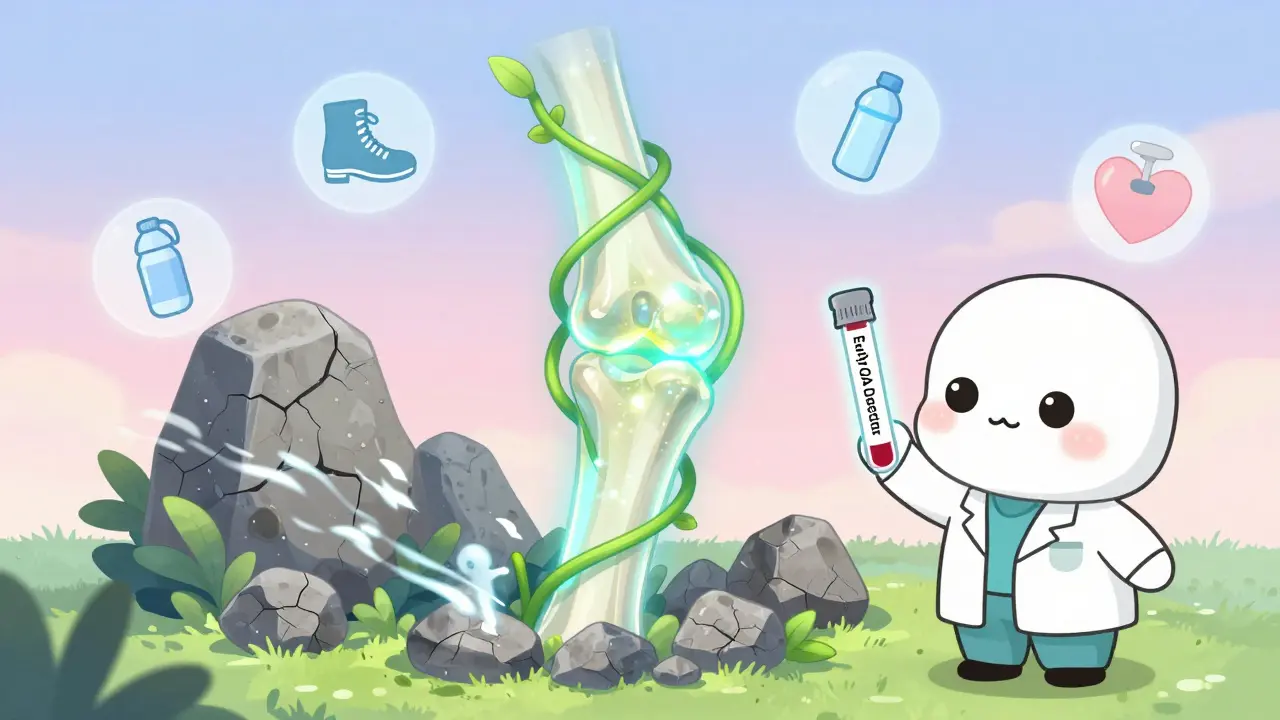
Osteoarthritis doesn’t just wear down cartilage like an old tire. That’s the old story. Today, doctors see it as a whole-joint disease. It affects everything: the cartilage, the bone underneath, the ligaments, the lining of the joint, even the fat around it. The cartilage starts to break down, but it’s not because you used it too much. It’s because the body’s repair system fails. Tiny cracks form on the surface, then deepen. Chondrocytes - the cells that maintain cartilage - go into overdrive trying to fix it, but they end up making things worse. Inflammation creeps in. Bone starts to change shape. Bone spurs grow. The joint loses its smooth glide.
This isn’t random. It happens most often in weight-bearing joints: knees (60% of cases), hips (30%), hands (25%), and spine (20%). And it’s rarely symmetrical. One knee hurts, the other doesn’t. That’s different from rheumatoid arthritis, where both sides usually flare up together. OA pain gets worse when you move - walking, climbing, standing. Rest helps. RA pain? It’s worse in the morning and improves with movement. Gout? Sudden, burning pain, often in the big toe, with redness and swelling. OA creeps in slowly. By the time you notice, the damage is already there.
Why You Might Not Know You Have It - Until It’s Too Late
Many people ignore early signs. A little stiffness after sitting. A pop when standing up. A dull ache after gardening. They think, "It’s just old age." But the truth? OA can be detected years before symptoms show. Right now, doctors rely on X-rays. But by the time changes show up on an X-ray, you’ve already lost 30-50% of your cartilage. That’s like waiting for your car’s engine to smoke before you check the oil.
Dr. Virginia Byers Kraus from Duke University says we need better tools. Blood tests that detect early joint breakdown are coming. In five years, we might be able to spot OA before you even feel pain. Until then, if you’re over 45 and have joint discomfort - especially after activity - get it checked. Don’t wait for the pain to be unbearable.
Who’s Most at Risk?
It’s not just age. Weight matters. Every extra pound puts four times the stress on your knees. If you’re overweight, losing just 10% of your body weight can cut your pain in half. That’s not a guess - it’s what 72% of patients in Arthritis Foundation surveys reported. Women are more likely to get OA than men, especially in the knees and hands. Men get more severe hip OA. Certain jobs raise your risk: construction workers (37% higher), musicians (29% higher), and warehouse workers. Repetitive motion, heavy lifting, kneeling - they all add up.
And here’s the dangerous cycle: OA makes you less active. Less activity leads to weight gain. Weight gain makes OA worse. It also increases your risk of heart disease, diabetes, and depression. So managing OA isn’t just about pain. It’s about breaking that cycle.
What Actually Works for Pain Management?
Medication alone won’t fix this. NSAIDs like ibuprofen help - but only for a while. And they come with risks: stomach bleeding, kidney damage. A 2022 Arthritis Foundation survey found 63% of patients were unhappy with how well pain meds worked. You need more than pills.
The most effective approach? A three-part plan: movement, weight control, and education.
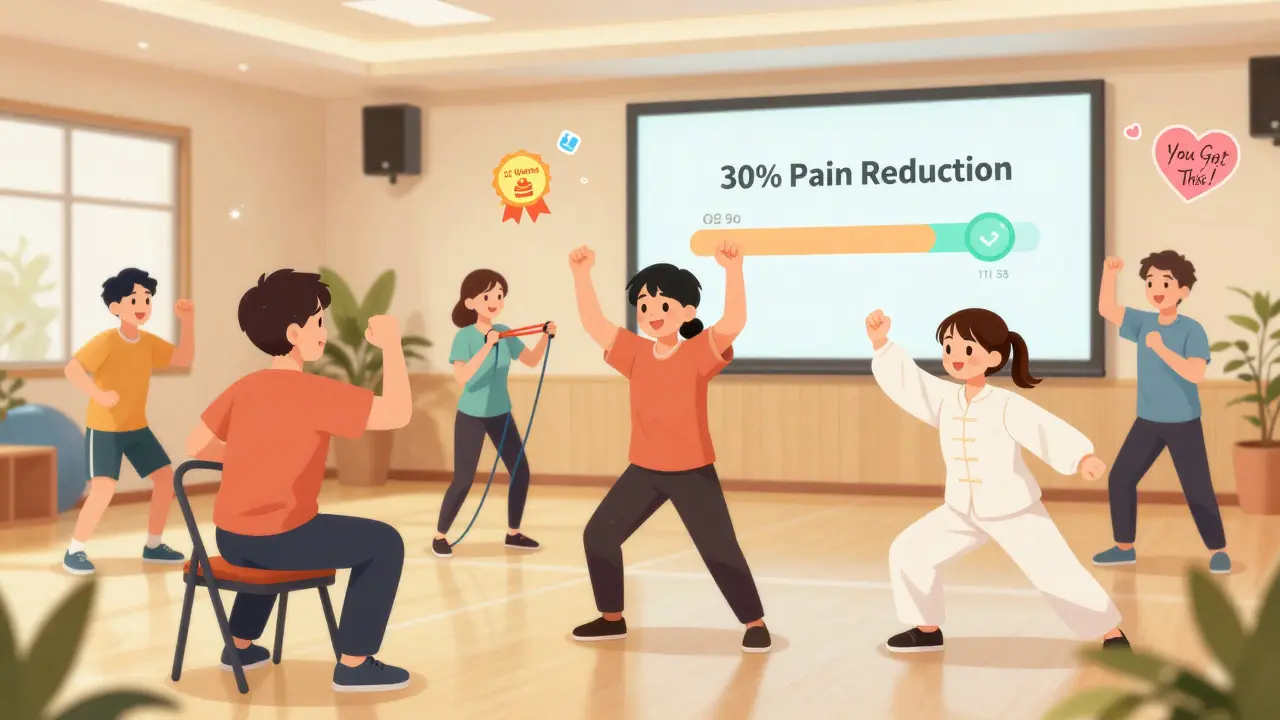
- Movement: Land-based exercise is key. Walking, cycling, swimming - anything that keeps you moving without pounding your joints. Do it 3 times a week for 45 minutes. In a 2022 clinical trial, 80% of people saw real pain reduction after 12 weeks. Strength training matters too. Stronger muscles around the joint take pressure off it. Physical therapy helps you learn how to move without hurting yourself.
- Weight loss: Losing 5-10% of your body weight cuts pain and improves function. That’s not "get skinny." It’s losing 10-20 pounds if you’re overweight. Studies show this works better than any drug for early-stage OA.
- Education: Knowing how to protect your joints changes everything. Learn how to sit, stand, lift, and bend without stressing damaged areas. The CDC’s 6-week self-management course reduces pain by 40% and improves daily function by 30%. It’s free. It’s online. And it works.
Some people try braces, heat packs, or acupuncture. These can help temporarily. But they don’t change the disease. Only consistent movement and weight control do.
New Treatments on the Horizon
There’s hope beyond the usual options. In June 2023, the FDA approved tanezumab, a new injection that blocks a pain signal in nerves. In trials, it reduced pain 35% more than NSAIDs. It’s not for everyone - it’s for moderate-to-severe cases that didn’t respond to other treatments.
Corticosteroid injections into the knee are now strongly recommended by OARSI guidelines. They can cut pain by 50% for up to 4 weeks. Great for flare-ups. Not a long-term fix.
Stem cell therapy? Still experimental. There are over 380 active clinical trials worldwide. But right now, there’s no solid proof it rebuilds cartilage. Don’t pay thousands for unproven treatments. Stick to what works.
The Real Barrier: Getting Help
Here’s the ugly truth: Getting care is hard. The average wait for a rheumatologist in the U.S. is over 8 weeks. Many primary care doctors don’t know the latest OA guidelines. Patients report feeling dismissed. "It’s just arthritis," they’re told. But OA isn’t just arthritis. It’s a complex disease with real, measurable impact.
And the cost? It’s huge. In the U.S., OA costs $140 billion a year - in medical bills and lost wages. Employers lose $3.4 billion annually because workers can’t do their jobs. Forty-three percent of people with OA cut back on work. If you’re struggling to keep your job because of joint pain, you’re not alone. And you deserve better support.
What to Do Right Now
You don’t need a miracle. You need action. Start with these three steps:
- Move daily. Walk 20 minutes. Do chair squats. Use resistance bands. Don’t wait for pain to disappear - move through it gently.
- Check your weight. If you’re overweight, aim to lose 5-10% in 6 months. That’s 1-2 pounds a week. Small changes add up.
- Learn. Go to the CDC’s arthritis management page or the Arthritis Foundation’s free online course. Learn how to protect your joints. It takes less than an hour.
Don’t wait for a doctor to tell you what to do. You have more power than you think. OA doesn’t have to take your life. But you have to fight back - with movement, with weight control, with knowledge.
Is osteoarthritis the same as rheumatoid arthritis?
No. Osteoarthritis (OA) is caused by mechanical stress and wear on joints over time. It’s not an autoimmune disease. Rheumatoid arthritis (RA) happens when the immune system attacks the joint lining, causing inflammation. OA pain gets worse with activity and improves with rest. RA pain is often worse in the morning and improves with movement. RA can affect organs beyond joints; OA doesn’t. They’re treated very differently.
Can you reverse osteoarthritis?
No - not yet. Once cartilage is lost, it doesn’t grow back on its own. But you can stop it from getting worse. Weight loss, exercise, and joint protection can slow progression significantly. Some studies show people with early OA can stabilize their condition for years - even decades - with the right lifestyle changes. The goal isn’t to reverse it, but to prevent it from disabling you.
Do I need an X-ray to diagnose osteoarthritis?
Not always. Doctors often diagnose OA based on symptoms and physical exam - especially if you’re over 45, have joint pain worsened by activity, and no signs of inflammation like redness or swelling. X-rays are used to confirm severity, not to make the diagnosis. If your symptoms match typical OA and you respond to lifestyle changes, you may never need an X-ray.
Are painkillers the best way to manage OA pain?
No. Painkillers like NSAIDs can help short-term, but they don’t change the disease and carry risks - stomach bleeding, kidney damage, high blood pressure. A 2022 survey found 63% of OA patients were dissatisfied with pain meds. The most effective long-term strategy is movement, weight loss, and education. Medication should be a backup, not the main tool.
Can I still exercise if my joints hurt?
Yes - but you need to choose the right kind. High-impact activities like running or jumping can make OA worse. Low-impact options like walking, cycling, swimming, water aerobics, or tai chi are safe and effective. The key is consistency. Start slow. If you feel sharp pain, stop. A dull ache during or after is normal. A 2022 study showed 80% of people improved pain after 12 weeks of regular, gentle exercise.
What’s the most effective way to lose weight with OA?
Combine low-impact movement with dietary changes. Walking 30 minutes a day, five days a week, burns about 150-200 calories. Pair that with cutting sugary drinks and processed snacks. You don’t need a fancy diet. Focus on whole foods: vegetables, lean protein, whole grains. Losing just 10% of your body weight can reduce knee pain by 50%. That’s more effective than any drug.

Comments
This post hit me right in the feels 🥹 I’ve been living with knee OA for 7 years and nobody ever told me it wasn’t just ‘getting old’.
Started walking daily after work - 20 mins, no excuses. Lost 18 lbs. Pain cut in half. No magic pill. Just consistency.
Also - THANK YOU for calling out that 6-week CDC course. Did it last year. Changed my life. Free. Easy. No sales pitch. Do it.
America’s healthcare system is broken. I paid $1,200 out of pocket just to get an X-ray. Meanwhile, my buddy in Germany got a full joint scan with no deductible. This isn’t a medical issue - it’s a policy failure.
Interesting read. In India, most people don’t even know what OA is. They just take painkillers and call it a day. The idea of exercise as medicine? Most think it’s for gym bros. But slowly, awareness is growing. Yoga and walking are becoming more common among elders.
The evidence presented here is clinically sound and aligns with current guidelines from the American College of Rheumatology. Emphasis on non-pharmacological interventions is not only appropriate - it is essential. Patients who engage in structured movement programs demonstrate statistically significant improvements in function and quality of life. This is not anecdotal.
Losing weight helped me more than any doctor ever did. I didn’t need surgery. I didn’t need injections. Just stopped drinking soda and walked every evening. Simple. No drama. No hype. Just life.
They’re lying about stem cells. Everyone’s selling snake oil. I paid $12k for a ‘regenerative’ injection. Zero results. The FDA approved tanezumab? That’s just Big Pharma’s new cash cow. They don’t care if you walk - they want you on pills forever.
Oh wow. A *real* article. Not one of those ‘drink celery juice and hug a tree’ wellness blogs. Finally. Someone who gets it. Movement isn’t a suggestion - it’s a biological imperative. Weight loss isn’t a moral failing - it’s biomechanics. And yes, your cartilage is not a tire. It’s a living, breathing, screaming mess of chondrocytes trying to survive a corporate takeover. I’m sending this to my cousin who thinks ‘resting’ his hip is the solution.
I’m a physical therapist. I see this every day. People wait until they can’t get out of a chair. Then they panic. The best intervention? Early movement. Not surgery. Not pills. Just consistent, smart activity. You don’t need a gym. You need a schedule. And a little self-compassion.
I read somewhere that OA is caused by 5G radiation. The joint pain started right after the towers went up in my neighborhood. I don’t trust mainstream medicine. They’re hiding the truth. I’ve been using copper bracelets and moon water. My pain is… manageable? Maybe. I’m not convinced.
I am absolutely floored by the depth of this article. It is, without hyperbole, a masterpiece of medical communication. The way it dismantles the myth of aging as a disease - oh, my heart! The precision with which it distinguishes OA from RA - the clarity! I wept. I printed it. I laminated it. I posted it on my fridge. I showed it to my mother. My husband. My dog. I think I’ve found my life’s purpose: to spread this gospel. I will not rest until every person with joint pain reads this. With profound gratitude, Emma.
In Tamil Nadu, grandmas walk 5km every morning. No gym. No pills. Just movement. They don’t call it OA. They call it life. Maybe we’re overcomplicating it. Simple = effective.
Stop. Just stop. Move. Lose weight. Learn. That’s it. No fluff. No drama. No excuses. Do it.