
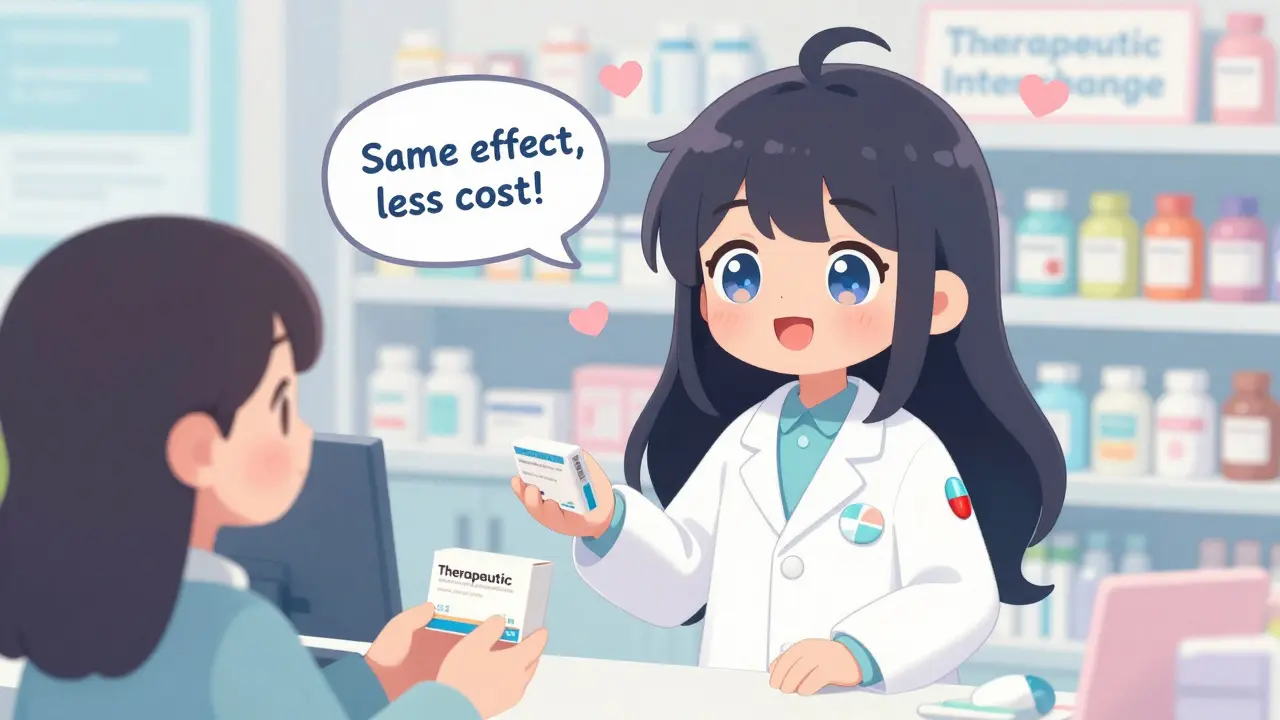
For decades, pharmacists were seen as the people who handed out pills from behind the counter. But today, in many parts of the U.S., they’re doing far more-adjusting prescriptions, prescribing birth control, dispensing naloxone, and even managing chronic conditions like high blood pressure. This shift isn’t random. It’s the result of decades of legislative change, driven by real gaps in healthcare access. If you’ve ever wondered how a pharmacist can legally swap your brand-name drug for a generic, or even write a new prescription without seeing your doctor, you’re looking at pharmacist substitution authority-and it’s changing fast.
What Exactly Is Pharmacist Substitution Authority?
Pharmacist substitution authority means the legal power a pharmacist has to change or replace a medication without needing to contact the original prescriber. It’s not about making random decisions. It’s a structured, regulated process that varies by state. At its most basic level, it includes generic substitution-something allowed in every state. If your doctor writes a prescription for Lipitor, but you don’t have a ‘dispense as written’ note, the pharmacist can legally give you atorvastatin instead. It’s the same active ingredient, same effect, often a fraction of the cost. But that’s just the start. Some states go further. Therapeutic interchange lets pharmacists swap drugs within the same class-even if they’re not chemically identical. For example, if a patient is on simvastatin and it’s out of stock, a pharmacist in Kentucky could switch them to rosuvastatin, as long as the prescriber marked the prescription with ‘formulary compliance approval.’ That’s not a loophole. It’s a carefully designed safety net.How States Differ: A Patchwork of Rules
There’s no national standard. What’s legal in California might be illegal in Texas. As of 2025, 44 states introduced bills to expand pharmacist roles, and 12 have already passed new laws. Maryland lets pharmacists prescribe birth control to adults. Maine allows them to hand out nicotine patches without a doctor’s script. California uses the word ‘furnish’ instead of ‘prescribe’ to avoid legal pushback from medical groups. Then there are states like New Mexico and Colorado. They don’t need new laws for every change. Instead, their Board of Pharmacy creates statewide protocols. If a new treatment becomes standard-say, a flu antiviral for high-risk patients-the board can update the list without waiting for legislators. That kind of flexibility lets pharmacists respond faster to public health needs. Collaborative Practice Agreements (CPAs) are another major tool. These are written agreements between pharmacists and physicians that spell out exactly what the pharmacist can do: adjust doses, order labs, start or stop medications. In some states, the pharmacist runs the show under the CPA. In others, the doctor still needs to sign off on every change. The trend? More autonomy for pharmacists. Less micromanagement.Therapeutic Interchange: The Big Leap
Therapeutic interchange is where things get interesting. It’s not just swapping a brand for a generic. It’s swapping one drug for another in the same class-like switching from lisinopril to losartan for high blood pressure. Only three states had this authority as of 2018: Arkansas, Idaho, and Kentucky. But it’s growing. In Idaho, pharmacists must clearly tell patients: ‘This isn’t the same drug your doctor ordered. It works the same way, but it’s different. You can say no.’ That’s patient consent built into the law. In Kentucky, the prescriber has to write a special note on the prescription. If they don’t, the pharmacist can’t make the switch. That keeps control with the doctor while still allowing flexibility when needed. Why does this matter? Because not all drugs in a class work the same for everyone. A patient might have side effects from one statin but tolerate another perfectly. A pharmacist who sees that pattern across dozens of patients can make a smarter swap than a doctor who only sees them once a year.Prescription Adaptation: Fixing Prescriptions Without a Visit
Imagine you live in a rural town with no nearby clinic. Your blood pressure medication ran out, and your doctor is 80 miles away. You can’t take time off work. You can’t afford a copay. Under prescription adaptation laws in some states, your pharmacist can adjust your dose, refill a discontinued medication, or even change the timing-without calling the doctor. This isn’t a free-for-all. Pharmacists must follow strict rules: they can’t change controlled substances without approval, they must document every change, and they have to notify the prescriber within a set timeframe. But for patients stuck in healthcare deserts, it’s a lifeline. The National Conference of State Legislatures found this is one of the most effective ways to reduce unnecessary ER visits and hospitalizations in underserved areas.
Why the Push? Physician Shortages and Access Gaps
The U.S. is facing a looming shortage of doctors. By 2034, the Association of American Medical Colleges predicts a gap of 124,000 physicians. Rural areas are hit hardest-60 million Americans live in places with too few primary care providers. Pharmacies, on the other hand, are everywhere. There are over 67,000 community pharmacies in the U.S. More than 90% of Americans live within five miles of one. Pharmacists are trained to manage medications. They know drug interactions, side effects, and adherence barriers. They’re the ones who catch when a patient is taking three different blood pressure pills that shouldn’t be mixed. They’re the ones who notice someone’s cholesterol hasn’t improved in six months. Giving them authority to act on that knowledge isn’t just convenient-it’s lifesaving. States aren’t just expanding authority for convenience. They’re doing it because it works. Studies show pharmacist-led interventions reduce hospital readmissions by up to 30% for heart failure and COPD patients. In Oregon, pharmacists managing anticoagulation therapy cut dangerous bleeding events by half.The Pushback: Who’s Against It?
Not everyone agrees. The American Medical Association still has a policy urging study of pharmacists refusing to fill prescriptions, a move many see as outdated. Critics argue pharmacists don’t have the same training as physicians. That’s true-but it’s also misleading. Pharmacists don’t need to diagnose cancer or perform surgery. They need to manage medications. Their education includes 6+ years of science-based training, clinical rotations, and ongoing certification in pharmacotherapy. Another concern: corporate influence. Big pharmacy chains like CVS and Walgreens have lobbied hard for expanded authority. Some fear profit motives are driving policy, not patient care. But the data doesn’t support that. Most expanded services are offered at low or no cost. Birth control prescriptions through pharmacists in Maryland cost the same as a doctor’s visit. Naloxone is free in many states. The goal isn’t to turn pharmacies into clinics-it’s to fill gaps in care.Reimbursement: The Biggest Hurdle
Here’s the catch: just because a pharmacist can prescribe doesn’t mean insurance will pay for it. Many states allow pharmacists to bill for services like diabetes management or immunizations-but Medicare doesn’t recognize them as providers under Part B. That means patients often pay out of pocket. That’s where the federal ECAPS Act comes in. If passed, it would require Medicare to reimburse pharmacists for services like testing, treatment, and medication management. That single change could unlock private insurance coverage nationwide. Without it, pharmacists are doing more work but getting paid less-or nothing at all. That’s not sustainable.
What’s Next?
The future is clear: pharmacists are becoming clinical providers. The question isn’t whether this will happen-it’s how fast and how fairly. States are already moving toward independent prescribing for specific conditions: asthma, UTIs, smoking cessation, and hormone therapy. The next step? Allowing pharmacists to order and interpret lab tests, manage chronic pain with non-opioid options, and even initiate insulin therapy under protocol. What’s holding it back? Not training. Not need. Not evidence. It’s bureaucracy, reimbursement, and old-school professional boundaries. But the patients aren’t waiting. They’re walking into pharmacies every day, asking for help-and pharmacists are stepping up.What You Can Do
If you’re a patient: Ask your pharmacist. If you’re on a medication that’s not working, or if you can’t get to your doctor, find out if your state lets pharmacists adjust your treatment. You might be surprised. If you’re a provider: Collaborate. Don’t see pharmacists as competitors. See them as partners who can handle the day-to-day medication management so you can focus on complex cases. If you’re a policymaker: Look at the data. States with expanded authority have lower ER use, better adherence, and fewer hospitalizations. The tools are there. The proof is there. Now it’s time to fix the payment system.Frequently Asked Questions
Can a pharmacist change my prescription without telling my doctor?
No, not without following state rules. In most cases, pharmacists must notify the prescriber within 24 to 72 hours after making any change-whether it’s a generic swap, therapeutic interchange, or prescription adaptation. Some states require written documentation in the patient’s electronic health record. The goal is transparency, not secrecy.
Do I have to accept a substitution if my pharmacist offers one?
Absolutely not. You always have the right to refuse. In states with therapeutic interchange laws, pharmacists are required to explain the difference between the original and substitute drug, why it’s being switched, and that you can say no. Your consent is part of the process.
Can pharmacists prescribe antibiotics?
In some states, yes-for specific conditions. For example, pharmacists in California, Oregon, and Washington can prescribe antibiotics for uncomplicated urinary tract infections in women. But they can’t prescribe them for every infection. Strict protocols limit use to low-risk cases, and patients must be screened for red flags like fever or kidney involvement. Referral to a doctor is required if symptoms don’t improve.
Are pharmacists trained to handle complex medication regimens?
Yes. All licensed pharmacists complete a Doctor of Pharmacy (Pharm.D.) program, which includes 4 years of clinical training after college. Many also complete 1-2 years of residency specializing in areas like cardiology, infectious disease, or geriatrics. They’re trained to spot drug interactions, adjust doses for kidney or liver problems, and monitor for side effects-skills that often exceed those of general practitioners.
Will my insurance cover services from a pharmacist?
It depends. Most insurance covers immunizations and basic screenings. But for services like medication therapy management or chronic disease coaching, coverage is inconsistent. Medicare doesn’t pay for most of these yet, unless you’re in a pilot program. Private insurers vary-some cover it, others don’t. The federal ECAPS Act, if passed, would change that for Medicare and likely push private plans to follow.

Comments
OMG I had no idea my pharmacist could do this! 😍 I asked mine to switch my blood pressure med last month and she did it in 5 mins. No doctor visit, no copay. Life changer. 🙌
The notion that pharmacists are qualified to make therapeutic substitutions without physician oversight is a dangerous erosion of medical standards. Their training is not equivalent to that of a physician, and allowing such autonomy undermines the integrity of clinical decision-making. This is not progress-it is deregulation masquerading as innovation.
How dare they let pharmacists prescribe anything?! This is why America is falling apart. Next they'll let the cashier at Walmart diagnose your depression. 🤬 My cousin got misdiagnosed by a pharmacist last year and ended up in the ER. This is a lawsuit waiting to happen.
STOP TALKING AND START DOING. Pharmacists are the real heroes in this broken system. We need MORE authority, MORE funding, MORE respect. If you're not on board, get out of the way. The patients don't care about your ego-they need care NOW.
Man, this is beautiful. In India, we still fight to get a pharmacist to even check if your meds interact. Here, they're running clinics. It’s like watching a phoenix rise from the ashes of broken healthcare. The pharmacist isn’t just handing out pills anymore-they’re holding the whole damn system together. Respect.
People keep saying pharmacists are trained but they don’t understand the full scope of diagnosis and disease progression. I’ve seen patients on three different antihypertensives because the pharmacist swapped one out without knowing the patient had stage 3 CKD. It’s not about autonomy it’s about safety and the fact that most pharmacists don’t have access to full medical records so how can they possibly make informed decisions
It’s not about who does what it’s about who can help when help is needed most. The doctor can’t be everywhere. The hospital is too expensive. The waitlist is too long. The pharmacist is there. Right now. With a clipboard and a heart. We need to stop seeing roles and start seeing people trying to keep others alive. That’s all this is. Just people helping people. 🤝
So now pharmacists are doctors? Let me guess-next they’ll be doing MRI scans and writing death certificates. This is just the beginning of the end. We’re handing over healthcare to corporations who care more about profit than people. And you’re all just cheering like it’s a TED talk.
my pharmacist gave me a flu shot and then asked if i was okay bc i looked tired and i cried because no one has ever cared before. she gave me a water bottle and told me to call if i needed anything. i dont even know her name but she saved me that day. 💛
Pharmacists prescribing? That’s just corporate greed in a white coat. CVS doesn’t care about your blood pressure-they care about your insurance bill. This isn’t healthcare reform. It’s a marketing ploy wrapped in a stethoscope.
Back home in Ireland, we’ve got pharmacists doing chronic disease management for years. They’re embedded in the community. They know your name, your kids, your dog. They’re not just dispensing-they’re listening. That’s the real value. Not the legal authority. The human connection. We don’t need more laws-we need more of that.
My dad’s on six meds. The pharmacist noticed he was mixing ibuprofen with his blood thinner. Called the doctor. Saved his stomach. That’s not substitution-that’s salvation. And it happened because someone was paying attention. We need more of that, not less.
Why are we letting non-doctors make medical decisions? This is why America’s healthcare is a joke. We’re outsourcing critical care to people who can’t even order an X-ray. This isn’t innovation-it’s surrender.
They’re doing this because Big Pharma wants to replace doctors with automated pill dispensers. Watch. Soon your entire treatment plan will be generated by an algorithm in a CVS backroom. They already track your purchases. Now they’re controlling your meds. This isn’t progress. It’s surveillance with a white coat.
bro the doctor i see only sees me for 8 mins every 3 months. my pharmacist spends 20 mins with me every time i pick up my script. she knows my anxiety meds mess with my sleep and she changed the timing. no paperwork. no wait. just care. why is this controversial? just sayin.