

Medication Side Effects Timeline Estimator
Track Your Symptoms
Starting a new medication can feel like stepping into the dark. You know it’s supposed to help, but what if something goes wrong? Medication side effects are more common than most people realize - and when they show up matters just as much as what they are. Some hit within minutes. Others creep in weeks later. Knowing the typical timeline helps you spot real problems early, avoid panic, and know when to call your doctor.
Immediate Reactions: Minutes to One Hour
If you feel dizzy, break out in hives, or can’t breathe right after swallowing a pill, don’t wait. These are immediate reactions - and they’re serious. Anaphylaxis, the most dangerous type, usually starts within 15 minutes. In fact, nearly 70% of penicillin-related anaphylaxis cases begin in that first quarter-hour, according to the American Academy of Allergy, Asthma & Immunology. Other quick reactions include sudden swelling of the lips or throat, wheezing, or a rapid drop in blood pressure. These aren’t "bad feelings" - they’re emergencies. If you’ve had a reaction before, carry an epinephrine auto-injector. If you’re new to a drug, stay near a phone or medical help for at least an hour after the first dose.Early Delayed Reactions: 1 to 72 Hours
Many side effects don’t show up right away but still come fast. Between one and three days after taking a new medication, you might notice a rash, fever, joint pain, or nausea. This window covers most non-allergic drug reactions, like mild liver irritation or serum sickness-like symptoms. For example, antibiotics like amoxicillin often cause a flat, red rash during this time - not always an allergy, but still worth reporting. About 92% of documented drug allergy symptoms show up in this 72-hour window, according to Vinmec Medical Center. If you’re on a new prescription, check your skin daily and note any new aches or fatigue. Don’t assume it’s a cold or the flu.Delayed Reactions: 4 Days to 8 Weeks
This is where things get tricky. Most people think side effects show up fast. But many of the most concerning ones take weeks. Maculopapular rashes - the most common drug-induced skin reaction - typically appear between days 4 and 14, with a median of 8 days. DRESS syndrome (Drug Reaction with Eosinophilia and Systemic Symptoms) is rarer but far more dangerous. It can take 2 to 8 weeks to develop, often starting with a fever and rash, then spreading to the liver, kidneys, or lungs. Anticonvulsants like carbamazepine and phenytoin are common triggers. Studies show the median onset is 28 days. That’s why doctors ask you to come back at 2 and 4 weeks after starting antidepressants or seizure meds - they’re watching for these hidden reactions. Even if you feel fine, don’t skip follow-ups.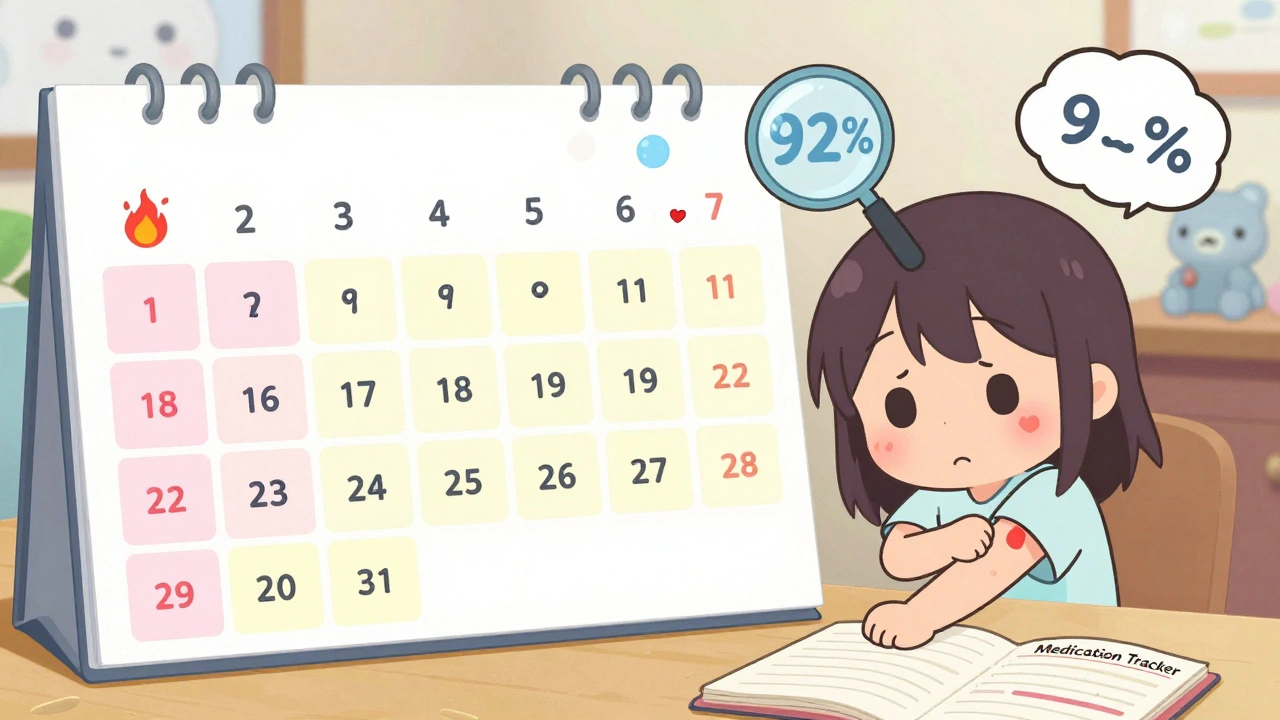
Chronic Reactions: Beyond 8 Weeks
Some side effects don’t show up until you’ve been on the drug for months. This isn’t rare. Statins like atorvastatin can cause muscle pain or weakness in 5-10% of users, often appearing after 7-10 days - but sometimes not until 3 or 4 months. Amiodarone, a heart rhythm drug, can cause lung damage that only becomes noticeable after 6 to 12 months. These are slow burns. You might feel tired, short of breath, or notice unexplained weight loss. Because they’re delayed, they’re often mistaken for aging, stress, or other illnesses. If you’ve been on a medication longer than two months and feel "off," ask your doctor if it could be the drug. Keep a symptom journal - timing matters more than you think.What Makes Side Effects Show Up Faster or Slower?
Not everyone reacts the same way. Your body’s chemistry changes the timeline. Higher doses mean faster reactions - 82% of dose-dependent side effects show up within 24 hours, compared to just 47% at normal doses. Age plays a big role too. People over 65 often experience side effects 2.3 days later than younger adults because their bodies process drugs more slowly. Kidney or liver problems can delay clearance of medications, stretching side effects out by 30-50%. Genetics matter too. If you carry the HLA-B*57:01 gene variant, taking abacavir (an HIV drug) can trigger a severe reaction within 48 hours - almost always. Testing for this gene is now standard before prescribing. Even something as simple as switching from brand-name to generic can change timing. About 23% of patients report different side effect onset after a switch, likely due to different fillers or how fast the pill dissolves.What Should You Do When You Notice Something New?
Don’t guess. Track it. Write down the exact day and time the symptom started. Note what you ate, how much you slept, and whether you took the medication at your usual time. A 2021 study found that patients who recorded symptoms within 15-minute precision were far more likely to get the right diagnosis. If it’s an immediate reaction - trouble breathing, swelling, chest tightness - call emergency services. No waiting. For early or delayed reactions, contact your doctor within 24-48 hours. Don’t stop the medication unless told to. Some side effects, like mild nausea or drowsiness, fade as your body adjusts - about 78% of mild ones resolve in 3-5 days. But if symptoms worsen or you develop a fever, rash, or swollen glands, stop the drug and seek help. For DRESS or other severe delayed reactions, starting corticosteroids within 48 hours can cut the death risk from 10% to just 2.3%.

Comments
Just started a new beta-blocker last week and had a weird rash on day 5-was panicking until I read this. Now I know it’s probably not an emergency. Thanks for the clarity!
This is the kind of post that makes me trust medicine again. So many people panic over minor stuff, and others ignore life-threatening signs. You laid it out like a roadmap. Seriously, thank you.
As a pharmacist, I see this all the time. Patients stop their meds because of a mild headache on day 2, then come back two weeks later with a full-blown DRESS reaction because they didn’t tell their doctor they’d stopped. Tracking symptoms saves lives. Keep doing this.
Whoa. So my weird itchy arms after starting sertraline? Not just ‘bad vibes’-it’s literally a delayed immune response? And they don’t even warn you in the pamphlet? I mean, they say ‘may cause rash’ but not ‘it’ll hit you like a ghost at 12 days’? That’s wild. I’m printing this out and taping it to my pill bottle.
Of course the pharma giants want you to think side effects are ‘normal’-they make billions off the side effects they create. You’re just a walking data point in their algorithm. Don’t trust timelines. Trust nothing.
Interesting. But in India, we don’t have this luxury of ‘waiting 2 weeks’ for follow-ups. We pay out of pocket, and doctors don’t care unless you’re dying. Also, generics? We use them because we have to. Your ‘23% report different onset’? That’s just capitalism in action. Not science.
so like… if i get a headache after taking advil… is that a side effect? or am i just a wimp? 🤔
My mom had a reaction to amiodarone after 7 months. She thought she was just getting older-tired, coughing, weight loss. Turns out it was lung damage. She almost didn’t make it. This timeline? Lifesaver. I’m sending this to every relative on meds now.
Excellent breakdown. The distinction between immediate, early delayed, and chronic reactions is clinically sound and practically useful. I will be citing this in my patient education packets.
bro i took a new vitamin and my pee turned neon green. is that a side effect or am i magic now?
Actually, the 70% anaphylaxis statistic is misleading-it’s based on IV penicillin, not oral. You’re conflating routes of administration. Also, DRESS syndrome onset varies by drug class: carbamazepine is 21-28 days, allopurinol is 14-21. You’re oversimplifying. This is why laypeople misunderstand pharmacology.
It’s funny how we treat our bodies like machines that should respond predictably-but they’re ecosystems. A drug isn’t just a molecule hitting a receptor; it’s a ripple across your gut flora, your sleep, your stress hormones. Maybe the ‘timeline’ isn’t the real story. Maybe it’s how you listen to yourself. The body doesn’t lie. We just forget how to hear it.
Have you considered that these ‘timelines’ are fabricated by Big Pharma to cover up the fact that their drugs are poison? The FDA doesn’t test for long-term effects because they’re paid off. That ‘41% reduction’ from AI? That’s just more surveillance. They want to track your every heartbeat. Don’t be fooled.
Thank you for this comprehensive, evidence-based overview. I’ve shared it with my primary care team. The inclusion of genetic markers like HLA-B*57:01 and the distinction between brand and generic absorption profiles is particularly valuable. This is the standard we should expect from all patient education materials.