

Imagine walking into a pharmacy and getting a prescription that works perfectly the first time. No trial and error, no side effects, no wasted money on pills that your body simply can't process. This is the promise of Pharmacogenomics, a field that combines pharmacology and genomics to tailor medication choices to an individual's genetic makeup. When you pair this with Artificial Intelligence, the process becomes fast enough for everyday use, even in the world of online pharmacies.
For years, the standard model of medicine has been "one size fits all." Doctors prescribe a generic drug because it's cheap and effective for the average person. But the average person doesn't exist. Your liver enzymes might break down a drug too fast, or too slow. In 2026, AI tools are finally bridging the gap between complex genetic data and the practical need for affordable, effective generic medications.
What is Pharmacogenomics and Why It Matters
At its core, Pharmacogenomics (PGx) is the study of how your genes affect your response to drugs. Think of your genes as the instruction manual for your body's machinery. Some people have a manual that says "Process this chemical quickly," while others say "Process this chemical slowly." If a doctor prescribes a standard dose to both, one person might get no relief, and the other might overdose.
This isn't just theory. Adverse drug reactions account for approximately 7% of hospital admissions, according to World Health Organization data cited in recent industry reports. Many of these could be avoided if we knew beforehand how a patient's specific genetic variants would interact with a specific medication. The goal of PGx is to move from reactive medicine to proactive medicine.
Historically, this process was slow and expensive. It required a genetic counselor to manually interpret test results against guidelines like those from the Clinical Pharmacogenetics Implementation Consortium (CPIC), a group that publishes guidelines on how to use genetic information in clinical practice. This manual interpretation could take 15 to 20 minutes per case, making it impractical for high-volume settings like online pharmacies or busy clinics.
How AI Transforms Genetic Interpretation
Enter Artificial Intelligence. The integration of AI into pharmacogenomics has accelerated dramatically since 2020. A pivotal study published in the Journal of the American Medical Informatics Association (JAMIA) in June 2024 demonstrated how GPT-4 could be used as an assistant to interpret PGx testing results. The system didn't just spit out data; it explained complex genetic information in language that both doctors and patients could understand.
The technical architecture behind these systems often uses retrieval-augmented generation (RAG). This means the AI doesn't guess; it retrieves specific, verified guidelines from knowledge bases like CPIC or PharmGKB and generates a response based on that context. In the JAMIA study, the AI achieved 89.7% accuracy in interpreting results, compared to human experts. More importantly, it reduced interpretation time to under two minutes.
For an online pharmacy, speed is everything. When a customer orders medication online, they expect a quick turnaround. AI allows the pharmacy to instantly check a customer's genetic profile against the medication they are ordering. If there's a conflict-say, a specific variant in the CYP450 enzyme system, which is responsible for metabolizing many common drugs-the system can flag it immediately and suggest an alternative.
The Rise of Personalized Generic Recommendations
Here is where it gets interesting for your wallet. Generic medications are the backbone of affordable healthcare. They are chemically identical to brand-name drugs but cost a fraction of the price. However, generics aren't always the right choice for everyone due to genetic variations.
Traditionally, if a generic didn't work, you switched to a brand name or a different drug entirely, often at a higher cost. With AI-powered PGx, the recommendation engine can identify which specific generic formulation is most likely to work for your unique genetic profile. It might recommend a different active ingredient that is still available as a generic, or it might adjust the dosage of the current generic to match your metabolism.
For example, consider Clopidogrel, a common blood thinner. It requires activation by the CYP2C19 enzyme. If you have a genetic variant that makes this enzyme less active, the drug won't work. An AI system can detect this risk before you buy the generic version and recommend a different antiplatelet agent that doesn't rely on that enzyme, saving you from a potential heart attack and the cost of hospitalization.
This approach aligns perfectly with the mission of online pharmacies to provide accessible care. By leveraging AI, they can offer personalized advice that was previously only available in high-end academic medical centers.
Safety, Accuracy, and the Black Box Problem
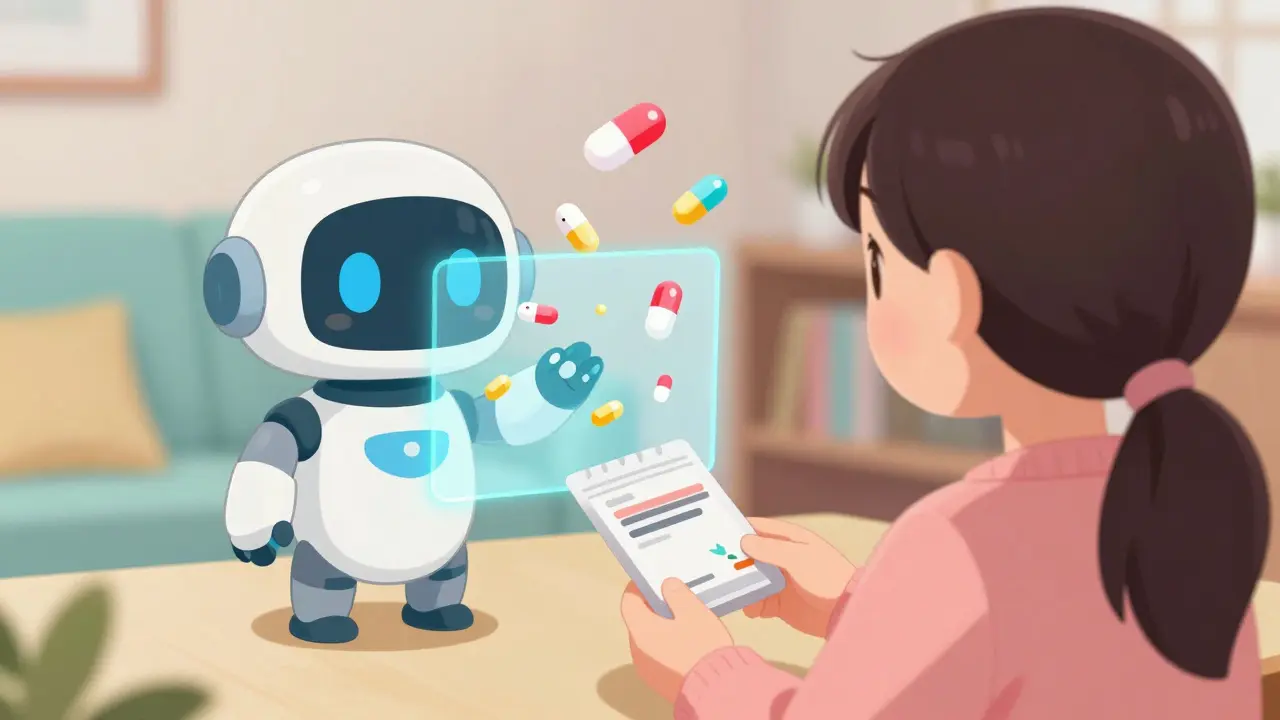
While the potential is huge, we must talk about safety. AI is not infallible. The JAMIA study noted that 3.2% of AI responses contained clinically significant inaccuracies, often referred to as "hallucinations." In the world of medicine, a 3% error rate is too high for autonomous decision-making.
This is why the current standard is "human-in-the-loop." The AI makes the recommendation, but a licensed pharmacist or physician reviews it before it reaches the patient. Dr. Mary Relling, Chair of CPIC, emphasized in a 2024 webinar that AI tools must operate within strict guardrails to prevent misinterpretation of complex gene-drug interactions.
Another concern is the "black box" problem. Sometimes, an AI model makes a decision without explaining exactly why. Dr. Eric Topol warned in a 2024 op-ed that without transparent reasoning pathways, clinicians cannot trust AI recommendations for high-stakes medication decisions. To address this, newer models are being designed to show their work, citing the specific guideline or study that led to the recommendation.
| Feature | Traditional PGx | AI-Driven PGx |
|---|---|---|
| Interpretation Time | 15-20 minutes per case | Under 2 minutes |
| Accuracy | Dependent on human expertise | ~89.7% (JAMIA 2024 study) |
| Patient Understanding | 45% find reports understandable | 92% find explanations understandable |
| Integration | Manual entry required | Automated EHR integration via APIs |
Integration with Online Pharmacies
How does this reach you? In 2026, the integration of AI pharmacogenomics into online pharmacy platforms is becoming more common. The process typically starts with a genetic test. You might order a saliva kit from a service like OneOme or Myriad Genetics. Once the results are in, they are uploaded to your health profile.
When you visit an online pharmacy to refill a prescription, the backend system checks your genetic data against the drug you are ordering. If there is a conflict, the system triggers a consultation. This isn't just a pop-up warning; it's a proactive suggestion. "Based on your CYP2D6 status, this medication might cause side effects. We recommend this alternative generic instead."
Security is paramount here. These systems must meet HIPAA compliance standards. Platforms like InterSystems have developed proprietary algorithms that allow hospitals and pharmacies to share patient biomedical and genetic records securely using federated learning. This means the AI can learn from data across different institutions without ever exposing the raw patient data.
Challenges and Limitations
Despite the progress, there are hurdles. One major issue is data diversity. A 2023 study in Cell Genomics showed that current PGx databases contain 78% European ancestry data, even though that group represents only 16% of the global population. This can lead to inaccurate recommendations for people of non-European descent. The NIH's "AI for PGx" initiative, launched in April 2024, is committing $125 million to address this bias by developing more equitable models.
Another limitation is the handling of rare variants. AI models excel at common drug-gene interactions but struggle with ultra-rare genetic variants that lack sufficient evidence in knowledge bases. In these cases, the system will default to a standard recommendation or flag the case for human review.
Furthermore, not all online pharmacies have access to these advanced tools. Enterprise adoption leads individual use, with only 22% of healthcare systems incorporating AI components into their PGx programs as of 2023. However, this number is expected to grow rapidly as the technology matures and costs decrease.
What This Means for Your Health
For the average patient, the rise of AI in pharmacogenomics means better outcomes and lower costs. You are less likely to experience adverse reactions, and you are more likely to find a medication that works for you without going through multiple prescriptions. It democratizes precision medicine, making it available through the convenience of online platforms.
However, you should remain vigilant. Always verify that the online pharmacy you use is licensed and transparent about how they use your data. If an AI tool recommends a change to your medication, ask for the reasoning. A good system will be able to point to the specific genetic marker and the guideline that informed the decision.
The future of medicine is personalized, but it is also collaborative. AI handles the data crunching, but human expertise ensures safety. As we move further into 2026, the combination of genetic testing and AI interpretation will likely become a standard part of the prescription process, ensuring that the generic medication you buy is truly the right one for you.
Frequently Asked Questions
What is pharmacogenomics?
Pharmacogenomics is the study of how your genes affect your response to drugs. It helps doctors determine which medications and dosages will work best for you based on your unique genetic makeup.
Can AI replace doctors in prescribing medication?
No. AI acts as a decision support tool. It analyzes data and suggests options, but a licensed healthcare professional must review and approve the final recommendation to ensure safety.
Is genetic testing expensive?
Costs vary, but many direct-to-consumer tests range from $100 to $500. Some insurance plans now cover pharmacogenomic testing if it is deemed medically necessary for specific conditions.
How accurate are AI recommendations for drugs?
Recent studies, such as the 2024 JAMIA study, show AI systems achieving around 89.7% accuracy in interpreting genetic test results, which is comparable to human experts.
Do online pharmacies use pharmacogenomics?
Some advanced online pharmacies are integrating AI pharmacogenomics to personalize generic recommendations. However, availability varies by provider, so check with your pharmacy about their capabilities.
Is my genetic data safe with AI systems?
Reputable systems use end-to-end encryption and comply with regulations like HIPAA. They often use federated learning to train models without sharing raw patient data, ensuring privacy.
What if I have a rare genetic variant?
AI systems may struggle with ultra-rare variants that lack clinical evidence. In these cases, the system will flag the result for human review by a specialist or genetic counselor.
How long does it take to get results?
Once you submit a sample, lab processing can take a few weeks. However, once the data is in the system, AI interpretation happens in under two minutes.
Can this help with mental health medications?
Yes. Psychotropic medications often have complex genetic interactions. Tools like GeneSight have received FDA clearance to help guide depression treatment selection based on genetics.

Comments
This topic is incredibly important for our community and we need to talk about it more.
We often see how medical systems fail people from diverse backgrounds when they rely on standard models.
The article mentions the lack of data diversity in genetic databases which is a huge red flag.
It is troubling that European ancestry data dominates the research while other groups are left out.
We need to ensure that African and Asian populations are represented in these studies properly.
Otherwise the technology will only benefit a select few and widen the health gap.
I hope the NIH initiative mentioned actually delivers on its promise to fix this bias.
Funding is one thing but implementation is another story entirely and we must watch closely.
We must remain vigilant about how these AI tools are deployed in real world settings.
It is wonderful to see speed improvements in interpretation times for doctors and patients alike.
However accuracy should never be sacrificed for convenience in any medical context.
The human-in-the-loop model is a necessary safety net right now until we are sure.
We cannot trust machines to make life or death decisions alone without oversight.
Education for patients is also a critical component of this shift towards personalized medicine.
People need to understand their own genetic profiles better to advocate for themselves.
This democratization of precision medicine is a step in the right direction for everyone.
The integration of artificial intelligence into pharmacogenomics represents a significant paradigm shift in how we approach therapeutic interventions. It is fascinating to observe the transition from reactive medicine to a more proactive stance regarding patient care. One must consider the ethical implications of algorithmic decision-making in such a sensitive domain as human health. The precision offered by these systems is commendable yet it raises questions about accountability when errors occur. We are essentially outsourcing the interpretation of complex biological data to a machine that operates within a black box. This creates a dependency that could undermine the critical thinking skills of medical professionals over time. The reduction in interpretation time is beneficial for high volume settings but should not be the sole metric of success. We must ensure that the efficiency gains do not come at the cost of patient safety or understanding. The collaboration between human expertise and artificial intelligence seems to be the most viable path forward. It is essential that we maintain rigorous standards for the training data used in these models.
This whole thing sounds like a way to make people pay more for the same old pills. We should not trust a computer to tell us what drugs to take. The error rate is too high and they are pushing this on us anyway. It is just another corporate scheme to sell genetic testing kits to unsuspecting patients. People are going to get hurt because of these so called AI recommendations. We need to stop letting technology dictate our health choices. The system is broken and this does not fix it. It is a scam.
Everyone is hyping this up but it is just a gimmick to sell generic drugs faster. The AI is not smarter than a doctor and we should not pretend otherwise. I bet most of these online pharmacies are not even using real genetic data. They are just using it as a marketing buzzword to get your money. You are better off sticking to what your local doctor prescribes without all this nonsense. It is a waste of time to think this will change anything for the average person. Just ignore the hype and save your cash.
They are tracking your DNA and selling it to the highest bidder without you knowing. The government wants to control what you take and this is how they do it. You should not trust these online pharmacies with your genetic information ever. It is all a conspiracy to monitor the population and adjust drug availability. Wake up people before it is too late. 🕵️♂️👁️
I think this is a really interesting development for the future of healthcare. It would be great if we could avoid side effects before they happen. I am just glad that there are safety checks in place for now. It gives me peace of mind knowing that a pharmacist still reviews the results. I hope this technology becomes more accessible to everyone soon.
Sounds like another expensive way to sell generic drugs.
Stop trusting these machines with your life. They are not perfect and will fail you when you need them most. The data is biased and the results are unreliable for many people. We need more human oversight not less. Do not let them push this on you.
I agree with you completely about the data diversity issue. It is really concerning that so many groups are left out of the research. We need to make sure everyone benefits from these advances in medicine. It is great to see someone pointing this out so clearly. Let us hope the new initiatives actually make a difference.
You make some very valid points about the ethical side of things. It is definitely something we should all be thinking about more. The balance between speed and safety is really tricky to get right. I think the human review part is super important for now. Thanks for sharing your perspective on this.
I get where you are coming from but the tech is actually pretty good. The studies show it works most of the time for common drugs. You dont need to be so negative about it all the time. It helps people who cant afford brand name meds get something that works. Just give it a chance instead of calling it a scam.
I understand your skepticism but there is real science behind this stuff. It is not just a gimmick if you look at the clinical trial data. We should be open to new ways of improving patient outcomes. It might not be perfect yet but it is a step in the right direction. Let us support innovation while staying safe.
That is a very extreme view to take about this technology. We should focus on the facts rather than fear mongering. The privacy protocols are in place to protect patient data. You are spreading unnecessary panic without evidence to back it up. Stick to the medical facts please.
yeah i think its cool too. i hope i can use it sometime. it would be nice to not take meds that dont work. hope it gets cheaper tho. thanks for saying that.
lol u might be right but i think its cool 😎. maybe it will save money in the long run 🤷♀️. dont be so grumpy about it lol. 🙄