
Steroid Eye Risk Calculator
Calculate Your Risk
Use this tool to assess your personal risk of steroid-induced cataracts or glaucoma based on your medication use and health factors
Most people know steroids help with inflammation-whether it’s for asthma, eczema, or an autoimmune flare-up. But few realize that using them for more than a few weeks can quietly damage your eyes. Steroid-induced cataracts and steroid glaucoma aren’t rare side effects. They’re common, preventable, and often caught too late.
Think about it: if you’re on prednisone for months because of lupus, or using steroid eye drops for uveitis, your eyes are under constant chemical stress. The damage doesn’t show up overnight. It creeps in. You might not feel pain. You might not notice blurry vision until your vision drops to 20/80. By then, it’s often too late to reverse.
How Steroids Actually Damage Your Eyes
Steroids don’t just reduce swelling-they change how your eye works at a molecular level. In the lens, they trigger a chemical reaction between the steroid molecule and proteins in the eye. This forms abnormal clumps called Schiff base adducts. These aren’t found in regular age-related cataracts. They’re unique to steroid use. And they build up fast-sometimes in as little as two to four weeks.
That’s why steroid-induced cataracts are almost always posterior subcapsular. That means they form on the back surface of the lens, right where light enters. This causes glare, halos around lights, and trouble seeing at night. Unlike age-related cataracts that slowly cloud the whole lens, these start in the center and blur vision quickly. Many patients don’t realize they have them until their eye doctor spots them during a routine check.
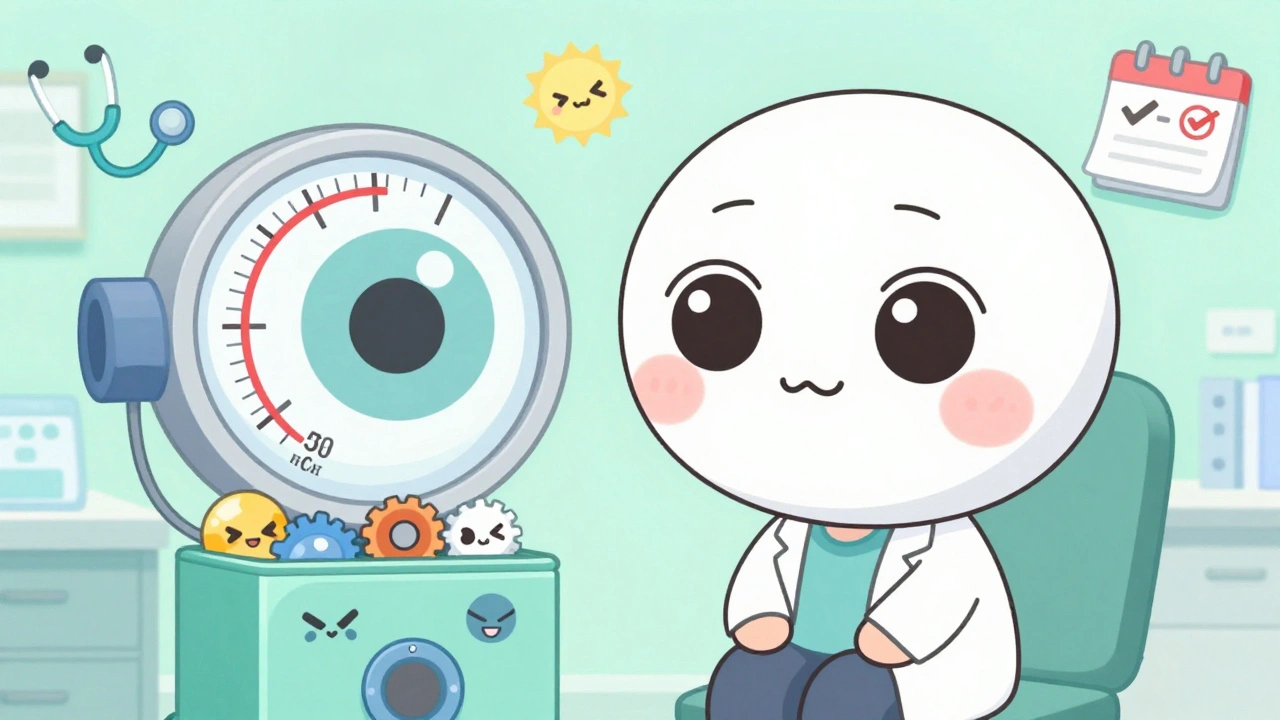
Glaucoma works differently. Steroids block the drainage channels inside your eye. These channels, called the trabecular meshwork, normally let fluid (aqueous humor) flow out. When they clog, pressure builds up. That’s intraocular pressure (IOP). Normal IOP is around 10-21 mmHg. In steroid users, it can jump to 30, 40, even 50 mmHg. And high pressure doesn’t hurt-until it starts killing the optic nerve. That’s when peripheral vision goes. First, you miss things at the edge of your sight. Then, it narrows like a tunnel. By the time you notice, damage is permanent.
Who’s at Risk? It’s Not Just the Obvious Cases
You might think only people on high-dose oral steroids are at risk. But that’s not true. Topical steroid eye drops are actually the biggest offender. A single bottle of dexamethasone or prednisolone eye drops used daily for six months can trigger cataracts or glaucoma-even in someone with no prior eye problems.
Here’s the scary part: about 30-40% of the general population are “steroid responders.” That means their eye pressure rises significantly with steroid exposure. Among people with a family history of glaucoma, that number jumps to 90%. And nearly one-third of steroid-induced glaucoma cases happen in people who never had glaucoma before.
Post-surgery patients are especially vulnerable. After cataract surgery, doctors often prescribe steroid drops to prevent swelling. But if you’re already a steroid responder, those drops can cause pressure spikes that damage your optic nerve. Robert Noecker, MD, says he sees steroid-induced glaucoma “every other week” in his practice-mostly in patients who had surgery and didn’t get follow-up pressure checks.
Even inhaled steroids for asthma or oral steroids for rheumatoid arthritis can cause problems. It takes longer-usually four months or more-but the risk is real. One Reddit user shared: “After six months of prednisone for asthma, my eye doctor found advanced posterior subcapsular cataracts. I had no idea until my vision test showed 20/80.”
The Silent Progression: Why You Won’t Notice Until It’s Too Late
Glaucoma is called the “silent thief of sight” for a reason. There’s no pain. No redness. No sudden blur. You might think your vision is fine-until you can’t see the curb while walking, or you keep bumping into doorframes.
Cataracts from steroids are sneakier too. Colors look washed out. Headlights at night create blinding halos. Reading becomes harder. You blame it on aging. You don’t connect it to the steroid you’ve been taking for your eczema.
That’s why symptoms aren’t reliable. Many patients don’t report changes until their vision is already significantly impaired. A Healthgrades review from April 2024 said: “I didn’t realize my steroid eye drops for uveitis were causing glaucoma until I lost peripheral vision-now I need multiple daily eye drops permanently.”
That’s the reality: once the optic nerve is damaged, it doesn’t heal. You might control the pressure with drops or surgery, but the vision you lost? Gone for good.
Monitoring Is Not Optional-It’s Lifesaving
The good news? These complications are almost always preventable-if you get checked.
The National Institutes of Health (NIH) has clear guidelines: before starting any steroid treatment that lasts longer than two weeks, get a baseline eye exam. That means measuring your eye pressure and checking the health of your lens and optic nerve.
After that, follow-up checks are non-negotiable:
- Two weeks after starting steroids
- Every 4-6 weeks for the first three months
- Every six months if pressure stays normal
That’s it. Simple. But only 42% of primary care doctors actually refer patients for these checks. Most assume the ophthalmologist will catch it. Or they think the patient will notice symptoms. Neither is true.
If you’re on steroids long-term, don’t wait for your doctor to suggest it. Ask for an eye exam. Bring your prescription list. Say: “I’m on steroids. I want to make sure my eyes are safe.”
What to Do If You’re Already on Steroids
Don’t stop your meds without talking to your doctor. Steroids can be life-saving. But you need to manage the risk.
Here’s what works:
- Use the lowest dose possible. If you’re on 20mg of prednisone daily, can you drop to 10mg? Talk to your doctor.
- Shorten the duration. Is this a three-month course? Can it be two? Every extra week increases risk.
- Switch to safer alternatives. Newer steroid eye drops like loteprednol etabonate cause far less pressure rise. Ask if your prescription can be changed.
- Get tested for steroid responsiveness. New genetic tests can now predict with 85% accuracy whether you’re likely to develop high eye pressure from steroids. If you’re planning long-term therapy, this test could save your vision.
And if you’ve already had elevated pressure? Don’t panic. In most cases, IOP drops back to normal after stopping steroids. But if your optic nerve is already damaged, you’ll need ongoing treatment-daily pressure-lowering drops, laser therapy, or even surgery.

What’s Changing in 2025? New Tools to Protect Your Vision
Technology is catching up. Home IOP monitoring devices are now available for high-risk patients. These small, handheld tools let you check your eye pressure in minutes, right at home. No clinic visit needed. They’re being piloted in the Veterans Health Administration and are starting to show up in private practices.
Tele-ophthalmology is another big shift. You can now have a remote eye exam using smartphone-based imaging. Your doctor can review your lens clarity and optic nerve health without you leaving the house. This is huge for people in rural areas or with mobility issues.
And the medical community is waking up. The European Medicines Agency (EMA) now requires all steroid prescriptions to include mandatory monitoring instructions for long-term use. In the U.S., the American Academy of Ophthalmology is pushing for better education among primary care providers. But until that changes, you have to be your own advocate.
Final Warning: This Isn’t Just About Eyes-It’s About Control
Steroids give you control over inflammation. But they take control away from your eyes if you’re not careful. The trade-off isn’t worth it if you end up blind in one eye because no one told you to get checked.
Every year, 10-20% of secondary glaucoma cases and 5-10% of cataract surgeries in people under 55 are caused by steroids. That’s tens of thousands of preventable vision losses. Not because the drugs are evil. But because the risk isn’t talked about enough.
If you’re on steroids for more than two weeks, get your eyes checked. Not next year. Not when you feel something’s off. Now. Because your vision doesn’t wait.

Comments
Man, I had no idea steroid eye drops could do this. I used them for months after my LASIK and thought I was fine. Just went for a checkup last month and my doc nearly flipped-my IOP was at 28. Scared the hell out of me. Now I’m on a strict schedule. Don’t wait like I did.
Thank you for writing this. So many people think if it’s prescribed, it’s safe. But your body doesn’t care if it’s from a doctor or a gym bro. This is the kind of info that saves sight. Please share it with everyone you know.
I lost my peripheral vision at 42 because I didn’t get my pressure checked after six months of steroid drops for uveitis. I thought the redness was just irritation. Now I need three different drops just to keep what’s left. Don’t be me. Get checked. Now. Not tomorrow. Now.
so u saying if i use flonase for my allergies i’m gonna go blind? lol
Actually, yes-chronic nasal steroid use can elevate IOP in steroid responders, though it’s less common than with eye drops or oral steroids. The risk is low, but not zero. If you’re on it for over 6 months and have family history of glaucoma, get screened. It’s a 5-minute test.
Another reason America’s healthcare system is broken. Doctors don’t warn you because they don’t get paid for prevention. They get paid for surgery. That’s why 10-20% of glaucoma cases are preventable but still happen. Wake up, people.
OMG I’ve been on prednisone for 8 months for my eczema and my vision’s been weird lately-halos, colors faded-but I thought it was just my phone screen being too bright 😂
That’s exactly the kind of thing that gets missed. You blame the phone, the lighting, your age. But if you’re on long-term steroids, it’s not aging-it’s damage. Book an eye appointment today. Even if you feel fine. Seriously.
Thank you for the clarity. This is vital information. Many patients assume their primary care provider will handle everything. But eye health requires specialist attention. Advocacy is not optional.
so the american medical system is just waiting for you to go blind so they can bill you for the fix? revolutionary.
It’s wild how our bodies adapt to chemical stress until they don’t. Steroids are like silent roommates who slowly rearrange your furniture while you sleep. By the time you notice the couch is in the kitchen, you can’t move it back. Get checked early. It’s the only way to keep your vision from becoming a ghost story.
My mom’s on steroids for RA and I just sent her this article. She’s gonna make her doctor schedule the eye check this week. Small steps, but they matter.
in india, most people dont even know what intraocular pressure means. i shared this with my cousin who’s on steroid inhaler for asthma-she went for screening and found early glaucoma. now she’s on drops. saved her sight. this info saves lives, not just eyes.
just got my home iop monitor today 😎📱👀 #visionfirst
They should put warning labels on steroid prescriptions like they do on cigarettes. 'May cause permanent blindness if used without monitoring.' Simple. Clear. Mandatory. But no-profit over prevention. Again.