
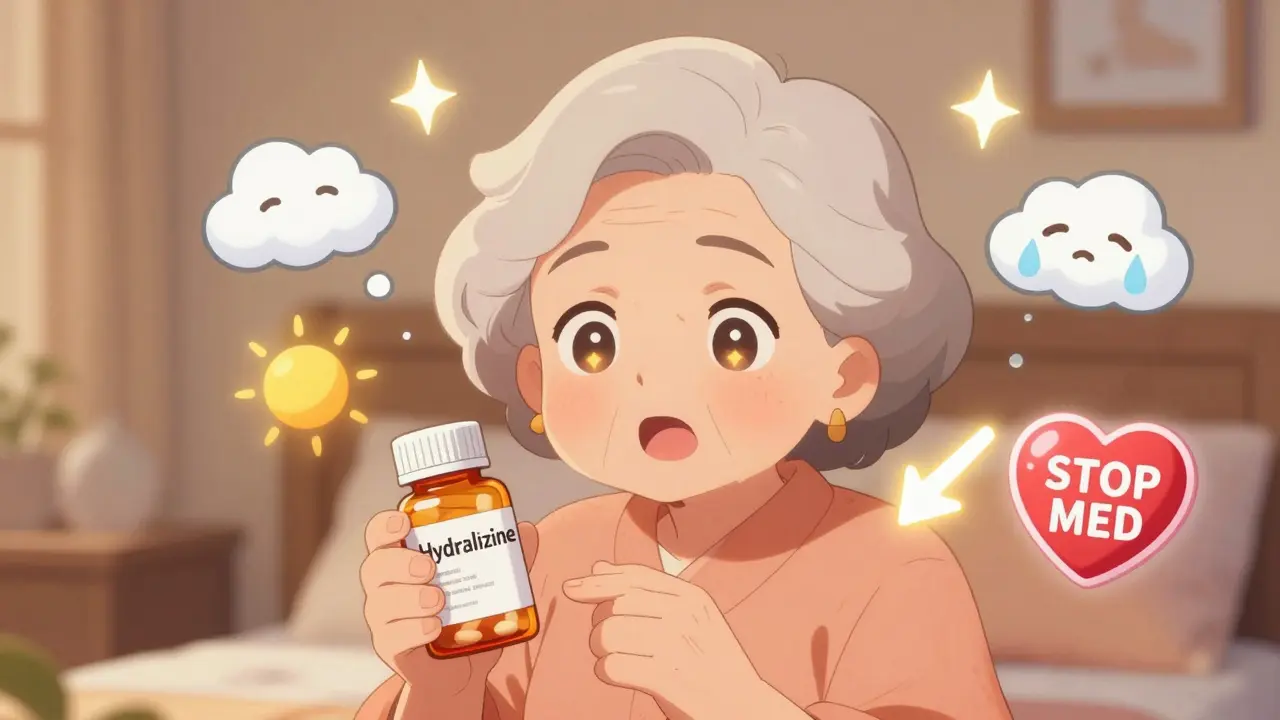
Drug-Induced Lupus Risk Checker
Check Your Medication Risk
Drug-induced lupus (DIL) is an autoimmune reaction triggered by certain medications. This tool helps assess your risk based on your current medication and how long you've been taking it.
Most people don’t realize that a common blood pressure pill or antibiotic could trigger lupus-like symptoms. It’s not the same as systemic lupus - it doesn’t last forever, and it doesn’t require lifelong treatment. But if you’re experiencing joint pain, fatigue, or fever after being on medication for months, you might be dealing with drug-induced lupus.
What Is Drug-Induced Lupus?
Drug-induced lupus (DIL) is an autoimmune reaction caused by certain medications. Your immune system, which normally protects you from infections, starts attacking your own tissues. The result? Symptoms that look a lot like systemic lupus erythematosus (SLE), but with one big difference: it goes away when you stop the drug. It was first noticed in the 1950s when patients taking hydralazine for high blood pressure started developing joint pain, rashes, and fatigue. Since then, doctors have linked over 40 drugs to DIL, but only a handful are common culprits. The most dangerous ones are hydralazine (used for hypertension), procainamide (for irregular heartbeats), and certain antibiotics like minocycline. Newer drugs like TNF inhibitors (used for rheumatoid arthritis and Crohn’s disease) and immune checkpoint inhibitors (for cancer) are now rising as triggers. Unlike regular lupus, which mostly hits women between 15 and 45, DIL affects men and women equally - and it’s mostly seen in people over 50. That’s because older adults are more likely to be on long-term medications for chronic conditions. The good news? About 80-90% of people fully recover after stopping the drug.Common Symptoms - What to Watch For
DIL doesn’t hit you all at once. Symptoms usually show up after 3 to 6 months of taking the drug, though some people notice them as early as 3 weeks or as late as 2 years later. The most frequent signs include:- Joint pain and swelling - affects 65-75% of patients
- Muscle aches - reported by 75-85%
- Constant fatigue - nearly everyone feels it
- Fever without infection - often low-grade but persistent
- Weight loss - unexplained and gradual
- Pain when breathing deeply - this could mean pleuritis (lung lining inflammation)
- Chest pain that gets worse when lying down - a sign of pericarditis (heart lining inflammation)
How Is It Diagnosed?
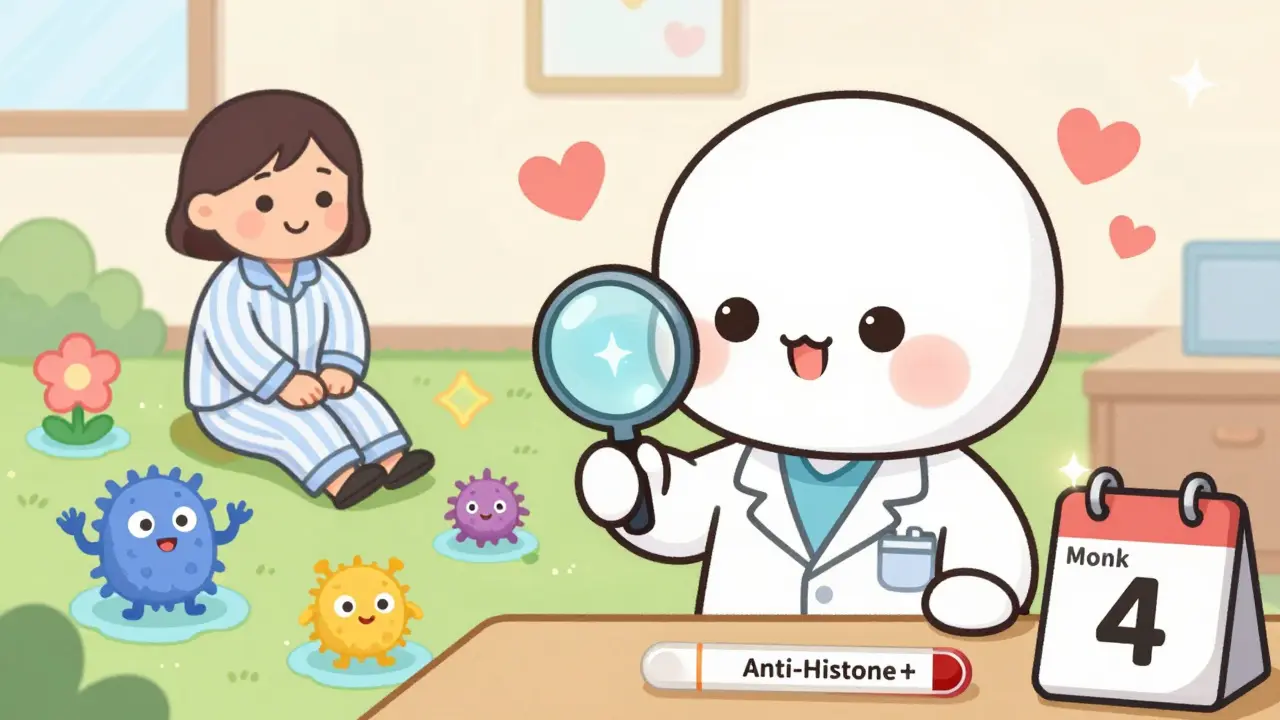
There’s no single test for DIL. Diagnosis is a puzzle made of three pieces: your medication history, your symptoms, and your blood results. First, your doctor will ask: “What drugs have you been on for the last 6 months or longer?” If you’ve taken hydralazine, procainamide, minocycline, or a TNF blocker, that’s a red flag. Even if you stopped the drug weeks ago, tell your doctor - the immune reaction can linger. Next comes blood testing:- ANA (antinuclear antibody) test - positive in over 95% of DIL cases
- Anti-histone antibodies - found in 75-90% of cases, especially with hydralazine and procainamide
- Anti-dsDNA antibodies - usually negative in DIL (positive in 60-70% of SLE cases)
- ESR and CRP - often elevated, showing inflammation
Recovery - What Happens When You Stop the Drug?
The best treatment for DIL is simple: stop the drug. Most people start feeling better within 2 to 4 weeks. By 12 weeks, 95% of patients see major improvement or full recovery. You won’t need chemotherapy or lifelong immunosuppressants - just time and supportive care. Here’s what recovery usually looks like:- Weeks 1-2: Fever and fatigue begin to fade
- Weeks 3-4: Joint pain and muscle aches improve noticeably
- Weeks 6-8: Most people return to normal activity levels
- Weeks 10-12: Blood tests (ANA, ESR) often normalize
What If You Need the Medication?
Stopping a drug isn’t always easy. If you’re on hydralazine for high blood pressure or procainamide for a heart rhythm, you can’t just quit cold turkey. Your doctor needs to replace it with a safer alternative. For hypertension: Instead of hydralazine, doctors often switch to ACE inhibitors (like lisinopril) or calcium channel blockers (like amlodipine). Both carry almost no DIL risk. For heart arrhythmias: Procainamide can be replaced with amiodarone - which has a DIL risk of less than 0.3%, compared to 30% with procainamide after long-term use. If you’re on a TNF inhibitor like adalimumab for arthritis, your doctor may switch you to a non-TNF biologic like abatacept or rituximab. These don’t trigger DIL as often. Never stop a medication on your own. Work with your doctor to find a safe transition plan.Who’s at Higher Risk?
Not everyone who takes hydralazine gets DIL. Genetics play a big role. People with a specific gene variant called HLA-DR4 are 3.2 times more likely to develop it. Even more important: your body’s ability to break down drugs. The NAT2 gene controls how fast your liver processes certain medications. If you’re a “slow acetylator,” your body can’t clear hydralazine quickly. That increases your DIL risk by nearly five times. This is why some European guidelines now recommend genetic testing before starting hydralazine - especially for patients over 50. Older adults, people on multiple medications, and those with a family history of autoimmune disease are also at higher risk. But even if you’re healthy, long-term use of high-risk drugs is the biggest factor.What’s Changing in 2025?
DIL is becoming more common - not because drugs are getting more dangerous, but because we’re using more of them. Older populations are on more medications. Biologics and cancer immunotherapies are now linked to DIL in 12-15% of new cases, up from just 5% a decade ago. New diagnostic criteria from the American College of Rheumatology (2023) now include drug exposure timelines and antibody patterns to make diagnosis faster. Researchers are also testing blood markers - like specific microRNA profiles - that could predict DIL before symptoms even start. One promising area? “Histone decoy” molecules. In animal studies, these tiny proteins block the immune system from attacking histones - the proteins that trigger DIL. If human trials succeed, we might one day treat DIL without stopping life-saving drugs.
What to Do If You Suspect DIL
If you’ve been on a medication for more than 3 months and now have unexplained joint pain, fatigue, or fever:- Write down every drug you’ve taken in the last 12 months - including antibiotics, supplements, and over-the-counter meds
- Make an appointment with your doctor or a rheumatologist
- Ask specifically: “Could this be drug-induced lupus?”
- Request ANA and anti-histone antibody tests
- Don’t assume it’s fibromyalgia, chronic fatigue, or just aging
Frequently Asked Questions
Can drug-induced lupus turn into regular lupus?
No. Drug-induced lupus (DIL) and systemic lupus erythematosus (SLE) are separate conditions. DIL is triggered by medication and resolves after stopping the drug. SLE is a chronic autoimmune disease with no known trigger. While someone with DIL may later develop SLE (like anyone else), stopping the drug doesn’t cause SLE - and DIL doesn’t evolve into it.
How long does it take to recover from drug-induced lupus?
Most people see improvement within 2 to 4 weeks after stopping the drug. About 80% feel significantly better by 4 weeks, and 95% recover fully within 12 weeks. In rare cases, symptoms may linger for months, especially if the drug was taken for years. But full recovery is the norm, not the exception.
Which medications are most likely to cause drug-induced lupus?
The top three are hydralazine (for high blood pressure), procainamide (for heart rhythm problems), and minocycline (an antibiotic for acne). TNF-alpha inhibitors like infliximab and adalimumab are rising causes, especially since 2015. Immune checkpoint inhibitors like pembrolizumab (used in cancer) are now linked to DIL in 1.5-2% of users. Other less common triggers include isoniazid, methyldopa, and chlorpromazine.
Are blood tests enough to diagnose drug-induced lupus?
No. Blood tests are essential, but they’re not enough on their own. You need a clear link between the drug and symptoms. ANA and anti-histone antibodies support the diagnosis, but the key is timing: symptoms started after taking the drug, and improved after stopping it. Without that timeline, even positive antibodies can be misleading.
Can I take the same drug again after recovering from DIL?
No. Once you’ve had drug-induced lupus from a specific medication, re-exposure almost always causes symptoms to return - often faster and more severely. Even if you feel fine, your immune system remembers. Avoid the drug completely. Your doctor will find a safer alternative.
Is drug-induced lupus dangerous?
It’s usually not life-threatening. Unlike systemic lupus, DIL rarely affects kidneys, brain, or major organs. The main danger is misdiagnosis - if it’s mistaken for SLE, you might get unnecessary long-term steroids or immunosuppressants, which carry their own risks. With proper diagnosis and drug withdrawal, DIL is one of the most treatable autoimmune conditions.

Comments
Ugh. Another person who thinks their meds are harmless? You think your blood pressure pill is just a little sugar cube? No. It’s a chemical grenade in your body, and you’re the one holding the pin. I’ve seen too many people ignore the signs until their joints are swollen and their kidneys are screaming. Stop blaming ‘aging’ and start reading the damn label. This isn’t ‘maybe’-it’s a documented, preventable disaster.
And if you’re still on hydralazine after 6 months with fatigue? You’re not ‘just tired.’ You’re autoimmune poisoning yourself. Wake up.
It is imperative to underscore, with the utmost clinical precision, that drug-induced lupus (DIL) constitutes a distinct immunological entity, characterized by a temporally correlated exposure to a pharmacological agent-typically hydralazine, procainamide, or minocycline-resulting in the upregulation of antinuclear antibodies, particularly anti-histone IgG subtypes, with concomitant systemic inflammation, as evidenced by elevated ESR and CRP markers.
Crucially, the absence of anti-dsDNA antibodies, coupled with the resolution of symptomatology upon cessation of the inciting agent, serves as the diagnostic cornerstone. Furthermore, the NAT2 slow-acetylator phenotype, encoded by the HLA-DR4 haplotype, confers a fivefold increased relative risk, necessitating pre-prescription pharmacogenomic screening in patients over the age of 50. The therapeutic imperative is unequivocal: discontinuation, not immunosuppression, remains the gold standard intervention.
my doc put me on minocycline for acne and i got joint pain after 5 months. thought i was just getting old. turns out i had DIL. stopped the pill, 3 weeks later i could walk without wincing. no steroids, no chemo. just… stopped taking the thing that was killing me.
why dont more doctors ask about meds? they just say 'oh you're tired' or 'you're stressed.' it's wild. you're not broken. your body is screaming at you. listen.
also, if you're on antibiotics for more than 3 months? question it. seriously.
So let me get this straight-some drug company’s pill is making Americans sick, and the solution is to stop taking it? Wow. That’s the most American thing I’ve heard all week. We’re so obsessed with popping pills we forget our bodies aren’t machines.
And now they want to test your genes before giving you a BP med? Next they’ll be scanning your DNA before you get a coffee.
Meanwhile, in India, people take herbs and live to 90. Maybe we should stop trusting Big Pharma and start trusting our own biology.
i read this and thought of my mom. she was on hydralazine for 2 years, started having pain and thought it was arthritis. she was so tired all the time. when they finally figured it out? she cried because she felt so stupid for not speaking up sooner.
you’re not stupid. you’re just human. but please, if you’re on meds long-term and feel off? talk to someone. even if it’s just a nurse. ask: 'could this be the pill?'
you deserve to feel better. not just 'live with it.'
thank you for writing this.
Just a quick note: I’m a nurse in a rheumatology clinic. I’ve seen DIL misdiagnosed as fibromyalgia, chronic fatigue, even depression. Patients are on SSRIs for months while their immune system is literally attacking their own connective tissue.
It’s heartbreaking. And it’s 100% preventable.
Don’t let your doctor dismiss your symptoms because you’re 'too young' or 'not sick enough.' Bring this article. Print it. Ask for the anti-histone test. It takes 10 minutes. It could change your life.
This is an incredibly well-researched and compassionate piece. Thank you for highlighting the role of pharmacogenomics-especially NAT2 and HLA-DR4. In India, where polypharmacy is common among the elderly, this information is urgently needed.
Many patients here are on long-term antibiotics for acne or TB prophylaxis, unaware of the risks. We need public health campaigns, not just blog posts.
I will be sharing this with my medical students. The fact that recovery is so common with drug withdrawal is a powerful message of hope. We must stop pathologizing normal human reactions to chemical exposure.
my dad got DIL from minocycline. he was on it for 14 months. he thought he was just getting old. turned out his kidneys were fine, his heart was fine, but his joints were on fire.
stopped the drug. 6 weeks later he was gardening again.
doctors dont tell you this stuff. they just say 'take this.'
thank you for saying it.