

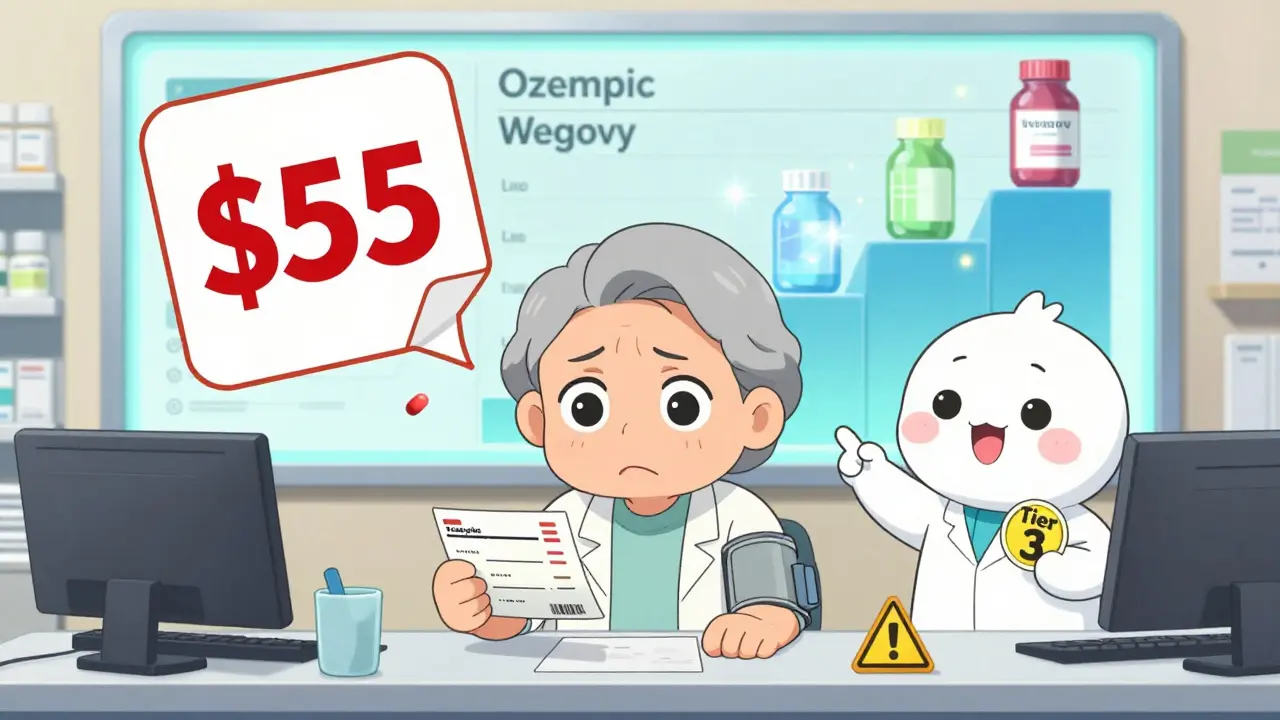
Every year on January 1st, thousands of seniors wake up to find their monthly medication costs have changed-without warning. One day, your blood pressure pill costs $12. The next, it’s $55. That’s not a mistake. It’s a formulary change.
What Is a Drug Formulary and Why Does It Matter?
A drug formulary is simply the list of medications your insurance plan covers. But it’s not just a list. It’s broken into tiers, and each tier tells you how much you’ll pay out of pocket. Tier 1? Usually generics, maybe $5 or $10. Tier 4 or 5? That’s where the specialty drugs live-drugs like Ozempic, Wegovy, or insulin pumps-and those can cost hundreds a month. All Medicare Part D plans and most private plans use this system. It’s not optional. It’s how insurers control costs. But here’s the catch: your plan can change this list at any time-even mid-year. And if you’re not checking, you’re paying more than you should.How Tiers Work: From Generic to Specialty
Not all plans are the same. Some have three tiers. Others have five. Here’s how the most common ones break down:- Tier 1: Preferred generics. Lowest cost. Think metformin, lisinopril, atorvastatin. Copays often $0-$10.
- Tier 2: Non-preferred generics or lower-cost brand names. Maybe $15-$30.
- Tier 3: Higher-cost brand-name drugs. These are drugs that have cheaper alternatives but are still covered. Expect $40-$70.
- Tier 4: Non-preferred brands with no cheap substitute. Often require prior authorization. $80-$150.
- Tier 5: Specialty drugs. Insulin, cancer treatments, GLP-1 weight loss drugs. Coinsurance can be 33% or more. Monthly costs easily hit $300-$1,000.
When Do Formularies Change?
Most plans update their formularies on January 1st. That’s when new drug lists go live. But changes can happen anytime. CMS allows plans to make mid-year changes if:- A new generic drug hits the market (and it’s cheaper).
- New safety data comes out (like a recall or warning).
- A drug’s effectiveness is questioned.
- There’s a major price drop on a competitor.
How to Check Your Drug Coverage
You don’t have to guess. Every plan has a tool to check this. Here’s how:- Find your plan’s website. Look for “Drug Formulary,” “Formulary Search,” or “Drug List.”
- Enter the exact name of your medication. Use the brand name or generic. Don’t use abbreviations.
- Check the tier. Note the copay or coinsurance amount.
- Look for restrictions: Do you need prior authorization? Step therapy? Quantity limits?
- Check the effective date. Is the change happening now or next month?
What If Your Drug Isn’t Covered or Moved to a Higher Tier?
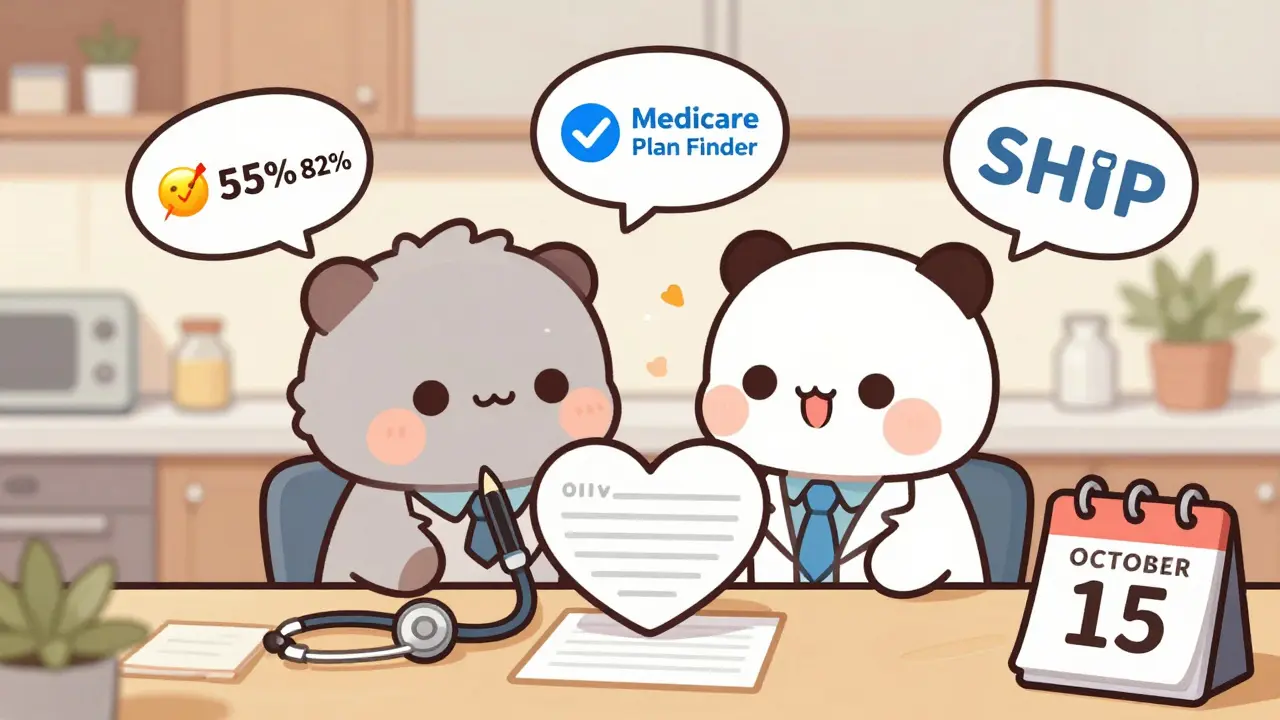
You’re not stuck. You have options. First, ask your doctor for a formulary exception. That’s a formal request to your plan saying, “This drug is medically necessary, and the alternatives won’t work.” In 2022, over 1.2 million exceptions were filed. Approval rates? Between 55% and 82%, depending on your plan and how strong your doctor’s letter is. If your doctor writes a clear note explaining why your current drug is essential, your chances are high. Second, ask your pharmacist. They know which similar drugs are in lower tiers. Maybe your lisinopril can switch to a generic version that’s covered better. Or your blood thinner can change to a different brand that’s cheaper. Third, use Medicare’s Medicare Plan Finder to compare other plans. If your drug keeps moving to higher tiers, it might be time to switch during the Annual Enrollment Period (October 15-December 7).Common Mistakes Seniors Make
Most people don’t check their formulary until it’s too late. Here’s what goes wrong:- Assuming last year’s coverage stays the same. It doesn’t.
- Not reading the notice. Plans must send written notice 60 days before a change-but many seniors ignore it.
- Thinking the pharmacy will warn them. Pharmacists fill prescriptions. They don’t manage your insurance plan.
- Not asking for exceptions. 31% of people in a GoodRx survey didn’t know they could request one.
- Switching plans too late. If you wait until March to realize your drug is expensive, you’re stuck until next January.
Who Can Help?
You don’t have to figure this out alone.- SHIP (State Health Insurance Assistance Program): Free, local counselors who help seniors with Medicare. They helped 1.7 million people in 2022.
- Your pharmacist: They can check formularies, suggest alternatives, and even call your plan on your behalf.
- Your doctor: They can submit the exception request. Don’t be shy-ask them to help.
What’s Changing in 2026?
The system is evolving. CMS is testing a simplified 4-tier model for 2025. That could make things clearer. But the trend is clear: more drugs are moving into specialty tiers. By 2026, over half of the top-selling medications will be in Tier 5. Insurers are also rolling out AI tools to predict which drugs patients might need. That’s good-if it helps you get the right drug at the right price. But it’s risky if you don’t know how to check it yourself.Final Tip: Make This a Habit
Set a calendar reminder: every January 1st and every July 1st, check your drug coverage. Even if nothing changed, do it. It takes 10 minutes. It could save you hundreds. If your drug cost jumped suddenly, don’t assume it’s your fault. It’s not. It’s the system. But you can fix it. Check. Ask. Switch. Don’t pay more than you have to.How often do Medicare drug formularies change?
Medicare drug formularies are updated every year on January 1st. But plans can also make changes mid-year if a new generic becomes available, safety concerns arise, or a drug’s cost drops significantly. Plans must notify you in writing if a change affects a drug you’re taking, and they must give you at least 60 days’ notice unless it’s for safety reasons.
Can I get my drug covered if it’s not on the formulary?
Yes. You can ask your plan for a formulary exception. Your doctor must submit a letter explaining why the drug is medically necessary and why alternatives won’t work. Approval rates vary between 55% and 82%, depending on your plan and the strength of your medical documentation. Many seniors get approved when they ask.
Why is my generic drug suddenly more expensive?
Even generics can move to higher tiers. Sometimes, a new generic version becomes available, and your plan switches to it-but if it’s not on their preferred list, they might move your current generic to Tier 2 or higher. Other times, the plan decides to favor a different manufacturer’s version. Always check the tier, not just the name.
What’s the difference between copay and coinsurance?
A copay is a fixed amount you pay at the pharmacy-like $15 for a Tier 2 drug. Coinsurance is a percentage of the drug’s total cost. For example, if your Tier 5 drug costs $500 and your coinsurance is 33%, you pay $165. Coinsurance is more common with specialty drugs and can lead to much higher out-of-pocket costs.
Should I switch Medicare plans because of formulary changes?
If your most important drugs are consistently moved to high tiers, or if you’re paying hundreds more each month, switching plans during the Annual Enrollment Period (October 15-December 7) can save you money. Use Medicare’s Plan Finder tool to compare formularies across plans. Don’t wait until you’re stuck with a bill you can’t afford.
Do all Medicare Part D plans have the same drug tiers?
No. Each plan designs its own formulary. The same drug can be in Tier 1 on one plan and Tier 3 on another. That’s why comparing plans before choosing is so important. What looks like a low-premium plan might have high drug costs. Always check your medications first.
How do I know if a formulary change affects me?
Your plan is required to send you a notice if a drug you’re taking is being removed, moved to a higher tier, or has new restrictions. If you don’t get a letter, check your online account or call customer service. Don’t wait for your next refill-check your formulary before your prescription runs out.

Comments
Man, I didn’t even know formularies could change mid-year. I thought once you picked your plan, it was locked in. My mom’s insulin jumped from $40 to $280 last spring and we had no warning. Just showed up at the pharmacy like, ‘oh hey, congrats on your new price tag.’
Thanks for laying this out so clearly. I’m going to set a reminder for January 1st and July 1st now. No more surprises.
Same. I used to think if it was covered, it was covered. Turns out, ‘covered’ just means they’ll let you pay for it-just with a credit card and a prayer.
Also, did you know some plans have different tiers for the exact same generic? Like, metformin from one manufacturer is Tier 1, but metformin from another is Tier 3? It’s madness.
Everyone’s acting like this is some new crisis. It’s not. This has been going on since 2006. Medicare Part D was designed to shift costs onto seniors. The tiers? A scam. The exceptions? A theater. The real solution is single-payer. Until then, you’re just playing a rigged game.
And don’t get me started on GLP-1 drugs being moved to Tier 5. They’re not ‘specialty’-they’re life-saving. But hey, if you’re poor, maybe you should’ve saved more.
My grandma called me crying last week because her blood pressure med went from $5 to $89. She’s on a fixed income. She thought she was being scammed. I had to sit her down and walk her through the formulary search tool. Took 20 minutes. She cried again but this time because she was relieved.
Everyone needs to do this. It’s not complicated. Just open the damn website. Don’t wait for the letter. Don’t wait for the pharmacy to say ‘sorry.’ Do it now.
Also if your doc won’t write the exception letter just ask them to email it. Most will. They’re tired of seeing people cry too.
Wow. A 17% increase in tier moves. That’s a 17% increase in corporate greed. Congrats, insurers. You’ve turned healthcare into a game of musical chairs where the music stops and everyone’s left holding a $1000 bill.
And yes, I know I’m being sarcastic. But honestly? This is the funniest tragedy I’ve ever seen.
Big hug to anyone reading this and feeling overwhelmed. You’re not alone. I’ve been there. My dad’s cancer med got moved to Tier 5 and we almost lost him because we couldn’t afford it.
But here’s the thing-you’ve got power. Ask for the exception. Call your pharmacist. Use SHIP. Talk to your doctor. They’re not just there to write scripts. They’re your allies.
And if you’re scared to ask? Do it scared. It’s worth it.
One step. One call. One email. You got this 💪
As someone who moved here from Nigeria 12 years ago, I never thought I’d see something this broken in the US. Back home, if you need insulin, you pay what you can. Here? You pay what the algorithm says. And if you’re lucky, you get a 60-day notice before they screw you.
This isn’t healthcare. It’s a subscription service with a side of trauma.
While I appreciate the effort to inform, I must point out that this article exhibits a concerning lack of fiscal responsibility. The notion that seniors should be shielded from market dynamics is both economically unsound and morally irresponsible. The private sector operates on efficiency. If a drug is no longer cost-effective, it must be deprioritized. This is not malice-it is capitalism.
Furthermore, the suggestion to switch plans is not a solution but an admission of poor planning. Seniors should have selected their plan with greater diligence. The onus is on the individual, not the insurer.
Wait-so if a new generic hits the market, they can bump your current generic to a higher tier even if it’s working fine? That’s wild. My neighbor’s plan switched her from one metformin to another and her copay doubled. She didn’t even know they were the same chemical.
So how do you even know which manufacturer’s version you’re getting? Is that listed anywhere?
Also, do formularies track which pharmacies you use? Like, does CVS have a different tier list than Walgreens?
Check your formulary every Jan 1 and Jul 1
Use the online tool
Ask your pharmacist
Get the exception if needed
Switch if it keeps happening
That’s it. No magic. Just action.