
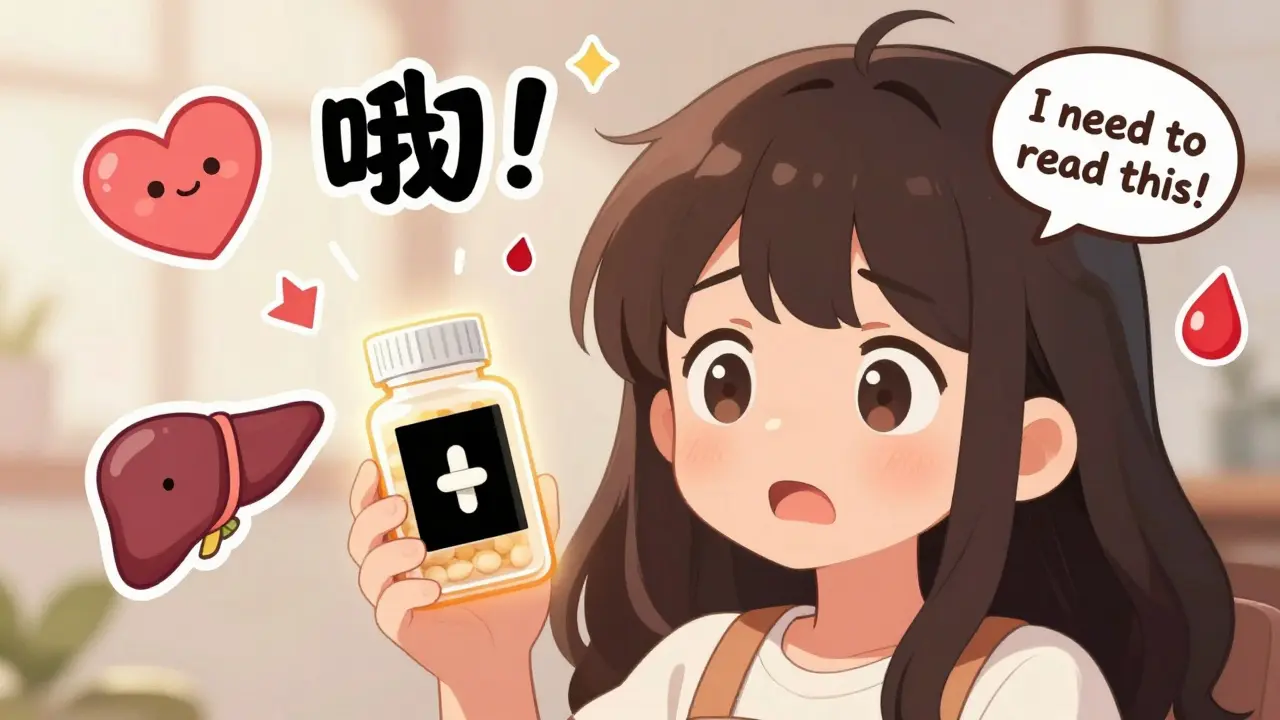
Prescription Drug Warning Quiz
What is the highest level of warning on a prescription drug label?
Why is it important to check the original manufacturer's label rather than just the pharmacy label?
What should you do if you don't understand a warning on your prescription?
What does a "contraindication" mean?
What should you do if you're on 3 or more medications?
Your understanding of prescription drug warnings
Every time you pick up a prescription, there’s a hidden layer of life-saving information on the label-hidden not because it’s secret, but because it’s buried in tiny print, tucked under stickers, or written in language that feels like a legal contract. If you’ve ever stared at your pill bottle and thought, "What does this actually mean?", you’re not alone. Millions of people ignore or misunderstand these warnings every year, and the consequences can be serious-sometimes deadly.
The safety and warnings sections on prescription drug labels aren’t just fine print. They’re your first line of defense against dangerous side effects, life-threatening interactions, and preventable hospital visits. In the U.S. alone, over 1.3 million emergency room trips each year happen because someone didn’t understand their medication’s risks. Learning how to read these sections isn’t optional-it’s essential.
What’s in the Safety and Warnings Section?
Prescription drug labels follow a strict format set by the U.S. Food and Drug Administration (FDA). The safety and warnings section isn’t one big paragraph-it’s broken into clear, specific parts, each with its own purpose.
- Boxed Warning (Black Box Warning): This is the highest-level alert. It’s printed with a thick black border around it, and it’s placed right at the top of the prescribing information. If a drug has this, it means the FDA has found strong evidence it can cause serious or life-threatening harm. For example, clozapine-a drug used for severe schizophrenia-carries a boxed warning because it can wipe out white blood cells, leaving you vulnerable to deadly infections. You need blood tests every week just to take it. This isn’t a "maybe"-it’s a "must monitor."
- Warnings and Precautions: This section lists all the known serious side effects, but without the black border. It tells you what might happen, how often, and under what conditions. Look for phrases like "may cause," "has been associated with," or "risk increases with." These aren’t scare tactics-they’re based on clinical data. For instance, a common painkiller like naproxen might warn that it "increases risk of heart attack or stroke," especially if you have high blood pressure or have had heart problems before.
- Drug Interactions: This part tells you which other drugs, supplements, or even foods can make your medication dangerous. It doesn’t just say "avoid alcohol." It says: "CYP3A4 inhibitors may increase your drug levels by up to 400%." That’s a precise, measurable risk. If you take blood pressure meds and also use grapefruit juice, this section will tell you why that combo can crash your blood pressure into a dangerous zone.
- Use in Specific Populations: This covers risks for pregnant women, older adults, kids, or people with kidney or liver disease. A drug that’s safe for a 30-year-old might be risky for a 75-year-old with reduced kidney function. Always check this if you’re in one of these groups.
Why You Can’t Trust the Pharmacy Label Alone
Your pharmacist puts a label on your bottle with warnings like "May cause drowsiness" or "Take on empty stomach." It looks helpful, right? But here’s the truth: those pharmacy-applied labels are often the weakest link.
A 2021 study found that only 42% of patients actually notice or understand the warnings on the bottle itself. Why? Because they’re small, printed in plain text, and often placed where you can’t see them-like the bottom of the bottle, which gets hidden when you store it in a cabinet. Compare that to the original manufacturer’s label, where the boxed warning is front and center: 78% of doctors recognize it.
And here’s another problem: warnings get cut. Pharmacists have to fit everything onto a tiny label, especially for children’s meds. One study found that pediatric vials have 75% less space than adult ones. So critical warnings? Sometimes they’re shortened to just "Take as directed." That’s not enough.
How to Actually Understand the Warnings
Reading the label isn’t enough. You need to understand it. Here’s how:
- Start with the Boxed Warning. If it’s there, this is your #1 priority. Don’t skip it. Ask your pharmacist: "What happens if I ignore this?" If the answer is "You could die," you need to know how to avoid it.
- Look for numbers. "Risk increases with age" is vague. "Risk of kidney damage doubles after age 65" is actionable. If you see a percentage or a time frame, write it down.
- Check for "contraindications". This means "do not use if." If you have liver disease and the label says "contraindicated in severe hepatic impairment," then this drug is not safe for you.
- Use the "teach-back" method. After your pharmacist explains a warning, say: "So if I take this with ibuprofen, I could get stomach bleeding-is that right?" If they say yes, you got it. If they hesitate, ask again.
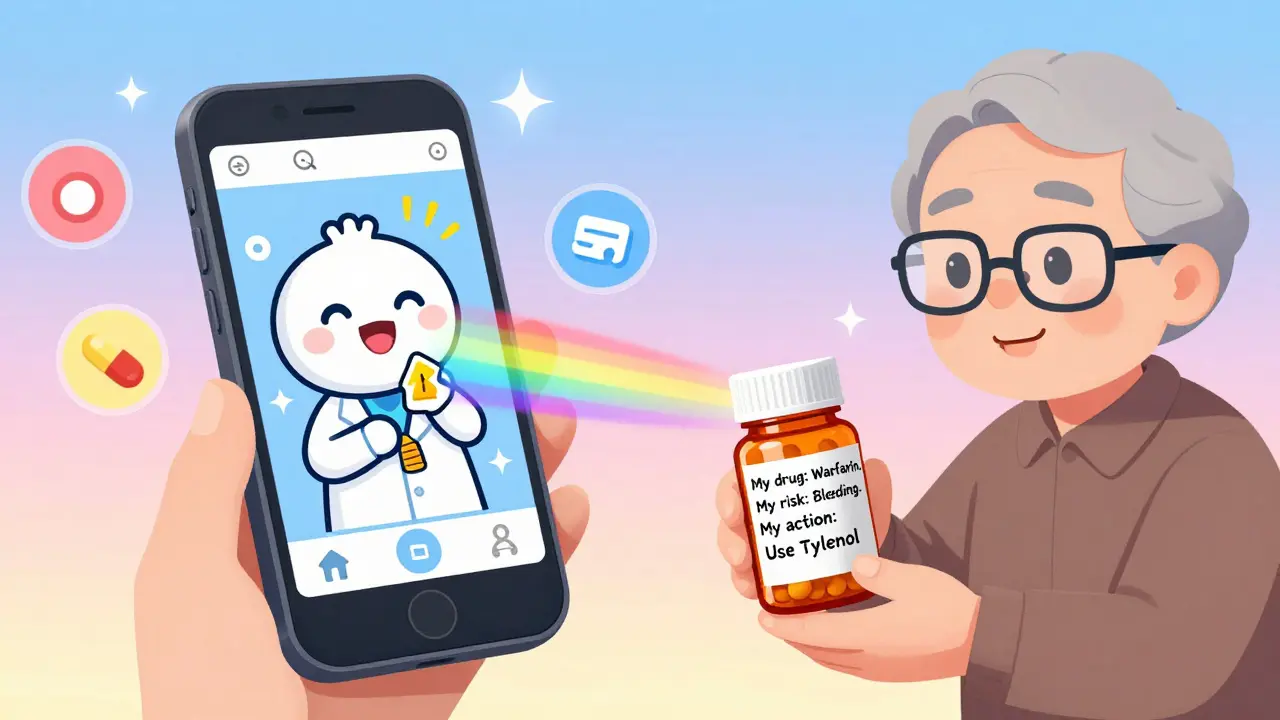
- Write down your personal risk. Create a simple note: "My drug: ______. My risk: ______. My action: ______." For example: "My drug: Warfarin. My risk: Bleeding if I take NSAIDs. My action: Use Tylenol instead of Advil." Keep this note in your wallet or phone.
What to Do When Warnings Conflict
Many people take 5 or more medications. That’s common. But each one has its own warning. What if Drug A says "avoid grapefruit" and Drug B says "take with food"? Or if one warns about drowsiness and another says "do not drive"?
There’s no universal rule. But here’s what works:
- Use a medication log. List every drug, supplement, and over-the-counter pill you take. Next to each, write its top warning. A 2021 University of Florida study showed this improves adherence to safety rules by 41% in older adults.
- Ask your pharmacist to map your risks. Pharmacists can use software to check for interactions between all your meds. Don’t assume they’ll do it automatically-ask. "Can you check if these five drugs are safe together?"
- Look for color-coded systems. Some pharmacies now use red, yellow, and blue stickers: red = critical, yellow = important, blue = general. If yours doesn’t, ask if they can add one. CVS Health reported a 22% improvement in patient recall after introducing this system.
What’s Changing-and What’s Coming
The system isn’t perfect. But it’s getting better.
In 2024, the FDA started requiring all new drug labels to use language tested with low-literacy patients. That means fewer legal terms, more plain English. You’ll start seeing things like "This can make you very sleepy" instead of "may induce somnolence."
Some pharmacies are testing scannable NFC tags on pill bottles. Tap your phone, and you get a short video explaining the warning in plain language. In a Walgreens pilot, 92% of users understood the warning-compared to 63% with printed labels.
But here’s the catch: 24 million Americans don’t use smartphones regularly. So if you’re one of them, don’t wait for tech to fix this. Keep reading the label. Keep asking questions. Keep writing down your risks.
Real Stories Behind the Warnings
A 68-year-old man in Ohio took dextromethorphan (a cough medicine) with his antidepressant. The label warned: "Do not take with SSRIs." He didn’t see it. The font was too small. He ended up in the ER with serotonin syndrome-his body overheated, his muscles locked up. He survived, but barely.
On the flip side, a woman in Texas saw a "may cause drowsiness" sticker on her new blood pressure pill. She didn’t drive to work the next day. She called in sick. That simple action prevented a crash on the highway.
These aren’t rare cases. They’re everyday moments where understanding a warning changes everything.
Bottom Line: Don’t Guess. Ask. Write. Verify.
You don’t need to be a doctor to read a drug label. But you do need to be careful. Treat every warning like a red flag-not a suggestion.
- Always check the original manufacturer’s insert, not just the pharmacy label.
- Write down your top 3 risks and what you’ll do about them.
- Ask your pharmacist: "What’s the one thing I absolutely must avoid?"
- If you’re on 3+ meds, get a full interaction check every 6 months.
Medication errors are preventable. But only if you know what to look for. Your life might depend on it.
What does a "black box warning" mean on a prescription label?
A "black box warning" is the strongest safety alert the FDA can require. It appears with a thick black border on the drug label and signals that the medication carries a risk of serious or life-threatening side effects. Examples include increased risk of heart attack, liver failure, or fatal blood disorders. This warning is based on real clinical evidence and is meant to ensure patients and doctors take extra precautions-like regular blood tests or avoiding certain other drugs.
Why are pharmacy labels different from the original drug label?
Pharmacy labels are simplified versions meant for quick reference. They’re often smaller, use less space, and may omit detailed information to fit on a vial. The original manufacturer’s label, found in the box or online, contains the full FDA-approved safety data, including boxed warnings, interaction details, and dosage risks. Always refer to the original document for complete safety information-not just the sticker on your bottle.
Can I ignore a warning if I’ve taken the drug before without problems?
No. Medication risks aren’t based on past experience alone. Your body changes over time-your liver function, kidney health, or other medications you take can all affect how your body reacts. A drug that was safe last year might become dangerous this year if you’ve started a new supplement, gained weight, or developed high blood pressure. Warnings exist because risks are based on population data, not individual luck.
What should I do if I don’t understand a warning?
Don’t guess. Ask your pharmacist or doctor. Use the "teach-back" method: repeat what you think the warning means in your own words. For example, say: "So if I take this with grapefruit, it could raise my drug levels too high-is that right?" If they confirm, you’ve understood it. If they correct you, you’ve just avoided a dangerous mistake. Never assume you know what it means.
Are there tools to help me track medication warnings?
Yes. Apps like Medisafe scan your pills and alert you to interactions with 89% accuracy. You can also create a simple written "warning log"-list each medication and its top risk next to it. A 2021 study showed this method improved safety compliance by 41% in older adults. Even a handwritten note on your phone works. The key is consistency: update it every time you start or stop a drug.
For more information, always consult your pharmacist or healthcare provider. Prescription drug safety is a shared responsibility-and your awareness makes all the difference.

Comments
I can't believe how many people just glance at the pharmacy label and call it a day. 🤦♂️ That boxed warning? It's not decoration. It's a siren. I had a cousin who ignored the grapefruit warning on his statin - ended up in ICU for a week. Don't be that person. Your body doesn't care how 'smart' you think you are.
Pharmacists cut warnings because they're overworked and the labels are too small. But here's the real issue - no one teaches you how to read this stuff in school. We're expected to decode legal jargon like it's a puzzle. Meanwhile, the FDA makes the original docs 47 pages long. That's not safety. That's a trap.
I love how this post acts like everyone has the time and mental energy to dissect drug labels like they're reading a contract. Most of us are juggling jobs, kids, aging parents, and depression. You think we're gonna sit there with a magnifying glass and a highlighter? Nah. We're just trying to survive. And yeah - sometimes we get lucky. Sometimes we don't. But stop acting like ignorance is a moral failing. It's a systemic failure.
You don't need to be a doctor to read a label but you DO need to be a detective. My grandma took 8 meds. I made her a color-coded chart. Red = don't mix. Yellow = watch for dizziness. Green = fine. She lives alone. Still takes her pills. Still breathing. Simple tools > complex knowledge.
The CYP3A4 inhibition data is critical but rarely communicated in lay terms. Patients need to understand that grapefruit isn't just 'bad with meds' - it's a metabolic hijacker. The liver enzyme gets blocked. Drug levels spike. Toxicity follows. This isn't anecdotal. It's pharmacokinetics 101. We must educate at scale.
I used to work in a pharmacy. Saw the same thing every day. People would ask 'Is this safe?' and hand me a bottle with 5 different stickers. Half the time, the original warning was gone. I started printing out the full FDA insert and taping it to the cap. No one ever asked why. But everyone read it. Small fix. Huge impact.
The real problem isn't the label. It's the system that lets you get 5 prescriptions without a single conversation about how they interact. You get a script. You walk out. No follow-up. No risk review. Just 'take as directed.' That's not healthcare. That's a vending machine with side effects.
They say 'ask your pharmacist' like they're not overloaded. I went in with 7 meds. The guy glanced at my list, said 'Looks fine,' and handed me the bottle. Three weeks later I had liver enzyme spikes. Turns out one of my supplements was a CYP3A4 inhibitor. No one checked. No one cared. The system is rigged. You're on your own.
I wrote my risks on a sticky note and put it on my mirror. Every morning. 'Warfarin - no NSAIDs. Tylenol only.' It saved me. Not because I'm smart. Because I was scared. And scared people pay attention.