
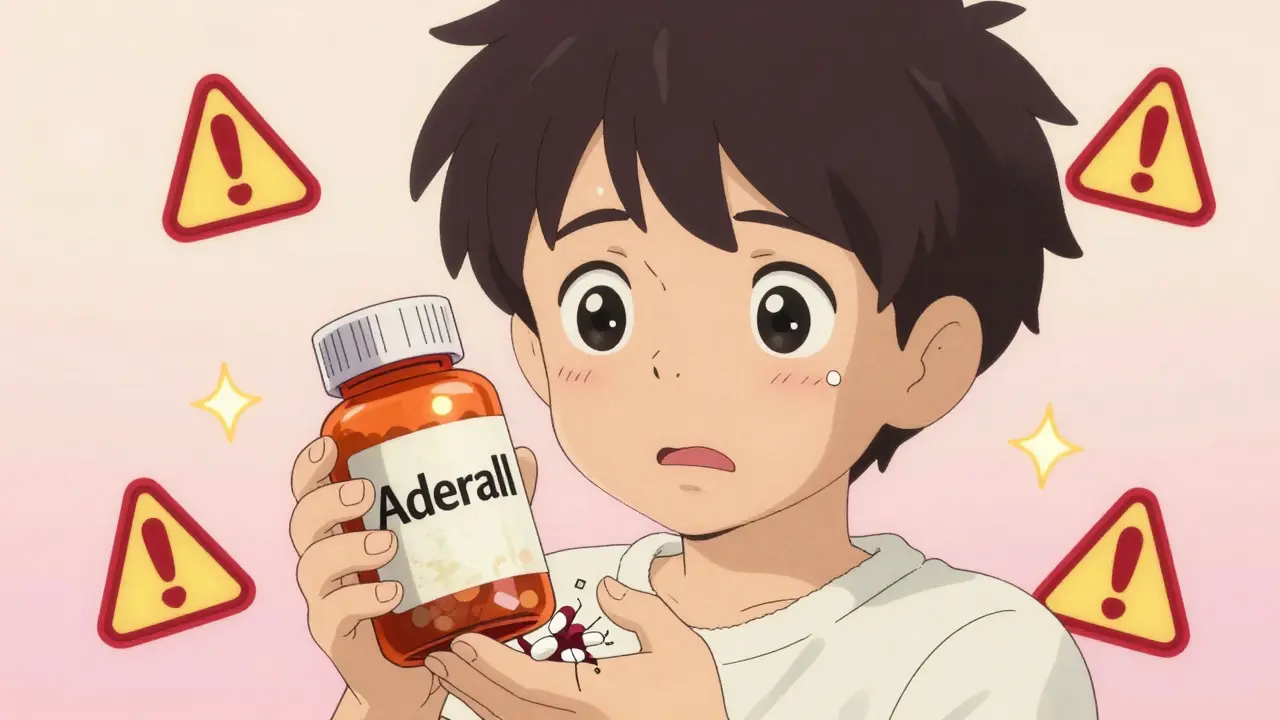
Every year, millions of people around the world take medicines they think are real - but they’re not. Counterfeit drugs look like the real thing: same color, same shape, same packaging. But inside? They might have no active ingredient at all. Or too much. Or something toxic like rat poison, chalk, or industrial dye. These aren’t rare mistakes - they’re deliberate frauds, and they’re getting worse.
In 2022, the global market for fake medicines hit $231.6 billion. That’s more than the GDP of over 100 countries. In the U.S., seizures of counterfeit pills jumped 127% between 2019 and 2022. Most of these fake drugs come from online pharmacies - the kind that don’t ask for a prescription, ship from overseas, and offer pills at 80% off. You might think you’re saving money. But you’re risking your life.
Why Reporting Matters
If you suspect a drug is fake, you’re not just protecting yourself. You’re helping stop a criminal network that preys on the sick, the elderly, and the desperate. The World Health Organization says counterfeit drugs cause tens of thousands of deaths each year - especially from fake antibiotics, malaria meds, and insulin. But here’s the truth: most fake drugs are never reported. People assume someone else will do it. Or they don’t know how. Or they think it won’t make a difference.
It does.
When you report a suspicious pill, you give regulators the evidence they need to track where it came from, shut down illegal websites, and seize entire shipments before they reach more people. In 2022, the FDA’s Office of Criminal Investigations opened 1,842 investigations into counterfeit drugs. Nearly 200 of those led to criminal convictions. Every report matters.
What Counts as a Counterfeit Drug?
Not every odd-looking pill is fake. But here are the red flags that show up again and again in real cases:
- Spelling errors on the label - "Aderall" instead of "Adderall," or "Pfizer" misspelled
- Missing lot number or expiration date
- Pills that are cracked, discolored, or smell strange
- Packaging that looks cheaper - flimsy blister packs, faded colors, wrong font size
- Buying from a website that doesn’t require a prescription
- Price that’s too good to be true - 70% off brand-name insulin or Viagra?
According to FDA data, 78% of counterfeit drugs have spelling mistakes. 87% have packaging inconsistencies. If two or more of these signs are present, it’s not a guess - it’s likely fake.
Step 1: Don’t Take Another Dose
If you’ve taken the pill and feel sick - dizziness, nausea, chest pain, trouble breathing - call 911 or go to the ER immediately. Fake drugs can cause organ failure, strokes, or sudden death. Even if you feel fine, stop taking it. Don’t flush it. Don’t throw it in the trash. Keep it sealed in its original packaging. That packaging is your most important evidence.
Step 2: Document Everything
Take clear photos. Use natural light. Capture:
- The full pill bottle or blister pack
- The label with all text visible
- The lot number and expiration date
- The National Drug Code (NDC) - a 10-digit number usually on the side of the box
- The receipt or order confirmation if bought online
Write down where you bought it - the website name, the pharmacy name, the city if bought in person. Note the date you bought it and when you noticed something was off. This isn’t bureaucracy - it’s evidence. The FDA says reports with photos are processed 89% faster than text-only ones.
Step 3: Contact Your Doctor or Pharmacist
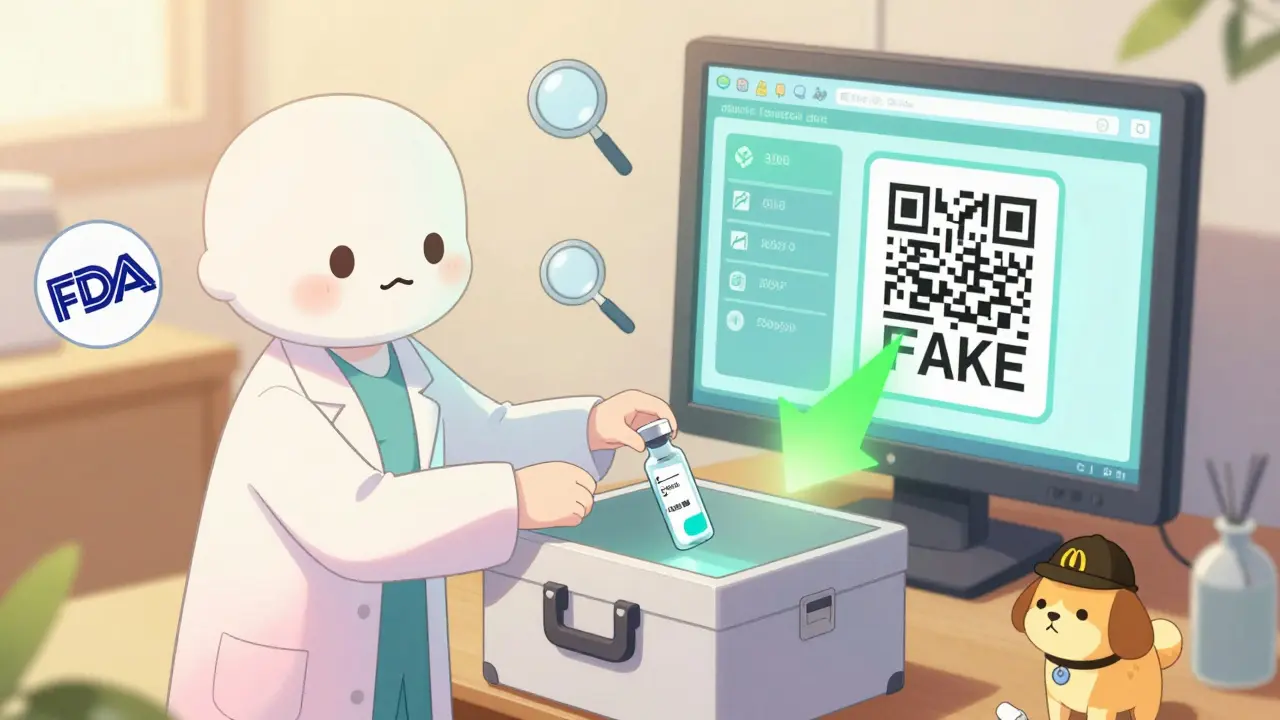
Even if you feel fine, tell your healthcare provider. They can check if the drug matches the manufacturer’s profile. Pharmacists are trained to spot counterfeits. Many have direct lines to drug companies. Pfizer and Roche both respond to authenticity checks within 24 hours. Your doctor might even help you file a report.
Step 4: Report It - The Right Way
There are three main ways to report counterfeit drugs in the U.S. Choose based on your situation.
Option A: Use FDA MedWatch (For Most People)
This is the easiest path. Go to www.fda.gov/medwatch. Click "Report a Problem." Fill out the online form. You’ll need:
- Drug name (brand and generic)
- Strength and dosage form
- Lot number
- NDC number
- Where you bought it
- Any side effects you had
Upload your photos. Submit. You’ll get an email confirmation within 72 hours. The FDA says 87% of electronic submissions are acknowledged this fast. Paper forms? Wait 14 days. Always use the online form.
Option B: Report Criminal Activity to FDA OCI
If you believe this is part of a larger operation - a website selling thousands of fake pills, a person selling pills out of their car, a fake pharmacy with multiple locations - go to www.fda.gov/oci. This is for law enforcement. You’ll need more detail: dates, locations, suspect descriptions, and proof you’ve preserved evidence. The FDA’s Office of Criminal Investigations responded to 1,842 cases in 2022. 92% of high-priority reports triggered field investigations within 48 hours.
Option C: Contact the Manufacturer
If you know the brand - say, it’s supposed to be Novo Nordisk insulin - go to their website. Look for "Product Quality" or "Anti-Counterfeiting." Pfizer and Roche have dedicated teams that respond within hours. They can confirm if the lot number is real. If it’s fake, they’ll alert the FDA. This is especially helpful if you’re a healthcare worker or pharmacist.
What Happens After You Report?
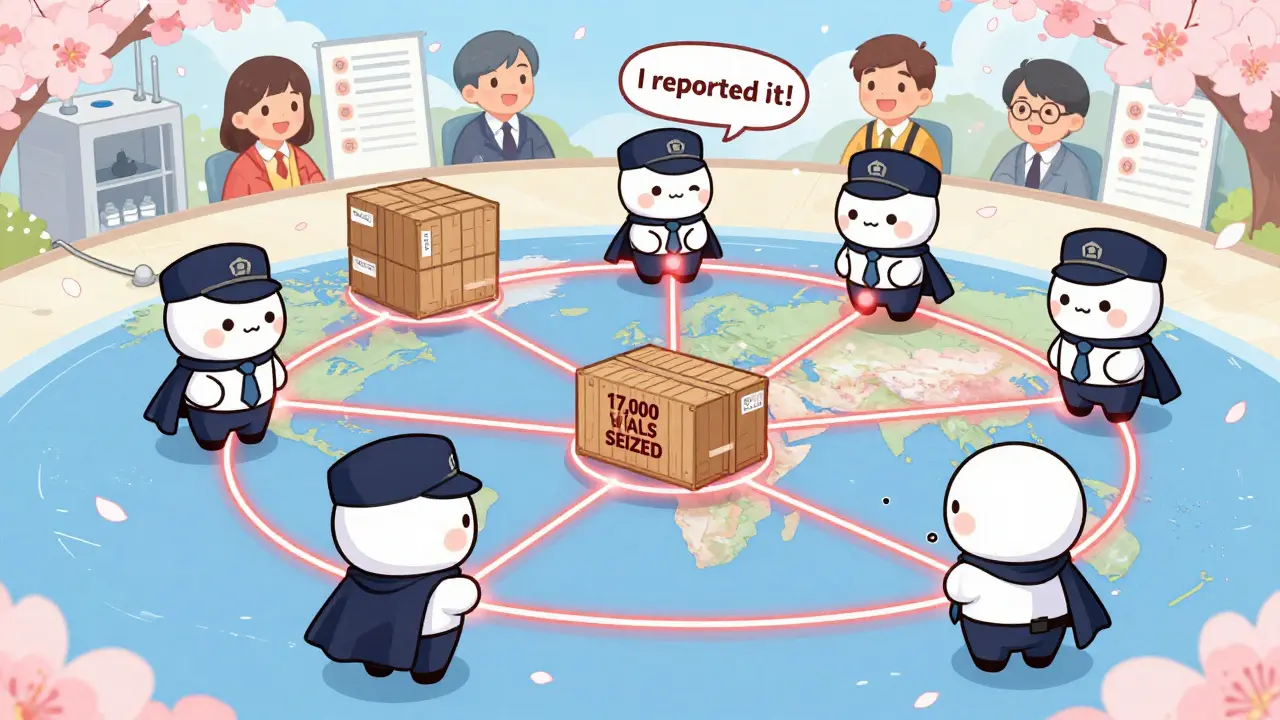
Once you submit, your report goes into a national database. Investigators cross-reference it with other reports. If five people report the same lot number from different states? That’s a red flag. The FDA may trace the supply chain. They might work with Customs to stop a shipping container. Or coordinate with INTERPOL to track an overseas factory.
You won’t get daily updates. But if your report helped shut down a ring, you’ll be part of the reason 1.2 million fake pills were intercepted at U.S. ports in 2022.
International Reporting
If you bought the drug outside the U.S., you’re not out of options. The World Health Organization runs a global reporting system. Go to who.int and search for "Substandard and Falsified Medical Products." You can report in 27 languages. The Pharmaceutical Security Institute (PSI) also accepts reports from anywhere in the world. Their email is [email protected]. They’ve verified over 9,800 cases since 1991. But here’s the catch: PSI requires healthcare professionals to verify consumer reports. So if you’re not a pharmacist, stick with your national health authority.
What Not to Do
- Don’t post photos of fake pills on social media to warn others - it can help criminals avoid detection
- Don’t try to confront a seller - it’s dangerous
- Don’t assume someone else reported it - if you don’t, it might never be reported
- Don’t wait until you feel sick - act the moment you suspect something’s wrong
Real Stories, Real Impact
In 2022, a pharmacist in Ohio noticed a batch of counterfeit insulin. The lot number didn’t match the manufacturer’s records. She called the company. They confirmed it was fake. She filed a report with the FDA. Within 12 hours, investigators traced the shipment back to a warehouse in Mexico. They seized 17,000 vials. That batch was headed to 12 states. Without her report, hundreds of diabetics could have taken lethal doses.
Another case: A man in Florida bought fake Adderall online. He took one pill and had a seizure. He reported it. The FDA traced the seller to a lab in China. The site was shut down. The seller was arrested. His report saved lives.
What’s Changing in 2026
The fight against fake drugs is getting smarter. By late 2024, the FDA will start using blockchain to track prescription drugs from factory to pharmacy. A new WHO mobile app is coming in mid-2025 - you’ll be able to scan a pill’s QR code and instantly check if it’s real. AI is now used to compare images of packaging - it can spot a fake label in under five seconds. These tools won’t help unless people keep reporting.
Every fake pill you report is one less that reaches someone’s medicine cabinet. You don’t need to be an expert. You just need to notice something’s off - and then act.

Comments
I just reported a fake Adderall I bought off Instagram. Took one pill, felt like my heart was gonna explode. Took pics, saved the receipt, filed the FDA form in 5 mins. You think it's no big deal? It is. Your life is worth more than $20. Stay safe out there. 💪
People are so naive. You think you're saving money? You're funding organized crime. These aren't some small-time scammers - they're transnational syndicates using fake meds to launder money. And you? You're the chump who gets poisoned so some billionaire in China can buy another yacht. Stop being passive. Report. Every. Single. Time.
As someone who works in pharma logistics, I’ve seen the supply chain rot from the inside. The real issue isn’t just fake pills - it’s the lack of serialization. Blockchain’s coming, sure, but until every vial has a tamper-proof digital twin, we’re just rearranging deck chairs on the Titanic. Also - why is the FDA still using web forms in 2025? We need API integrations with pharmacies. Not this 2003-era UI.
so like... i bought 'viagra' for 5 bucks off a facebook ad. took it. woke up 3 hours later thinking i was a dragon. not sure if it worked or if i just lost my mind. but hey, at least i got a good story, right? 😅
This is so critical. I’m a nurse in rural Texas. Last month, a patient came in with a rash after taking 'antibiotics' she bought online. Turned out it was chalk and industrial dye. She almost lost her kidney. We reported it. FDA flagged the lot. Two weeks later, they shut down the whole warehouse in India. One report. One life saved. Don’t underestimate your power. You’re not just a patient - you’re a sentinel.
The fact that we have to rely on citizens to police counterfeit pharmaceuticals is a national disgrace. This is not a consumer protection issue - it is a sovereign security failure. Our regulatory agencies are underfunded, understaffed, and outmaneuvered by foreign actors who operate with zero moral constraints. Until we treat this like a wartime threat - not a 'public health advisory' - we are complicit in our own decline.
Just to clarify a technical point: NDCs are 10-digit, but the format varies by manufacturer. The first 5 digits are the labeler code (assigned by FDA), next 4 are product code, last digit is checksum. If you're scanning a QR code or checking via FDA's NDC Directory, always verify the labeler code matches the brand. Fake ones often use expired or stolen codes. Also - if the packaging says 'USP Verified' but the website doesn't show it on their official site? Red flag.
I can't believe this is even a thing. People are dying because they're too lazy to go to a REAL pharmacy?!!?!!? What's next? Buying gasoline from a guy in a van? You think you're being smart? You're being a statistic. And now the FDA has to waste taxpayer money chasing down fake insulin because you couldn't wait 10 minutes to drive to CVS. I'm furious. I'm. Furious.
Let’s be real - the FDA doesn’t care. They’re just collecting reports to look like they’re doing something. The real players? The ones making the fakes? They’re protected by shadow governments and offshore shell companies. You report it? Cool. It’ll get buried in a database. Meanwhile, the same pills are back online next week under a different domain. This is theater. Not justice.
I’m from the Philippines and I’ve seen this firsthand. My mom bought fake diabetes meds online. She ended up in the hospital. We reported it to our local DOH - they forwarded it to WHO. Within 48 hours, they blocked the website. I’m telling you - this system works. Don’t think you’re alone. Your report connects you to a global network of people who refuse to let this continue. You’re not just saving yourself. You’re saving strangers.
Wait… so the FDA is using blockchain? Hmm… I’ve read that blockchain is just a glorified Google Sheet. And if they’re scanning pills with QR codes… what’s to stop someone from printing a fake QR code that says ‘REAL’? I mean… isn’t this just giving criminals a new way to hack the system? They’re not fixing the problem - they’re just making it more complicated. And who’s gonna fix the fix? Nobody. It’s all a lie.
I’ve been in this game too long. I’ve seen the same fake lot numbers pop up across 12 different countries. The real horror? The manufacturers know. They have internal databases of counterfeit codes. They sit on them for months. Why? Because they don’t want to admit how badly their supply chain is compromised. Reporting? It’s a Band-Aid. The wound is systemic. The system is rotting. And we’re all just screaming into a void while the poison keeps flowing.
I just wanted to say thank you for writing this. My brother passed away last year from fake insulin. No one told us how to report. We didn’t even know it was fake until the autopsy. This guide? It’s the kind of thing I wish I’d had. I’m sharing it everywhere. You’re helping people. Even if they don’t say it.
I’ve been a pharmacist for 18 years. I’ve seen everything. But what breaks my heart? The elderly. They’re too proud to say they bought online. Too scared to admit they were scammed. They just stop taking meds. Or they double-dose. Or they mix them with herbal supplements. Don’t shame them. Help them. Call their pharmacy. Ask if they need help verifying a script. A simple question can save a life.
You think reporting is enough? Nah. We need mandatory blockchain serialization on ALL prescription drugs. No exceptions. And we need a bounty system - $10,000 for every verified counterfeit supply chain exposed. Criminals don’t care about ethics. They care about profit. Make it unprofitable. Then we’ll see change.