
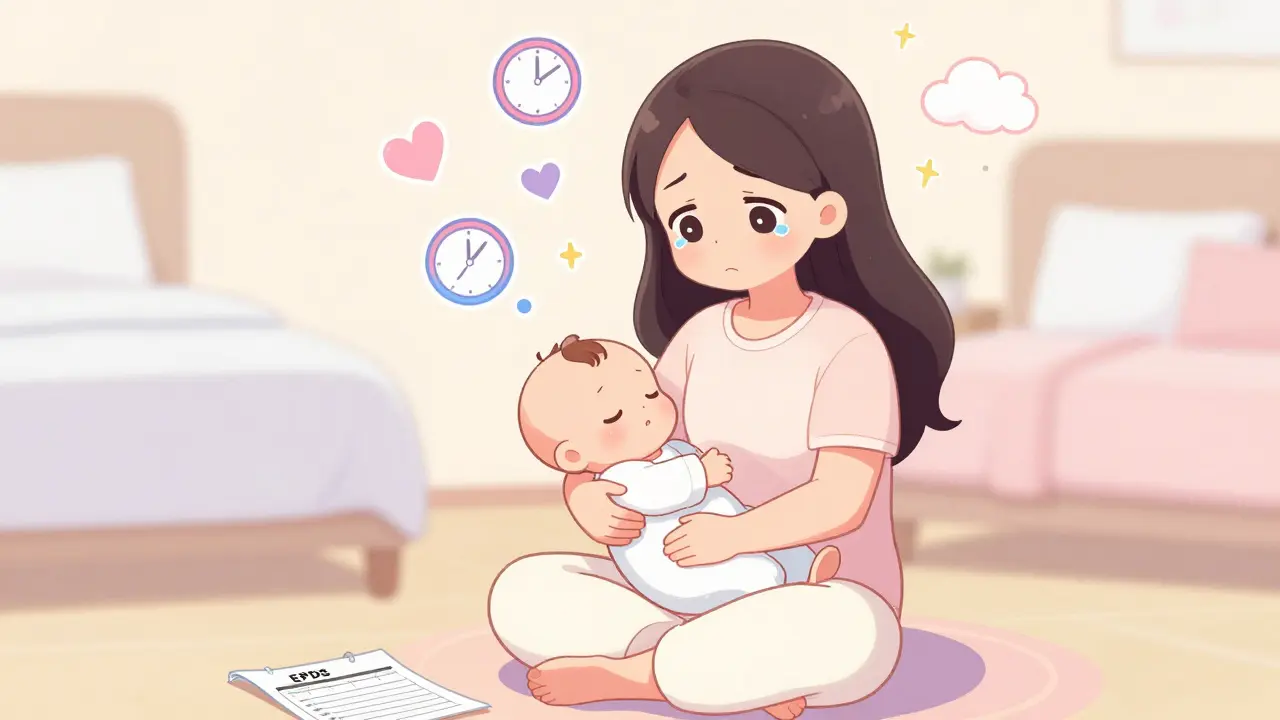
After giving birth, many women expect to feel tired, overwhelmed, or emotional. That’s normal. But when the constant worry, racing heart, and sleepless nights don’t fade after two weeks, it’s not just stress-it’s postpartum anxiety. This condition affects about 1 in 5 new mothers, yet most don’t realize what’s happening. They think they’re just bad at handling parenthood. Or worse-they blame themselves. The truth? Postpartum anxiety is a real, treatable medical condition. And catching it early changes everything-for the mother, the baby, and the whole family.
What Postpartum Anxiety Really Feels Like
Postpartum anxiety isn’t just being nervous about the baby’s health. It’s a persistent, overwhelming sense of dread that shows up even when everything’s going fine. You might find yourself checking the baby’s breathing every five minutes, even when they’re sound asleep. Or you might panic if they cry for more than a minute. These aren’t signs of being a good mom-they’re signs of anxiety.
The physical symptoms are just as real. Sixty-two percent of women with this condition report their heart racing without warning. Nearly half feel nauseous. Almost four in ten lose their appetite. Sleep? Forget it. Even when the baby is sleeping, your mind won’t shut off. You might lie there, replaying every decision you’ve made since the birth: Did I feed them enough? Did I hold them right? What if something happens?
And then there are the intrusive thoughts. About 68% of women with postpartum anxiety experience sudden, disturbing images-like the baby falling, or getting sick. These aren’t wishes. They’re fears that feel uncontrollable. Many women stay silent because they’re terrified someone will think they’re dangerous. But these thoughts are a symptom, not a reflection of character.
How It’s Different from Baby Blues and Postpartum Depression
It’s easy to confuse postpartum anxiety with the baby blues. Nearly 80% of new moms feel tearful or moody in the first few days after birth. But those feelings fade within two weeks. Postpartum anxiety doesn’t. It sticks around. And it gets worse.
Postpartum depression is often talked about more, but anxiety is actually more common. While depression shows up as sadness, numbness, or hopelessness, anxiety shows up as panic, racing thoughts, and physical tension. In fact, 85% of women with postpartum anxiety report constant worry as their main symptom. That’s compared to 92% of women with depression who report low mood.
And here’s the kicker: 47% of women have both anxiety and depression at the same time. That makes it harder to treat. If you only address the sadness and ignore the panic, symptoms don’t fully go away. That’s why screening needs to check for both.
Screening: The Tools That Catch What You Miss
There’s no blood test for postpartum anxiety. No X-ray. No scan. Diagnosis is based entirely on how you feel and what you describe. That’s why screening tools are so important.
The Edinburgh Postnatal Depression Scale (EPDS) has been used for years. But it wasn’t built to catch anxiety. Now, the updated version includes specific anxiety questions. In a study of over 1,200 women, the new version correctly identified anxiety in 89% of cases.
But even better is the GAD-7-a simple 7-question tool made for generalized anxiety. It catches 89% of postpartum anxiety cases and correctly rules out anxiety in 84% of women who don’t have it. That’s far more accurate than the old EPDS alone.
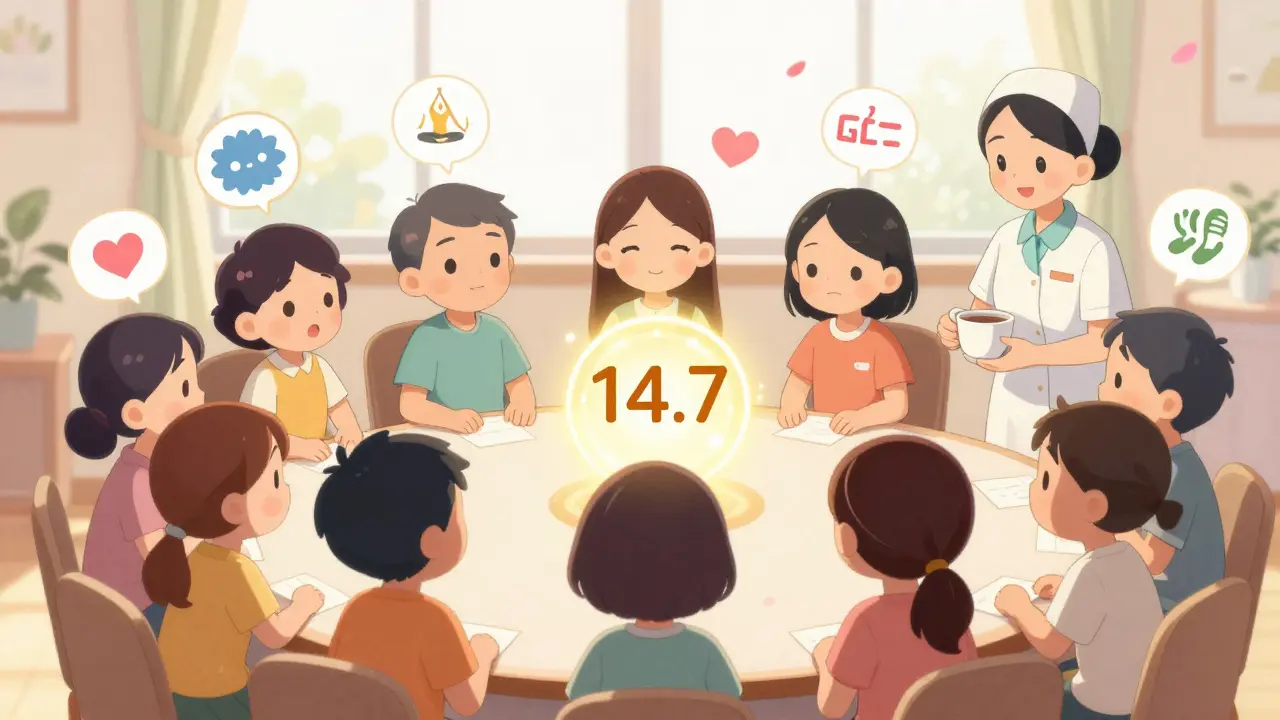
Here’s what the scores mean:
- 6.2: Average score for women with no mental health issues
- 9.8: Average for anxiety-only cases
- 11.3: Average for depression-only cases
- 14.7: Average for women with both anxiety and depression
If your score is above 10, it’s time to talk to someone. Not just your partner. Not just your mom. A professional.
Who’s at Highest Risk?
Postpartum anxiety doesn’t happen randomly. Certain factors make it much more likely.
- If you’ve had an anxiety disorder before pregnancy, your risk goes up 3.2 times.
- If you’ve lost a pregnancy before, your risk jumps 2.7 times.
- If your baby had medical problems after birth, your risk increases 2.4 times.
- If you had postpartum depression after a previous birth, your risk soars to 3.8 times higher.
It’s not about being weak. It’s about biology and past experience. Your brain has already been through a stress response. When you go through it again-pregnancy, birth, sleepless nights, hormonal shifts-it’s more likely to get stuck in high alert.
And here’s the scary part: 63% of cases are misdiagnosed as normal stress. That means most women wait an average of 11 weeks before getting help. By then, the anxiety has taken root. It’s harder to treat. And it starts to affect how you bond with your baby.
Care Pathways: What Actually Works
Treatment isn’t one-size-fits-all. It depends on how bad it is.
Mild cases (EPDS 10-12): Therapy and lifestyle changes are often enough. Daily 30-minute walks reduce anxiety scores by 28% in eight weeks. Yoga cuts symptoms by 33% in clinical trials. Talking to other new moms in a support group helps too-adherence to treatment jumps 58% when you’re not alone.
Moderate cases (EPDS 13-14): Cognitive Behavioral Therapy (CBT) is the gold standard. Twelve to sixteen sessions with a trained therapist help 57% of women. CBT teaches you to challenge the thoughts that spiral: “What if my baby stops breathing?” becomes “My baby has been breathing fine for 12 hours. This is anxiety talking.”
Severe cases (EPDS 15+): Therapy alone isn’t enough. Medication becomes necessary. SSRIs like sertraline are the first choice-even though they don’t have FDA approval specifically for postpartum anxiety. Why? Because they work. In clinical studies, 64% of women see major improvement within eight weeks. And only 0.3% of the dose passes into breast milk. That’s considered safe for nursing babies.
But here’s the catch: SSRIs take 4 to 6 weeks to kick in. That’s a long time to feel this bad. That’s why mindfulness training is used as a bridge. Daily 10-minute breathing exercises reduce anxiety symptoms by 41% in just two weeks. No pills. No appointments. Just a few minutes a day.
What’s New in Treatment
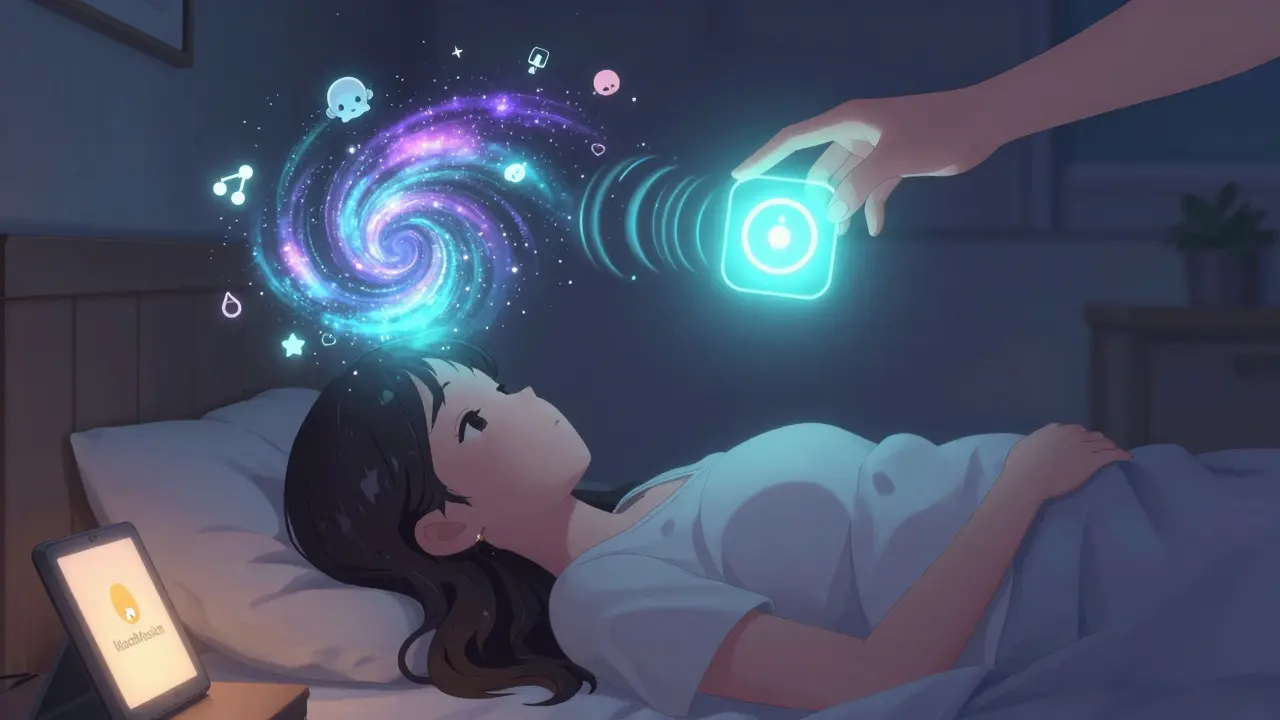
Things are changing fast. In 2023, the FDA cleared a digital app called MoodMission for postpartum anxiety. In a trial with 328 women, it cut anxiety symptoms by 53% using CBT-based exercises you can do on your phone. It’s not a replacement for therapy, but it’s a lifeline for women who can’t get to a clinic.
Another breakthrough? Brexanolone (Zulresso). Originally approved for postpartum depression, new trials show it works for anxiety too-with a 72% response rate in just 60 hours. That’s faster than any other treatment. It’s still under review, but it’s a sign that the medical world is finally catching up.
And insurance? It’s getting better. In 2021, new billing codes were created specifically for postpartum anxiety. That meant coverage jumped from 38% to 79% of cases. More women can now get therapy and medication without going broke.
Why This Matters Beyond the Mother
Postpartum anxiety doesn’t just hurt the mother. It affects the child. Babies of anxious mothers are more likely to have trouble sleeping, feeding issues, and delays in emotional development. That’s not because the mother loves them less. It’s because anxiety makes it hard to respond calmly and consistently.
When anxiety is treated, bonding improves. Babies cry less. They smile more. They develop secure attachments. That’s not magic. That’s science.
And the ripple effect? Partners feel less alone. Families stop tiptoeing around the house. The mother starts to feel like herself again. That’s the real win.
What to Do If You Think You Have It
Step one: Don’t wait. Don’t wait for it to get worse. Don’t wait for someone to notice. Don’t wait for a perfect moment. You don’t need to be broken to deserve help.
Step two: Take the EPDS or GAD-7. You can find both online. They’re free. They’re quick. They’re confidential.
Step three: Talk to your OB, midwife, or pediatrician. Bring the results. Say: “I think I might have postpartum anxiety.” If they brush you off, find someone else. You deserve better.
Step four: Start small. Walk outside for 10 minutes. Try a 5-minute breathing app. Call a friend who’s been through it. You don’t have to fix everything today. Just take one step.
Postpartum anxiety is not your fault. It’s not weakness. It’s not something you can outwill. But it is something you can treat. And you’re not alone.
Is postpartum anxiety the same as baby blues?
No. Baby blues are mild mood swings that start a few days after birth and go away within two weeks. Postpartum anxiety is intense, persistent worry, panic, and physical symptoms that last longer than two weeks and interfere with daily life. It doesn’t just fade-it needs treatment.
Can I take medication while breastfeeding?
Yes, many women safely take SSRIs like sertraline while breastfeeding. Only about 0.3% of the mother’s dose passes into breast milk, which is considered minimal and safe. The benefits of treating anxiety usually outweigh the risks. Always talk to your doctor about your options.
Why isn’t postpartum anxiety talked about more?
Because it’s often mistaken for normal stress. Many women feel guilty for being anxious when they “should” be happy. Providers sometimes miss it because screening tools weren’t designed for anxiety. But awareness is growing. More clinics now use updated screening tools, and insurance coverage has improved significantly since 2021.
Can postpartum anxiety go away on its own?
Sometimes, but rarely. Studies show that without treatment, symptoms often last for months or even years. The longer it goes untreated, the harder it is to recover. Early intervention-therapy, lifestyle changes, or medication-leads to much better outcomes.
What if I don’t have access to a therapist?
Digital tools like the FDA-cleared app MoodMission offer CBT-based exercises you can use at home. Online support groups and peer-led new mom circles are also effective. Even daily walks, yoga, and mindfulness apps can reduce symptoms significantly. You don’t need a clinic to start feeling better.
Is postpartum anxiety only for biological mothers?
No. Adoptive parents, partners, and non-biological caregivers can also experience postpartum anxiety. The stress of caring for a newborn, hormonal shifts from adoption-related treatments, and the pressure to bond can trigger the same symptoms. Anyone becoming a new parent is at risk.

Comments
Just wanted to say this post saved me. I thought I was failing as a mom because I couldn't stop checking my baby's chest for 10 minutes straight. Turns out? It's not me-it's the GAD-7 score screaming at me. I took the test, showed it to my OB, and got sertraline. Two weeks in, I slept through the night for the first time since birth. You're not broken. You're biologically overwhelmed. And treatment works.
Let's be real-most of this is just modern medicine pathologizing normal parenting stress. If you're checking on your baby every five minutes, maybe you need to stop scrolling through parenting forums and just trust your instincts. No one in 1970 had a GAD-7 score and they raised perfectly fine kids. This is anxiety industrial complex at its finest.
Kimberly, you're missing the point entirely. This isn't about 'overmedicalization'-it's about neurobiology. Cortisol dysregulation, oxytocin suppression, GABA receptor sensitivity-all documented in peer-reviewed literature. The fact that you dismiss this as 'modern fuss' ignores the data: 1 in 5 women, 11-week average delay in care, 63% misdiagnosed. This isn't a trend. It's a public health crisis.
Thank you for the detailed breakdown. I’m a dad, and I didn’t realize my partner’s panic attacks were postpartum anxiety-not just ‘being tired.’ I thought she needed more coffee. Turns out, she needed CBT and a damn good listener. We started doing 10-minute breathing exercises together. No meds. Just presence. And it’s changed everything. If you’re reading this and you’re a partner-stop fixing. Start listening.
lol so if you're a new mom and you're anxious you just take ssris? what about just... sleeping? or eating? or not watching tiktok for 3 hours? i mean come on. my cousin had a baby and she just went for walks and now she's chill. no pills needed. this article is just fearmongering with stats.
In India, we have a term: ‘mata ki jai.’ The mother is sacred. But we don’t talk about her suffering. My sister-in-law had postpartum anxiety after her second child. No one mentioned it. She cried every night. We called it ‘hormonal.’ Now she’s in therapy. And yes-she’s on sertraline. And yes-it’s safe while breastfeeding. Cultural silence kills. This post? It’s a lifeline.
Oh wow. A 72% response rate with brexanolone in 60 hours? That’s faster than my ex’s text replies. And now we’re giving a $34,000 IV drip to new moms while they’re still wearing hospital socks? Meanwhile, my sister’s Medicaid got denied for therapy because ‘anxiety isn’t a real diagnosis’-but sure, let’s fund the fancy IVs. Capitalism’s solution to trauma: make it expensive and branded.
Postpartum anxiety is not weakness. It is neurochemical recalibration under extreme duress. The brain, having undergone profound hormonal flux, enters a hyper-vigilant state. This is not moral failure. It is biological adaptation misfiring. Treatment is not indulgence. It is homeostasis restoration. One step. One breath. One moment at a time.