
Most sinus infections aren’t bacterial - and antibiotics won’t help
You wake up with a stuffy nose, facial pressure, and thick yellow mucus. It’s day three. You’re tired. You feel like you’re coming down with something serious. You Google it. Sinusitis. And suddenly, you’re convinced you need antibiotics. But here’s the truth: 9 out of 10 times, you don’t. Most sinus infections are viral - and antibiotics do nothing against viruses. Yet, millions of people get prescribed them anyway. Why? Because it’s easier than waiting. But that ease comes at a cost - for you and for everyone else.
In the U.S., about 31 million people get sinusitis every year. That’s one in ten adults. And according to the CDC and major medical societies, 90-98% of those cases are caused by viruses - usually the same ones that give you a cold. The rest? Bacterial. And that’s where things get tricky. The symptoms can look almost identical. So how do you know which is which? And more importantly, when should you actually take antibiotics?
How to tell if your sinus infection is viral or bacterial
There’s no magic test you can do at home - but there are clear patterns doctors use to tell the difference. And you can learn them too.
Viral sinusitis usually starts like a cold: runny nose, mild congestion, maybe a low-grade fever. Symptoms peak around day 3-5 and then slowly get better. By day 7-10, most people feel significantly improved. The mucus might turn yellow or green - but that doesn’t mean bacteria are in charge. Color alone is not a reliable sign. Even healthy people have green mucus after a cold. What matters is how long it lasts and whether it’s getting better.
Bacterial sinusitis behaves differently. It either:
- Stays the same or gets worse after 10 days
- Improves for a few days, then suddenly crashes again - known as a "double-worsening" pattern
This second scenario is a red flag. You feel okay on day 5, then on day 7, your fever spikes back up, your face throbs, and your mucus turns thick, dark green. That’s when bacteria might be taking over. Other signs include:
- Fever above 102°F (38.9°C) lasting more than 3 days
- Severe, one-sided facial pain - especially around your cheeks or eyes
- Pain in your upper teeth - that’s the sinuses pressing on nerves
- Pus-like discharge that doesn’t improve
These aren’t just "bad colds." They’re signs your body’s fighting a bacterial infection that won’t clear on its own.
Antibiotics: When they work - and when they don’t
Antibiotics are powerful. But they’re not magic bullets. They only kill bacteria. They do nothing for viruses. And using them when they’re not needed? That’s where the real danger lies.
According to the Infectious Diseases Society of America and the American Academy of Otolaryngology, antibiotics should only be considered if symptoms last longer than 10 days, or if there’s a clear double-worsening pattern. For most people, that’s it. No antibiotics needed. Just time, rest, and supportive care.
But if your doctor confirms bacterial sinusitis, the first-line treatment is usually amoxicillin - 500mg three times a day for 5 to 10 days. If you’ve taken antibiotics recently, or if you live in an area with high resistance rates, your doctor might switch to amoxicillin-clavulanate (Augmentin). That’s because some bacteria have learned to fight off regular amoxicillin.
Here’s what not to take:
- Macrolides (like azithromycin or clarithromycin) - resistance rates are over 30%
- Trimethoprim-sulfamethoxazole (Bactrim) - resistance to common sinus bacteria is over 40%
These drugs are often prescribed because they’re "convenient" - one pill a day. But they’re less effective, and using them wrongly fuels antibiotic resistance. That’s not just your problem. It’s everyone’s.
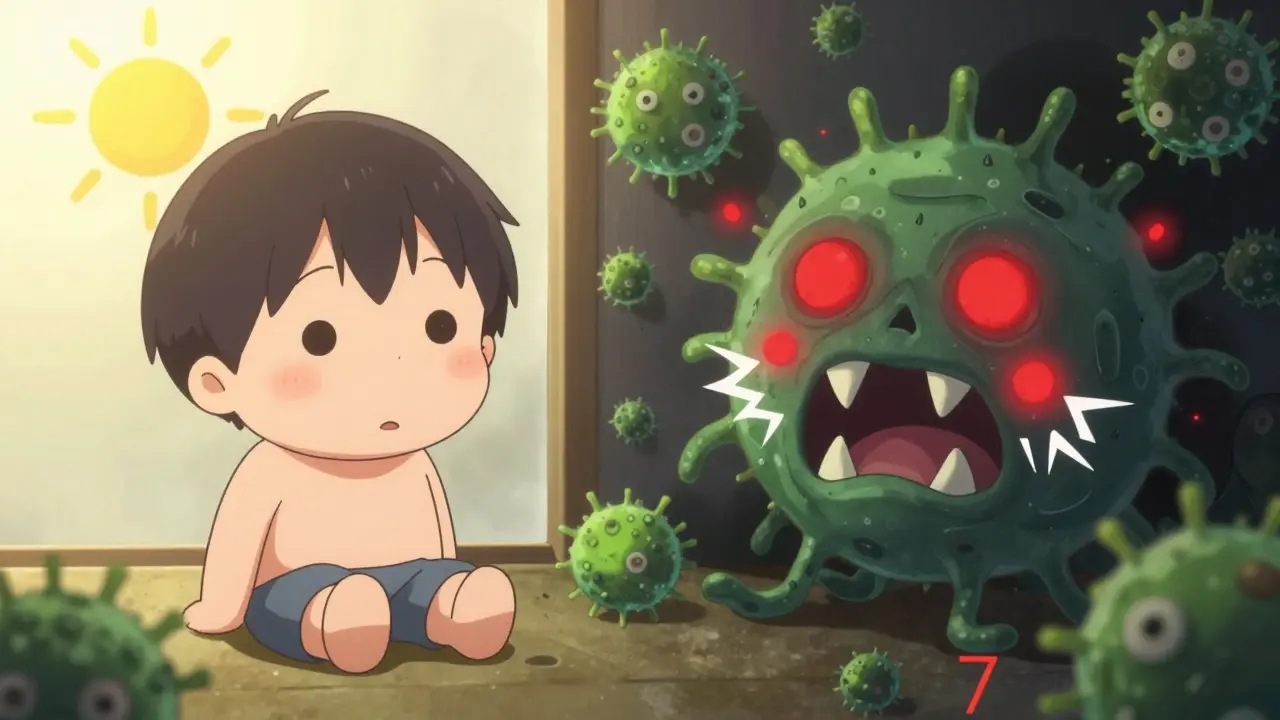
What to do instead - the real relief
If you have a viral sinus infection, your best weapons aren’t pills. They’re simple, cheap, and backed by science:
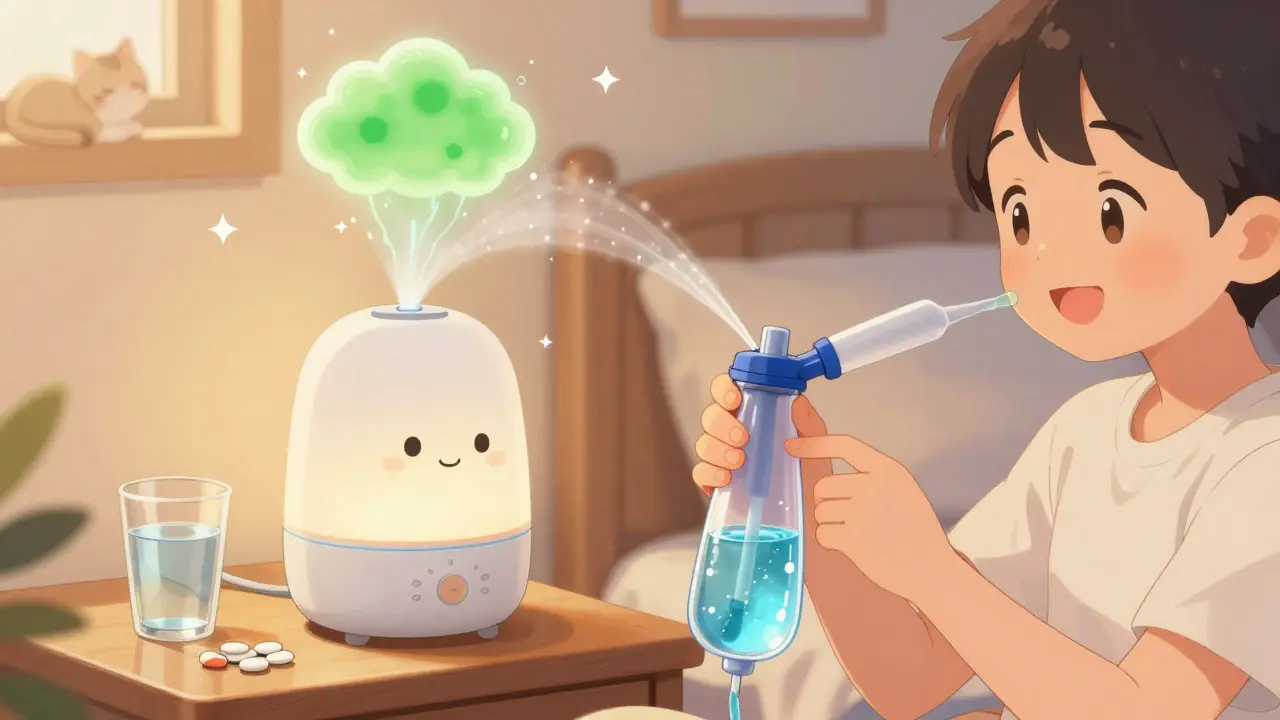
- Saline nasal irrigation - Use a neti pot or squeeze bottle with sterile, distilled, or boiled water. Do it 2-3 times a day. It flushes out mucus, viruses, and irritants. Studies show 75% of people get the technique right after watching a video tutorial.
- Hydration - Drink at least 2-3 liters of water a day. Thinner mucus = easier drainage.
- Humidifiers - Keep indoor humidity between 40-60%. Dry air makes congestion worse.
- Pain relief - Acetaminophen (650-1000mg every 6 hours) or ibuprofen (400-600mg every 6 hours) can ease pressure and headaches.
- Rest - Your immune system doesn’t work well when you’re exhausted.
One patient in Melbourne, who had recurring sinus issues, avoided seven rounds of antibiotics over two years by sticking to daily saline rinses and a humidifier. She didn’t need pills. She just needed consistency.
The hidden cost of unnecessary antibiotics
Every time you take an antibiotic you don’t need, you’re not just risking side effects - you’re helping create superbugs.
Antibiotic resistance is one of the biggest public health threats in the world. The WHO calls it a silent pandemic. In the U.S., 2.8 million antibiotic-resistant infections happen every year. Over 35,000 people die from them. Many of those cases trace back to unnecessary prescriptions - including for sinus infections.
And there’s another risk: Clostridioides difficile (C. diff). It’s a deadly gut infection that can follow antibiotic use. It causes severe diarrhea, hospitalization, and even death - especially in older adults or those with weak immune systems. Studies show a 15-30% chance of recurrence. One person on PatientsLikeMe developed C. diff after taking azithromycin for a viral sinus infection. She ended up in the hospital for two weeks.
Doctors know this. A 2022 JAMA editorial found that 78% of antibiotics prescribed for sinusitis were unnecessary. Yet patients still expect them. Why? Because they’ve been told for decades that "antibiotics fix infections." But medicine has changed. You need to change with it.
What to track - and when to call your doctor
Don’t guess. Track your symptoms. Use a simple diary:
- Day 1: Runny nose, mild pressure - 3/10 pain
- Day 3: Thick yellow mucus, slight fever - 5/10 pain
- Day 7: Feeling better, mucus clearing - 2/10 pain
- Day 10: Back to normal
That’s viral. You’re fine.
But if you see:
- Fever above 102°F lasting more than 3 days
- Sudden worsening after initial improvement
- Severe headache, confusion, or vision changes
- Swelling around your eyes
- then call your doctor immediately. These could be signs of complications like orbital cellulitis or meningitis. Rare, but serious.
New tools are coming - but they’re not for everyone
There’s exciting science happening. In May 2023, the FDA approved the first rapid point-of-care test for bacterial sinusitis - SinuTest™. It detects bacterial markers in nasal secretions with 89% accuracy. But it’s not available everywhere yet. And it’s expensive.
Researchers are also testing nasal probiotics. Early trials show they can reduce recurrent sinus infections by 42%. That’s promising. But it’s still experimental.
For now, the best tool you have is knowledge. Knowing when to wait. Knowing when to act. Knowing that antibiotics aren’t the answer to every sniffle.
Bottom line: Don’t rush to antibiotics
If your symptoms are mild and improving after 7 days - wait. Let your body heal. Use saline rinses. Drink water. Rest. Take pain relievers if you need them.
If symptoms last more than 10 days - or if you get worse after feeling better - then see your doctor. Ask: "Is this bacterial?" and "Do I really need an antibiotic?"
Antibiotics save lives. But only when they’re used right. Misuse doesn’t help you. It hurts the next person who truly needs them.
You’re not weak for not taking a pill. You’re smart for waiting - and protecting the future of medicine.
Can green mucus mean I have a bacterial sinus infection?
Not necessarily. Green or yellow mucus is common in viral infections too. Your immune system releases white blood cells that turn mucus yellow or green as they fight off the virus. The color alone doesn’t prove bacteria are present. What matters more is how long symptoms last and whether they get worse after improving.
How long should I wait before seeing a doctor for sinus symptoms?
Wait at least 10 days if your symptoms are slowly improving. If they’re getting worse after day 5-7 - especially if you develop a high fever, severe facial pain, or vision changes - see your doctor right away. That’s the classic "double-worsening" pattern that suggests bacterial infection.
Are nasal sprays better than pills for sinusitis?
For viral sinusitis, saline sprays and rinses are more effective than any oral medication. They clear mucus and reduce swelling. Steroid nasal sprays (like fluticasone) can also help reduce inflammation - but they’re not antibiotics. They’re for long-term relief, especially if you have allergies. Oral antibiotics only help if bacteria are involved - and only if prescribed correctly.
Can I use a neti pot safely at home?
Yes - if you use the right water. Never use tap water. Always use distilled, sterile, or previously boiled (and cooled) water. Tap water can carry tiny organisms that cause rare but dangerous brain infections. Use a clean neti pot, rinse it after each use, and let it air dry. Most people get the technique right after watching a 5-minute video tutorial.
What if my doctor insists on antibiotics even after 7 days?
Ask why. Request the diagnostic criteria they’re using. Cite the American Academy of Otolaryngology’s 2023 guidelines: antibiotics aren’t recommended for symptoms under 10 days unless there’s a double-worsening pattern. Many doctors still prescribe out of habit or patient pressure - but you have the right to ask for evidence. If you’re unsure, get a second opinion. Your health is worth it.
Do children need antibiotics for sinusitis too?
The same rules apply. Most sinus infections in kids are viral. Antibiotics aren’t routinely recommended unless symptoms last more than 10 days or worsen after initial improvement. Children are especially vulnerable to antibiotic side effects like diarrhea and rashes. The American Academy of Pediatrics supports watchful waiting for most cases.

Comments
This is SO needed! I used to panic every time my mucus turned green 🤢 Now I just do saline rinses and drink water. Took me 3 years and 4 unnecessary antibiotic courses to learn this. My sinuses have never been better. 🙌
Americans still don't understand antibiotics. We've had guidelines since 2010. You don't need a PhD to know viruses don't respond to penicillin.
In India we know this already doctors here dont give abx for cold unless fever above 102 for 3 days and green mucus with facial pain only then
I used to think antibiotics were magic. Then I got C. diff after a viral sinus infection. Spent 11 days in the hospital. Now I do neti pot daily. No more antibiotics unless my doctor proves it's bacterial. Seriously changed my life.
This post gave me so much peace. I used to feel weak for not taking pills. Turns out I was just smart. Thank you for writing this.
I'm a nurse and I see this every week. People come in demanding amoxicillin for a 5-day cold. I show them the CDC guidelines. Half the time they leave without meds and come back a week later saying 'I'm fine, thanks for not giving me antibiotics.'
I've been prescribing antibiotics for sinusitis for 18 years. I thought I was helping. Then I read the 2022 JAMA study. 78% unnecessary. I feel ashamed. I've changed my practice. I now say 'Let's wait 10 days' as the default. It's hard to undo decades of habit, but it's the right thing to do.
The real problem isn't patients asking for antibiotics. It's the system. Doctors get paid more to prescribe. Insurance doesn't cover nasal irrigation devices. Pharmacies push antibiotics because they're profitable. This isn't about ignorance. It's about economics.
One thing missing from this post: the psychological barrier. We've been conditioned to believe medicine = pill. If you don't get a prescription, you feel like you didn't get 'treated.' But healing isn't always about drugs. Sometimes it's about patience. And trust in your body. That's the hardest part.
You call this a 'silent pandemic'? It's not silent. It's screaming. Every time someone takes an antibiotic for a virus, they're helping create a monster that will kill their grandchildren. This isn't medical advice. It's a moral emergency.
I just tried the saline rinse for the first time. It felt weird at first but now I can't believe I lived without it. My nose feels like it's breathing again. I'm going to buy a better neti pot next week.
The double-worsening pattern is the real tell. I had it last winter. Felt okay on day 6, then BAM-fever back at 103, face felt like it was being crushed by a vice. Went to the ER. They did a CT scan. Bacterial sinusitis. Got amoxicillin-clavulanate. 48 hours later I was human again. Knowledge saved me.